
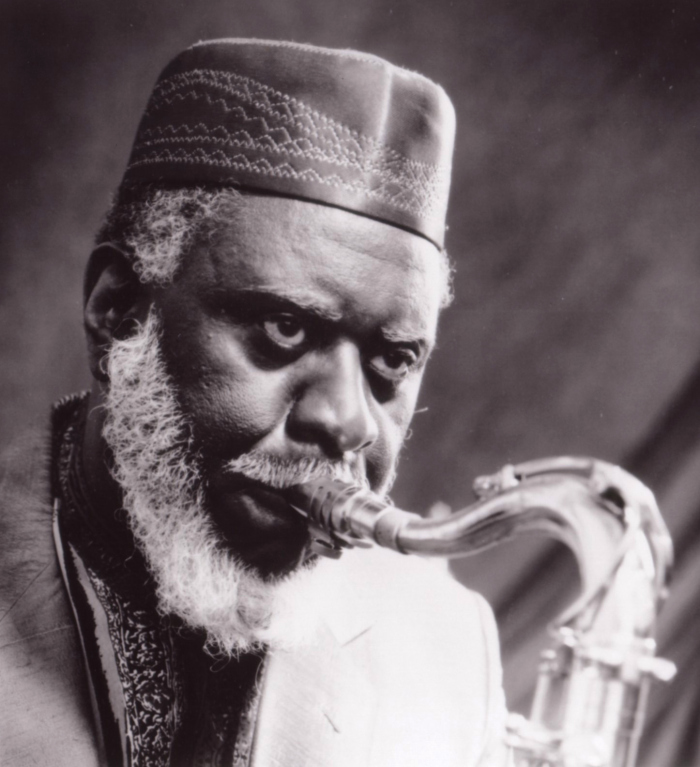
Black History Month Spotlight: Pharoah Sanders

bhm pharoahPharoah Sanders (his given name, Ferrell Sanders) was born into a musical family. Sanders’ early favorites included Harold Land, James Moody, Sonny Rollins, Charlie Parker, and John Coltrane. Known in the San Francisco Bay Area as “Little Rock,” Sanders soon began playing bebop, rhythm & blues, and free jazz with many of the region’s finest musicians, including fellow saxophonists Dewey Redman and Sonny Simmons, as well as pianist Ed Kelly and drummer Smiley Winters. In 1961, Sanders moved to New York, where he struggled. Unable to make a living with his music, Sanders took to pawning his horn, working non-musical jobs, and sometimes sleeping on the subway. During this period he played with a number of free jazz luminaries, including Sun Ra, Don Cherry, and Billy Higgins.

In 1964, Coltrane asked Sanders to sit in with his band. The following year, Sanders was playing regularly with the Coltrane group. Coltrane’s ensembles with Sanders were some of the most controversial in the history of jazz. Their music represents a near total desertion of traditional jazz concepts, like swing and functional harmony, in favor of a teeming, irregularly structured, organic mixture of sound for sound’s sake. Strength was a necessity in that band, and as Coltrane realized, Sanders had it in abundance.

Sanders made his first record as a leader in 1964. After John Coltrane’s death in 1967, Sanders worked briefly with his widow, Alice Coltrane. From the late ’60s, he worked primarily as a leader of his own ensembles.

In the decades after his first recordings with Coltrane, Sanders developed into a more well-rounded artist, capable of playing convincingly in a variety of contexts, from free to mainstream. Some of his best work is his most accessible. As a mature artist, Sanders discovered a hard-edged lyricism that has served him well.

In 2004, he was inducted into the Arkansas Black Hall of Fame.  That night, he headlined a concert in Little Rock as a fundraiser for the Hall of Fame.  For more on Pharoah Sanders and other inductees into the Arkansas Black Hall of Fame, visit the permanent exhibit at the Mosaic Templars Cultural Center. That museum is an agency of the Department of Arkansas Heritage.

Black History Month Spotlight: Fatima Robinson

bhm fatimaAs a critically acclaimed dancer, choreographer and director, Fatima Robinson is the woman behind the moves for some of today’s top music artists including OutKast, the Black Eyed Peas, Will Smith, Mary J. Blige and the late Aaliyah. Her eclectic, fluid, urban style has made her one of the hottest choreographers in the field.

Born in Little Rock, Robinson moved to Los Angeles at the age of four with her mother and two younger sisters. After completing high school at the age of 16, Robinson became a certified cosmetologist and worked for a time as a professional hairdresser while dreaming of operating her own hair salon like her mother. Ultimately, however, Robinson’s love for dance would become the catalyst for dreams even bigger than she ever dared to dream.

Her “big break” came when film director John Singleton asked her to choreograph the video for Michael Jackson’s “Remember the Time” single. Since then, she has gone on to receive numerous accolades and awards including being named by Entertainment Weekly magazine as one of the “100 Most Creative People in Entertainment”, and more recently, the October 2004 issue of Essence magazine singled her out as one of 40 “Women Who are Shaping the World.”

Recognition for Robinson’s art continues to mount. After seven nominations, in 2004 she walked away with the MTV Video Music Award for Best Choreography in a Music Video.  Fatima recently directed and choreographed Cee-Lo Green’s new Las Vegas show “Loberace,” and choreographed commercials for Nike and Heineken with director Rupert Sanders. Fatima also notably choreographed the 2011 Super Bowl Halftime show with the Black Eyed Peas, 2012 Coachella Tupac Hologram, HBO Inauguration event for President Barack Obama, and the Sony Pictures movie Sparkle, starring Jordin Sparks and Whitney Houston. Fatima also choreographed the 2007 and 2009 Oscars, making her the second African American woman in history to do so.

In 2004, she was inducted into the Arkansas Black Hall of Fame.  For more on Fatima Robinson and other inductees into the Arkansas Black Hall of Fame, visit the permanent

Black History Month Spotlight: Art Porter Jr.

bhm art jr.Just like his father and namesake, Art Porter Jr. was a talented musician on a variety of instruments and in a variety of musical genres.

Arthur Lee (Art) Porter Jr. was born in Little Rock on August 3, 1961. Porter began his music career under the tutelage of his father, legendary jazz musician, Arthur Porter, Sr. who surrounded him with everything musical. He performed proficiently on drums, saxophone and piano. He was classically trained but his performances ranged across jazz, rhythm and blues, funk, and ballads.

During high school, under the supervision of Sterling Ingram, private teacher and band director at Parkview High School, Art Jr. was selected to be a member of the Arkansas All-State Band for three consecutive years.  At age 16, he was awarded the “Most Talented Young Jazz Artist in America” by the National Association for Jazz Education.

During Porter’s youth, his playing while underage in venues where liquor was sold proved controversial. Bill Clinton, then attorney general, established a framework for the legislature that would allow minors to work in such venues with parental supervision. Act 321 known as The “Art Porter Bill” became Arkansas law.

Porter graduated from Northeastern University in Chicago, Illinois, in 1986 with a BA degree in music education and performance. While in college, he won two certificates for excellence in jazz at the Notre Dame University Festival of Music in South Bend, Indiana. He later earned graduate hours at Roosevelt University studying music education and performance, and at Virginia Commonwealth University where he studied under the tutelage of Ellis Marsalis, patriarch of the Marsalis jazz family. Jack McDuff, a renowned jazz organist, heard Porter’s performances and asked him to join his band. His first performance while on tour with McDuff was in a New Orleans jazz club.

Porter started the Art Porter Quartet in Chicago and developed a loyal following in the area. He continued to write his own music and in 1991 was offered a contract to record on the Verve label, a division of Polygram Classics and Jazz.

Art burst on the music scene with his debut album, Pocket City (1992), followed by Straight to the Point (1993). In 1994, his third album, Undercover, placed Porter solidly on the “wave” radio charts with R&B artists as well as “cool jazz” artists. During this same year, he performed at Carnegie Hall for the Polygram Anniversary Celebration. His final album, Lay Your Hands on Me (1996), contained the radio favorite “Lake Shore Drive.”

Many of his compositions were expressions of his spirituality, such as the song “Lay Your Hands on Me.” Porter performed at the inaugural ceremonies of President Bill Clinton in 1993. During the inaugural prayer service, in collaboration with his father, he received a standing ovation for his solo renditions of “Amazing Grace” and “My Tribute.”

Porter traveled the world with performances but no matter where his music would carry him, he always returned to his beloved hometown of Little Rock. He conducted workshops for music students at his alma maters, Dunbar Magnet Junior High School and Parkview Arts and Science Magnet School. He was a founder of the Art Porter Sr. Music Education, Inc. (now the Art Porter Music Education, Inc. in memory of Art Sr. and Art Jr.), a nonprofit organization that provides scholarships to musically talented Arkansas students who need financial assistance to pursue their dream of obtaining a musical degree.

Porter died on November 23, 1996, in a boating accident in Thailand. He had just completed a performance at the Thailand International Golden Jubilee Jazz Festival commemorating the fiftieth anniversary of King Bhumibol Adulyadej’s reign.  In 2013, he was posthumously inducted into the Arkansas Black Hall of Fame.  For more on Art Porter Jr. and other inductees into the Arkansas Black Hall of Fame, visit the permanent exhibit at the Mosaic Templars Cultural Center. That museum is an agency of the Department of Arkansas Heritage.

Black History Month Spotlight – Art Porter Sr.

bhm art srArthur Lee (Art) Porter Sr. was a pianist, composer, conductor, and music teacher. His musical interest spanned from jazz to classical and spirituals.

Born on February 8, 1934 in Little Rock, he began his music education at home. He played in church at age eight; played his first recital at twelve; and, by fourteen, hosted a half-hour classical music radio program on KLRA-AM. He earned a bachelor’s degree in music from Arkansas AM&N College (now UAPB) in May 1954. The next year, he married Thelma Pauline Minton. Following his marriage, he pursued graduate study a the University of Illinois, University of Texas and Henderson State University.

He began his teaching career at Mississippi Valley State University in 1954.  When he was drafted into the Army, his musical talents were responsible for him being assigned as a chaplain’s assistant in New York.  In the late 1950s he returned to Little Rock and taught at Horace Mann High School, Parkview High School and Philander Smith College.

He also started playing piano jazz in the evenings. This led to the creation of the Art Porter Trio, which became THE music group for events.  Many musicians who came to Arkansas to perform in Little Rock or Hot Springs would often stop by and join in with Porter as he played.  From 1971 to 1981 he hosted The Minor Key musical showcase on AETN.  His Porterhouse Cuts program was shown in 13 states.

Often encouraged to tour, he instead chose to stay based in Arkansas.  He did, from time time, perform at jazz or music festivals.   He also performed classical piano with the Arkansas Symphony Orchestra, founded the Art Porter Singers, and created a music group featuring his four oldest children.  Though Porter received many honors and awards, he found particular satisfaction in the “Art Porter Bill” enacted by the state legislature, which allowed minors to perform in clubs while under adult supervision. Porter’s children thus were able to perform with him throughout the state. Governor Bill Clinton, at the time a huge fan and friend of Porter, often joined Porter’s group on his saxophone.

In January 1993, Porter and his son Art Porter, Jr., performed at festivities in Washington DC for the Presidential Inauguration of his friend Bill Clinton.  In July 1993, he died of lung cancer.  He was eulogized at Bethal AME Church, where he had been organist for 35 years.  He is buried at Little Rock National Cemetery.  Today his legacy lives on in the Art Porter Music Education Fund as well as in the lives of the many musicians and fans he touched.

He was posthumously inducted into the Arkansas Black Hall of Fame in 1994.  For more on Art Porter Sr. and other inductees into the Arkansas Black Hall of Fame, visit the permanent exhibit at the Mosaic Templars Cultural Center. That museum is an agency of the Department of Arkansas Heritage.
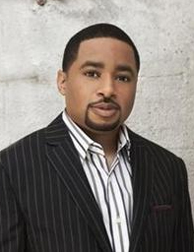
Black History Month Spotlight: Smokie Norful

bhm smokieEarlier this month, W. R. Smokie Norful picked up his latest Grammy Award.  Born in Little Rock, the son of an AME minister, he now pastors his own congregation in addition to his recording career.

He grew up in Pine Bluff, and was deeply involved in his fathers church. He was interested in music from a very young age, reportedly picking out one-finger piano melodies at age two. His parents supported him with music lessons, and unusual for his background, allowed him to experiment with and listen to the current R&B and soul music of the day as well as gospel music. Norful attended Pine Bluff High School, where he occasionally performed in school assemblies and programs. He graduated from the University of Arkansas at Pine Bluff as a History major.

After graduation, taught history for several years at Jack Robey Junior High School, Pine Bluff High School and Evanston Township High School.  For two years he also was the educational director for the Pine Bluff Housing Authority’s after-school program. He has also been a historian for the National Park Service and a congressional aid for the fourth congressional district.

He was ordained an elder in the African Methodist Episcopal church and has been a licensed preacher since 1997. Rev. Norful served as youth pastor, minister of music, and associate minister of St. John AME church in Pine Bluff, under the leadership of Rev. W.R. Norful Sr., and Teresa Norful until relocating to Chicago. He has also leads workshops for the National Baptist Convention USA, Inc.

Currently he serves as pastor of the Victory Cathedral Worship Center in Bolingbrook, which he founded in 2005.  He has since established a second campus also in the Chicago area.  In 2009, he was inducted into the Arkansas Black Hall of Fame.

For more on Smokie Norful and other inductees into the Arkansas Black Hall of Fame, visit the permanent exhibit at the Mosaic Templars Cultural Center. That museum is an agency of the Department of Arkansas Heritage.
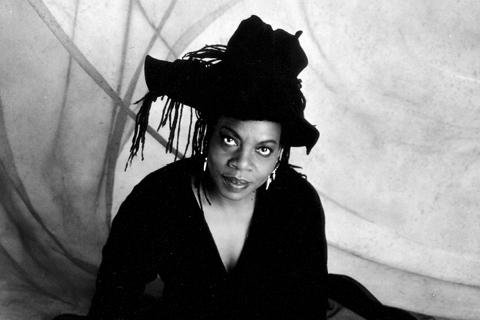
Black History Month Spotlight: Amina Claudine Myers

bhm aminaAmina Claudine Myers was born in Conway County and grew up in the Dallas/Fort Worth area.  She started singing and playing the piano and organ as a child in church choirs.  Returning to Arkansas, she graduated in concert music and music education from Philander Smith College in the early 1960s. After graduation, Myers moved to Chicago where she taught music, attended classes at Roosevelt University and worked with musicians such as Sonny Stitt and Gene Ammons. In 1966 she joined the AACM in Chicago, focusing on vocal compositions and arrangements, and recording her first jazz album with Kalaparusha Maurice McIntyre in 1969.

In 1976 Myers relocated to New York City, where she intensified her compositional work and expanded it into the realm of Off-Broadway productions. She also continued performing and recording as a pianist and organist. In 1985 she joined Charlie Haden’s Liberation Music Orchestra. Notable collaborations also include recordings with Bill Laswell, Marian McPartland, the Art Ensemble of Chicago, Archie Shepp, David Murray, Arthur Blythe, Frank Lowe, Leroy Jenkins, Jim Pepper and Ray Anderson.

In 1976 Amina moved to NY and became involved with the creative musicians that had migrated from Chicago and St. Louis, playing music in the lofts of NYC.  For a year she became a teacher at SUNY ((State Univ. of NY) developing the gospel chorus there.  Myers received several grants from the National Endowments for the Arts, Meet the Composer and NY Foundation for the Arts.                                                                           .

Myers began touring Europe with The Lester Bowie Quintet and The NY Organ Ensemble around 1978.  This began her European (all of Western Europe, Hungary, Turkey and Poland), Japanese, Canadian and U.S. performances of concerts, festivals and clubs as a soloist, with her trio, quartet, sextet and voice choir. This included workshops, seminars and residencies in universities and schools in the U.S. as well as Europe. Myers had the opportunity to perform in Cape Town, South Africa at The North Sea Jazz Festival with saxaphonist/composer Archie Shepp and to Accra, Ghana (West Africa) with composer/ vibraphonist Cecilia Smith during their jazz festival.

Myers’ works of blues, jazz, gospel and extended forms continues.  She teaches privately, giving lessons in theory, composition, piano, voice, organ, classical piano and assisting clients interested in stage/ performances. Amina  has  performed at Lincoln Center, Carnegie Hall, Town Hall, The Brooklyn Academy of Music, The Iridium Club, Birdland and other sites with her groups and with other artists and still continues to perform nationally and internationally.

She is a 2001 inductee into the Arkansas Black Hall of Fame.  For more on Amina Claudine Myers and other inductees into the Arkansas Black Hall of Fame, visit the permanent exhibit at the Mosaic Templars Cultural Center. That museum is an agency of the Department of Arkansas Heritage.

Charley Sandage and Harmony tonight at the Ron Robinson Theatre

sandage

In its continuing quest to cover the depth and breadth of Arkansas’ musical heritage, tonight Arkansas Sounds presents another concert at the Ron Robinson Theatre.

Charley Sandage and Harmony, a Mountain View trio comprising Mary and Robert Gillihan and Dave Smith, present original songs that tell stories about people and events that shaped Arkansas. The group uses an array of traditional instruments including fiddle, banjo, guitar, mandolin, autoharp, bass, button accordion, harmonica, pickin’ bow, and spoons.

The concert is free.  It starts at 7:30 pm at the Ron Robinson Theater.

The Charley Sandage & Harmony concert is supported by the Arkansas Arts Council, an agency of the Department of Arkansas Heritage, and the National Endowment for the Arts. This concert is also supported in part by a grant from the Arkansas Humanities Council and the Department of Arkansas Heritage.