
 Future Senator Joseph Taylor Robinson was born in Lonoke in August 26, 1872. In 1894 Robinson was elected to the Arkansas General Assembly for one term. From 1903 until 1913, he served in the US House of Representatives as a Congressman from Arkansas’ then-Sixth District.
He chose not to seek another term in Congress and ran for Governor in 1912. On January 3, 1913, sitting US Senator Jeff Davis died in office. Robinson was sworn in as Governor on January 16, 1913. Twelve days later he was chosen by the Arkansas General Assembly to become the next US Senator. He became the final US Senator to be selected by a legislator instead of popular vote. At the time, Senate terms started in March, so Robinson served as governor until March 8, 1913.
He rose through the ranks of the Senate and eventually became the first person to hold the title of Senate Majority Leader. In 1928, he was the Vice Presidential nominee for the Democratic Party. Four years later, he rode with Franklin and Eleanor Roosevelt to the inauguration ceremonies before FDR took the oath. He would be President Roosevelt’s go-to man on legislative issues.
Senator Robinson died in Washington D.C. on July 14, 1937. His wife was in Little Rock making preparations for a trip the couple was to take. Following his demise, Mrs. Robinson went to Washington to accompany her husband’s body back to Arkansas.
It was not until December 1937, that Senator Robinson’s name became attached to the municipal auditorium which Little Rock voters had approved in January 1937. Mrs. Robinson participated in the December 24, 1937, groundbreaking for the auditorium.
Naming the auditorium after him was not Little Rock’s first attempt at honoring Senator Robinson. In 1930, portions of Lincoln, Q, and Cantrell streets were renamed Robinson Drive in his honor. This was part of an effort to give Highway 10 (which had four different names as it wended through the City) a single name in Little Rock. A few months later the Senator requested that the original names be returned. Cantrell had been named in honor of a developer who was continuing to work in the area surrounding that street. The Senator felt it should be named after Mr. Cantrell. As part of that, the name Cantrell was extended to most of Highway 10 within the Little Rock city limits.
In 1935, on Senator Robinson’s ante-penultimate birthday, the Little Rock City Council coincidentally approved the plans for a municipal auditorium which would then be submitted to the Public Works Administration. It was this project which would become Robinson Auditorium.
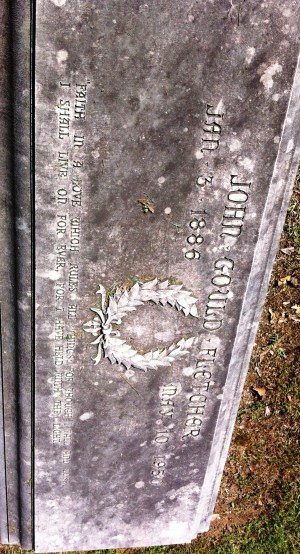 The Pulitzer Prizes are to be announced tomorrow (Monday, April 15). This year marks the 102nd anniversary of the prizes, though not all of the current categories have been around since 1917.
 The other Pulitzer Prize winner buried in Mount Holly is J. N. Heiskell, the longtime editor of the Arkansas Gazette. It was Heiskell, in fact, who asked Fletcher to compose the poem about Arkansas. Heiskell served as editor of the Gazette from 1902 through 1972. He died at the age of 100 in 1972.
 On March 3, 1866, William Marmaduke Kavanaugh was born in Alabama. He later moved with his family to Kentucky before coming to Little Rock as a newspaper reporter.
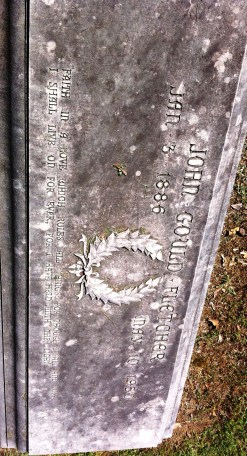 The Pulitzer Prizes are to be announced today. This year marks the 101st anniversary of the prizes, though not all of the current categories have been around since 1917.
 Little Rock Culture Vulture