Little Rock Look Back: Truman visits LR

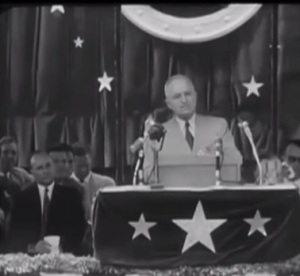
HST in LR2On June 10 and 11, 1949, President Harry S. Truman visited Little Rock.  He was here to participate in activities connected to the reunion of the 35th Division Association.  He had served in that division during World War I.

While he was in Little Rock, President Truman spoke several times.  He generally was accompanied by Governor Sid McMath and Mayor Sam Wassell.

On June 10, he spoke at Robinson Auditorium as part of a welcome ceremony, at a reception at the Hotel Marion and at a ball held at Robinson Auditorium.  His first address was at 3:48 pm and his final one was at 10:15 pm.  The next day he spoke at a breakfast and at a luncheon at the Hotel Marion.  He took pains at these times to stress he was here as a member of the 35th Division.  He also participated in a parade.

In his Presidential role, he spoke at the dedication of War Memorial Park on June 11.  His address took place inside War Memorial Stadium, which had been opened a few months earlier.  It was not a brief dedicatory speech, but instead was a lengthy treatise on foreign affairs.  The address was carried on nationwide radio.  The text of his address can be found here.

President Truman would return to Little Rock in July 1952.  He was in the state to speak at the dedication of Bull Shoals Dam. He did not make any formal remarks in Little Rock while in the city for that visit.


Little Rock Look Back: Harry S. Truman

HST in LR2

Truman speaking at War Memorial Park

On May 8, 1884, future US President Harry S. Truman was born in Lamar, Missouri.

Truman spent most of his youth on the family farm.  Serving in World War I, he saw combat in France and rose to the rank of Captain.  After the war, he returned to Missouri and became involved in Democratic Party politics.  After serving as a county official, he was elected US Senator in 1935 backed by the powerful Kansas City Pendergast machine.

In 1941, he headed a Senate Committee which exposed corruption and fraud in wartime contracts.  He also worked to show he was not just a puppet of the Pendergast machine (which was crucial once Pendergast went to prison).  In 1944, Democratic leaders were trying to knock the incumbent Vice President, Henry Wallace, off the ticket as FDR’s running mate.  Wallace was viewed as too far to the left.  Truman was a compromise candidate and was chosen to serve as FDR’s running mate.

He took office as Vice President in March 1945.  When President Roosevelt died in April 1945, they had spent little time together.  He oversaw the dropping of the atomic bomb on Japan in his hopes of ending World War II with fewer soldier casualties.

Following the war, he supported the creation of the United Nations, sought to contain communism through the Truman Doctrine, and worked to rebuild Europe.  In his quest to stem the spread of communism, he involved the US in the Korean War.

Domestically, he struggled with civil rights issues (including integrating the military) and labor issues (including the threat to draft striking railway workers into the military). His election in 1948 for a full four-year term is often seen as the biggest upset in US Presidential political history.

At the time he became President, Truman was still living in a small apartment with his wife and daughter.  Though they lived in the White House for a bit, they later vacated it for the Blair House so that the structure could be completely renovated.

By the approach of the 1952 presidential election, Truman’s popularity had waned again.  He half-heartedly ran in the New Hampshire primary because he did not like any of the candidates currently in the field.  After finishing second to Sen. Estes Keafauver, he announced he would not be a candidate.  He left office in 1953 and returned to Missouri.

From 1953 onward, he served as the senior statesman and father confessor of the Democratic Party.  Many political leaders made pilgrimages to visit him.  In 1965, President Johnson signed the bill establishing Medicare at the Truman Library with President and Mrs. Truman in attendance.

He died on December 26, 1972, after having been admitted to the hospital earlier in the month for pneumonia.

Truman made two visits to Little Rock while President.  In June 1949, he attended an Army division reunion and spoke at the dedication of War Memorial Park.  In 1952, he visited Little Rock while in the state to speak at the dedication of Bull Shoals Dam and Norfork Dam.

 

Little Rock Look Back: Mayor Sam Wassell

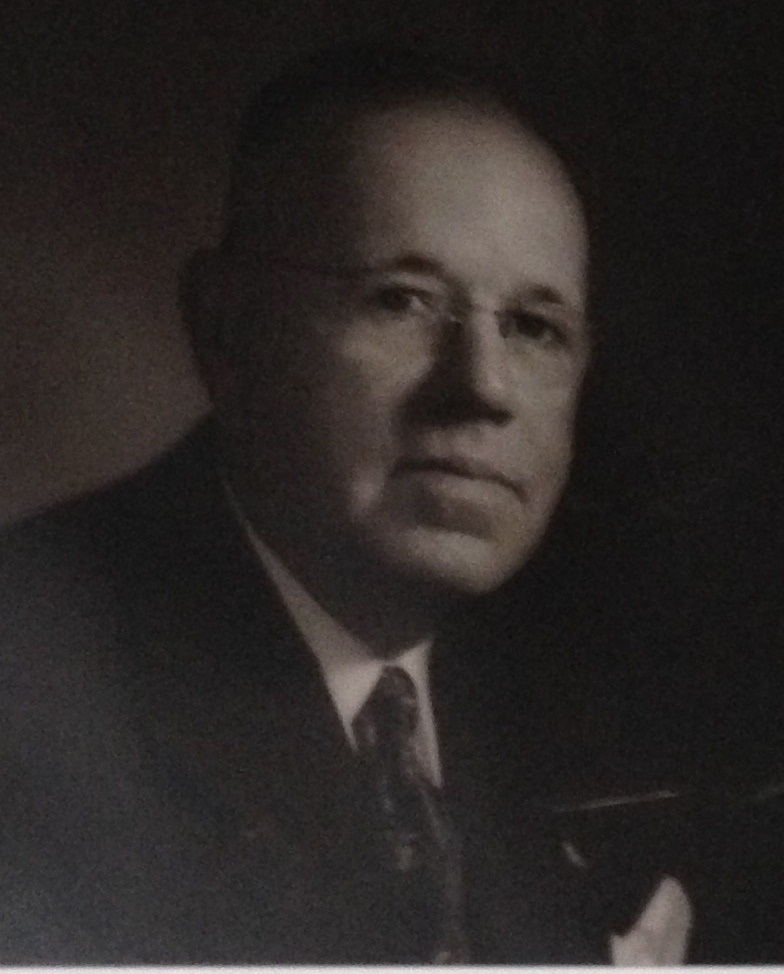
S WassellOn this date in 1883, future Little Rock Mayor Sam M. Wassell was born.  His grandfather John W. Wassell had been appointed Mayor of Little Rock in 1868.  He is the only Little Rock Mayor to be a grandson of another Little Rock Mayor.

Sam Wassell served on the Little Rock City Council from 1928 through 1934 and again from 1940 through 1946.  He is one of the few 20th Century Little Rock Mayors who previously served on the City Council.

Wassell was an attorney.  He practiced law privately and also served as an Assistant US Attorney.  In 1930, he ran unsuccessfully for the Democratic nomination for the US Congress representing the 5th Congressional District, which at the time included Little Rock.

Wassell ran for Mayor in 1947 and was unopposed in the general election.  He was unopposed in his bid for re-election in 1949.  During his second term, President Harry S. Truman visited Little Rock.  In 1951, he sought a third term as Mayor.  No Little Rock Mayor had sought a third consecutive term since 1923.  Though he received the Democratic nomination, the Republican party nominated Pratt Remmel who defeated Wassell by a 2 to 1 margin.

With a new USS Little Rock under construction, it is interesting to note that Mrs. Sam Wassell christened the previous USS Little Rock in 1944.  At the time, she was a City Councilor’s wife.

Mayor Wassell died on December 23, 1954 and is buried at Roselawn Cemetery in Little Rock.

Dinosaurs Abound at Clinton Center now through October

Clinton Dinos

Photo by the Clinton Presidential Center

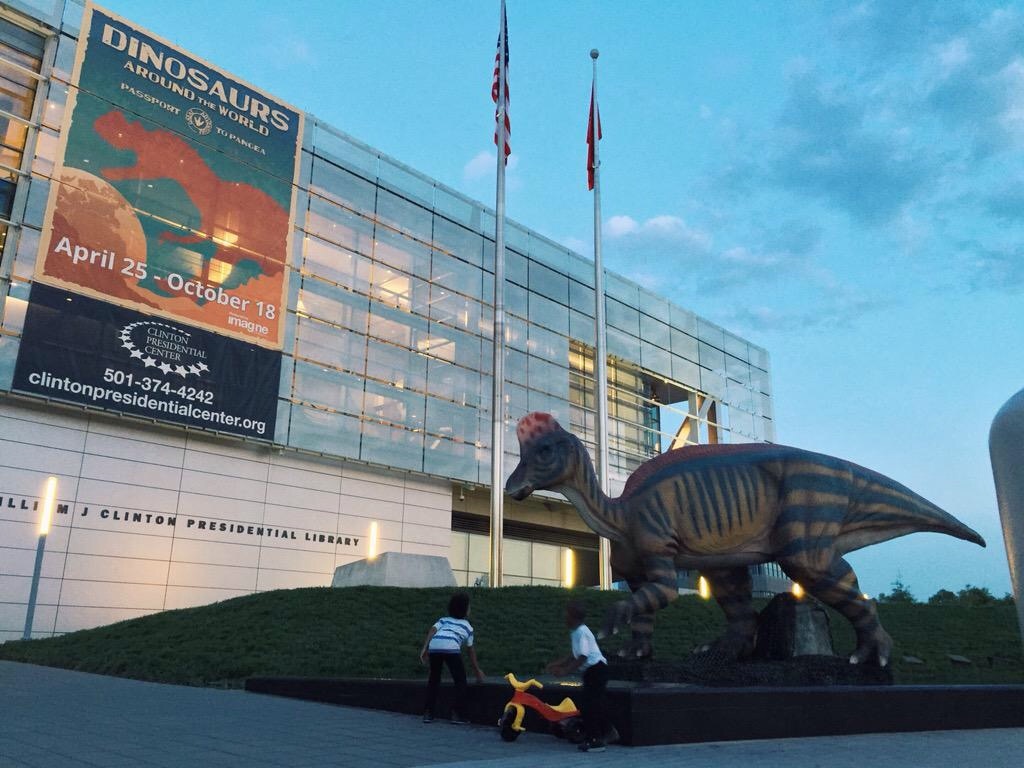
The Clinton Presidential Center presents Dinosaurs Around the World through October 18.

Dinosaurs Around the World takes you back in time on a dinosaur adventure and a tour of an Earth very different from today – a time before the continents as we know them existed, when lush landscapes covered Africa and greenery was the norm in Antarctica! With 13 life-sized animatronics, a multi-layered narrative, fossils, authentic casts, cutting-edge research and immersive design elements, you’ll experience the Age of Reptiles as it comes to life!
Dinosaurs Around the World invites you to grab your prehistoric passport to Pangea and discover how continental splits driven by plate tectonics, land bridges revealed after sea level fluctuations, and new landforms created by volcanic activity allowed dinosaurs to disperse to all corners of the globe. These left each of the seven continents with its own unique selection of these giant reptiles. During their 172 million year reign, dinosaurs adapted into a variety of forms including enormous long-necked herbivores, the mighty T. rex, and more.
“We are thrilled to host the global premiere of Dinosaurs Around the World and look forward to sharing this interactive and scientific exhibit with our visitors,” said Stephanie S. Streett, executive director of the Clinton Foundation. “Our summer exhibits are highly anticipated by the community because they are specifically designed to appeal to the entire family.”
In addition to advanced animatronics, Dinosaurs Around the World also features information about the geologic time scale, geology, geography, and climatology. The exhibition questions how the dinosaurs lived on each continent, how they interacted with each other, how geography impacted their behavior and diets, and what the continents were really like at the time.
The exhibit also features an area that chronicles the accomplishments of four U.S. Presidents who worked to preserve the fossil-rich areas in North America where dinosaurs once roamed. Exhibit artifacts include items from the administrations of Presidents Bill Clinton, Dwight D. Eisenhower, Franklin D. Roosevelt, and Harry S. Truman. This display includes a dinosaur skull replica on loan from the Grand Staircase-Escalante National Monument, an area that President Clinton designated as a national monument in 1996.
Dr. Gregory M. Erickson, a world-renowned dinosaur paleontologist, is the Senior Scientific Advisor for Dinosaurs Around the World. Dr. Erickson received his Bachelor of Science degree from the University of Washington, a Master’s degree from Montana State University, and a Ph. D. in Integrative Biology from the University of California, Berkeley and conducted post-doctoral research at Stanford University and Brown University before joining the faculty at Florida State University in Tallahassee. Dr. Erickson is currently the curator for the Florida State University Museum and holds research appointments with the American Museum of Natural History in New York, The Field Museum in Chicago, and University of Alaska’s Museum of the North in Fairbanks. Dr. Erickson is working with Imagine Exhibitions as an advisor, writer, and editor of the paleontology copy for the Company’s Dinosaurs Around the World exhibition.
Dinosaurs Around the World is open daily to the public from 9 a.m. to 5 p.m., Monday through Saturday, and 1 to 5 p.m. on Sunday, through October 18, 2015. Tickets are available to purchase at the Clinton Center.

Little Rock Look Back: Ark Municipal League 1944 President Sam Wassell

S WassellTonight, the Arkansas Municipal League kicks off its 2014 convention and celebrating its 80th anniversary this week here in Little Rock.  The first meeting took place in 1934 at the Hotel Marion.

Five Little Rock city leaders have served as President of the Arkansas Municipal League. On Friday, Mayor Mark Stodola will become the sixth Little Rock city official to be president of the Arkansas Municipal League.

In 1944, Alderman (and future Little Rock Mayor) Sam M. Wassell served as the eleventh AML President.  He was the first alderman to lead the group.

A Little Rock native, his grandfather John W. Wassell had been Mayor of Little Rock in 1868.  He is the only Little Rock Mayor to be a grandson of another Little Rock Mayor.

Sam Wassell served on the Little Rock City Council from 1928 through 1934 and again from 1940 through 1946.

Wassell was an attorney.  He practiced law privately and also served as an Assistant US Attorney.  In 1930, he ran unsuccessfully for the Democratic nomination for the US Congress representing the 5th Congressional District, which at the time included Little Rock.

Wassell ran for Mayor in 1947 and was unopposed in the general election.  He was unopposed in his bid for re-election in 1949.  During his second term, President Harry S. Truman visited Little Rock. As Mayor, he oversaw post-war growth in Little Rock. In 1951, he was not successful in his bid for a third term, losing to Pratt Remmel.

With a new USS Little Rock under construction, it is interesting to note that Mrs. Sam Wassell christened the previous USS Little Rock in 1944.

Mayor Wassell died on December 23, 1954 and is buried at Roselawn Cemetery in Little Rock.

Little Rock Look Back: Sam Wassell, LR’s 51st Mayor

IMG_5025On this date in 1883, future Little Rock Mayor Sam M. Wassell was born.  His grandfather John W. Wassell had been appointed Mayor of Little Rock in 1868.  He is the only Little Rock Mayor to be a grandson of another Little Rock Mayor.

Sam Wassell served on the Little Rock City Council from 1928 through 1934 and again from 1940 through 1946.  He is one of the few 20th Century Little Rock Mayors who previously served on the City Council.

Wassell was an attorney.  He practiced law privately and also served as an Assistant US Attorney.  In 1930, he ran unsuccessfully for the Democratic nomination for the US Congress representing the 5th Congressional District, which at the time included Little Rock.

Wassell ran for Mayor in 1947 and was unopposed in the general election.  He was unopposed in his bid for re-election in 1949.  During his second term, President Harry S. Truman visited Little Rock.  In 1951, he sought a third term as Mayor.  No Little Rock Mayor had sought a third consecutive term since 1923.  Though he received the Democratic nomination, the Republican party nominated Pratt Remmel who defeated Wassell by a 2 to 1 margin.

With a new USS Little Rock under construction, it is interesting to note that Mrs. Sam Wassell christened the previous USS Little Rock in 1944.  At the time, she was a City Councilor’s wife.

Mayor Wassell died on December 23, 1954 and is buried at Roselawn Cemetery in Little Rock.

Exhibit at Clinton Library pays tribute to March on Washington

(Copyright Estate of Stanley Tretick LLC)

(Copyright Estate of Stanley Tretick LLC)

The William J. Clinton Presidential Library opened a new exhibit last month in conjunction with the 50th anniversary of the March on Washington.

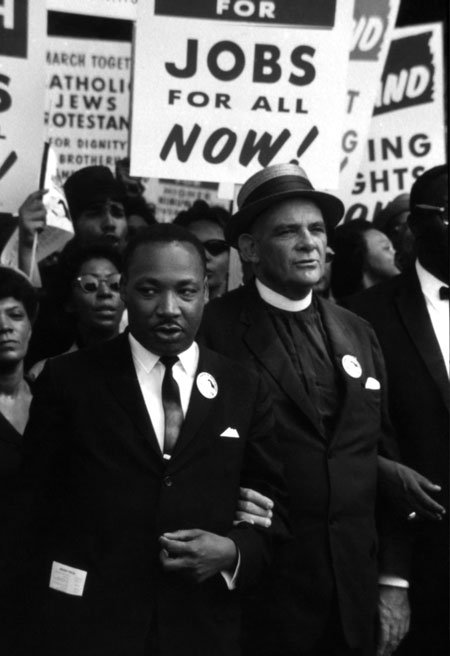
Entitled, “And Freedom for All: The March on Washington for Jobs and Freedom,” this exhibit pays tribute to the 50th anniversary of The March on Washington. The March took place in Washington, D.C., on August 28, 1963.  It was attended by approximately 250,000 people, it was the largest demonstration ever seen in the nation’s capital.

Stanley Tretick was assigned by LOOK magazine to cover the march behind-the-scenes with organizers and program speakers.  The exhibit features his pictures and videos of speeches by Daisy Bates, John Lewis and a performance by Mahaila Jackson.

Dr. Martin Luther King Jr’s “I Have a Dream” speech is also featured in the exhibit.  President Clinton declared it to be “the clearest clarion call to the more perfect union of America in the 21 century.”

Stanley Tretick was an American photojournalist who worked for United Press International, Look and People (where he was a founding photo editor). He covered every president from Harry S. Truman through George H. W. Bush. For UPI, he followed the Kennedy presidential candidacy.  He resigned when UPI would not assign him to the White House once JFK took office.  The President promised his broad access which prompted Look to hire him.  His photos of the Kennedys helped form the collective iconic images for which the family is now remembered.

The exhibit runs through November 17.