
Little Rock Look Back: St. Pat’s Day with Mayor Pat Robinson

On this date in 1900, future Little Rock Mayor Pat L. Robinson was born.  While it cannot be verified that he was indeed named after St. Patrick, it would be fairly reasonable to assume there might be a connection.  He was born in a community outside of Arkadelphia, but moved to Little Rock with his parents.

By the 1920s, Robinson was a rising star of Little Rock Democratic politics.  In April 1929, just weeks after his 29th birthday, he was elected Mayor.  He had twice been elected as City Attorney (1926 and 1928) and was one of the youngest to serve in that position.

During Mayor Robinson’s tenure, he announced plans to construct a new airport.  That project led to the creation of what is now the Bill and Hillary Clinton National Airport.  Mayor Robinson was also involved in helping Philander Smith College secure the property where it is now located.  In addition, during his tenure, what is now the Museum of Discovery was folded into the City of Little Rock.  Shortly after taking office, he championed several projects for approval by Little Rock voters. The projects he supported were approved; the ones he did not support did not pass.

Single at the time he was in office and generally considered good looking, Mayor Robinson was sometimes referred to as the “Jimmy Walker of the Southwest.” Walker was the handsome and charming Mayor of New York City at the time.

Mayor Robinson ran afoul of some of the Democratic party leaders. While the extent of the discord is not exactly known, it IS known that shortly after taking office he confronted the City Council over a special election.  Mayor Robinson sat silently while the City Council voted to approve a special election with a variety of options for voters. Only after the Council approved it did he disclose he only supported three of the initiatives.  In a bit of political brinkmanship, the Council subsequently voted to cancel the election. The Mayor vetoed their vote.  The aldermen chose not to attempt an override (though they had the votes based on disclosures made to the public and the press).  It appears that the relationship between the Mayor and the City Council never recovered.

IMG_4532During this era in Little Rock, it was customary for an incumbent mayor to be given a second term. But City Clerk Horace Knowlton challenged Robinson in the primary.  It was a bitter campaign with Robinson linking Knowlton to disreputable denizens and Knowlton charging Robinson with “an orgy of spending.”  Robinson initially came out 17 votes ahead. But after a review and a lawsuit, it was found that Knowlton ended up with 10 more votes and became the nominee.  At the time, being the Democratic nominee was tantamount to election.

After he left office, Robinson practiced law for a few years in Little Rock and then left the city.  He married a woman from England, Arkansas in the 1930s, but by the 1940 census, he was listed as divorced and living as a lodger.  He later served in the Army during World War II.  Robinson died in June 1958, and is buried in Clark County.

Little Rock Look Back: St. Pat’s Day with Mayor Pat L. Robinson

On this date in 1900, future Little Rock Mayor Pat L. Robinson was born.  While it cannot be verified that he was indeed named after St. Patrick, it would be fairly reasonable to assume there might be a connection.

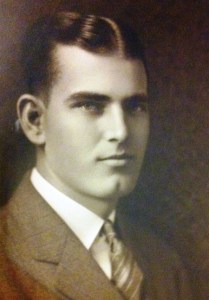
Robinson was a rising star of Little Rock Democratic politics.  In April 1929, just weeks after his 29th birthday, he was elected Mayor.  He had twice been elected as City Attorney (1926 and 1928) and was one of the youngest to serve in that position.

During Mayor Robinson’s tenure, he announced plans to construct a new airport.  That project led to the creation of what is now the Bill and Hillary Clinton National Airport.  Mayor Robinson was also involved in helping Philander Smith College secure the property where it is now located.  In addition, during his tenure, what is now the Museum of Discovery was folded into the City of Little Rock.  Shortly after taking office, he championed several projects for approval by Little Rock voters. The projects he supported were approved; the ones he did not support did not pass.

Single at the time he was in office and generally considered good looking, Mayor Robinson was sometimes referred to as the “Jimmy Walker of the Southwest.” Walker was the handsome and charming Mayor of New York City at the time.

Mayor Robinson ran afoul of some of the Democratic party leaders. While the extent of the discord is not exactly known, it IS known that shortly after taking office he confronted the City Council over a special election.  Mayor Robinson sat silently while the City Council voted to approve a special election with a variety of options for voters. Only after the Council approved it did he disclose he only supported three of the initiatives.  In a bit of political brinkmanship, the Council subsequently voted to cancel the election. The Mayor vetoed their vote.  The aldermen chose not to attempt an override (though they had the votes based on disclosures made to the public and the press).  It appears that the relationship between the Mayor and the City Council never recovered.

IMG_4532During this era in Little Rock, it was customary for an incumbent mayor to be given a second term. But City Clerk Horace Knowlton challenged Robinson in the primary.  It was a bitter campaign with Robinson linking Knowlton to disreputable denizens and Knowlton charging Robinson with “an orgy of spending.”  Robinson initially came out 17 votes ahead. But after a review and a lawsuit, it was found that Knowlton ended up with 10 more votes and became the nominee.  At the time, being the Democratic nominee was tantamount to election.

After he left office, Robinson practiced law for a few years in Little Rock and then left the city.  Records do not indicate where he went but he no longer appeared in the City of Little Rock directory by the early 1940s.  In the 1940 census he is listed as divorced and a lodger living with a couple.

Little Rock Look Back: St. Patrick’s Day with Mayor Pat L. Robinson

IMG_4517On this date in 1900, future Little Rock Mayor Pat L. Robinson was born.  While I cannot verify that he was indeed named after St. Patrick, it would be fairly reasonable to assume there might be a connection.

Robinson was a rising star of Little Rock Democratic politics.  In April 1929, just weeks after his 29th birthday, he was elected Mayor.  He had twice been elected as City Attorney (1926 and 1928) and was one of the youngest to serve in that position.

During Mayor Robinson’s tenure, he announced plans to construct a new airport.  That project led to the creation of what is now the Bill and Hillary Clinton National Airport.  Mayor Robinson was also involved in helping Philander Smith College secure the property where it is now located.  In addition, during his tenure, what is now the Museum of Discovery was folded into the City of Little Rock.  Shortly after taking office, he championed several projects for approval by Little Rock voters. The projects he supported were approved; the ones he did not support did not pass.

Single at the time he was in office and generally considered good looking, Mayor Robinson was sometimes referred to as the “Jimmy Walker of the Southwest.” Walker was the handsome and charming Mayor of New York City at the time.

Mayor Robinson ran afoul of some of the Democratic party leaders. Records don’t seem to indicate exactly what actions he took or did not take.  One thing that is brought up is that the City went into financial distress during his tenure.  Considering the Wall Street crash happened shortly after he took office, that financial state was not unique to Little Rock.

IMG_4532During this era in Little Rock, it was customary for an incumbent mayor to be given a second term. But City Clerk Horace Knowlton challenged Robinson in the primary.  It was a bitter campaign with Robinson linking Knowlton to disreputable denizens and Knowlton charging Robinson with “an orgy of spending.”  Robinson initially came out 17 votes ahead. But after a review and a lawsuit, it was found that Knowlton ended up with 10 more votes and became the nominee.  At the time, being the Democratic nominee was tantamount to election.

After he left office, Robinson practiced law for a few years in Little Rock and then left the city.  Records do not indicate where he went but he no longer appeared in the City of Little Rock directory by the early 1940s.  In the 1940 census he is listed as divorced and a lodger living with a couple.

Little Rock Look Back: Leap Day City Council meetings

CLR Leap Day 1932February 29 may come around only once every four years, but it is even rarer for the City of Little Rock to have City Council or City Board meetings on that date.

The most recent official meeting on a Leap Day was on February 29, 1932.  Mayor Horace A. Knowlton presided with all sixteen Aldermen present.  Among the items discussed were regulating of junk dealers, taxes on slot machines, a building condemnation, and setting a license fee for bowling alleys.

There were several issues related to cemeteries discussed throughout the evening.  One forbade any new burials in a section of Oakland Cemetery while another sought to prohibit the creation of any new cemeteries within the City limits.  The Council also passed a motion instructing the Mayor to notify the State Board of Health that the City was “seriously objecting and would strenuously oppose the establishment of a [new] Cemetery within the present boundaries of the City of Little Rock.”  The final cemetery issue was the acceptance of the annual report of the Mount Holly Cemetery Association.

That night the Council also passed a resolution to name the city government hospital as “Little Rock City Hospital.” The purpose of the name was to “clearly designate said hospital to the citizens of Little Rock as the hospital owned and operated by the City of Little Rock.”

The issue which seems to have taken up most of the time was overriding a Mayoral veto of a resolution opposing the firing of a firefighter.  The motion to sustain the veto ended in a tie. After the Mayor promised to rehire the firefighter as soon as a vacancy occurred, on alderman changed his vote and the veto was sustained.

The only other City Council meeting on a February 29 was in 1892.  Mayor H. L. Fletcher presided over the meeting.  The main focuses of that meeting were to discuss boundaries of various sewer districts, pay the monthly bills, approve the relocation of a house from 9th Street to the corner of 12th Street and Commerce Street and to bring certain City criminal penalties in line with a new state law.

Little Rock Look Back – Mayor Horace Knowlton

IMG_3227On November 25, 1872, future Little Rock Mayor Horace A. Knowlton Jr. was born.

In April 1920, he was elected City Clerk of Little Rock.  He served in that position until April 1931.  That year, he was chosen as the Democratic nominee for Mayor, denying incumbent Mayor Pat L. Robinson a second term.  The primary race against Mayor Robinson was close.  When the results were first announced, it looked as if Mayor Robinson had prevailed.  But after challenging ballots, Mr. Knowlton was declared the winner.  Since Little Rock was primarily a Democratic Party city, unsurprisingly Mr. Knowlton was elected Mayor in April 1931 and served two terms as Mayor.

He oversaw the start of some of President Roosevelt’s New Deal programs in Arkansas during his tenure.  In 1934, he negotiated the purchase of Gillam Park for the City which established the first public park in Little Rock for African Americans.  While a segregated park would one day be viewed as wrong, he was viewed as very progressive at the time for providing a public park for African Americans.  One of his final acts as Mayor was to participate in the groundbreaking for the Museum of Fine Arts building in City Park (now a portion of the Arkansas Arts Center building in MacArthur Park).

Following his departure from public office, Mayor Knowlton and his wife (who had been an elementary school teacher) eventually moved to Florida and resided in the Tampa Bay area.  His son and grandson (Horace III and Horace IV) have both been lawyers in the Tampa Bay area.  Mayor Knowlton died on February 14, 1965.  He is buried in the Oak Grove cemetery in Conway.

Little Rock Look Back: St. Patrick’s Day with Mayor Pat L.  Robinson 

On this date in 1900, future Little Rock Mayor Pat L. Robinson was born.  While I cannot verify that he was indeed named after St. Patrick, it would be fairly reasonable to assume there might be a connection, especially given the fact that he was Catholic.

Robinson was a rising star of Little Rock Democratic politics.  In April 1929, just weeks after his 29th birthday, he was elected Mayor.  He had twice been elected as City Attorney (1926 and 1928) and was one of the youngest to serve in that position.

During Mayor Robinson’s tenure, he announced plans to construct a new airport.  That project led to the creation of what is now the Bill and Hillary Clinton National Airport.  Mayor Robinson was also involved in helping Philander Smith College secure the property where it is now located.  In addition, during his tenure, what is now the Museum of Discovery was folded into the City of Little Rock.

Single at the time he was in office and generally considered good looking, Mayor Robinson was sometimes referred to as the “Jimmy Walker of the Southwest.” Walker was the handsome and charming Mayor of New York City at the time.

Mayor Robinson ran afoul of some of the Democratic party leaders. Records don’t seem to indicate exactly what actions he took or did not take.  One thing that is brought up is that the City went into financial distress during his tenure.  Considering the Wall Street crash happened shortly after he took office, that financial state was not unique to Little Rock.

IMG_4532During this era in Little Rock, it was customary for an incumbent mayor to be given a second term. But City Clerk Horace Knowlton challenged Robinson in the primary.  It was a bitter campaign with Robinson linking Knowlton to disreputable denizens and Knowlton charging Robinson with “an orgy of spending.”  Robinson initially came out 17 votes ahead. But after a review and a lawsuit, it was found that Knowlton ended up with 10 more votes and became the nominee.  At the time, being the Democratic nominee was tantamount to election.

After he left office, Robinson practiced law for a few years in Little Rock and then left the city.  Records do not indicate where he went but he no longer appeared in the City of Little Rock directory by the early 1940s.

Women’s History Month Throwback Thursday: The Fine Arts Club

In 1914, a group of women interested in visual art came together in Little Rock and formed The Fine Arts Club of Arkansas. 

In the early years, they gathered for regular discussions and taught art classes. 

Over time, the Fine Arts Club started acquiring artworks through donations. Originally they displayed these in the Pulaski County Courthouse in a room loaned to them for that purpose. 

Eventually, the County needed the space and the Fine Arts Club needed more room.  In the early 1930s, members approached Mayor Horace Knowlton with the suggestion of the City constructing a fine art museum. 

After securing funding for construction from the WPA, ground was broken and the Museum of Fine Arts opened in 1937 in City Park (now MacArthur Park).

Members of the Fine Arts Club staffed the museum as volunteers and docents as well as arranged for traveling exhibits. From the museum, the club continued to offer classes and guest lectures

By the mid-1950s, there was a desire for larger exhibit space, and the Fine Arts Club joined with the Junior League and the City of Little Rock in creating a new art museum.  

In 1963, the Arkansas Arts Center opened in MacArthur Park. This new facility encompassed the previous museum as well as additional spaces. With the hiring of professional staff to curate exhibits and teach classes, the Fine Arts Club transitioned to a volunteer corps and continued special monthly programming. 

Today, the purpose of the Fine Arts Club is to promote and extend the activities, usefulness and enjoyment of the Arkansas Arts Center.  The Fine Arts Club supports the Arkansas Arts Center by hosting programs featuring knowledgeable and dynamic speakers, and providing volunteers.