 On February 16, 1940, after three years of planning and construction including several delays due to lack of funding, the Joseph Taylor Robinson Memorial Auditorium officially opened. It was a cold, rainy night, but those in attendance did not care. (The concept of a municipal auditorium for Little Rock had first been raised in 1904, so this evening was truly a long time in the works.)
Searchlights painting arcs in the sky greeted attendees. They were borrowed from the Arkansas National Guard. Newspaper accounts noted that only a few of the men who attended were in tuxedos, most were simply in suits. The work to get the building opened had been so harried, that it was discovered there was not an Arkansas flag to fly in front of the building. Mayor Satterfield found one at the last minute courtesy of the Arkansas Department of the Spanish War Veterans.
The weather delayed arrivals, so the program started fifteen minutes late. Following a performance of Sibelius’ Finlandia by the fledgling Arkansas State Symphony Orchestra, Mayor J. V. Satterfield, Ewilda Robinson (the Senator’s widow), Emily Miller (the Senator’s sister-in-law and a member of the Auditorium Commission) and D. Hodson Lewis of the Chamber of Commerce participated in a brief ribbon cutting ceremony. Mrs Robinson cut the ribbon on her second attempt (once again proving that nothing connected with getting the building open was easy).
The ceremony was originally set to be outside of the building but was moved indoors due to the inclement weather. The ribbon cutting took place on the stage with the ribbon stretched out in front of the curtain. The opening remarks were broadcast on radio station KGHI.

Mr. Lewis, Mrs. Miller and Mayor Satterfield look on as Mrs. Robinson cuts the ribbon
Though he had previously discussed how he had voted against the auditorium in 1937 before entering public life, the mayor’s remarks that evening were appropriately gracious, statesmanlike and a testament to the effort he had invested to get it open upon becoming mayor. “We hope you have a very pleasant evening and hope further that it will be the first in a long series which you will enjoy in this, your auditorium.”
Tickets for the event, advertised as being tax exempt, were at four different pricing levels: $2.50, $2.00, $1.50 and $1.00.
The estimated attendance was 1700. Following the ribbon cutting, the main performance took place. The headliner for the grand opening was the San Francisco Opera Ballet accompanied by the new Arkansas State Symphony Orchestra (not related to the current Arkansas Symphony Orchestra). The featured soloist with the ballet was Zoe Dell Lantis who was billed as “The Most Photographed Miss at the San Francisco World’s Fair.”
Auditorium Commission chairman E. E. Beaumont, a local banker, noted that while event planners knew the evening of ballet and classical music would not appeal to everyone, it was intended to show the wide range of offerings that would be suitable in the new space. Earlier in the week, children’s theatre performances had been offered to school groups through the auspices of the Junior League of Little Rock.
At the same time that the gala was going on upstairs in the music hall, a high school basketball double-header was taking place in the downstairs convention hall. North Little Rock lost to Beebe in the first game, while the Little Rock High School Tigers upset Pine Bluff in the marquee game.

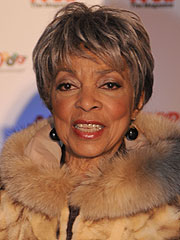 Future Oscar nominee Ruby Dee was in Little Rock in 1992 for the filming of the Disney Channel movie The Ernest Green Story. The film was produced by Carol Ann Abrams, whose son J. J. Abrams is now an in-demand director and producer.
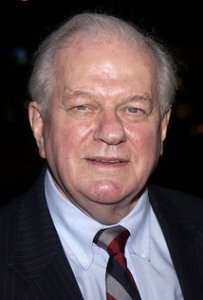 In 1980, future two time Oscar nominee Charles Durning came to Little Rock to film the TV movie Crisis at Central High. In the movie he played Jess Matthews, who was principal at Central High during the desegregation of the school. Girls Vice Principal Elizabeth Huckaby had written a book about her experiences during that time which was published earlier in 1980.
 In 1980, Oscar winner Joanne Woodward came to Little Rock to film the TV movie Crisis at Central High. In the movie she played Elizabeth Huckaby, who was vice principal for girls at Central High during the desegregation of the school. Huckaby had written a book about her experiences which was published earlier in 1980.
 Over the years, Robinson Center Music Hall has played host to numerous Oscar winners and Oscar nominees.
 On April 5, 1965, the Academy Award for Best Documentary, Short Subject went to the film “Nine from Little Rock.”
 Little Rock Culture Vulture