Little Rock Look Back: Mayor Byron R. Morse

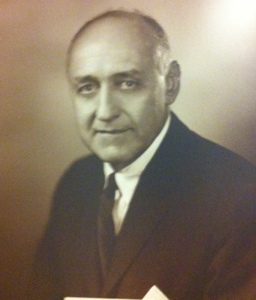
20130222-185157.jpgOn February 23, 1917, future Little Rock Mayor Byron R. Morse was born. A founder of the real estate firm of Rector-Phillips- Morse, he was long active in civic affairs of Little Rock.

Mayor Morse was first elected to the City Board of Directors in November 1960. In 1963, he was chosen as Little Rock Mayor. After serving two years as Mayor, he chose to not seek re-election to the City Board. In 1980, he was appointed to the City Board to fill out an unexpired term. He was later asked to fill another unexpired term but declined.

In 1983, he was elected national president of the Society of Industrial and Office Realtors. Mayor Morse also served as president of the Little Rock Chamber of Commerce, the Little Rock United Way, the Little Rock Red Cross, and was a member of the Board of Directors of the Little Rock Boy’s Club. He was a member of the Fifty for the Future. On July 25, 2001, Mayor Morse died.

LR Look Back: Mayor W. W. Stevenson

On this date in 1797, future Little Rock Mayor William Wilson Stevenson was born in South Carolina.  In 1811, he came to Arkansas when his family settled in Batesville.  An ordained Presbyterian minister, he married Ruana Trimble in 1821 and had two children.  After she died, he married Maria Tongray Watkins in 1831 and had two more children.

In 1831, he ran for Mayor in the first election for the office but was defeated by Dr. Matthew Cunningham.  The next year he ran to succeed Cunningham and was elected.  After leaving the Mayor’s office on December 31, 1833, he continued public service.  He was State Commissioner for Public Buildins in 1839.

In 1849, he delivered the funeral oration at the ceremony for Hon. Ambrose H. Seveier.  Later that year, he was hired as a geologist for the Little Rock and California Association which was created to take advantage of the gold rush.  He and his two oldest sons moved to California and never returned to Arkansas. He died in 1888.

No known photograph of Mayor Stevenson is known to exist.

LR Look Back: Mayor Martin Borchert

Martin John BorchertOn this date in 1916, future Little Rock Mayor Martin Borchert was born in Stuttgart.  After graduating high school he moved to Little Rock.  He started work at ACME Brick and spent 21 years there before engaging in other business interests.  Among these businesses were Martin Borchert Co., ASCO Hardware, Dtection Systems Inc. and Component Systems Inc.  In 2005 he was inducted into the Arkansas Construction Hall of Fame.

Mayor Borchert was elected to the Little Rock City Board of Directors in 1964 and served from January 1965 through December 1968. He chose not to seek a second term.  In 1967 and 1968 he served as Mayor of Little Rock. During this time, he laid out the vision for what has become Riverfront Park along the Arkansas River.

Other civic achievements included being a member of the Board of the Little Rock Chamber of Commerce, being on the Governor’s Citizens Advisory Committee, a member of the Pulaski County Quorum Court, vice chairman of the Arkansas Planning Commission, and being on the Little Rock Air Force Base Community Council. In 1967 he served on the President’s National Advisory Council to the Small Business Administration. Mayor Borchert served on the Little Rock Water Commission, including a tenure as chairman. In 1985, he was chairman of the Metropolitan Transit Policy Board and as chairman oversaw the transfer of the Central Arkansas Transit system to the Central Arkansas Transit Authority. One of the achievements of which he was very proud of was that he was one of the very first in Arkansas to receive an Adopt the Highway road.

Mayor Borchert was married for 57 years to Rosemary “Biddy” Branch Borchert.  They had two children, a son, John “Topper” Borchert and a daughter, Leslie Borchert Wilson.

Little Rock Look Back: Mayor Charles Bussey

Future Little Rock Mayor Charles Bussey was born on this date in 1918.  Throughout his life he was a trailblazer.  He was the first African American Sherriff’s Deputy in Pulaski County and expanded the Junior Deputy program into the African American community.
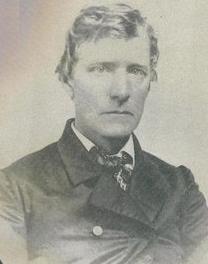
In 1968 he became the first African American elected to the Little Rock City Board of Directors. He served from 1969-1977 and again from 1979 through 1991.  In 1981 he was selected by his fellow City Directors to serve as Little Rock’s Mayor, which made him the first African American Mayor of Little Rock.

Throughout his lifetime Mayor Bussey championed youth outreach efforts.  He also was active in the Arkansas Municipal League, National League of Cities, West Little Rock Rotary Club, Elks, Shriners and many other organizations.

In 2006 he was posthumously inducted into the Arkansas Black Hall of Fame.  The previous year, 20th Street in Little Rock was renamed in his honor.

Little Rock Tree Week – Capital Hotel

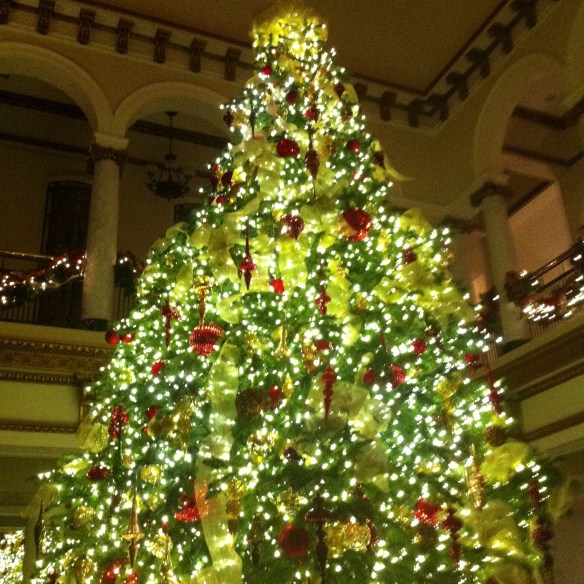
IMG_3580As Little Rock Tree Week continues, today’s feature is the Capital Hotel.  In addition to enjoying the tree, visitors to the Capital Hotel can admire Chef Tandra’s gingerbread village as well as musical performances in the lobby.

The schedule for the remainder of this week is:

• Don Roberts Elementary on Tue, Dec 18 at Noon
• Violinists on Tue, Dec 18 at 5:30pm
• Capital String Quartet on Wed, Dec 19 at 5:30pm
• St. Paul United Methodist Bells on Wed, Dec 19 at 7pm
• Booker Arts Magnet on Thu, Dec 20 at 10:15am

Among the groups performing earlier this month have been: Forest Heights Middle School, Horace Mann Magnet, eSTEM, Pulaski Academy, Williams Magnet, Episcopal Collegiate, Mount St. Mary Academy, Central Arkansas Christian, Sylvan Hills High School, Holy Souls School, Bale Elementary, Cabot Middle School and the UCA Hornaments.

The arrival of the tree at the Capital Hotel.

The arrival of the tree at the Capital Hotel.

The tree and other decorations at the Capital Hotel are overseen by Tipton Hurst.  The Hurst family is descended from Little Rock’s first hoteliers, the Peay family. The Peay Hotel stood a few blocks away from where the Capital Hotel was constructed in the 1870s.

The tree arrived on a Friday afternoon. It took several hours to get it raised into place and secured.  It took all weekend for a crew to decorate the tree, which has thousands of lights wrapped around its branches.  The tree was officially lit on Monday, December 3.

Little Rock Look Back: Mayor Gordon N. Peay

On this date in 1819 future Little Rock Mayor Gordon Neill Peay was born.  The Peay family arrived in Arkansas from Kentucky in 1825.  They quickly became one of Little Rock’s leading families.  Mayor Peay’s father, Nicholas Peay served on the Little Rock Board of Trustees (which existed before the town was incorporated) and later served on the City Council and was acting mayor.

Godon N. Peay served as mayor of Little Rock from 1859 to 1860.  During the Civil War, Peay served as Captain and later Colonel of the Capital Guard.  He later received a pardon from the federal government.

The Peay family owned the Peay Hotel, Little Rock’s first hotel, and were also co-founders of what became Worthen Bank.  They were also a founding family of Christ Episcopal Church. Mayor Peay later served as Pulaski County Chancery Clerk.

He died on December 14, 1876 and is buried at Mt. Holly Cemetery along with many members of his family.  His great-grandson Joseph Barber Hurst, Sr. served on the Little Rock City Board of Directors from 1967-1971. His great-great-granddaughter-in-law Stacy J. Hurst currently serves on the City Board of Directors.

Sculpture Vulture: THE CENTER

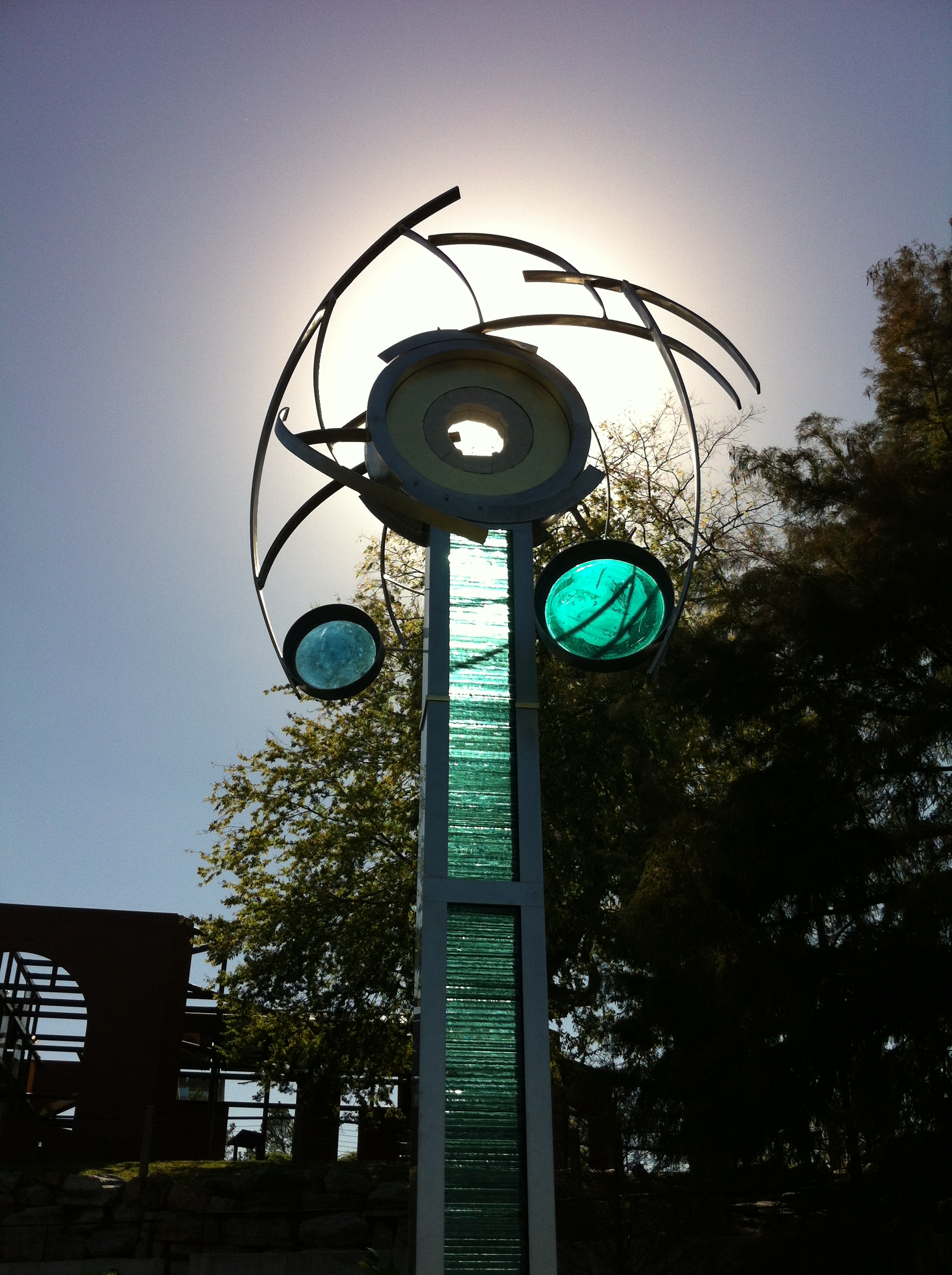
One of Little Rock’s two newest sculptures is featured in the Sculpture Vulture today.  Chapel’s THE CENTER was dedicated on Friday, October 19. It is located in Riverfront Park just to the west of the Junction Bridge and north of the Peabody Playground. The piece was commissioned in 2011 at the 5th annual Sculpture at the River Market.

Chapel uses a variety of materials including steel and colored glass to create this tall sculpture. It represents that Little Rock is the center of the state and Riverfront Park (and the nearby “Little Rock”) represent the heart of the City.   The steel evokes the nearby Junction bridge and the blue and green glass echo the nearby grass and water.  (Green and Blue are also Little Rock’s colors, so this was a happy accident by the sculptor as well.)  The textured glass that is in the center of the column is also evocative of the Arkansas River.

Chapel is an award winning sculptor who creates both abstract and figurative pieces working in a variety of media.  Though his work can be seen worldwide, most of his commissions have been in the south and west. He is a member of the National Sculpture Guild and Society of Animal Artists among many other professional associations.