Little Rock Look Back: LaHarpe Sees a Rock

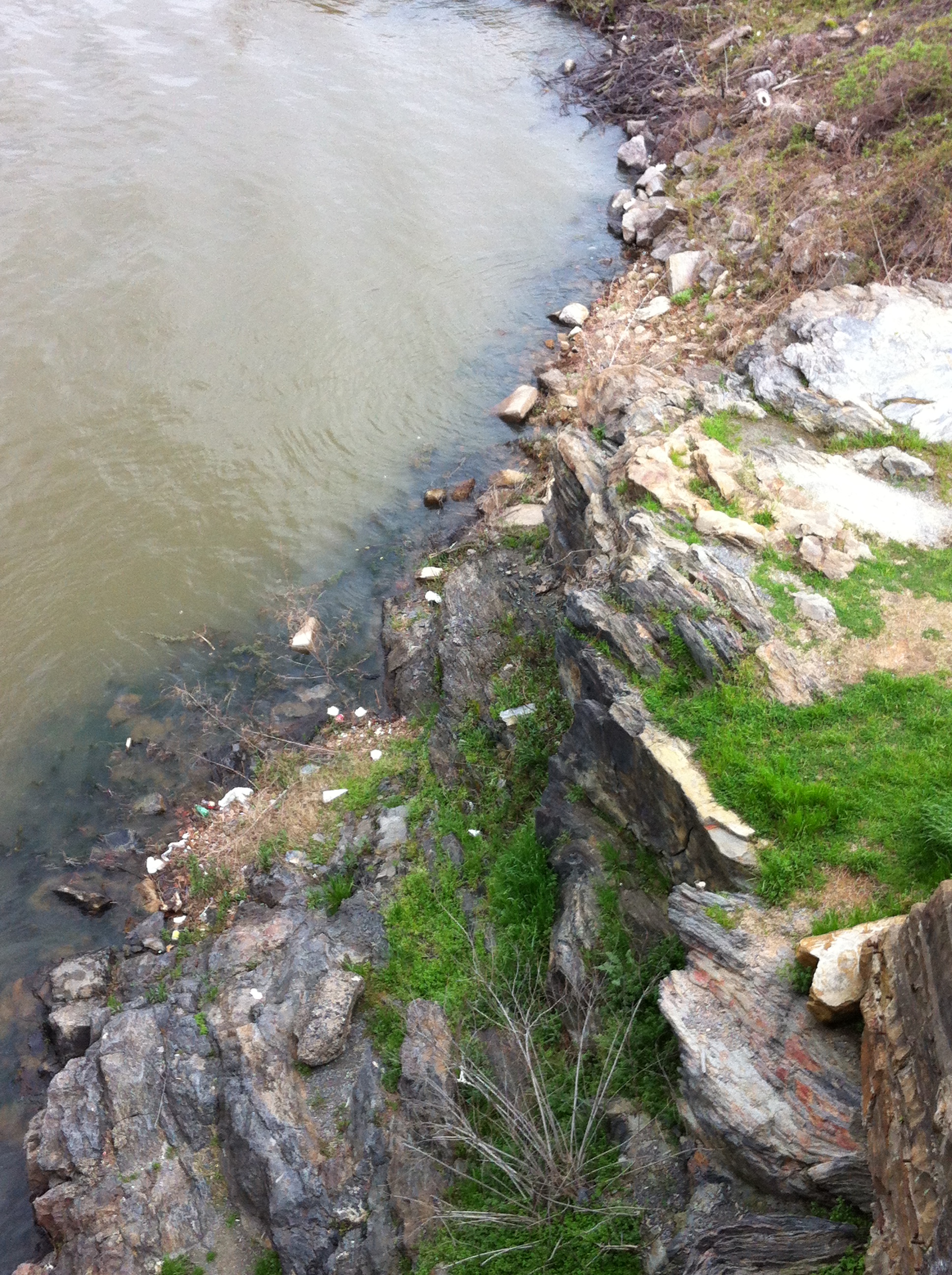
IMG_4805On April 9, 1722, French explorer Jean-Baptiste Bénard de La Harpe rounded the bend of the Arkansas River and saw La Petite Roche and Le Rocher Français.  He had entered the mouth of the Arkansas River on February 27 after traveling up the Mississippi River from New Orleans.

Though La Harpe and his expedition are the first Europeans documented to have seen La Petite Roche, the outcropping of rocks was well-known to the Quapaw Indians in the area.  The outcropping jutted out in the Arkansas River and created a natural harbor which provided a perfect place for boats to land.

The rock outcropping is the first one visible along the banks of the Arkansas River.  It marks the place where the Mississippi Delta meets the Ouachita Mountains.  Geologists now believe that the Little Rock is not the same type of rock as the Ouachita Mountains and more closely matches the composition and age of mountains in the western US.

In 1813, William Lewis became the first European settler to live near La Petite Roche but only stayed a few months.  Speculators and trappers continued to visit the area throughout the 1810s. During that time, the outcropping became known informally as the Little Rock.

La Petite Roche had become a well-known crossing when the Arkansas Territory was established in 1819. The permanent settlement of ‘The Rock’ began in the spring of 1820, and the first building has been described as a cabin, or shanty, and was built on the bank of the river near the ‘Rock.’ In March 1820, a Post Office was established at the ‘Rock’ with the name “Little Rock.”

Over the years, La Petite Roche was altered.  In 1872, Congress authorized the building of a railroad bridge. A pier for the bridge was built at the location of the La Petite Roche which caused the removal of several tons of rock.  The bridge was never built.  When the Junction Bridge was built in 1899, even more rock was removed in the process of erecting part of the bridge on top of the rock.  It was not viewed as being disrespectful of the City’s namesake at the time.  Indeed, it was viewed as a testament to the sturdiness of the rock.

In 2010, La Petite Roche plaza opened in Riverfront Park.  It celebrates the history of La Petite Roche and explores its importance to various aspects of Little Rock’s history and geography.
Little Rock Look Back: LR Mayor Werner Knoop

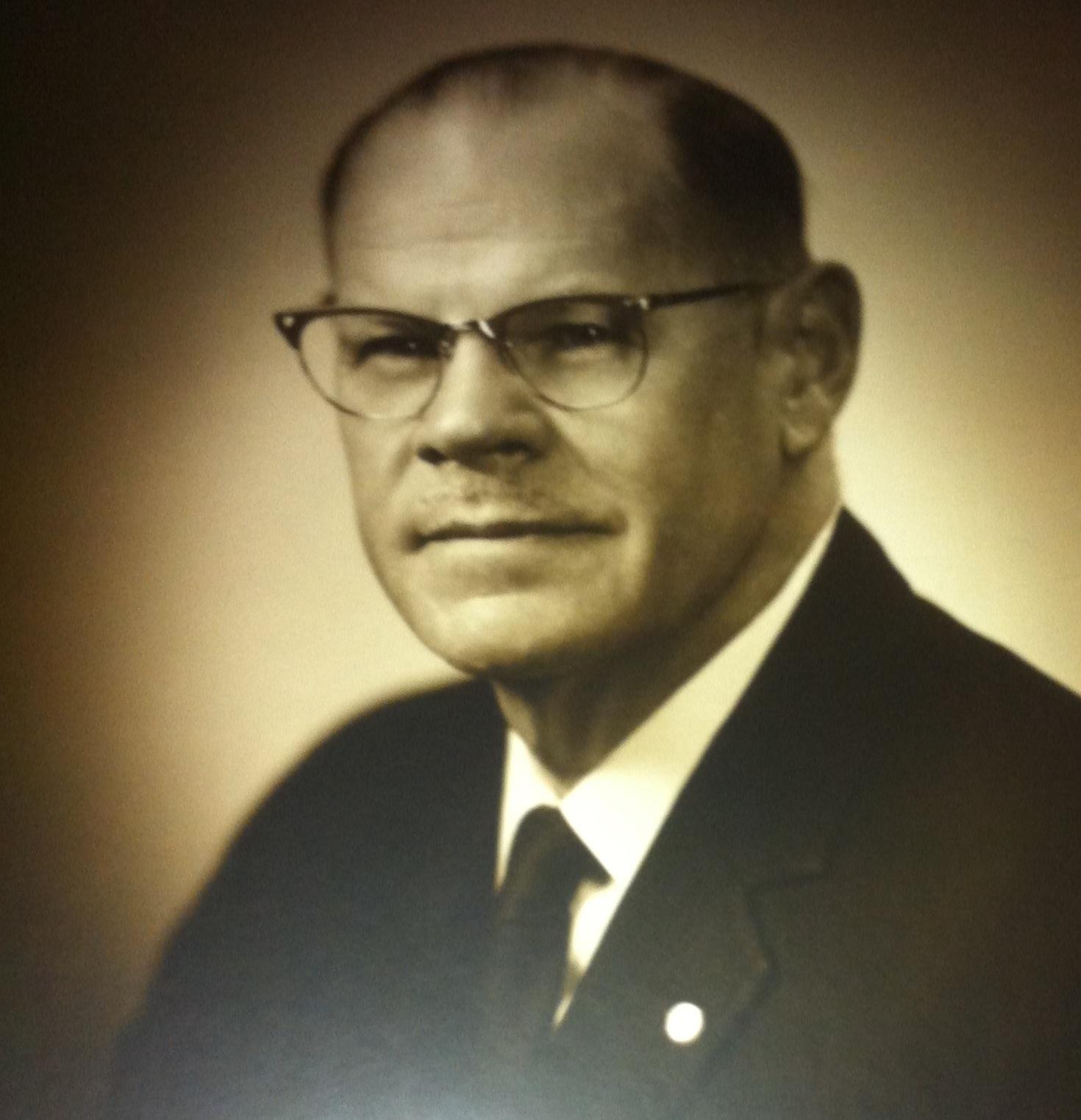
Mayor KnoopTo Little Rock citizens under a certain age, the name Knoop means Knoop Park — a picturesque park tucked away in a pocket of Hillcrest.  There are, however, still many who remember Werner C. Knoop as a business and political leader who helped shape Little Rock as a modern city.

Knoop was born on March 30, 1902.

In 1946, Knoop joined with Olen A. Cates and P. W. Baldwin to form Baldwin Construction Company in Little Rock.  Knoop had previously founded Capital Steel Company and established his business reputation there.  From 1945 through 1951, he served on the Little Rock School Board.

Following a series of political scandals, efforts were undertaken for Little Rock to shift from Mayor-Council to City Manager form of government.  Even before the desegregation of Little Rock Central put the city in the eyes of the world, an election for new leaders had been set for November 1957.  Knoop was on a “Good Government” slate and was one of the members elected.

At the first meeting of the new City Board, Werner C. Knoop was chosen by his fellow directors to serve as Little Rock Mayor.  Knoop served as Mayor until December 1962.  For the first several months in office, Little Rock had no City Manager so Knoop oversaw the transition of City staff as the forms of government changed.

Though City Hall generally stayed out of school district matters, that did not mean that the public viewed the two entities separately.  In September 1959, the Baldwin Construction offices were bombed as part of a series of terrorist activities protesting the desegregated reopening of all Little Rock high schools.

Downtown LR as viewed from Knoop Park

Downtown LR as viewed from Knoop Park

After two terms on the City Board, Knoop decided against seeking a third term.  He concluded his elected public service on December 31, 1962.  Following his time on the City Board, Knoop did not retire from Civic Affairs.  In 1970, he served as Chairman of the Little Rock Chamber of Commerce.   The previous year he served as President of the Arkansas Chapter of Associated General Contractors.

Mayor Knoop died in July 1983.  He is buried at Roselawn Memorial Park next to his wife Faith Yingling Knoop, a renowned author.

In the 1930s, Knoop moved into an Art Moderne house on Ozark Point in Hillcrest.  It was adjacent to Little Rock Waterworks property which was developed around the same time.  Eventually much of the land was deeded to the City for creation of a park.  In 1989, it was named in tribute to long-time neighbor Knoop in honor of his lifetime of service to Little Rock.

Drain Smart Public Art contest announced

DrainSmartA coalition of state and local agencies and nonprofit organizations have announced the launch of Drain Smart — a public art program aimed at raising awareness on education and protection of local streams.

Like most cities, Little Rock’s storm drains flow directly into our streams. When it rains, water picks up everything in its path and carries it through storm drains into streams and creeks. Drain Smart is an engaging public-education and environmental program that uses art to communicate the importance of reducing the litter that flows into storm drains.

Program coordinators are calling for local artists to submit their ideas for murals that would be painted on 18 storm drains in the downtown and midtown areas of Little Rock. Supplies for these projects will be provided to the artists.

Artists have until April 3 to submit their applications along with a sketch of their idea. An artist selection committee will choose 18 artists to paint a mural on the designated storm drains.  Artists will be eligible for a final prize to be given to the winner chosen by public voting. This exciting project gives artists the opportunity to express themselves via semi-permanent public art in a series of small-scale outdoor storm drain murals. This art will then serve to educate the public on watershed and stream protection.

Partners in this inaugural project include the City of Little Rock, Audubon Arkansas, Arkansas Department of Environmental Quality, Little Rock Parks and Recreation, Friends of Fourche Creek, Keep Little Rock Beautiful, Studio Main, The Bernice Garden, MacPark Group, The Arkansas Arts Center and Sculpture at the River Market. Sherwin Williams, Walmart and Seal Krete will donate supplies and materials.

Artists will be notified by April 10 and all art will be completed by June 1.

For more information on this project, the timeline, rules and artist application visit www.drain-smart.org.

Little Rock Look Back: Robert Catterson–Doctor, Soldier, LR Mayor

R_F_Catterson_BGen_ACWOn this date in 1835, future Little Rock Mayor Robert Francis Catterson was born in Indiana, the son of Irish immigrants.  He studied medicine in Ohio and established a medical practice in Indiana upon completion of his studies.

With the outbreak of the Civil War, he enlisted as a private in the Union Army.  Throughout the war, he was promoted and was eventually mustered out as a brigadier general in 1866.  During his service, he participated in the siege of Vicksburg, the Battle of Chattanooga, the Atlanta Campaign and Sherman’s March to the Sea.

Following his departure from the military, Catterson decided not to return to medical practice.  He moved to Arkansas and worked for a brief time in the cotton commodities field.  He later returned to military service commanding a militia fighting the Ku Klux Klan.  Catterson was appointed US Marshal and would also command the Brooks troops during the Brooks-Baxter War in Little Rock.

In November 1871, he was elected Mayor of Little Rock. His election ended a tumultuous two-year period where the Little Rock City Council tried unsuccessfully to remove Mayor A. K. Hartman.  Mayor Catterson served a relatively quiet two year term in office until November 1873.

Following the completion of his term, Mayor Catterson moved to Minnesota. He later moved to Texas where he died on March 30, 1914 at the age of 79.  He is buried in the San Antonio National Cemetery.

Little Rock Look Back: Rev. W. W. Stevenson, LR 2nd Mayor

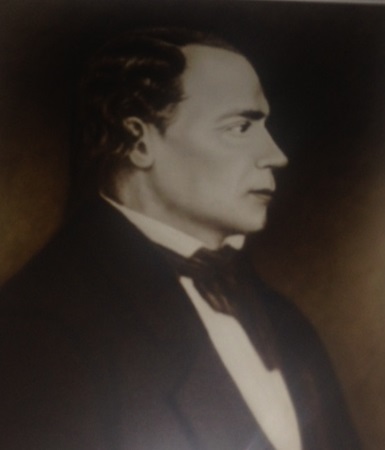
Mayor StevensonOn January 29, 1797, future Little Rock Mayor William Wilson “W. W.” Stevenson was born in South Carolina.

In 1811, he came to Arkansas when his family settled in Batesville.  An ordained Presbyterian minister, he married Ruana Trimble in 1821 and had two children. After she died, he married Maria Tongray Watkins in 1831 and had two more children.

In 1831, he ran for Little Rock Mayor in the first election for the office but was defeated by Dr. Matthew Cunningham.  The next year he ran to succeed Cunningham and was elected.  After leaving the Mayor’s office on December 31, 1833, he continued public service.  He was State Commissioner for Public Buildings in 1839.

In 1849, he delivered the funeral oration at the ceremony for Hon. Ambrose H. Sevier.  Later that year, he was hired as a geologist for the Little Rock and California Association which was created to take advantage of the gold rush.  He and his two oldest sons moved to California and never returned to Arkansas. He died in 1888.

Little Rock Look Back: Martin Borchert, LR 57th Mayor

Martin John BorchertOn January 16, 1916, future Little Rock Mayor Martin Borchert was born in Stuttgart.  After graduating high school he moved to Little Rock.  He started work at ACME Brick and spent 21 years there before engaging in other business interests.  Among these businesses were Martin Borchert Co., ASCO Hardware, Dtection Systems Inc. and Component Systems Inc.  In 2005 he was inducted into the Arkansas Construction Hall of Fame.
Mayor Borchert was elected to the Little Rock City Board of Directors in 1964 and served from January 1965 through December 1968. He chose not to seek a second term.  In 1967 and 1968 he served as Mayor of Little Rock. During this time, he laid out the vision for what has become Riverfront Park along the Arkansas River.

Other civic achievements included being a member of the Board of the Little Rock Chamber of Commerce, being on the Governor’s Citizens Advisory Committee, a member of the Pulaski County Quorum Court, vice chairman of the Arkansas Planning Commission, and being on the Little Rock Air Force Base Community Council. In 1967 he served on the President’s National Advisory Council to the Small Business Administration. Mayor Borchert served on the Little Rock Water Commission, including a tenure as chairman. In 1985, he was chairman of the Metropolitan Transit Policy Board and as chairman oversaw the transfer of the Central Arkansas Transit system to the Central Arkansas Transit Authority. One of the achievements of which he was very proud of was that he was one of the very first in Arkansas to receive an Adopt the Highway road.

Mayor Borchert was married for 57 years to Rosemary “Biddy” Branch Borchert.  They had two children, a son, John “Topper” Borchert and a daughter, Leslie Borchert Wilson.  He died on May 11, 2007.


Bicentennial of Battle of New Orleans

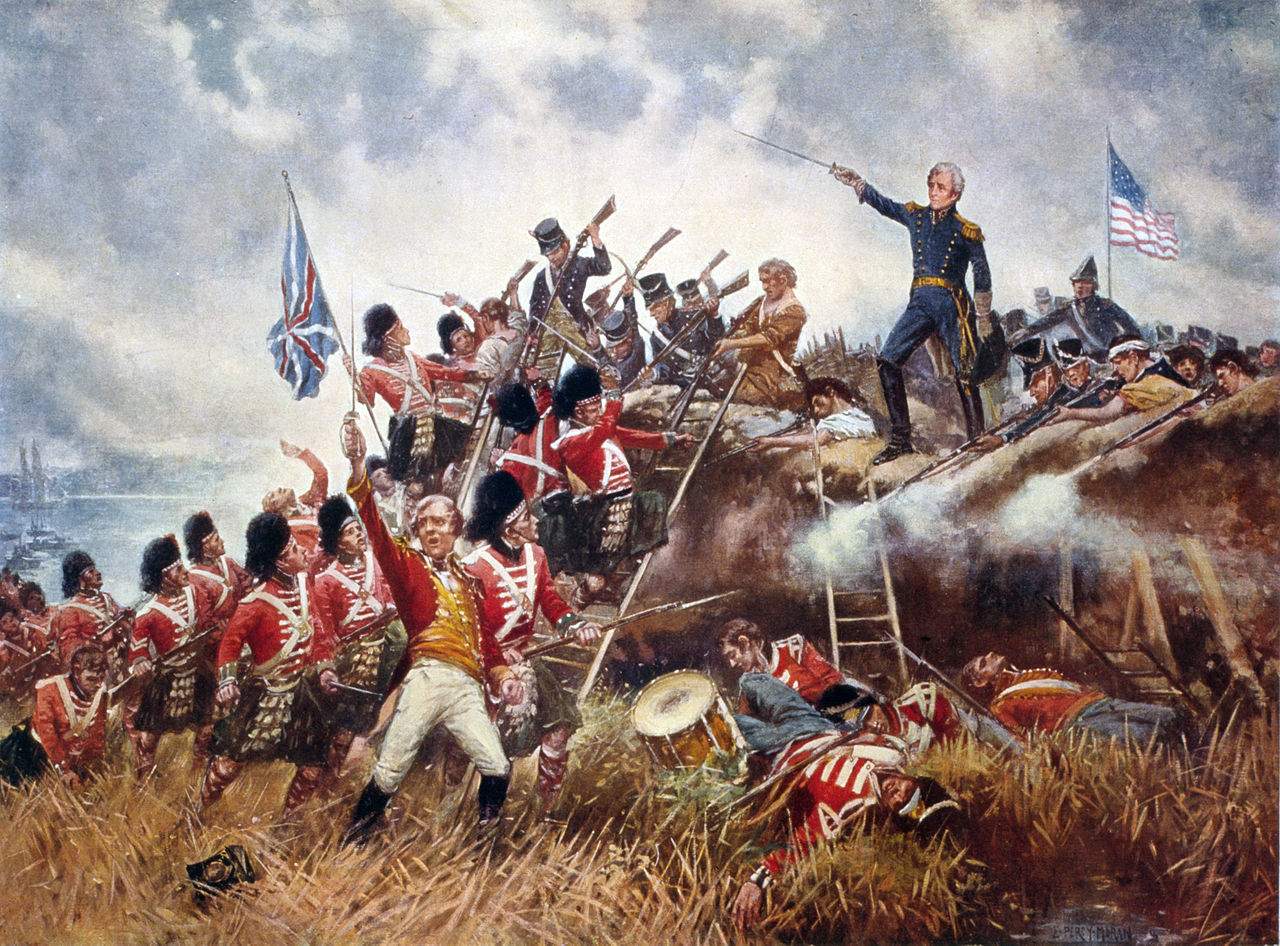
1280px-Battle_of_New_OrleansToday marks the 200th anniversary of the conclusion of the Battle of New Orleans.  It relates to Little Rock in a couple of ways.

First, it made General Andrew Jackson a national hero which helped propel him to the presidency.  It was while he was president that Arkansas was admitted to the Union.

Secondly, one of his soldiers in the battle was a young Roswell Beebe.  Jackson and Beebe became friends and maintained that friendship throughout their lives. Beebe later moved from Louisiana to Arkansas and became a leading citizen of Little Rock.  Using his friendships with Jackson and his successor Martin Van Buren, Beebe was able to navigate the already burgeoning bureaucracy of Washington DC.  Working with the federal government, he was able to straighten out the murky questions of who owned what land in Little Rock.

Beebe received the patent to most of Little Rock’s land. He then laid out streets, set aside land for a state capitol (now the Old State House Museum), set aside land for Mount Holly Cemetery (where he now resides), and sold land at reasonable prices to others.  These actions helped Little Rock continue its momentum as a growing trade town.  Without them, it could have devolved into a frontier town of lawlessness.