Mac Park Music Tonight – Kirk Anderton and Quentin May

macparkmusicFrom the late 1920s through the mid 1950s, Little Rock’s MacArthur Park was a centerpiece of live music.  The Foster Bandshell, named in memory of Mrs. H. H. Foster, stood in the park near 10th and Commerce.  The structure was torn down in the early 1960s.  A portion of the Arkansas Arts Center sits on the site of the old Foster Bandshell.

In 2002, the lakeside pavilion in MacArthur Park was renamed the Foster Pavilion to pay tribute to the memory of Mrs. Foster and the bandshell.

The Foster Pavilion will be the site of a new music series taking place on Wednesday nights in September.  MAC PARK MUSIC! will take place from 5:30pm to 7:30pm on September 11, 18 and 25.

Tonight’s lineup features Kirk Anderton and Quentin May will be playing good ole Southern Rock and all of your sing-a-long favorites.  Clyde & Kiddo’s BBQ will be serving salads, burgers, BBQ, fries and more.  Beer and wine will be available for donations.


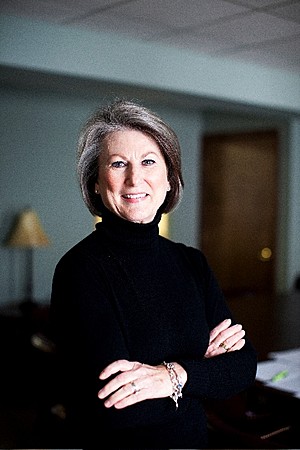
Little Rock Look Back: Mayor Sharon Priest

Photo courtesy of the Downtown Little Rock Partnership

Photo courtesy of the Downtown Little Rock Partnership

On September 12, 1947, future Little Rock Mayor Sharon Priest was born in Montreal, Canada. After marrying Bill Priest, she came to Little Rock. She began her public service at the grassroots level when she led the effort to bring flood relief to Southwest Little Rock and Pulaski County following the devastating flood of 1978 that killed 13 people in central Arkansas.

She was appointed to the Little Rock City Beautiful Commission.  Following that, she challenged an incumbent City Director and won her first elective office in 1986. In January 1989, she was named Vice Mayor of Little Rock by her colleagues on the City Board.  Two years later, she was selected Mayor becoming only the second female to serve as Mayor of Little Rock.  During her service to the City of Little Rock, she spearheaded the effort to create a Little Rock flag.  At the conclusion of her second four year term on the City Board, she decided to run for Secretary of State.
In November 1994, she elected Secretary of State, becoming the first woman to be elected to that position in Arkansas.  She was reelected in 1998.   In the summer of 2000, she becamePresident of the National Association of Secretaries of State. After the 2000 presidential election, she was thrust into the forefront of the movement towardelection reform. Ms. Priest testified before U.S. House and Senate Committees on election reform. As Secretary of State, restoring the Governor’s Reception Room and the Old Supreme Court Chamber of the State Capitol to their original splendor and restoring the rotunda marble are a few of her proudest achievements.
In January 2003, Ms.Priest was selected to serve as Executive Director of theDowntown Little Rock Partnership. Priest reorganized the Partnership during that first year. The Partnership is spearheading the revitalization of Main Street in collaboration with stakeholders and the City of Little Rock, focusing on the redevelopment of existing structures, streetscape and safety. She has also been a leading champion for the redevelopment of MacArthur Park, the City’s oldest park.

Prior to her work as an elected official, she worked as Director of Membership for Little Rock Chamber of Commerce and was founder and owner of the Delvin Company, a property management firm. She was a Toll Fellow in 1995, and has won numerous distinctions including the Excellence in Leadership Fellowship, Women Executives in State Government, 1997 and TIME/NASBE Award for Outstanding Leadership in Voter Education, 1996.

Last month she was the featured honoree at the Big Brothers/Big Sisters Roast and Toast, becoming the first female to be so honored.

Mac Park Music Tonight -Fire and Brimstone

macparkmusicFrom the late 1920s through the mid 1950s, Little Rock’s MacArthur Park was a centerpiece of live music.  The Foster Bandshell, named in memory of Mrs. H. H. Foster, stood in the park near 10th and Commerce.  The structure was torn down in the early 1960s.  A portion of the Arkansas Arts Center sits on the site of the old Foster Bandshell.

In 2002, the lakeside pavilion in MacArthur Park was renamed the Foster Pavilion to pay tribute to the memory of Mrs. Foster and the bandshell.

The Foster Pavilion will be the site of a new music series taking place on Wednesday nights in September.  MAC PARK MUSIC! will take place from 5:30pm to 7:30pm on September 11, 18 and 25.

Tonight’s lineup features Fire & Brimstone.  Bryant’s BBQ to be onsite with a Caribbean menu for purchase and beer and wine will be available for donations.

Fire & Brimstone is a husband-wife duo combine Reggae and Contemporary music.

Brimstone, also known as Phillip Norris, was born and raised in the Caribbean.  He picked up his first guitar at age 14. This accomplished guitarist who writes, sings, plays bass, keyboards and drums, has built a solid reputation as a seasoned musician in New York, Texas, Florida, California, Arkansas and parts of the Caribbean.

Fire, also know as Lori Harris-Norris, was born in Oklahoma. Her family moved to Los Angeles when she was a toddler. Lori showed signs of her love for entertaining at the early age of five when she began ballet and tap. She became involved in promoting, producing and booking artists and even started her own record label in the mid-1980’s.

Beginning in the early 90’s, this husband and wife duo played on a weekly basis throughout Southern California for over a decade.  In 2003 they traveled to France for the Cannes music festival, Midem International Music Market, where they performed their single, “Love’s Gotta Hold On You”, with an encore show at The Noga Hilton on the French Riviera.

They moved to Arkansas in 2004 to care for elders and have brought their music here.

Civil War Little Rock Campaign commemorated tonight

macmusOn September 10, 1863, Confederate forces under General Sterling Price evacuated Little Rock in advance .of Federal forces, thus ending the Little Rock Campaign. By 5:00pm, his forces had left the city and at 7:00pm, civil authorities formally surrendered. Little Rock became the fourth Southern capital to come under Federal control.

To commemorate the 150th anniversary of the Little Rock Campaign, the MacArthur Museum of Arkansas Military History will host a temporary exhibition of two Civil War flags from the 3rd Iowa Cavalry and the 37th Arkansas Infantry.

Troops from the 3rd Iowa Cavalry were among the first Federal troops to enter Little Rock and capture the Arsenal (in what is now MacArthur Park).  The flag from the 37th Arkansas Infantry was captured by Iowa forces at the Battle of Helena on July 4, 1863.  Members of the 37th Arkansas Infantry were among the Confederate soldiers in Little Rock in September 1863.

Both flags are on loan from the State Historical Museum, Iowa Department of Cultural Affairs and have never been exhibited in Arkansas before.

The exhibition is free and open to the public from September 11 through October 19.

There is a preview reception tonight from 5pm to 7pm at the museum. To commemorate the arrival of Federal troops into Little Rock on September 10, 1863, a symbolic lowering of the Confederate national flag and a raising of the Union guidon will take place in front of the museum at 5pm.

Partial funding for the exhibit is provided by the Arkansas Civil War Sesquicentennial Commission, Little Rock Convention and Visitors Bureau and Radiology Associates PA.  The MacArthur Museum of Arkansas Military History is a program of the City of Little Rock’s Parks and Recreation Department.

Little Rock Look Back: The Quapaw Line

quapawlineOn August 24, 1818, the Quapaw Line was drawn.  Starting at La Petite Roche and heading due south, this line formed the boundary between the Quapaw tribe lands and public lands available for settlement.  Though by 1824, the Quapaw were forced to give up all of their lands, the line continued serve as an important marker.  In the ensuing six years, the first permanent settlement of Little Rock took place and streets were planned.

It is interesting to note that the 1818 treaty referred to La Petite Roche as the Little Rock.  Some have speculated that this is the first official use of “Little Rock” to designate the outcropping.  When the Post Office was established in March 1820, it was given the name Little Rock.

There is a marker commemorating the beginning of the Quapaw Line located at La Petite Roche in Riverfront Park.  The first segment of the line is also noted in the park.  There are also sunken markers (such as the one to the left) place along the line at various points.  In MacArthur Park, at the corner of 9th and Commerce Streets, there is a marker noting that the line passed through at that location.

A good account of walking the Quapaw Line through downtown Little Rock can be found on this website.

Most of what is now called the Quapaw Quarter was located to the west of the Quapaw Line.  However, it did take its name from the fact that the tribe had once lived in that area and was later sequestered to lands near it.  The name for the area was chosen by a committee composed of David D. Terry, Peg Newton Smith, Mrs. Walter Riddick Sr., Dr. John L. Ferguson, and James Hatcher. They had been appointed to a Significant Structures Technical Advisory Committee to advocate for preservation of important structures as a component of the City of Little Rock’s urban renewal efforts.

Flag Day Concert in MacArthur Park tonite

flagdayOn Saturday, June 8, the MacArthur Museum of Arkansas Military History will host the 17th annual Flag Day concert, A Stars and Stripes Celebration, featuring the Little Rock Wind Symphony.

The concert begins at 7:00 p.m. and is free to the public.

Our annual Flag Day salute to the red, white, and blue, features hand-clapping marches, flag-waving patriotic songs, toe-tapping happy tunes.  There will be free American flags, ice cream and water.

The program will featured Timothy Tucker, baritone in selections with the LR Wind Symphony, under the direction of Dr. Karen Fannin.  The performance will include:

  • Dudley Buck: Festival Overture on the Star Spangled Banner 
  • John Philip Sousa: Washington Post March
  • Sousa: Who’s Who in Navy Blue
  • Aaron Copland: Old American Songs
  • James Barnes: Star-Spangled Salute!
  • Henry Fillmore: The Klaxon
  • Henry Fillmore: Circus Bee
  • Irving Berlin: God Bless America
  • Bob Lowden: Armed Forces Salute
  • Samuel Ward / Carmen Dragon: America the Beautiful
  • Sousa: The Stars and Stripes Forever


flagdayaudienceBring a picnic dinner for your family, lawn chairs or a blanket, and enjoy the concert at historic MacArthur Park in downtown Little Rock.   Dogs on leashes are welcome — and don’t forget there is a new dog park in MacArthur Park as well.

Black Hound Barbecue and Hot Dog Mike will be available to purchase food as well.  In the event of rain, the concert will be rescheduled for Sunday, June 9.

This event is sponsored by MacArthur Museum of Arkansas Military History, Little Rock Wind Symphony, Blue Bell Creameries, Woodmen of the World, Central Arkansas Water and Premium Refreshment Service.

Military History Museum Hosts Author Today

1368546527-enduringlegacyOn Saturday, May 18, the MacArthur Museum of Arkansas Military History will host author and professor, Dr. Stuart Towns, as he tours to promote his new book Enduring Legacy: Rhetoric and Ritual of the Lost Cause (University of Alabama Press, 2012).  Dr. Towns will speak at 2pm at the museum in MacArthur Park.

Enduring Legacy explores the vital place of ceremonial oratory in the oral tradition in the South. It analyzes how rituals such as Confederate Memorial Day, Confederate veteran reunions, and dedication of Confederate monuments have contributed to creating and sustaining a Lost Cause paradigm for southern identity. Towns studies in detail post—Civil War southern speeches and how they laid the groundwork for future generations, from southern responses to the civil rights movement and beyond. The Lost Cause orators that came after the Civil War, Towns argues, helped to shape a lasting mythology of the brave Confederate martyrs and of the southern positions for why the Confederacy lost and who was to blame.

W. Stuart Towns is recently retired from Professor and Chairman of the Department of Communication Studies at Southeast Missouri State University. Before that he was Professor and Chair of Department of Communication at Appalachian State University and the University of West Florida. After spending over 30 years in the Active Army Reserves, Stuart retired as a Colonel. While in the Reserves, he served with the 361st Civil Affairs Brigade, and was a member of the Consulting Faculty Program at the U. S. Army Command and General Staff College at Fort Leavenworth, Kansas.

The MacArthur Museum of Arkansas Military History relates the military heritage of Arkansas and its citizens to a diverse and widespread audience. Located in the historic Arsenal Building in MacArthur Park—one of Central Arkansas’s oldest surviving structures and the birthplace of one of this country’s foremost military heroes—the museum collects, preserves, and interprets our state’s rich military past from its territorial period to the present.