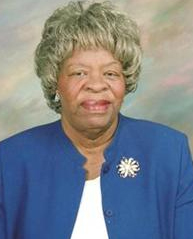
Maya Angelou celebrated at Mosaic Templars this morning

mosaictemplarsToday at 10am, the Mosaic Templars Cultural Center celebrates the life of poet, author, entertainer and civil rights activist, Dr. Maya Angelou.

The former Arkansan’s inspirational story will be brought to life by Dr. Gwendolyn Twillie, former chairwoman of the Theatre and Dance Department at UALR.

Registration is required. Contact Elvon Reed at 501.683.3592.

The Mosaic Templars Cultural Center is an agency of the Department of Arkansas Heritage.

Black History Month Spotlight – E. Lynn Harris

bhm lynnE. Lynn Harris was born in Flint, Michigan and raised, along with three sisters, in Little Rock. A graduate of Hall High School, he attended the University of Arkansas at Fayetteville where he was the school’s first black yearbook editor, the first black male Razorbacks cheerleader, and the president of his fraternity. He graduated with honors with a degree in journalism.

Harris sold computers for IBM, Hewlett-Packard, and AT&T for 13 years while living in Dallas, Washington, D.C. and Atlanta. He finally quit his sales job to write his first novel, Invisible Life, and, failing to find a publisher, he published it himself in 1991 and sold it mostly at black-owned bookstores, beauty salons, and book clubs before he was “discovered” by Anchor Books. Anchor published Invisible Life as a trade paperback in 1994, and thus his career as an author was “officially” launched.

Invisible Life was followed by Just As I Am (1994), And This Too Shall Pass (1996), If This World Were Mine (1997), and Abide With Me (1999), all published by Doubleday. All of Harris’s books were bestsellers. Harris’s sixth novel, Not A Day Goes By (July 2000) debuted at #2 on the New York Times bestseller list and was a #1 Publishers Weekly bestseller for two consecutive weeks. His seventh novel, Any Way the Wind Blows (July 2001), also debuted at #2 on the New York Times bestseller list. His other books included What Becomes Of The Brokenhearted – A Memoir (2003); I Say a Little Prayer (2006); Just Too Good To Be True (2008); Basketball Jones (2009); Mama Dearest (2009) (posthumously released) and In My Father’s House (2010) (posthumously released).

In 1999, the University of Arkansas honored Harris with a Citation of Distinguished Alumni for outstanding professional achievement, and in October 2000, he was inducted into the Arkansas Black Hall of Fame.  He died in July 2009 while in California for meetings. An autopsy determined it was due to heart disease.

For more on E. Lynn Harris and other inductees into the Arkansas Black Hall of Fame, visit the permanent exhibit at the Mosaic Templars Cultural Center. That museum is an agency of the Department of Arkansas Heritage.

 

Black History Month Spotlight – Dr. Erma Glasco Davis

Photo by Staton Breidenthal for the Arkansas Democrat-Gazette

Photo by Staton Breidenthal for the Arkansas Democrat-Gazette

Erma Lee Glasco Davis was born in Keo, Arkansas and was reared in south central Little Rock, also known as the South End.  She is a product of the Little Rock Public School System, graduating from Dunbar High School in May, 1945.  She received her Bachelor of Science degree from AM&N College (now the University of Arkansas at Pine Bluff).  A year or so after the Central High desegregation crisis of 1957, she and her husband moved to Detroit, Michigan and the Doctor of Philosophy degree from the University of Michigan at Ann Arbor.

Most of Dr. Davis’ professional career was spent in Detroit, Michigan  as a teacher, counselor and administrator.  She retired from an administrative position in the Detroit Public Schools’ Management Academy.  She also taught as an adjunct professor at Marygrove  College in Detroit.  While in Detroit, Dr. Davis has had a wealth of community involvement, serving in leadership positions on boards and committees and in organizations ranging from the NAACP to Alpha Kappa Alpha sorority.  In 1979, she co-chaired the Mayor’s Education Task Force for Detroit’s International Year of the Child event.  In 1987, she won the Spirit of Detroit Award, the city’s highest community-service award.

Dr. Davis is a past national president of the National Dunbar Alumni Association, and is co-author of a book about the school, Paul Laurence Dunbar High School of Little Rock.  She has been instrumental in marrying the goals of the association with those of the Mosaic Templars Cultural Center, the state-funded museum which showcases the history and achievements of black Arkansans.  A fruit of that marriage is the museum’s Dunbar exhibits on the museum’s first floor.  She is passionate about educating people on Dunbar’s role in the state’s history.

In 1990, Dr. Davis moved back to Arkansas form Michigan.  After her return, she quickly busied herself with community work, sitting on the boards of the Central High Museum and the Arkansas Humanities Council; taking two turns as chairman of the board of the Historic Arkansas Museum Foundation; she also chaired the gala for the opening of the Mosaic Templars Cultural Center.  In addition, Dr. Davis worked nearly four years as a founding volunteer for the Clinton Presidential Central.  In 2005, she was appointed by then-Governor Mike Huckabee to the State Review Committee for Historic Preservation, and reappointed by Governor Mike Beebe in 2007.  In 2009, she was inducted into the Arkansas Black Hall of Fame.

For more on Dr. Davis and other inductees into the Arkansas Black Hall of Fame, visit the permanent exhibit at the Mosaic Templars Cultural Center. That museum is an agency of the Department of Arkansas Heritage.


Black History Month Spotlight – Jocko Carter

BHM JCThere is always a pioneer needed to conquer the landscape of new territories. Leo Louis Carter, or “Jocko” as he was known to his friends and listeners, was that pioneer in the field of urban radio. One of the first radio announcers for KOKY 1440 AM, the first station in Arkansas designed for the culture of the urban community, Carter made an undeniable footprint into the forays of modern African American radio programming.

The Little Rock native assisted in the establishment of the station’s “True Heritage Today,” which was designed to provide entertainment, public service announcements and advertising to the urban community.

While at KOKY, he served in many capacities, including Radio Announcer, Music Director, and later Program Director. With six years of experience in radio, and twelve years of experience in the entertainment field, Carter became one of the most versatile and successful personalities in radio.

After years of success in the Little Rock area markets, Carter became sought after in the music industry’s national arena. He went on to accept a position at FAME Records in Muscle Shoals, Alabama as a National Promotional Director. After working with several labels, including Mercury and Malaco & Stax, Carter was hired by the world’s leading recording company: Warner Brothers Record. He joined their team as the Southeast Regional Promotions Manager for Black Music.

His presence at Warner Brothers served to increase the sale of Black records. In this position, Carter was directly responsible for obtaining airplay for Black artists. With the professional backing of Carter, artists were able to commemorate sales in excess of 500,000 copies. Some of these artists and their titles include Ashford & Simpson’s Send It, George Benson’s Breezin’, and Parliament Funkadelic’s One Nation Under a Groove.

In addition to his contribution to the careers of Black artists and Arkansas urban radio, Carter will always be remembered for his favorite audience petition: “Don’t meet me there; beat me there!”

In 2011, he was posthumously inducted into the Arkansas Black Hall of Fame.  For more on Leo Louis “Jocko” Carter and other inductees into the Arkansas Black Hall of Fame, visit the permanent exhibit at the Mosaic Templars Cultural Center. That museum is an agency of the Department of Arkansas Heritage.

Play at Arkansas Rep focus of Mosaic Templar Lunchtime Discussion

mosaictemplarsThe Mosaic Templars Cultural Center’s (MTCC) quarterly lunchtime series offers a variety of topics to educate, inspire, and entertain.

“It’s in the Bag” runs today from 11:30 to 12:30 at the MTCC.

Today’s installment will feature the cast of the Arkansas Repertory Theatre’s current play, The Whipping Man. Set at the end of The Civil War in 1865, The Whipping Man is an extraordinary tale of loyalty, deceit and deliverance. The award-winning play opened off-Broadway in 2011 to critical acclaim, winning the 2011 John Gassner New Play Award from the NY Outer Critics Circle and becoming one of the most produced plays in the country.

THEREP_THE WHIPPINGMAN (no credits)-page-001Don’t miss your chance to meet the cast and tour MTCC’s new exhibit, “Freedom! Oh, Freedom!” Arkansas’s People of African Descent and the Civil War: 1861-1866.

Guests are invited to bring their lunch, the museum will provide the drinks.

The Mosaic Templars Cultural Center is an agency of the Department of Arkansas Heritage.

Black History Month Spotlight – Barbara Higgins Bond

bhm bhbArtist and illustrator Barbara Higgins Bond is today’s feature.  At the age of 12, she began painting and drawing as a hobby. Today, her work for the U.S. Postal Service and corporate clients has earned her a national reputation as an illustrator and commercial artist.

Born and raised in Little Rock, Bond decided her career after taking an elective art course at Phillips University in Enid, Okla. She transferred to Memphis College of Arts, earning a bachelor of/inc arts degree in advertising design.

Book covers, posters, record album covers, television commercials, magazine covers and collector’s plates are just some of the bearers of Bond’s extraordinary talent. Her most memorable projects throughout her 40-year career include designs of Queen Nefertiti of Egypt and Mansa Mussa, a 14th-century king of Mali, for Anheuser- Busch’s Great King and Queens of Africa series; commemorative stamps of W E. B. DuBois and inventor Jan Matzeliger for the Postal Service’s Black Heritage series; and Cognac Hennessy’s 1997 Calendar celebrating The History of Jazz & African-American Culture.

Bond’s work has been exhibited at the Metropolitan Museum of Art in New York; the DuSable Museum of African-American History in Chicago; The Children’s Museum in Indianapolis, Ind.; and at the Memphis College of Arts. Among her awards are the CEBA Award of Merit for work featured in Black Enterprise magazine; the Medal of Honor by the Arkansas Sesquicentennial Committee; and the Multicultural Publishers Exchange Book Award of Excellence for her illustration of Toyomi Igus’ When I Was Little.

Higgins Bond’s clients include the Bradford Exchange, McGraw-Hill, Franklin Mint, NBC, Hennessy Cognac, Anheuser-Busch, Frito-Lay and Columbia House.  She has illustrated more than 37 books for children and adults and is an adjunct professor of illustration at the Nossi College of Art in Nashville, where she lives.

In 1997, she was inducted into the Arkansas Black Hall of Fame.  For more on Barbara Higgins Bond and other inductees into the Arkansas Black Hall of Fame, visit the permanent exhibit at the Mosaic Templars Cultural Center. That museum is an agency of the Department of Arkansas Heritage.

Black History Month Spotlight – Annie Abrams

bhm annieThis year during Black History Month, the Culture Vulture will look at 28 cultural leaders who have Little Rock connections and have been inducted into the Arkansas Black Hall of Fame.  Though presented in alphabetical order, up first is a personal friend of the Culture Vulture – Annie Abrams, or as she is affectionately known, Miss Annie.

Annie Mable McDaniel Abrams is a retired educator by trade and civic activist by avocation.  She is included in this list because she is also a historian.  As a writer and preservationist, she has worked to document history and ensure historical properties and neighborhoods will long remain in Little Rock.

Born in Arkadelphia, she moved to Little Rock at age 13 to attend Dunbar Junior High School and High School.  She studied education at Dunbar Junior College and later taught in Marianna. In 1956, she returned to Little Rock to work for the Arkansas Teachers Association.  After her return to the capital city, she married Orville Abrams.  In addition to raising her four children, Miss Annie has helped raise countless others through her advice, support, love, and sometimes strong admonitions.  She also found time to return to school and receive a degree from Philander Smith College.

Among her many accomplishments are leading efforts to rename High Street for Martin Luther King, 14th Street for Daisy L. Gatson Bates and 20th Street for Charles Bussey.  Through her community activities, she had worked closely with both Bates and Bussey.  She was a friend to the Little Rock Nine (who were only a few years younger than she) and to their families. Perhaps, because she has been a personal friend of many Arkansas and national politicians over the past 60 years, it should come as no surprise that she and her husband were also acquainted with Governor Faubus.

Whether a leading political figure or a small child, Miss Annie isn’t afraid to give advice or to share her love.  Once an educator, always an educator, she loves to learn and teach. It is rare for her to miss a speech at the Clinton School or a Political Animals Club meeting.

In recognition of all her efforts she has been recognized with an honorary doctorate from Philander Smith College, the Brooks Hays Award, and an award award from the national Martin Luther King Jr. Commission.  In 2010, she was inducted into the Arkansas Black Hall of Fame.

For more on Annie Abrams and other inductees into the Arkansas Black Hall of Fame, visit the permanent exhibit at the Mosaic Templars Cultural Center. That museum is an agency of the Department of Arkansas Heritage.