
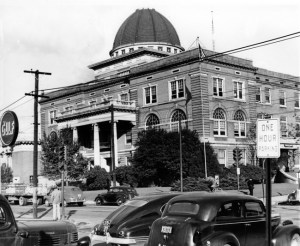
Little Rock City Hall in the 1940s
On December 8, 1941, one day after Pearl Harbor was attacked, the Little Rock City Council held a regularly scheduled meeting. While much of the business took place as previously planned, there were two actions that night which were in support of the war effort.
By a motion of Alderman Franklin E. Loy, seconded by Alderman L. L. Stewart, the City Council passed a motion to allow the erection of signage for a new Soldier Service Center which was to be set up in the War Memorial Building (now the Old State House Museum).
The same night, an ordinance was introduced for the City to purchase up to $40,000 in War Bonds. This was referred to the City Attorney to review.
Though the U.S. entry into World War II was only hours old, the City was already responding.
The following week, on December 15, 1941, the City Council discussed a plan to create a Civil Defense Coordinator for the City of Little Rock. Also, City Clerk H.C. “Sport” Graham reported that City employees had purchased $4,819.50 in Defense Savings Stamps and Bonds. There were also pledges for another approximately $20,000. A payroll deduction plan was being set up.
Over the coming weeks and years, many City employees would enlist or be drafted into the armed services. Victory gardens would be planted by City employees and their families. Rationing would take place. Eventually a USS Little Rock battleship would be commissioned.
There would be much to be done to support the war effort. But in the early days, the City was already taking steps to do its part for the war.

 Little Rock Culture Vulture