Sen. David Pryor speaks, Mayor Stodola an honoree at Quapaw Quarter annual meeting tonight

QQAThe Quapaw Quarter Association will host its annual membership meeting on Wednesday, October 2 in the Ottenheimer Theater at Historic Arkansas Museum.  The evening will begin with a 5:30 p.m. reception in the atrium, the membership meeting will begin at 6:00 p.m.  Nonmembers of the organization are invited to join at the door.

Board members standing for re-election this year are:
Chuck Cliett
John Herzog
Gabe Holmstrom
Cheri Nichols
Shana Woodard

Following a short business meeting, the Greater Little Rock Preservation Awards will be presented to projects in SoMa, the Governor’s Mansion Historic District, MacArthur Park Historic District and Main Street Commercial Historic District.  Anthony Black will receive the Peg Smith Award for his many years of exemplary volunteer work on QQA projects and programs.  Mayor Mark Stodola will receive the Jimmy Strawn Award.  Since 1980, the QQA has presented its most prestigious award to “someone whose efforts on behalf of the preservation of Greater Little Rock’s architectural heritage are an inspiration to the entire community.”

Senator David Pryor will join the QQA as guest speaker to close out the evening.

The Quapaw Quarter Association’s mission is to promote the preservation of Little Rock’s architectural heritage through advocacy, marketing and education.

Incorporated in 1968, the QQA grew out of an effort to identify and protect significant historic structures in Little Rock during the urban renewal projects of the early 1960s. Throughout its existence, the QQA has been a driving force behind historic preservation in Greater Little Rock.

Rhea Roberts serves as the executive director.

Little Rock Look Back: The Quapaw Line

quapawlineOn August 24, 1818, the Quapaw Line was drawn.  Starting at La Petite Roche and heading due south, this line formed the boundary between the Quapaw tribe lands and public lands available for settlement.  Though by 1824, the Quapaw were forced to give up all of their lands, the line continued serve as an important marker.  In the ensuing six years, the first permanent settlement of Little Rock took place and streets were planned.

It is interesting to note that the 1818 treaty referred to La Petite Roche as the Little Rock.  Some have speculated that this is the first official use of “Little Rock” to designate the outcropping.  When the Post Office was established in March 1820, it was given the name Little Rock.

There is a marker commemorating the beginning of the Quapaw Line located at La Petite Roche in Riverfront Park.  The first segment of the line is also noted in the park.  There are also sunken markers (such as the one to the left) place along the line at various points.  In MacArthur Park, at the corner of 9th and Commerce Streets, there is a marker noting that the line passed through at that location.

A good account of walking the Quapaw Line through downtown Little Rock can be found on this website.

Most of what is now called the Quapaw Quarter was located to the west of the Quapaw Line.  However, it did take its name from the fact that the tribe had once lived in that area and was later sequestered to lands near it.  The name for the area was chosen by a committee composed of David D. Terry, Peg Newton Smith, Mrs. Walter Riddick Sr., Dr. John L. Ferguson, and James Hatcher. They had been appointed to a Significant Structures Technical Advisory Committee to advocate for preservation of important structures as a component of the City of Little Rock’s urban renewal efforts.

Sculpture Vulture: pARTy for Peg at HAM

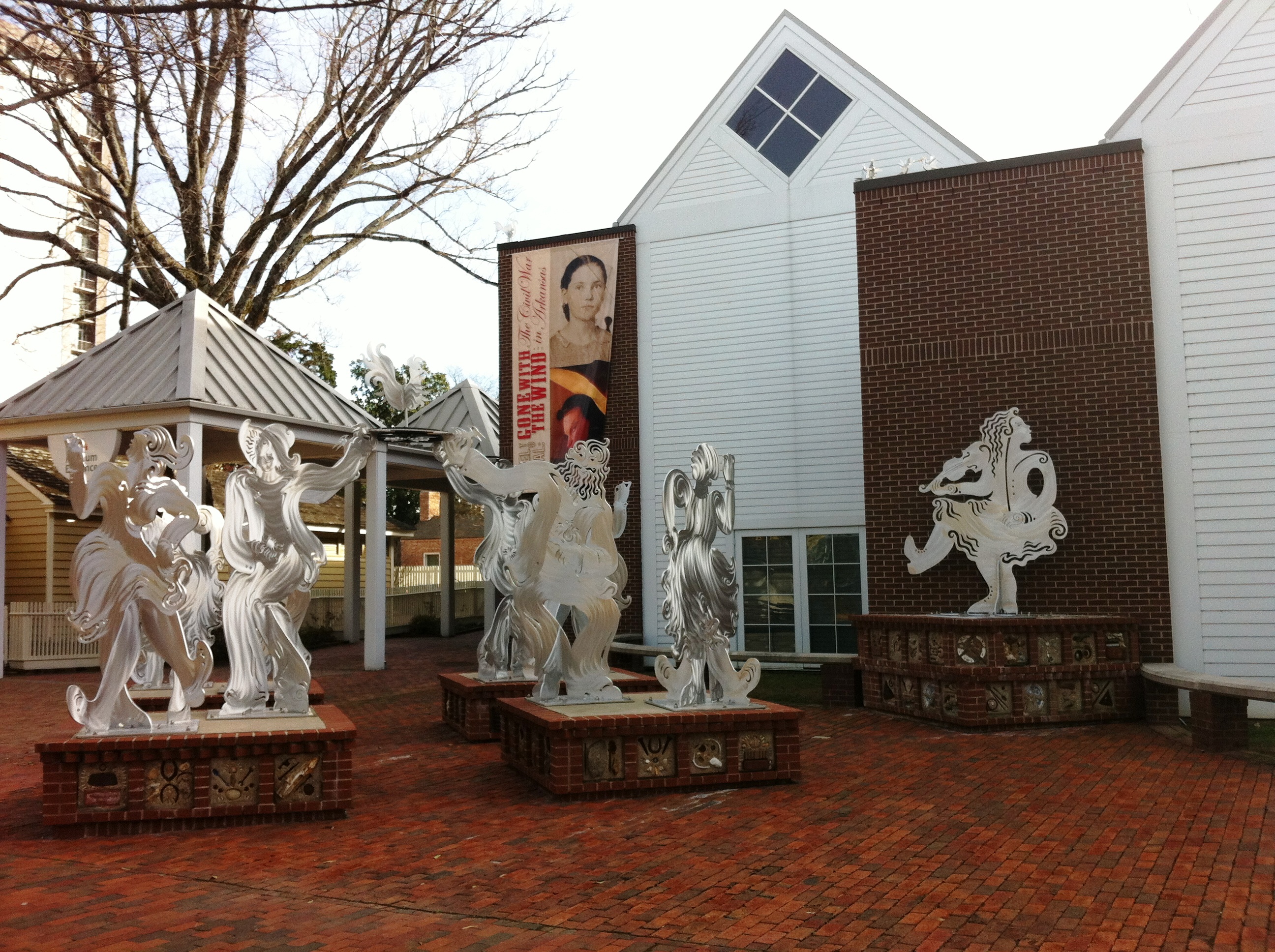
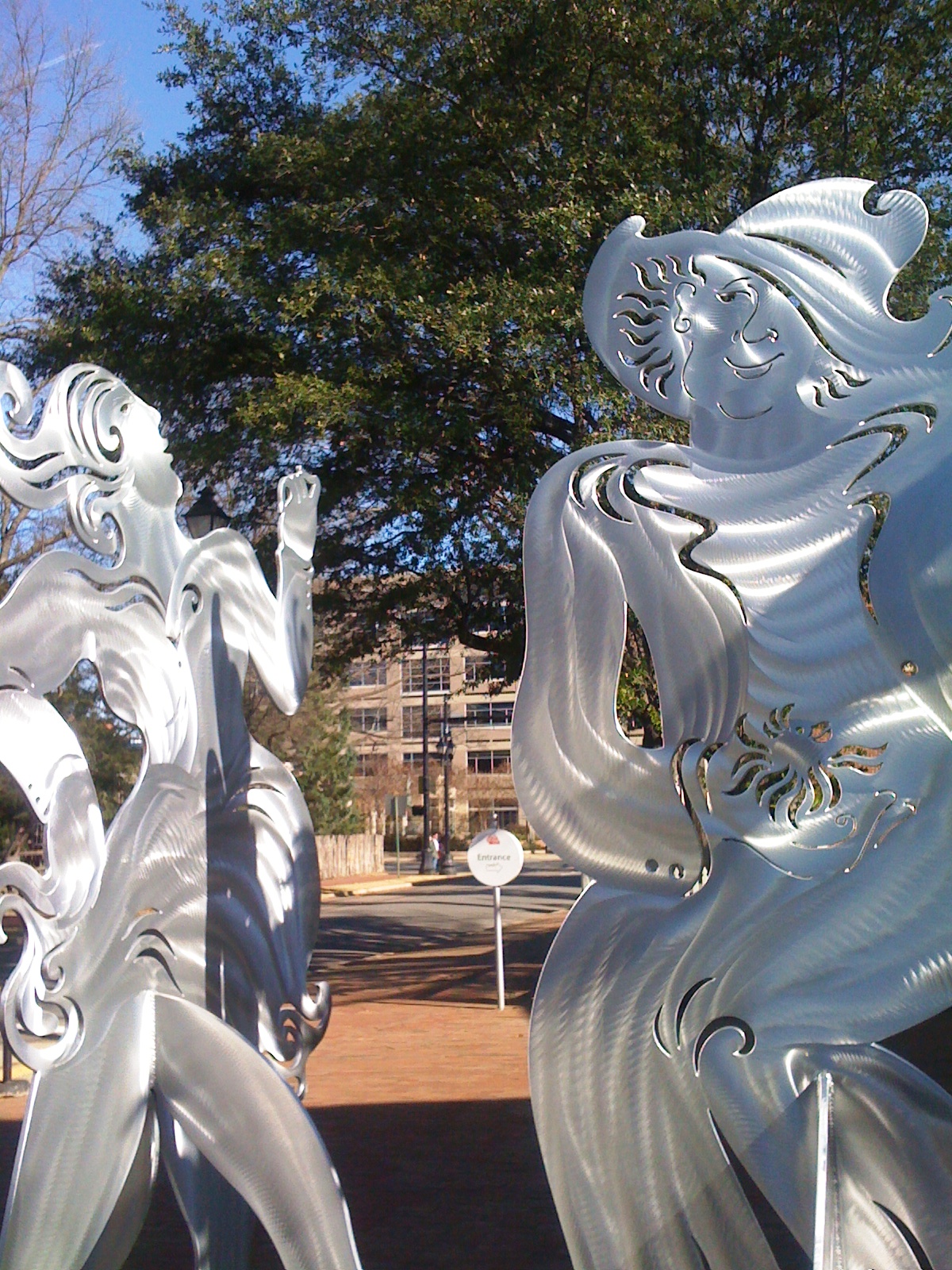
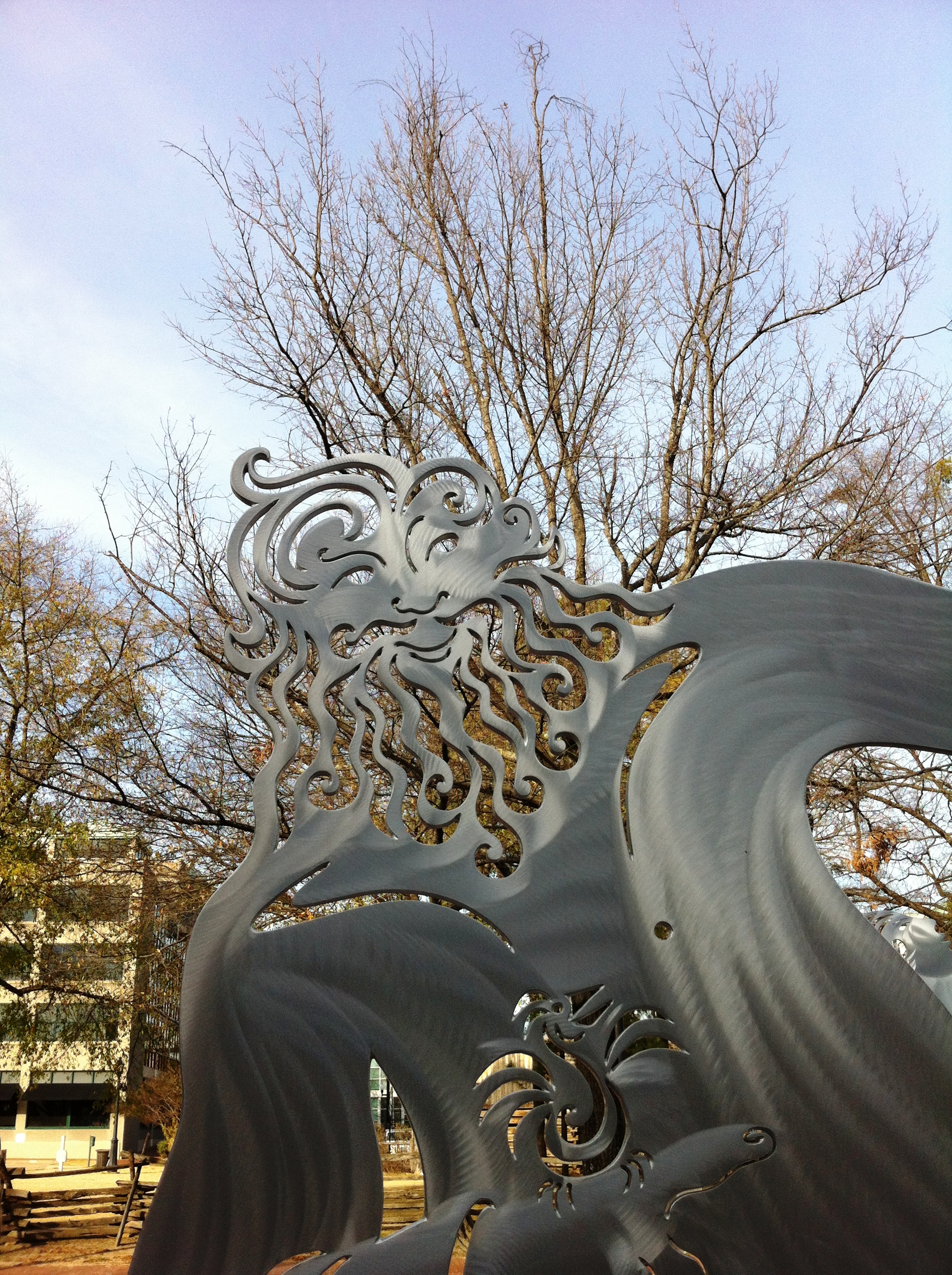
As a tribute to longtime Historic Arkansas Museum supporter Peg Newton Smith, HAM commissioned Alice Guffey Miller to create a piece of sculpture which sits along the north entrance to the gallery building.  pARTy for Peg depicts four couples dancing to a lively tune which is coming from a fiddle player.

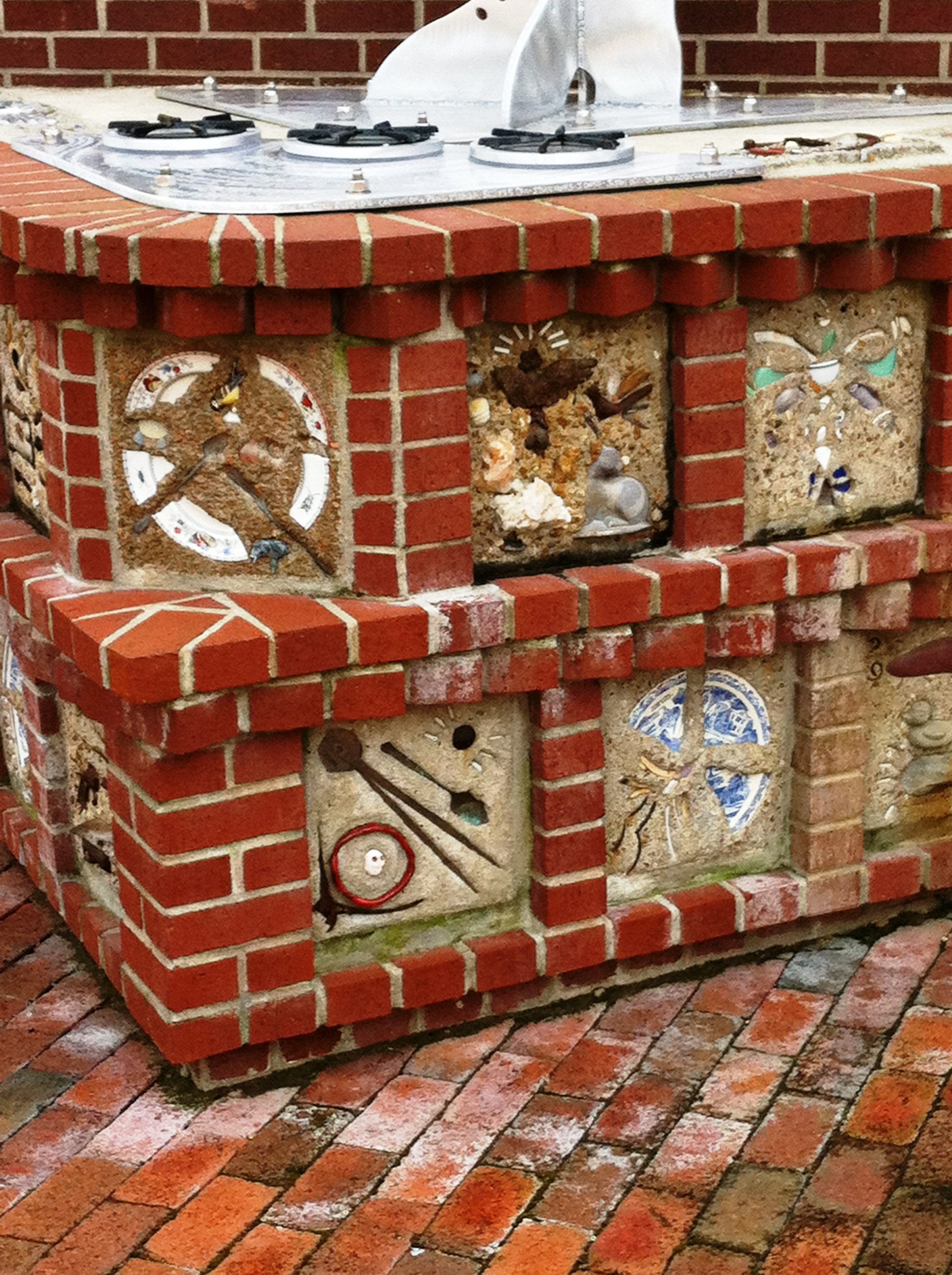
Upon closer examination, one sees that the sculpture is more than just whimsical figures cut from aluminum.  The pedestals upon which the sculptures stand contain found objects which commemorate everyday life in Arkansas from horseshoes to china pieces to flatware to rocks and bricks.  In addition, the concrete bears faint footprints which echo steps which could be made by dancers.  Quotes and sayings are etched into the aluminum base for each sculpture as well.

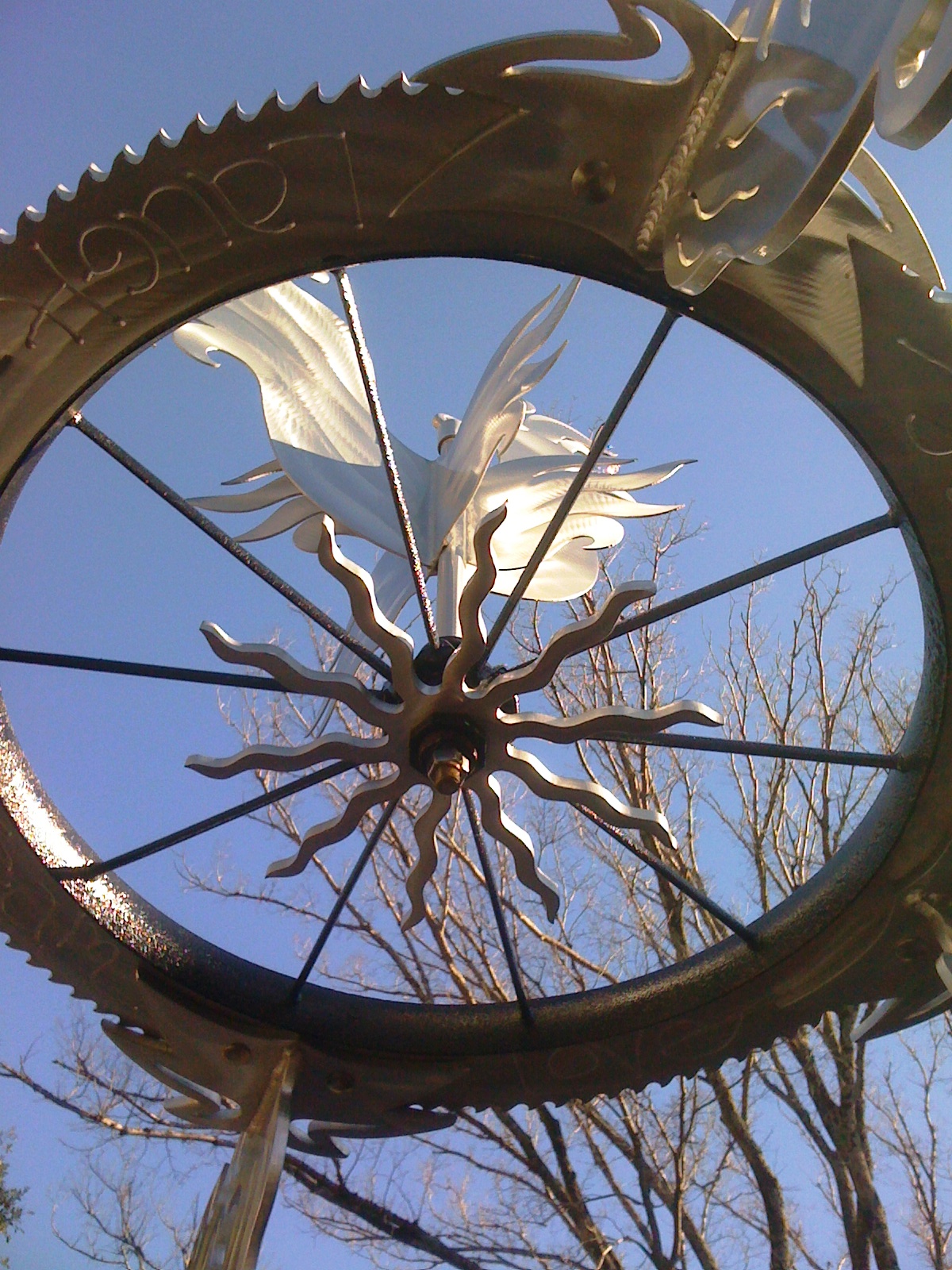
Connecting the four dancing couples is a weather vane which forms a canopy.  Overseeing everything are birds perched atop a corner of HAM’s gallery building.

Peg Newton Smith was a true Arkansas treasure. She was interested in not only the history of Little Rock and Arkansas, but also in the present and the future. This sculpture, which depicts a historical scene in a more modern way, aptly captures the woman and the joy she radiated.