
Little Rock Look Back: Hollywood in Little Rock

All right Mr. DeMille, Little Rock was ready for its close up.

From April 24 to 26, 1944, Cecil B. DeMille was in Little Rock for the world premiere screening of The Story of Dr. Wassell.  This 1944 Paramount Pictures Technicolor release told the story of wartime hero Dr. Corydon Wassell.

Why was Little Rock chosen?  It was the hometown of Dr. Wassell.  His paternal grandfather, John Wassell, was Little Rock’s 27th mayor.  His first cousin, Sam Wassell, was serving on the City Council at the time of the film’s release and would become Little Rock’s 51st mayor.

Based on a book by James Hilton, it was inspired by the heroic efforts of Dr. Wassell, a naval officer, as he led the evacuation of several sailors (and treated their wounds) in Java in February 1942.  President Roosevelt highlighted Dr. Wassell in his May 26, 1942, fireside chat.

Little Rock rolled out the red carpet (literally and figuratively) for DeMille and a contingency from Hollywood.  Dr. and Mrs. Wassell also returned to Little Rock for the festivities.  Unfortunately, Gary Cooper (who played Wassell in the film) was unable to attend due to illness.  His costar, Laraine Day, was making another film and could not attend either.    Those in attendance with DeMille (and Mrs. DeMille) included actresses Signe Hasso and Carol Thurston, and actor Melvin Francis.  The latter played himself; he had actually been one of the sailors saved by Dr. Wassell.

On April 24, 1944, DeMille and Dr. Wassell appeared on a radio program broadcast live from the music hall of Robinson Auditorium.  The next day, the troupe toured Camp Robinson and spoke to the soldiers there.  Later that day, Miss Hasso and Miss Thurston sold war bonds at Pfeiffers and M.M. Cohn’s.

April 26, 1944, was a full day for the DeMilles, the Wassells, and the others.  It started with a luncheon at the Hotel Marion, hosted by the Lions Club and Little Rock Chamber of Commerce.  Governor Homer Adkins presented DeMille with an Arkansas Traveler certificate.  DeMille, in return, presented Governor Adkins with a copy of the script.

When it was Dr. Wassell’s time to speak, he praised Little Rock’s efforts on the home front.  He also asked for a standing tribute to longtime Little Rock school superintendent R.C. Hall, who had died the day before.  Dr. Wassell had taught with Mr. Hall decades earlier.

Following the lunch, there was a parade on Main Street.  It started at 10th and Main and proceeded to Markham before ending at the War Memorial Building (now the Old State House Museum).  Newspaper accounts said that it was four miles long and featured many military units and marching bands.

Dinner that evening was at the Lafayette Hotel before screenings of the movie at the Capitol and Arkansas Theatres. Both screenings were sold out.  On April 27, 1944, a regular run of the movie started at the Capitol Theatre.  It would be released nationally on July 4, 1944, which also happened to be Dr. Wassell’s birthday.
Little Rock Look Back: HST in LR

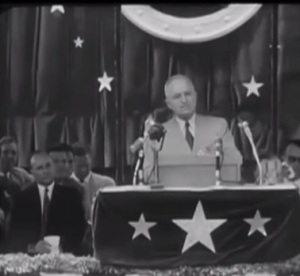
HST in LR2On June 10 and 11, 1949, President Harry S. Truman visited Little Rock.  He was here to participate in activities connected to the reunion of the 35th Division Association.  He had served in that division during World War I.
While he was in Little Rock, President Truman spoke several times.  He generally was accompanied by Governor Sid McMath and Mayor Sam Wassell.

On June 10, he spoke at Robinson Auditorium as part of a welcome ceremony, at a reception at the Hotel Marion and at a ball held at Robinson Auditorium.  His first address was at 3:48 pm and his final one was at 10:15 pm.  The next day he spoke at a breakfast and at a luncheon at the Hotel Marion.  He took pains at these times to stress he was here as a member of the 35th Division.  He also participated in a parade.

In his Presidential role, he spoke at the dedication of War Memorial Park on June 11.  His address took place inside War Memorial Stadium, which had been opened a few months earlier.  It was not a brief dedicatory speech, but instead was a lengthy treatise on foreign affairs.  The address was carried on nationwide radio.  The text of his address can be found here.

President Truman would return to Little Rock in July 1952.  He was in the state to speak at the dedication of Bull Shoals Dam. He did not make any formal remarks in Little Rock while in the city for that visit.

Little Rock Look Back: Mayor Sam M. Wassell

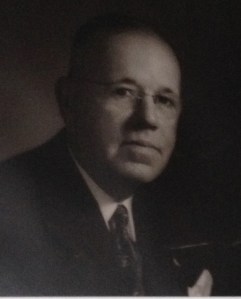
On April 28, 1883, future Little Rock Mayor Sam M. Wassell was born.  His grandfather John W. Wassell had been appointed Mayor of Little Rock in 1868.  He is the only Little Rock Mayor to be a grandson of another Little Rock Mayor.

Sam Wassell served on the Little Rock City Council from 1928 through 1934 and again from 1940 through 1946.  He is one of the few 20th Century Little Rock Mayors who previously served on the City Council.

Wassell was an attorney.  He practiced law privately and also served as an Assistant US Attorney.  In 1930, he ran unsuccessfully for the Democratic nomination for the US Congress representing the 5th Congressional District, which at the time included Little Rock.

Wassell ran for Mayor in 1947 and was unopposed in the general election.  He was unopposed in his bid for re-election in 1949.  During his second term, President Harry S. Truman visited Little Rock.  In 1951, he sought a third term as Mayor.  No Little Rock Mayor had been successful in achieving a third consecutive term since 1923.  Though he received the Democratic nomination, the Republican party nominated Pratt Remmel who defeated Wassell by a 2 to 1 margin.

With a new USS Little Rock nearing commissioning, it is interesting to note that Mrs. Sam Wassell christened the previous USS Little Rock in 1944.  At the time, she was a City Councilor’s wife.

Mayor Wassell died on December 23, 1954 and is buried at Roselawn Cemetery in Little Rock.

Women’s History Month – Ruth May Wassell

On August 27, 1944, Ruth May Wassell shattered a bottle on the hull of a new ship and christened it the U.S.S. Little Rock.  Mrs. Wassell, whose husband was Little Rock alderman Sam Wassell, had been designated as the official sponsor for the City of Little Rock by Mayor Charles Moyer.

Ruth May Wassell was more than the wife of a local political leader.  She graduated from Henderson-Brown College and received a law degree from the University of Arkansas.  In 1932, she was admitted to the Arkansas Bar and later was admitted to practice before the Arkansas Supreme Court, one of the first women to receive this designation.

Mrs. Wassell was active in business, serving as president of the Arkansas Lumber Company  and owner of a citrus farm in Texas.  She was also active in civic affairs through involvement with the Arkansas Democratic Women, Boys Club and Second Presbyterian Church.  From 1947 until 1951 she was First Lady of Little Rock when Sam Wassell was elected as Mayor.

Following the December 1954 death of Mayor Wassell, she subsequently married E. W. “Bud” Gibb.  She died in 1964.

RobinsoNovember: President Harry S. Truman

HST in LR2

President Truman in War Memorial Park. A photo of him at Robinson does not seem to exist.

Today is Veterans’ Day, a chance to pause and remember those — both living and deceased — who have served in the Armed Forces of the US.  November 11 was chosen since it was on November 11 in 1918, at 11:11 (Paris time), the Armistice was signed to end the Great War, as World War I was then known.  In 1954, the holiday was renamed Veterans Day since the US had been in two military conflicts since the Great War.

A World War I infantry reunion brought President Harry S. Truman to Little Rock in June 1949, a few months after he won his own term in the Presidency. During his time here, he spoke twice at Robinson Auditorium.

Upon arriving, he made some informal remarks:

I am most happy to be here. I am only here in my capacity as a member of the 35th Division. Tomorrow I will address you as President of the United States, and I am afraid you will have to listen, whether you like it or not.

I hope to have a pleasant time in Little Rock, as I always have when I come here. I have been here a dozen times–one of the most hospitable cities in the United States. They know how to treat you, they know how to make you like it, and want you to come back.

I will see more of you later on in the day.

I appreciate the welcome that everybody has given us here this afternoon.

Thank you very much.


Later that night, he spoke at a Ball at Robinson.  It followed a banquet that had taken place at the Hotel Marion.

Governor McMath, the Mayor of Little Rock, and distinguished guests:

I can’t tell you how very much I appreciate the cordial reception which I have received in Little Rock. It has been like coming back home to come down here. It’s a habit of mine and has been for 25 years. I have been here in town many a time, and attracted no attention at all. But my friends were just as cordial to me then as they are now.

And I want to thank Eberts Post No. r for its cooperation with the 35th Division in putting on this ball and entertainment.

My education, so far as taking part on the floor is concerned, was sadly neglected as I grew up. I am a Baptist–not a light-foot one–so I didn’t learn how to dance. But I did learn a lot of other things in life, maybe, that I shouldn’t have learned.

I hope that the 35th Reunion this year will be the usual success that 35th Reunions are. I have missed only one, I think, in 25 years or more. I didn’t want to miss this one. The fact that you had it on a weekend gave me and the congressional delegation of the great State of Arkansas an opportunity to be present and attend the meeting. Otherwise, we would have had to stay in Washington and work.

It doesn’t make any difference, though, where the President goes, his work follows him up. I told the congregation this afternoon–you see, I am talking as a Baptist talks–that it didn’t make any difference where I went, I have to sign my name some 600 times a day to keep the country running. And it has, up to date, and I think it will continue, at least for 3 1/2 years more.

I am looking forward to a most pleasant time. I am talking to you now as a member of the 35th Division only, but if you want to hear the President of the United States you had better come out to the stadium tomorrow, and I will tell you something that will be good for your souls.

Thank you very much.

The following day he gave a national address on foreign affairs at the dedication of War Memorial Park.  It was carried on coast-to-coast radio.  There was no radio coverage of his remarks at Robinson, but a large press corps of national correspondents captured his words.

The Little Rock Mayor to whom he referred was Sam Wassell.  Mayor Wassell’s wife had christened the USS Little Rock during World War II.  A first cousin, Dr. Corydon Wassell, was a war hero who had been played by Gary Cooper in a movie.

Little Rock Look Back: Airport Commission Created by LR Voters

lr-airport-commission-electionOn November 7, 1950, Little Rock voters approved the creation of the Little Rock Airport Commission.  This was an extremely rare initiated ordinance.

Local business leaders had tried two times prior to get the City Council to create an Airport Commission.  At the time, the Airport was managed by the Council’s Airport Committee, composed of aldermen.  Both times, the Council rejected the measure.  This prompted an organization called the Private Flyers Association to begin the drive to collect the signatures to place the ordinance on the ballot.  Mayor Sam Wassell was in favor of the creation of the separate commission to oversee the airport and was a member of the Private Flyers Association.

At the general election on November 7, 1950, the ordinance was on the ballot.  It passed with an overwhelming majority: 13,025 voters approved of it, and only 3,206 opposed it.  The Arkansas Gazette had been a proponent of the switch, endorsing it with a front page editorial entitled “An Airport for the Air Age.”

In many ways this movement was a precursor to Little Rock’s switch to the City Manager form of government later in the decade.  Where once the business leadership and city council had been one and the same, over the 1940s the two diverged.  Business leaders were less interested in party politics (and at the time the city races were partisan affairs) and more interested in professionally run government.  The main argument for a separate commission was that it would allow the airport to be run more efficiently and removed from party politics.  These would be the same arguments used by the Good Government Committee in 1956.

Also on the ballot in 1950 was a GOP challenger to a Democrat for one of the aldermen positions.  George D. Kelley, Jr., ran against incumbent Lee H. Evans.  Kelley was the first GOP contestant for a city race since Pratt Remmel ran unsuccessfully for City Council in 1938.  Remmel would be back on the ballot in 1951, this time for the position of mayor in a successful effort.

Little Rock Look Back: Mayor Sam Wassell

S WassellOn April 28, 1883, future Little Rock Mayor Sam M. Wassell was born.  His grandfather John W. Wassell had been appointed Mayor of Little Rock in 1868.  He is the only Little Rock Mayor to be a grandson of another Little Rock Mayor.

Sam Wassell served on the Little Rock City Council from 1928 through 1934 and again from 1940 through 1946.  He is one of the few 20th Century Little Rock Mayors who previously served on the City Council.

Wassell was an attorney.  He practiced law privately and also served as an Assistant US Attorney.  In 1930, he ran unsuccessfully for the Democratic nomination for the US Congress representing the 5th Congressional District, which at the time included Little Rock.

Wassell ran for Mayor in 1947 and was unopposed in the general election.  He was unopposed in his bid for re-election in 1949.  During his second term, President Harry S. Truman visited Little Rock.  In 1951, he sought a third term as Mayor.  No Little Rock Mayor had been successful in achieving a third consecutive term since 1923.  Though he received the Democratic nomination, the Republican party nominated Pratt Remmel who defeated Wassell by a 2 to 1 margin.

With a new USS Little Rock nearing commissioning, it is interesting to note that Mrs. Sam Wassell christened the previous USS Little Rock in 1944.  At the time, she was a City Councilor’s wife.

Mayor Wassell died on December 23, 1954 and is buried at Roselawn Cemetery in Little Rock.