Sandwich in History at Little Rock’s House House today at noon

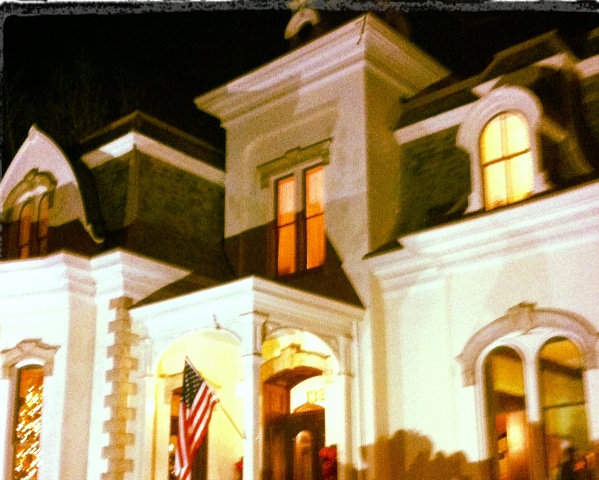
Joseph W. House HouseToday at noon the Arkansas Historic Preservation Program’s Sandwiching in History tour visits the Joseph W. House House at 2126 Arch Street.

The “Sandwiching In History” program is a series of tours that seeks to familiarize people who live and work in central Arkansas with the historic structures and sites around us. The tours take place on Fridays at noon, last less than an hour, and participants are encouraged to bring their lunches so that they can eat while listening to a brief lecture about the property and its history before proceeding on a short tour. A representative from the property is encouraged to attend also and address the group.

The Arkansas Historic Preservation Program is an agency of the Department of Arkansas Heritage. All tours are free and open to the public.

Joseph W. House House, 2126 S. Arch Street, Little Rock. Located in the Governor’s Mansion Historic District, this home was built about 1892 for prominent attorney and statesman Joseph Warren House, Sr. He served in the Confederate Army during the Civil War and later practiced law at Searcy. In 1871 House was elected to represent White County in the General Assembly and helped draft Arkansas’s fifth and current constitution during the convention of 1874. In 1892 he moved to the home at 2126 S. Arch Street, where he lived until his death in 1926.

 

Sandwich in History at LR’s Christ Church today

christchurch_scaledOn Friday, March 7 at 12 noon, the Arkansas Historic Preservation Program’s monthly “Sandwiching in History” program will visit Christ Church, Little Rock’s downtown Episcopal church since 1839.

Located at Capital and Scott Streets in downtown, the current sanctuary was built in 1940-41, designed by local architect Edwin Cromwell. That building replaced an 1887 structure which had burned in 1938.  The 1887 edifice itself replaced an 1840-1841 building which had been destroyed by fire in 1873.  A Parish House was constructed in 1928 adjacent to the sanctuary which is still in use today.

The “Sandwiching in History” program is a series of tours that seeks to familiarize people who live and work in central Arkansas with the historic structures and sites around us. The tours take place on Fridays at noon, last less than an hour, and participants are encouraged to bring their lunches so that they can eat while listening to a brief lecture about the property and its history before proceeding on a short tour. A representative from the property is encouraged to attend also and address the group.

The tours are organized by the Arkansas Historic Preservation Program, an agency of the Department of Arkansas Heritage. All tours are free and open to the public.

Sandwich in History Friday at Emmett W. Jenkins House

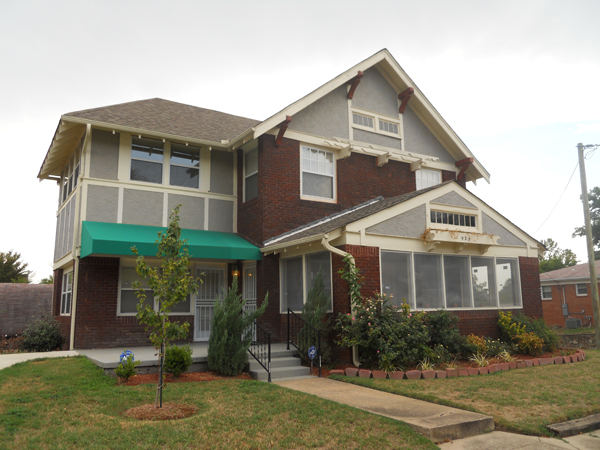
Emmett W. Jenkins House (photo courtesy of Arkansas Historic Preservation Program)

Emmett W. Jenkins House (photo courtesy of Arkansas Historic Preservation Program)

On Friday, August 2 at 12 noon, the Arkansas Historic Preservation Program’s monthly “Sandwiching in History” program will visit the Emmett W. Jenkins house.

Located at 923 W. 24th St. in the Governor’s Mansion Historic District, the Emmett W. Jenkins House was built about 1920.  It was constructed in the Craftsman style with exposed rafter tails, a front porch supported by square, brick columns, and mixed exterior materials.

The house was initially occupied by Emmett W. Jenkins, a contractor, and his wife, Sallie M. Jenkins. The home sustained considerable damage during the 1999 tornado that swept through downtown Little Rock. It was rehabilitated in 2009 and now serves as headquarters for the Ivy Foundation of Little Rock, which financially supports the community through the Beta Pi Omega Chapter of Alpha Kappa Alpha Sorority.

The “Sandwiching in History” program is a series of tours that seeks to familiarize people who live and work in central Arkansas with the historic structures and sites around us. The tours take place on Fridays at noon, last less than an hour, and participants are encouraged to bring their lunches so that they can eat while listening to a brief lecture about the property and its history before proceeding on a short tour. A representative from the property is encouraged to attend also and address the group.

The tours are organized by the Arkansas Historic Preservation Program, an agency of the Department of Arkansas Heritage. All tours are free and open to the public.

Sandwiching in History: Villa Marre

villamarreToday at 12 noon, the Arkansas Historic Preservation Program’s monthly “Sandwiching in History” program will visit the Villa Marre.

The Villa Marre is located at 1321 Scott Street. The Second Empire-style Villa Marre was built in 1881 by Italian immigrant and Little Rock saloonkeeper Angelo Marre, who also served on the Little Rock City Council.

The distinctive home features a mansard roof covered in patterned slate, a central tower topped by wrought-iron cresting, and hood molding above the doors and windows. Marre died in 1889, and his widow, Jennie, remained in the house until about 1900. Arkansas Governor Jeff Davis rented the house for a few years, and in 1905, the home was purchased by E. B. Kinsworthy, former state senator and attorney general of Arkansas.

It is probably most famous today for being the outdoor exterior of Sugarbakers design firm in the CBS sitcom “Designing Women.”  For several years, it was the home of the Quapaw Quarter Association. It later returned to a private residence.  Currently it is a rentable venue for weddings and other events.

The “Sandwiching In History” program is a series of tours that seeks to familiarize people who live and work in central Arkansas with the historic structures and sites around us. The tours take place on Fridays at noon, last less than an hour, and participants are encouraged to bring their lunches so that they can eat while listening to a brief lecture about the property and its history before proceeding on a short tour. A representative from the property is encouraged to attend also and address the group.

The tours are organized by the Arkansas Historic Preservation Program, an agency of the Department of Arkansas Heritage. All tours are free and open to the public.


Sandwiching in History at St. John’s Seminary today

Today the Sandwiching in History program visits the St. John’s Seminary, located at 2500 N. Tyler Street.  Sandwiching in History is sponsored by the Arkansas Historic Preservation Program.

StJohn3This campus was built in 1916 to house Little Rock College for Boys until it closed in 1929. From 1930 until it closed in 1967 St. John Home Mission Seminary was located at this site.

In 1968, the campus was renamed St. John Catholic Center when it became the home of the Diocese of Little Rock offices. Today it also serves as a retreat center and residence for retired diocesan priests.

The “Sandwiching In History program is a series of tours that seeks to familiarize people who live and work in central Arkansas with the historic structures and sites around us. The tours take place on Fridays at noon, last less than an hour, and participants are encouraged to bring their lunches so that they can eat while listening to a brief lecture about the property and its history before proceeding on a short tour.

The Arkansas Historic Preservation Program is an agency of the Department of Arkansas Heritage.

Sandwiching in History at Capital Hotel today

Capital Hotel frontThe Arkansas Historic Preservation Program’s “Sandwiching in History” program pays a visit this month to a location which is accustomed to receiving visitors — The Capital Hotel.

Built in 1872-1873 by businessman William P. Denckla, the Denckla Block, as it was then called, housed various shops on the first floor with offices and gentlemen’s apartments on the upper floors. The building featured a distinctive cast-iron façade with a projecting cornice, arched window openings, and engaged columns with Corinthian capitals. In 1877 the Denckla Block was converted into an hotel and quickly became the center of political and social activity in Little Rock. Over the years the building has been expanded upward and southward.

By the late 1960s, it fell into disrepair.  But through two extensive renovations, the Capital Hotel has been restored to its original beauty and continues to provide luxury accommodations in the capital city.

The “Sandwiching In History” program is a series of tours that seeks to familiarize people who live and work in central Arkansas with the historic structures and sites around us. The tours take place on Fridays at noon, last less than an hour, and participants are encouraged to bring their lunches so that they can eat while listening to a brief lecture about the property and its history before proceeding on a short tour.

The Arkansas Historic Preservation Program is an agency of the Department of Arkansas Heritage.

Sandwiching in History – The BPOE Building in Little Rock

Each month the Arkansas Historic Preservation Program sponsors a “Sandwiching in History” tour which features a historic property. Today at 12 noon is the first one for 2013.

This month’s tour is of the B.P.O.E. building at 401 S. Scott Street.  Now known at the headquarters of the Junior League of Little Rock, it was originally built as a lodge for the Benevolent Protective Order of the Elks.  The building was designed in the Second Renaissance Revival Style in 1908 by Theo Sanders and was constructed in two phases around 1910.  In 1927 the building was purchased by the Women’s City Club.  In May 2001 it was purchased by the Junior League of Little Rock.

The Sandwiching in History tours are free and open to the public. All tours begin at noon and last no more than one hour. An AHPP historian delivers a brief lecture about the property before leading guests on a tour. Attendees are encouraged to bring their lunches with them.

The Arkansas Historic Preservation Program (an agency of the Department of Arkansas Heritage) identifies, evaluates, registers, and  preserves the state’s historic and cultural resources and seeks to instill a preservation ethic in future generations of Arkansans. The agency also houses the Main Street Arkansas program, which works with local communities to revitalize downtown commercial areas.