Tony Awards Week – Trouble with a capital T and that rhymes with…. HAIR?

Ad for the original production of HAIR in Little Rock. Note the ticket prices. And that they could be purchased at Moses Music Shops.

Ad for the original production of HAIR in Little Rock. Note the ticket prices. And that they could be purchased at Moses Music Shops.

The Tony winning musical The Music Man may have featured a song about “Trouble in River City” but the Tony nominated musical Hair brought trouble to this “river city” in 1971 and 1972.

In February 1971, a young Little Rock attorney named Phil Kaplan petitioned the Little Rock Board of Censors to see if it would allow a production of Hair to play in the city. He was asking on behalf of a client who was interested in bringing a national tour to Arkansas’ capital city. The show, which had opened on Broadway to great acclaim in April 1968 after an Off Broadway run in 1967, was known for containing a nude scene as well for a script which was fairly liberally sprinkled with four-letter words. The Censors stated they could not offer an opinion without having seen a production.

By July 1971, Kaplan and his client (who by then had been identified as local promoter Jim Porter and his company Southwest Productions) were seeking permission for a January 1972 booking of Hair from the City’s Auditorium Commission which was charged with overseeing operations at Robinson Auditorium. At its July meeting, the Commissioners voted against allowing Hair because of its “brief nude scene” and “bawdy language.”

Kaplan decried the decision. He stated that the body couldn’t “sit in censorship of legitimate theatrical productions.” He noted courts had held that Hair could be produced and that the Auditorium Commission, as an agent for the State, “clearly can’t exercise prior censorship.” He proffered that if the production was obscene it would be a matter for law enforcement not the Auditorium Commission.

The Commission countered that they had an opinion from City Attorney Joseph Kemp stating they had the authority. One of the Commissioners, Mrs. Grady Miller (sister-in-law of the building’s namesake the late Senator Robinson who had served on the Commission since 1939), expressed her concern that allowing Hair would open the door to other productions such as Oh! Calcutta!

On July 26, 1971, Southwest Productions filed suit against the Auditorium Commission. Four days later there was a hearing before Judge G. Thomas Eisele. At that hearing, Auditorium Commission member Lee Rogers read aloud excerpts from the script he found objectionable. Under questioning from Kaplan, a recent touring production of Neil Simon’s Tony winning play Plaza Suite was discussed. That play has adultery as a central theme of one of its acts. Rogers admitted he found the play funny, and that since the adultery did not take place on stage, he did not object to it.

Judge Eisele offered a ruling on August 11 which compelled the Auditorium Commission to allow Hair to be performed. Prior to the ruling, some of the Auditorium Commissioners had publicly stated that if they had to allow Hair they would close it after the first performance on the grounds of obscenity. To combat this, Judge Eisele stated that the Commission had to allow Hair to perform the entire six day engagement it sought.

Upon hearing of the Judge’s ruling, Commissioner Miller offered a succinct, two word response. “Oh, Dear!”

In the end, the production of Hair at Robinson would not be the first performance in the state.  The tour came through Fayetteville for two performances in October 1971. It played Barnhill Arena.

On January 18, 1972, Hair played the first of its 8 performances over 6 days at Robinson Auditorium.  In his review the next day, the Arkansas Gazette’s Bill Lewis noted that Hair “threw out all it had to offer” and that Little Rock had survived.

The ads promoting the production carried the tagline “Arkansas will never be the same.”  Tickets (from $2 all the way up to $8.50) could be purchased at Moses Melody Shops both downtown and in “The Mall” (meaning Park Plaza). That business is gone from downtown, but the scion of that family, Jimmy Moses, is actively involved in building downtown through countless projects. His sons are carrying on the family tradition too.

Little Rock was by no means unique in trying to stop productions of Hair.  St. Louis, Birmingham, Los Angeles, Tallahassee, Boston, Atlanta, Charlotte NC, West Palm Beach, Oklahoma City, Mobile and Chattanooga all tried unsuccessfully to stop performances in their public auditoriums.  Despite Judge Eisele’s ruling against the City of Little Rock, members of the Fort Smith City Council also tried to stop a production later in 1972 in that city. This was despite warnings from City staff that there was not legal standing.

Within a few years, the Board of Censors of the City of Little Rock would be dissolved (as similar bodies also were disappearing across the US). Likewise, the Auditorium Commission was discontinued before Hair even opened with its duties being taken over by the Advertising and Promotion Commission and the Convention & Visitors Bureau staff.  This was not connected to the Hair decision; it was, instead, related to expanding convention facilities in Robinson and the new adjacent hotel.  Regardless of the reasons for their demise, both bygone bodies were vestiges of earlier, simpler and differently focused days in Little Rock.

Over the years, Hair has returned to the Little Rock stage. It has been produced two more times at Robinson Center,  UALR has produced it twice, and the Weekend Theater has also mounted a production.   The most recent visit to Little Rock at Robinson Center, which was the final Broadway show before the building closed for renovations, was based on the 2009 Broadway revival.  That production, was nominated for eight Tony Awards, and captured the Tony for Revival of a Musical.  Several members of the production and creative team are frequent collaborators of Little Rock native Will Trice.

Tony Awards Week – History of theatre in Little Rock

Joe E. Brown in HARVEY

Joe E. Brown in HARVEY

Little Rock existed as a theatre town for over 100 years prior to the Tony Awards.  But since this is Tony Awards week, “let’s start at the very beginning, a very good place to start” (words by my favorite lyricist Oscar Hammerstein II).

The first documented theatrical performance was on November 4, 1834, and in August 1838 the construction of the first theatre in Little Rock was announced.  Through Little Rock’s early years a variety of spaces were used for performances including the City Hall on Markham near Main Street which had been built in 1867.

The opening of the Capital Theatre in December 1885 would be Little Rock’s first large-scale, non-church space for performances and gatherings.  The Capital had a seating capacity of approximately 2,000 seats.  Designed to house theatrical productions, it also played host to civic events ranging from high school graduations (for both the white and African American high schools) to public memorials.  For instance, in 1901 it was the site of a public memorial for the recently assassinated President William McKinley.  In time, the Capital Theatre (which was situated on land that is now occupied by a portion of the Statehouse Convention Center) would be joined by a variety of other theatres, public houses, vaudeville houses and lodge halls.

The 1908 “temporary” City Auditorium probably played host to theatrical performances, but records do not exist for it.  The amphitheatre in Forest Park was home to many theatrical performances including appearances by Sarah Bernhardt.  Judy Baker Goss’s play Fond Farewell looked at one of Bernhardt’s visit to Little Rock.  (In the local production of that play, Bernhardt was played by Judy Trice, the mother of a three-time Tony winner Will Trice. His father, Bill Trice, played a Little Rock City Council member smitten with the actress.)

When Robinson Auditorium opened in 1940, it had space to host theatrical productions in the main music hall as well as in the lower level “little theatre.”  By that time, there were a variety of community theatre groups performing.  The first national tour to play in Robinson was Springtime for Henry starring Edward Everett Horton.

The first Tony winning production to play Robinson was the national tour of Harvey starring Joe E. Brown.  Brown, in fact, received a special Tony for starring in the national tour of the play.

Arkansas connections to 2015 Tony nominations

Rock the TonysLittle Rock native Will Trice picked up his sixth and seventh Tony nominations this morning. He was nominated as a producer for Best Play nominee Wolf Hall, Parts 1 & 2. He was also nominated for being a producer of Best Revival of a Play nominee You Can’t Take It with You.

Each of the past three years, Trice has earned a Tony. On June 7, he’ll find out if there will be another silver medallion or two to add to his mantle.

Wolf Hall Parts 1 & 2 was the most nominated play picking up eight nominations.  In addition to Best Play, it was nominated for Actor in a Play (Ben Miles), Featured Actor in a Play (Nathaniel Parker), Featured Actress in a Play (Lydia Leonard), Director of a Play (Jeremy Herrin), Scenic Design of a Play (Christopher Oram), Costume Design of a Play (Christopher Oram) and Lighting Design of a Play (Paule Constable & David Plater).

You Can’t Take It with You picked up a total of five nominations.  In addition to Revival of a Play, it was recognized for Featured Actress in a Play (Annaleigh Ashford), Director of a Play (Scott Ellis), Scenic Design of a Play (David Rockwell) and Costume Design of a Play (Jane Greenwood).

A third title which Trice produced received a Tony nomination.  Elisabeth Moss was nominated for Actress in a Play for her performance in the revival of The Heidi Chronicles.

Another Arkansas connection to the Tonys is Japhy Weideman. A few seasons back, he was a lighting designer at the Arkansas Repertory Theatre.  This marked the third year he received a Tony nominations for his lighting design. This year, he picked up a Tony in both Lighting Design of a Play (for the play Airline Highway) and Lighting Design of a Musical (for the musical The Visit).  Incidentally, both of these productions opened on the same night. That put Weideman in rarefied company of having two shows opening on the same night.

A MILLION DOLLAR QUARTET is in town this weekend

MDQMillion Dollar Quartet, the Tony winning musical, has been brought to Central Arkansas by Celebrity Attractions this weekend.

It is inspired by the electrifying true story of the famed recording session that brought together rock ‘n’ roll icons Elvis Presley, Johnny Cash, Jerry Lee Lewis and Carl Perkins for the first and only time.

Featuring  timeless hits including “Blue Suede Shoes,” “Ring of Fire,” “That’s All Right,” “Sixteen Tons,” “Great Balls of Fire,” “I Walk the Line,” “Whole Lotta Shakin’ Goin’ On,” “See Ya Later, Alligator,” “Fever,” “Folsom Prison Blues,” “Hound Dog” and more, this thrilling musical brings you inside the recording studio with four major talents who came together as a red-hot rock ‘n’ roll band for one unforgettable night. Rock and Roll’s best kept secret… revealed, MILLION DOLLAR QUARTET!

Performances are at 8pm on Friday (4/24) and Saturday (4/25) and 2pm matinees on Saturday (4/25) and Sunday (4/26). Though all four of the legendary singers played at Robinson Auditorium, due to that facility’s renovation, this production will be held at the Maumelle Performing Arts Center.

The Little Rock Convention and Visitors Bureau is the presenting sponsor of Million Dollar Quartet in Little Rock.

Little Rock Look Back: SOUTH PACIFIC opens on Broadway 66 years ago today

southpacific_obcSixty-six years ago today, a fictional Little Rock heroine took the stage of a Broadway megahit when South Pacific opened at the Majestic Theatre on April 7, 1949. It settled in for a run of 1925 performances. Based on the James Michener Pulitzer Prize winning novel Tales of the South Pacific, it featured a book by Oscar Hammerstein II and Joshua Logan, songs by Richard Rodgers and Hammerstein and direction by Logan. It was produced by Rodgers, Hammerstein, Logan and Leland Hayward. Set in the titular islands, it concerned the relationships of sailors, nurses, island natives and other island inhabitants.

The musical starred recent Tony winner Mary Martin as Little Rock native Nellie Forbush, opera star Ezio Pinza, stage veterans Myron McCormick and Juanita Hall, and stage newcomers William Tabbert and Betta St. John. Cloris Leachman was Martin’s understudy and would later succeed her in the part of Little Rock native Nellie Forbush.

Like other Rodgers and Hammerstein musicals, this show tackled tough themes – this one being prejudice. That did not set well with some theatergoers. Indeed, some potential investors did not put money into the show because of its stance. But Rodgers, Hammerstein, Logan and Hayward persisted. Their diligence paid off when the musical received the 1950 Pulitzer Prize in Drama, only the second musical to receive this designation. It is also the only Pulitzer Prize for Drama winner to be based on Pulitzer Prize winning source material. This was the first Rodgers & Hammerstein musical to not feature big dance numbers. In fact, there was no choreographer. The dance steps which existed were created by Martin, who had taught dance in her native Texas as a young mother.

Opening late in the season, South Pacific was named the 1949 New York Drama Critics Circle Best Musical, but was not part of the Tony Awards until 1950. (Though Jo Mielziner, who designed the set for South Pacific received a Tony for his set designs of shows during the 1948-49 season and South Pacific was one of the titles listed.) At the 1950 Tonys, it received six Tony Awards (sometimes listed as eight because Book and Score were not broken separate from Best Musical that year—but some sources incorrectly separate them.) It was named Best Musical, Actor in a Musical (Pinza), Actress in a Musical (Martin), Featured Actor in a Musical (McCormick), Featured Actress in a Musical (Hall), and Director (Logan). This is the only time that all four acting awards in the musical category went to performers in the same production. In fact, the other two acting trophies that year were incorrectly engraved as being from South Pacific out of habit.

Logan’s win was also the first time that the Director Tony went for a musical, since at the time that award was not separated out among plays and musicals. Hall was the first African American to win a Tony Award for Acting. Martin would reunite with Hayward, Rodgers & Hammerstein ten years later for The Sound of Music. Pinza and Tabbert reunited in 1954 for Fanny which would be the final Broadway credit for each gentleman. McCormick stayed with the show the entire run, except for vacations.

In 1999 for the 50th anniversary and in 2008 for the opening of the first Broadway revival remaining cast members from the original production had reunions in New York City. At the 50th anniversary ceremony, a proclamation from Little Rock Mayor Jim Dailey was read declaring it South Pacific day in Little Rock and honoring the show. It is interesting to note that in 1949, there were two heroines on the Broadway stage from Little Rock: Nellie Forbush from South Pacificand Lorelei Lee from Gentlemen Prefer Blondes.

In 2008, Lincoln Center Theatre produced the first revival of South Pacific on Broadway. It opened on April 3, just four days shy of the musical’s 59th anniversary.  The cast was led by Paulo Szot, Kelli O’Hara (as Little Rock girl Nellie Forbush), Matthew Morrison (before “Glee”), Danny Burstein and Loretta Ables Sayre.  The production restored a song which had been written for the original Broadway production that had been dropped. “My Girl Back Home” was featured in the movie version and in this Broadway revival. In it O’Hara and Morrison sang of their hometowns of Little Rock and Philadelphia.  The production was nominated for 11 Tony Awards and won 7: Best Musical Revival, Actor in a Musical (Szot), Director of a Musical (Bartlett Sher), Scenic Design (Michael Yeargan), Costume Design (Catherine Zuber), Lighting Design (Donald Holder) and Sound Design (Scott Lehrer).

Bartlett and O’Hara are reunited with Lincoln Center right now for a revival of The King and I. The song “Getting to Know You” from that show was originally written for South Pacific as a song called “Suddenly Lucky.”  It was replaced in South Pacific by “(I’m in Love with a) Wonderful Guy.”

NINE a 10

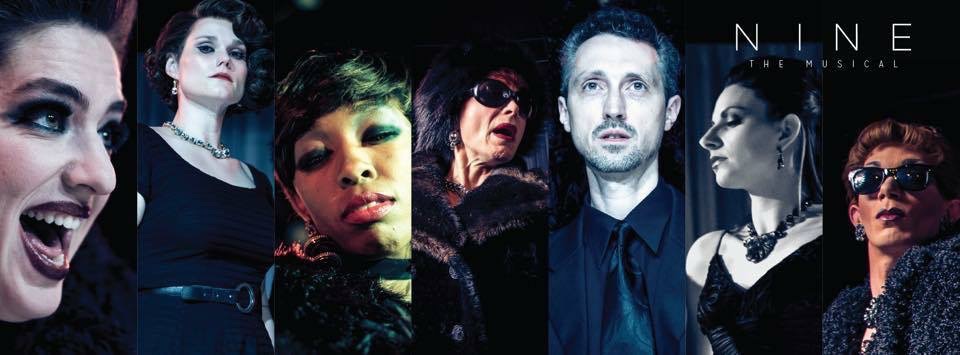
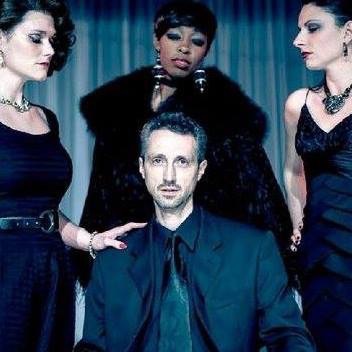
imageOne would be hard pressed to find a stronger volunteer theatre production than the Studio Theatre’s current offering of Maury Yeston and Arthur Kopjt’s Tony Award winning musical NINE. (The term “volunteer” theatre is used because “amateur,” “community,” or “non-professional” belie the quality of the production.)

Rafael Colon Castanera’s production is both visually stunning and full of surprises. The cohesive ensemble is up to the task of telling this compelling, complex tale in an entertaining and enchanting manner. They find the humor and humanity in these sometimes thinly sketched characters and scenarios.

The anchor of the production is James Norris as auteur Guido Contini. He deftly morphs from reality to fantasy while juggling numerous romantic conquests and searching for fulfillment. It is a challenging role because Guido is, at the same time, supposed to be worthy of the audience’s sympathy while also behaving in a unsympathetic manner.  Norris had many touching moments as the man-child desperately seeking something. A fearless actor, he threw himself into the role whether the moment called for romance, humor or desperation. These different moods are also reflected in the wide range of singing styles required of the role–all of which he handled skillfully.

As the younger version of Guido, Price Clark showed maturity beyond his years. His performance of “Getting Tall” at the end wrapped up the show as a lesson to the audience about the challenges and opportunities of getting older. Clark also had a wonderful rapport with both Norris (acting as a mentor to his older self) and Beth Ross as his mother (showing love, respect and embarrassment).

Ross was one of many in the cast who had the chance to showcase a wider range of their talents. Often cast in wisecracking roles, she here displayed a maternal warmth and daffiness as well as weariness and frustration. Likewise Julie Atkins often plays long-suffering, noble women. In this show she had the chance to show her comic skills and her bawdiness as an all-knowing spa proprietor. Often playing heartbreaking heroines, Erin Martinez zealously attacked her role as a tambourine-wielding unapologetically, earthy strumpet.

Antisha Anderson-Scruggs was audacious and bodacious as one of Guido’s mistresses. She was bawdy but never crass as she flaunted her sexuality. Anderson-Scruggs also displayed depth as her character faced disappointment with resolve and a new-found strength.

As another mistress, Rachel Warnick elegantly captured the persona of a classic European beauty who is no longer content with being a trophy. She was grateful and forgiving toward Guido, but resolute nonetheless to pursue her new life.

Mary Ann Hansen put the gal in Gallic as a gamine French film producer. She relished her moments in the spotlight and evoked a bygone era as she celebrated a past career (and joyously took the audience along on this reflective journey). Amy Young and K. L. Martin played her entourage; the pair enjoyably insulted, threatened and otherwise antagonized Guido each in her own way.

Elena McKinnis, Bailey Lamb and Moriah Patterson were a protean trio who functioned as a sort of Greek chorus (or was it Italian chorus?) playing various parts and keeping action moving.  Together with Martin, these performers showcased their dancing talents as showgirls during the musical within a musical numbers.

Heather Smith was Guido’s long-suffering wife. While clearly in love with him, she was also weary of her stagnant life.  A high point of her performance was her sung defense of him to the press in which she is convincing them of his sincerity, while also trying to convince herself.

As director, Castanera elicited layered performances from each of the actors and kept the action moving seamlessly.  As designer, he used a deceptively simple, classically elegant scenic design as a framework for the action. Tyler Herron’s transformative lighting and Greg Wirges’ evocative sound design reflected the many different moods and settings.

The orchestra led by music director Bob Bidewell played almost nonstop through this cinematic, nearly operatic production. This lush score has many moods which were ably performed without overpowering the actors.

The costumes by Castanera are almost worth the cost of admission by themselves. Each character was uniquely clad in black attire that reflected their character down to minute details. It is safe to say this show has the most intricate and lavish costumes of any volunteer theatre production in Little Rock history. For the “film” sequence, Castanera mixed some white in with the black and created fantastic, over the top ensembles (again often with unique and humorous touches). The wigs by Robert Pickens were the same quality as the costumes. Together, wigs and costumes helped define the characters without distracting from the actors’ performances.

As a musical, NINE has challenges. In the wrong hands the characters can be vapid and unlikeable.  It is also vocally demanding. Much like the source material (a semi-autobiographical Italian film), it has moments of absurdity and a plot which wavers between linear and concept. But NINE also has enormous warmth, heart and joy. The Studio Theatre’s production captures these merits without betraying the complexities of the characters. NiINE is another step forward in the development of both The Studio Theatre as well as volunteer theatre in Central Arkansas.

NINE continues April 4, 9-12 and 16-19. Performances are at 7pm except for Sundays, which are at 2pm.

NINE next at Studio Theatre

The 1982 Tony winning Best Musical Nine takes the stage oimagef the Studio Theatre tonight to begin a three week run.

Written by Maury Yeston and Arthur Kopit, and based on Fellini’s autobiographical 8 1/2, it tells the story of Guido Contini, a filmmaker, and the women in his life.

This production is directed by Rafael Colon Castanera with musical direction by Bob Bidewell.  Castanera also designed the set and costumes as well as co-choreographed the musical with Bailey Lamb.  Tyler Herron designed the lighting and served as assistant director.  Robert Pickens designed the wigs, Greg Wirges designed the sound, and Cara Smith is the stage manager.

The cast includes Antisha Anderson-Scruggs, Julie Atkins, Price Clark, Mary Ann Hansen, Bailey Lamb, Elena McKinnis, K. L. Martin, Erin Martinez, James Norris, Moriah Patterson, Beth Ross, Heather Smith, Rachel Warnick and Amy Young.

Performances are tonight (an opening night gala), Saturday (April 4), April 9 through 12 and April 16 through 19.  Showtimes are 7pm on Thursdays through Saturdays, and 2pm on Sundays.