
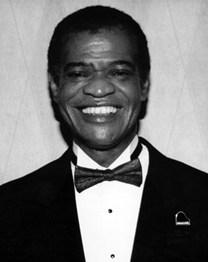
Black History Month Spotlight: Henry Shead

bhm shedHenry Wallace Shead, Sr., better known as “Shed” was born in Fordyce, Arkansas, on March 31, 1941.  He was raised in Little Rock, the son of a reverend, Henry Arthur Shead.  At the tender age of six, Henry was introduced to the keyboards by his mother, Willie LeBethel, who immediately recognized his natural talent. Henry’s mother saw to it that her son had piano lessons, while his father’s church provided the place for his early public performances.

At the start of his career, he performed regularly on a local American Bandstand-type TV show called Center Stage. He also became a fixture at the Little Rock Country Club. He made his mark playing in intimate settings as a solo artist, dazzling listeners with his absolute mastery of the piano, singing in that slightly raspy, yet smooth sounding baritone voice. Shead was awarded a scholarship to the University of Arkansas at Pine Bluff, and majored in music while entertaining around the area. Henry met his wife, Jeanette Mazique, while attending college in Pine Bluff. They married in January of 1964 and had four children.

He became a high school choral director and music teacher, all the while continuing to work in local nightspots like the Drummer‘s Club in Little Rock. In 1971, he moved to Los Angeles where he made his acting debut appearing with Henry Fonda, Richard Dreyfuss and Jane Alexander in William Saroyan’s The Time of Your Life. He wrote and arranged music for stage plays and television, sang the title song for a United Artist film, did studio work on a Johnny Mathis album, and recorded for the Liberty/United Artists and Cream labels.

Shed created national radio jingles and appeared on network television with Dinah Shore, Johnny Carson and Jerry Lewis. He has also performed at parties for the Rockefellers, Pearl Bailey, The Carpenters, President Lyndon Johnson, President Bill Clinton, Henry Mancini, Sergio Mendes, hotelier Peter Morton, Ed McMahon and Barbra Streisand.

In Las Vegas, the city where he lived since 1974, Shed entertained at most of the major hotels, with long engagements at the Aladdin, Stardust, Hacienda, MGM Grand, Caesar’s Palace and Sahara. In 1977, the Henry Shead Band with Denise Clemente was voted Las Vegas’ Best Lounge Act of the Year. His last long-term run was at AJ’s Steakhouse at the Hard Rock Hotel & Casino, retiring in 2007. In October 2006, he was inducted into the Arkansas Black Hall of Fame.

He died on October 5, 2012 in Las Vegas and is buried in Forest Lawn Cemetery in Hollywood CA.

For more on Henry Shead and other inductees into the Arkansas Black Hall of Fame, visit the permanent exhibit at the Mosaic Templars Cultural Center. That museum is an agency of the Department of Arkansas Heritage.

 

Black History Month Spotlight – Art Porter Sr.

bhm art srArthur Lee (Art) Porter Sr. was a pianist, composer, conductor, and music teacher. His musical interest spanned from jazz to classical and spirituals.

Born on February 8, 1934 in Little Rock, he began his music education at home. He played in church at age eight; played his first recital at twelve; and, by fourteen, hosted a half-hour classical music radio program on KLRA-AM. He earned a bachelor’s degree in music from Arkansas AM&N College (now UAPB) in May 1954. The next year, he married Thelma Pauline Minton. Following his marriage, he pursued graduate study a the University of Illinois, University of Texas and Henderson State University.

He began his teaching career at Mississippi Valley State University in 1954.  When he was drafted into the Army, his musical talents were responsible for him being assigned as a chaplain’s assistant in New York.  In the late 1950s he returned to Little Rock and taught at Horace Mann High School, Parkview High School and Philander Smith College.

He also started playing piano jazz in the evenings. This led to the creation of the Art Porter Trio, which became THE music group for events.  Many musicians who came to Arkansas to perform in Little Rock or Hot Springs would often stop by and join in with Porter as he played.  From 1971 to 1981 he hosted The Minor Key musical showcase on AETN.  His Porterhouse Cuts program was shown in 13 states.

Often encouraged to tour, he instead chose to stay based in Arkansas.  He did, from time time, perform at jazz or music festivals.   He also performed classical piano with the Arkansas Symphony Orchestra, founded the Art Porter Singers, and created a music group featuring his four oldest children.  Though Porter received many honors and awards, he found particular satisfaction in the “Art Porter Bill” enacted by the state legislature, which allowed minors to perform in clubs while under adult supervision. Porter’s children thus were able to perform with him throughout the state. Governor Bill Clinton, at the time a huge fan and friend of Porter, often joined Porter’s group on his saxophone.

In January 1993, Porter and his son Art Porter, Jr., performed at festivities in Washington DC for the Presidential Inauguration of his friend Bill Clinton.  In July 1993, he died of lung cancer.  He was eulogized at Bethal AME Church, where he had been organist for 35 years.  He is buried at Little Rock National Cemetery.  Today his legacy lives on in the Art Porter Music Education Fund as well as in the lives of the many musicians and fans he touched.

He was posthumously inducted into the Arkansas Black Hall of Fame in 1994.  For more on Art Porter Sr. and other inductees into the Arkansas Black Hall of Fame, visit the permanent exhibit at the Mosaic Templars Cultural Center. That museum is an agency of the Department of Arkansas Heritage.

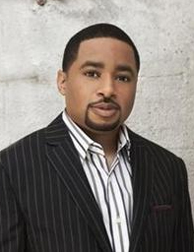
Black History Month Spotlight: Smokie Norful

bhm smokieEarlier this month, W. R. Smokie Norful picked up his latest Grammy Award.  Born in Little Rock, the son of an AME minister, he now pastors his own congregation in addition to his recording career.

He grew up in Pine Bluff, and was deeply involved in his fathers church. He was interested in music from a very young age, reportedly picking out one-finger piano melodies at age two. His parents supported him with music lessons, and unusual for his background, allowed him to experiment with and listen to the current R&B and soul music of the day as well as gospel music. Norful attended Pine Bluff High School, where he occasionally performed in school assemblies and programs. He graduated from the University of Arkansas at Pine Bluff as a History major.

After graduation, taught history for several years at Jack Robey Junior High School, Pine Bluff High School and Evanston Township High School.  For two years he also was the educational director for the Pine Bluff Housing Authority’s after-school program. He has also been a historian for the National Park Service and a congressional aid for the fourth congressional district.

He was ordained an elder in the African Methodist Episcopal church and has been a licensed preacher since 1997. Rev. Norful served as youth pastor, minister of music, and associate minister of St. John AME church in Pine Bluff, under the leadership of Rev. W.R. Norful Sr., and Teresa Norful until relocating to Chicago. He has also leads workshops for the National Baptist Convention USA, Inc.

Currently he serves as pastor of the Victory Cathedral Worship Center in Bolingbrook, which he founded in 2005.  He has since established a second campus also in the Chicago area.  In 2009, he was inducted into the Arkansas Black Hall of Fame.

For more on Smokie Norful and other inductees into the Arkansas Black Hall of Fame, visit the permanent exhibit at the Mosaic Templars Cultural Center. That museum is an agency of the Department of Arkansas Heritage.

Black History Month Spotlight – Jimmy McKissic

bhm mckissicJames Henry “Jimmy” McKissic was born March 16, 1940 in Little Rock and was raised in Pine Bluff by his parents, Rev. James E. McKissic and Rosa Daniels McKissic.  He spent a lot of time in church and by age 3 was playing church hymns by ear. His mother was his piano teacher until age 13. At that point, she decided he needed professional instructors. He soon developed the dream of someday playing at Carnegie Hall.

Growing up in Pine Bluff in the late 1950s and early 1960s, he was well known for musical talent in both the white and African American communities.  He served as a musical coach for a Miss Pine Bluff contestant, Frances Jane Anderson, who later went on to become Miss Arkansas and first runner up to Miss America.  Today, she is better known as Frances Cranford.


As a young man Jimmy played for St. Paul Missionary Baptist Church and the Mt. Calvary Baptist, where his father pastored. He also played for other churches in Pine Bluff and the surrounding area.  He earned a B.S. in Music Education from A.M.&N. College (now UAPB) which was followed by additional study with Marjorie Petray of Berkeley, before receiving a Hertz Scholarship to further his piano and musical training in Geneva, Switzerland. He worked at the American Church in Paris, where he was in charge of young adults for two years.

Establishing residency in Cannes, France, Jimmy’s personality led him to become one of Europe’s most popular entertainers. He performed concerts all over the globe including Switzerland (Geneva, Lucerne, Davos), Franc (Paris, Biarritz, Nice, Cannes), Morocco, England, Kenya (Nairobi, Mombasa), Syria, Holland, Bangkok, Singapore and Brazil, among others. He performed in numerous cities and states in the USA including Arkansas, California, Mississippi, Texas and New York. During his lifetime, while spending 49 years of his life abroad Jimmy played for three U.S. presidents. He also performed 28 at Carnegie Hall in New York City.

After that debut, Jimmy considered it a privilege to invite people to attend his concerts “without charge”. He would say, “To whom much is given, much is required.” He often closed his classical concerts with hymns and/or popular songs as a reminder of his roots and his celebration of the universal nature of music. People from all over the world would come to hear him play from as far away as Australia or as close as Washington, D.C.  He later served on the musical faculty of the University of California, Berkeley.

A PBS documentary, “How Do You Get to Carnegie Hall,” chronicles his odyssey from Pine Bluff to New York, with scores of stops and detours in between.  In 1994, he was inducted into the Arkansas Black Hall of Fame.  Regardless of where he lived or worked, he continued to visit Arkansas and support endeavors in the state.  In 2006, he lent his talents to a fundraiser for the Mosaic Templars Cultural Center.  Four years later, he made the rafters shake in capacity concerts at that now-opened museum as well as the Clinton Presidential Center.  In addition to his musical talent and winning personality, he was known for his unique fashion sense (deliberately not matching his shoes was one trademark).

Two years ago today (February 13, 2013), McKissic died. His funeral services were held on the campus of UAPB, where he had spent so much time growing up.

For more on Jimmy McKissic and other inductees into the Arkansas Black Hall of Fame, visit the permanent exhibit at the Mosaic Templars Cultural Center. That museum is an agency of the Department of Arkansas Heritage.

Black History Month Spotlight – Henri Linton

bhm HenriHenri Linton is a nationally known painter and a well-respected art educator.   Born in Alabama in 1944, he began painting and visiting museums as a young man.  He paid for art supplies by painting signs and shining shoes. After entering a national art contest as a teenager, he won a four-year scholarship to the Columbus College of Art and Design in Ohio. Linton earned a Bachelor of Fine Arts from Boston University and a master’s degree in art from the University of Cincinnati Graduate School of Fine Arts.

In 1969, the chairman of Arkansas AM&N College (later UAPB) art department, John Howard, offered Linton a position on the faculty. With Howard as his mentor, Linton began a career teaching aspiring artists. When Howard retired as chairman in 1980, Linton took the position.

In 1996 and 2000, he was featured in solo shows at the Arkansas Arts Center.  His work is displayed throughout the state, including in public collections at  UAMS, the Winthrop Rockefeller Foundation and the Arkansas Arts Center. He has highlighted some of his works in a book he co-authored, The Art of Henri Linton: Sequences in Time and Space (2003).

Linton also developed UAPB’s University Museum and Cultural Center. Gathering historical photographs, papers, annuals, books, newspaper clippings, tokens, mementos, and a variety of other artifacts, Linton organized, designed, and helped construct all the displays at the museum, which houses Keepers of the Spirit: The L. A. Davis, Sr. Historical Collection, which documents the history of UAPB.

In 2001, Henri Linton was inducted into the Arkansas Black Hall of Fame.  For more on Henri Linton and other inductees into the Arkansas Black Hall of Fame, visit the permanent exhibit at the Mosaic Templars Cultural Center. That museum is an agency of the Department of Arkansas Heritage.

ASO Happy Holidays Concerts

The Arkansas Symphony Orchestra performs their annual, audience favorite holiday concert this weekend.  The first concert was last night but it repeats tonight, Saturday, December 15 at 8pm and Sunday, December 16 at 3pm. at Robinson Center Music Hall. This is the second concert of the Acxiom Pops Live! Series. This concert is sponsored in part by Arkansas BlueCross BlueShield and Arkansas Democrat-Gazette.

The audience will enjoy traditional Christmas carols, Arkansas stars, and special surprises that are sure to entertain the whole family. Everyone is invited to get cozy with the ASO as we celebrate the most wonderful time of year.

Bring the kids to the Holiday Children’s Fair at 2 p.m. on Sunday in the Robinson Center Music Hall main lobby. Touch and play string, woodwind and brass instruments at the Instrument Petting Zoo, visit with Santa and join in on arts and crafts.

Tickets range from $14-$52 and can be purchased online at http://www.ArkansasSymphony.org or over the phone at (501) 666-1761. Thanks to the Entergy Kids Ticket, all kids through 12th grade are free on Sundays with the purchase of an adult ticket. For more information, visit http://www.ArkansasSymphony.org.

Under the direction of Maestro Philip Mann, the concert will featured the Arkansas Symphony Orchestra joined by Ballet Arkansas, the University of Arkansas at Pine Bluff Vesper Choir (under the direction of Dr. Michael Bates), the Ted Ludwig Trio, mezzo-soprano Diane Kesling, the Central Arkansas Children’s Choir (under the direction of Dr. Ryan Fisher), Arkansas Symphony Youth Orchestra musicians and the Two Jewish Guys (the redoubtable Phil Kaplan and Leslie Singer).

Handel’s MESSIAH tonight

PhotoThe Arkansas Choral Society’s annual presentation of selections from Handel’s MESSIAH takes place tonight.

Tonight’s performance of will consist of the Christmas portion of Handel’s oratorio Messiah plus some selected other choruses and solos. The ACS will be joined by the University of Arkansas at Pine Bluff Vesper Choir.  They will be accompanied by musicians from the Arkansas Symphony Orchestra.

The performance takes place at 7:30 p.m. tonight at the First Pentecostal Church, 1401 Calvary Drive (off Interstate 40), North Little Rock. Tickets: $15, $10 students. Call (501) 376-8484 for more information.

The Arkansas Choral Society is under the direction of Dr. Kent Skinner.  He is currently the Director of Choral Activities for the University of Arkansas at Monticello. In this capacity, Dr. SKinner leads the choral program and serves as both stage and music director for the university’s opera and music theatre.

The Arkansas Choral Society is central Arkansas’s oldest continually operating musical organization. Best known for performing Handel’s Messiah in whole or in part every year since 1930, the Society’s repertoire includes both classical and contemporary works. Historically the group has traveled Arkansas performing concerts and has also performed at special events such as the Arkansas Sesquicentennial Celebration in 1986.

The Arkansas Choral Society partners with high school and college choirs throughout Arkansas for its performances, and offers scholarships for college students. The mission of the Arkansas Choral Society is to further and improve choral singing in Arkansas, by performing Handel’s Messiah on an annual basis; by partnering with Arkansas college and high school choruses; and by awarding scholarships to choral singers who are or will be college students, while inviting everyone to join us and to attend our concerts.