Black History Month – Wiley Branton and Robinson Auditorium

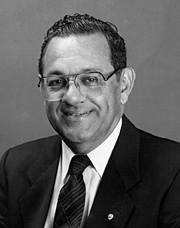
brantonMost of the people who are being featured this month have played at Robinson Center.  But today’s entry, Wiley A. Branton, Sr. worked to integrate Robinson Center.

In 1962, he filed a suit on behalf of several African American residents of Little Rock to integrate the City’s public facilities including Robinson Auditorium.  (The City Board and the Auditorium Commission were named in the lawsuit.)  In 1963, the decision came down and the facilities had to integrate.

This lawsuit was just one of many in which Branton paved the way for equal opportunities for all.  He helped desegregate the University of Arkansas School of Law and later filed suit against the Little Rock School Board in a case that went to the U.S. Supreme Court as Cooper v. Aaron.

A native of Pine Bluff, he graduated from what is now UAPB. After first being refused admission, he later became the fifth African American to attend the UA Law School and the third to graduate.  From 1953 to 1962, he had a law practice in Pine Bluff.  Between 1962 and 1965, Branton worked with representatives of the major African-American civil rights organizations to register almost 700,000 new black voters in eleven Southern states. Following that, he became executive director of the President’s Council on Equal Opportunity and help coordinate implementation of the Civil Rights Act of 1964. He spent 1965 to 1967 at the Justice Department, before becoming executive director of the United Planning Organization (UPO).  After working with a couple of other organizations, he returned to private practice in 1971.  In December 1977 it was announced that Branton would be the new dean of Howard University School of Law. After five years, he joined the law firm of Sidley and Austin in its Washington DC office.

Branton died of a heart attack in December 1988.  Eleven hundred mourners gathered at a memorial service at the Washington National Cathedral in Washington, D.C. Among those present was Supreme Court Justice Thurgood Marshall. The eulogy was delivered by Vernon E. Jordan, Jr..  Then-Gov. Bill Clinton spoke at the Pine Bluff memorial service for Branton.

Black History Month Spotlight – Politics and Law

Mahlon Martin Jr., City Manager Bruce T. Moore, Honorable Lottie Shackelford, Charles Bussey Jr.

Mahlon Martin Jr., City Manager Bruce T. Moore, Honorable Lottie Shackelford, Charles Bussey Jr.

The new Arkansas Civil Rights History Audio Tour was launched in November 2015. Produced by the City of Little Rock and the University of Arkansas at Little Rock allows the many places and stories of the City’s Civil Rights history to come to life an interactive tour.  This month, during Black History Month, the Culture Vulture looks at some of the stops on this tour which focus on African American history.

The Arkansas Civil Rights Heritage Trail was launched in 2011 by the UALR’s Institute on Race and Ethnicity.  Each year, a theme is chosen to honor a particular group of people who were active in Arkansas’s civil rights movement.  Year by year, the trail grows.  The plan is that over time the trail will stretch from the current starting point at the Old State House, down West Markham Street and President Clinton Avenue to the Clinton Presidential Library and Museum, and then back up the other side of the street to opposite the Old State House.

Politics and Law have been two central pillars in civil rights struggles.

The honorees contributed to those struggles in Arkansas in a number of ways. Annie Mae Bankhead was a community activist in Little Rock’s black College Station neighborhood; Charles Bussey was Little Rock’s first black mayor; Jeffery Hawkins was unofficial mayor of Little Rock’s black East End neighborhood; I. S. McClinton was head of the Arkansas Democratic Voters Association; Irma Hunter Brown was the first black woman elected to the Arkansas General Assembly; Mahlon Martin was Little Rock’s first black city manager; Richard L. Mays and Henry Wilkins III were among the first blacks elected to the Arkansas General Assembly in the twentieth century.

Lottie Shackelford was Little Rock’s first black woman mayor; Wiley Branton was head of the Southern Regional Council’s Voter Education Project in the 1960s; William Harold Flowers laid the foundations for the Arkansas State Conference of NAACP branches; Scipio Africanus Jones defended twelve black prisoners after the 1919 Elaine Race Riot; Olly Neal was the first black district prosecuting attorney in Arkansas; and John Walker for over five decades has been involved in civil rights activism in the courts.

The app, funded by a generous grant from the Arkansas Humanities Council, was a collaboration among UALR’s Institute on Race and Ethnicity, the City of Little Rock, the Mayor’s Tourism Commission, and KUAR, UALR’s public radio station, with assistance from the Little Rock Convention and Visitors Bureau.

Fourteen new names added to 2015 Arkansas Civil Rights Heritage Trail

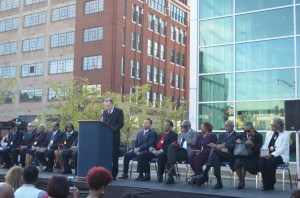
2015 ACRHTLast month, the University of Arkansas at Little Rock Institute on Race and Ethnicity unveiled the 2015 Arkansas Civil Rights Heritage Trail markers. This year’s theme is “Politics and Law” to commemorate the 50th anniversary of the passage of the Voting Rights Act of 1965.

The fourteen new markers are installed at Scott and Markham Streets near the Statehouse Convention Center.

Established in the summer of 2011, the Arkansas Civil Rights Heritage Trail honors those who made significant contributions to civil rights in Arkansas. The trail raises public awareness of the long and rich legacy of Arkansas’s civil rights history.

A 12-inch bronze marker is placed in the sidewalk for each honoree. The trail begins in front of the Old State House Convention Center on Markham Street and will eventually extend to the William J. Clinton Presidential Center and Park and other points throughout the downtown corridor.

This year’s 14 honorees are:

  • Annie Mae Bankhead, who was a community activist in Pulaski County’s black College Station neighborhood
  • Wiley Branton, Sr., who was head of the Southern Regional Council’s Voter Education Project in the 1960s
  • Charles Bussey, who was leader of the Veterans Good Government Association and became Little Rock’s first black mayor in 1980
  • William Harold Flowers, who laid the foundations for the Arkansas State Conference of National Association for the Advancement of Colored People branches
  • Jeffrey Hawkins, who was for decades the unofficial mayor of Little Rock’s black East End neighborhood
  • Irma Hunter Brown, who was the first black woman elected to the Arkansas General Assembly
  • Scipio Africanus Jones, a leading black Republican who defended 12 prisoners for their role in the 1919 Elaine Race Riot
  • Mahlon Martin, who was the first black city manager of Little Rock
  • I.S. McClinton, who was head of the Arkansas Democratic Voters Association, a forerunner of today’s Black Democratic Caucus
  • Richard L. Mays and Henry Wilkins III, who were among the first blacks elected to the Arkansas General Assembly in the 20th century in 1972
  • Olly Neal, who was the first black district prosecuting attorney in Arkansas and later served on the Arkansas Court of Appeals
  • Lottie Shackelford, who was the first black woman mayor of Little Rock
  • John Walker, who for more than five decades has been involved in civil rights activism in the courts, most notably in school desegregation cases

Dr. John Kirk is the director of the Institute.  At the November ceremony, he spoke along with UALR Chancellor Joel Anderson. At a reception following the ceremony, Senator Joyce Elliott gave a toast in honor of the 14 and several of the honorees or their descendants spoke.