Arkansas’ African-American legislators during Reconstruction

On display at the Arkansas State Capitol is a temporary exhibit – Arkansas’s African American Legislators, 1868-1893.  It was created by the Black History Commission of Arkansas and the Arkansas History Commission. It honors the African Americans who made up a significant part of Arkansas’s legislature during the 1860s and early 1870s, and who continued to serve until 1893.

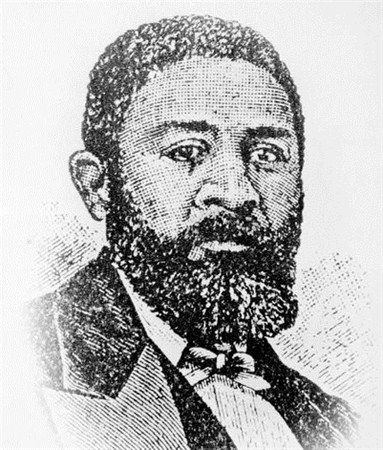
State Rep. William H. Grey, one of first two African Americans to serve in Arkansas legislature

On Tuesday, February 14, 2012, State Representative Fred Allen and Black History Commission chair, Carla Coleman, spoke at the official opening of the exhibit in the lower-level foyer at the Arkansas State Capitol. African Americans participated in Arkansas politics for the first time following the Civil War. After the end of that conflict, the state adopted a new constitution in 1868. Its provisions included the right to vote and hold public office for black males.

Between 1868 and 1893, eighty-five African Americans are known to have served in the Arkansas General Assembly. These legislators included lawyers, merchants, ministers, educators, farmers, and other professionals. The majority served in the House, with nine being chosen for the Senate. Election laws passed by the General Assembly in 1891 and new poll tax regulations in 1893 effectively ended the election of African Americans to the legislature. Blacks did not serve again in the General Assembly until 1973.
Photographs survive for forty-five of the African Americans who served in the Arkansas General Assembly during the nineteenth century and are featured in this exhibit. Forty-three of these are from the holdings of the Arkansas History Commission.

Museum of Discovery: Science After Dark — program for adults

The Museum of Discovery’s monthly “Science After Dark” program is tonight.  Specifically designed for adults, this month’s focus is on the world of Galileo!

Activities include:

  • Explore the Universe in our Starlab…
  • Make a “Throwie”…
  • Visit the Tinkering Studio…
  • Check out the Central Arkansas Astronomical Society…

The program runs from 6pm to 8pm.

Admission is free for members and $10 for non members.
21 and over only (leave the kiddos at home!).
Cash Bar Available.

For more information call 501-537-3073.

Art of Architecture: William Morris and Arts & Craft Movement

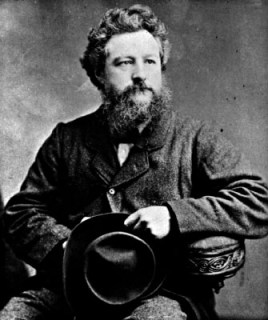
Morris

Tonight at the Arkansas Arts Center, the next installment of the Art of Architecture lecture series takes place.

Dr. Floyd Martin of UALR is discussing William Morris and Arts and Craft Movement. The lecture starts at 6pm in the Lecture Hall at the Arts Center.

William Morris, born in England in 1834, is long recognized as one of the major figures of the Arts and Craft Movement. A designer of textiles, wallpaper, furniture and books, Morris emphasized the importance of natural and organic forms in his work. Seeking inspiration from vernacular architecture and home furnishings, he schooled himself in the techniques and materials used in their construction.

Committed to making “aesthetically pleasing and well crafted things and making them available to as many people as possible”, Morris, had a profound influence on building and design. Though not an architect himself, working in collaboration with with architect Philip Webb, he played a major role in the design of his own home, known as the The Red House, a structure built in 1860 and now part of the British National Trust. Standen, another property with which Morris was associated, is a legacy of the Arts and Crafts movement and, too, part of the Trust.

Martin

Floyd Martin, the speaker, is Professor of Art History at UALR where he has taught since 1982. He has degrees in art history from Carleton College (BA), the University of Iowa (MA), and the University of Illinois at Urbana-Champaign (PhD).

Material for this lecture on William Morris was developed while Martin was on sabbatical from UALR during the spring of 2010, and able to visit the Red House for the first time, and return to Standen, a favorite country house from previous trips. In November he began a three year term as President of the Southeastern College Art Conference, an organization of college and university studio artists, art historians, and art educators, that is the second largest national organization of its type.

John Glenn in Little Rock

Sen. Glenn speaking to kids at the Museum of Discovery

50 years ago today, astronaut Col. John Glenn orbited the Earth.

Seven years and three months ago, as a former U.S. Senator, he visited Little Rock’s Museum of Discovery for a series of events in conjunction with the opening of the William J. Clinton Presidential center.

The Museum opened a new exhibit that week entitled “Space and the Presidency.” While that exhibit is no longer on display at the museum, there are many exciting new exhibits for audiences of all ages.


QQA Preservation Conversations: Urban Farming and Raising Chickens in Little Rock

The Quapaw Quarter Association continues its “Preservation Conversations” series tonight. The topic of the month is: Urban Farming and Raising Chickens in Little Rock. Nao Ueda will lead the discussion.

Preservation Conversations take place the third Monday of each month at historic Curran Hall, which serves as the QQA headquarters in addition to being the Mayor’s Official Reception Hall.

Beginning at 5:00, Curran Hall will be open for patrons to enjoy a glass of wine, programs start at 5:30 p.m. and last for one hour.  After the official program concludes, all are invited to keep the conversation going and enjoy a discounted dinner at nearby Copper Grill, 300 East Third Street.

The Quapaw Quarter Association is a non-profit historic preservation advocacy organization whose mission is to promote the preservation of the historic buildings and neighborhoods of Greater Little Rock. Rhea Roberts is the Executive Director.

Sculpture Vulture: Bill Clinton

Tomorrow is not President’s Day, it is Washington’s Birthday.  But in honor of the only Arkansan to succeed Washington as President, today’s Sculpture Vulture highlights the bust of William Jefferson Clinton which is on the grounds of the Arkansas Governor’s Mansion.

The bust was commissioned in 1994 by the Little Rock Advertising and Promotion Commission.  It had originally been intended as more of a plaque featuring Clinton’s face. But sculptor Jan Woods, who had been selected to create the art, suggested turning it into a bust.  A bust does look more statesman-like and appropriate for the intention of honoring the only resident of the Governor’s Mansion who has also lived in the White House.

Woods created a very life-like, realistic depiction of Bill Clinton.  She captures the slight smile and intense gaze of his face which is part of what creates the feeling of empathy and personal connection even his harshest critics agree he possesses.  Unlike the JFK bust in the Kennedy Center which is abstract or the lifeless gazes so often found in busts and statues of earlier presidents, this bust captures the essence of the man.

The bust sits on the front lawn of the Arkansas Governor’s Mansion to the west of the main gate.  Even when the grounds are closed, it is visible to the public through the fence.

Old State House: Growing Up in Arkansas

The Old State House museum opens a new exhibit today – “Things You Need to Hear: Memories of Growing Up in Arkansas from 1890 to 1980.” The exhibit is a collective memory of growing up in Arkansas from 1890 to 1980 and is told by the people who did it.  Through the exhibit, Growing Up in Arkansas, curator Dr. Margaret Jones Bolsterli conveys the importance of passing family histories from one generation to another.

The exhibit is comprised of five themes: community, family, work, school, and leisure. Bolsterli said that she “envisions this exhibit as a collective memory of growing up in Arkansas told by the people who did it.” Oral histories will be a highlight of the exhibit, some included in surprising ways. Each theme of the exhibit will be encapsulated in its own vignette, detailing a special sense of time and place. Artifacts will be included in each of these settings, revealing the layers of what life was like for past generations. Visitors will experience these time capsules and reflect on the past in Arkansas.

The museum, a division of the Department of Arkansas Heritage, is open from9am to 5pm on Monday through Saturday. On Sunday it is open from 1pm to 5pm.