Day 2 of 2015 LR Film Festival offers Features, Shorts, Student Films and Trivia

lrff_logo-backgroundAt 1:30 today the documentary How to Dance in Ohio starts the second day of the Little Rock Film Festival.  It will be shown at the Ron Robinson Theater.

From 3:30 to 5 the LRFFYouth! Screening of AETN Student Selects will take place, also at the Ron Robinson Theater.

At 5:30, films will start in two different venues.  The Ron Robinson Theater will play host to Made in Arkansas Shorts (Block 2) from 5:30 to 7:30pm.  The films being shown are “MatchMaker” by Robin Sparks, “Hush” by Kenn Woodard, “Dim the Lights” by Dwight Chalmers, “The Pop N’ Lock” by Jadon Barnes, “Rapture Us” by Levi Agee, “The Ask” by Edmund Lowry and “Contact” by Alexander Jeffery.  Following the films, Gerry Bruno will moderate a discussion with the filmmakers.

Also at 5:30, the Clinton School will be the site for the screening of Laurent Bécue-Renard’s Of Men and War.  This film is a staggering, masterful portrait of a California treatment center for PTSD-afflicted veterans of the Iraq war.   Writer and Journalist Jay Jennings will sit down with Director Laurent Bécue-Renard for a Q and A following the screening.

Punk takes over the Ron Robinson at 8pm as Salad Days: A Decade of Punk in Washington DC (1980-90) is shown.  Prior to the film, local punk band Headcold will play.

At 9pm at Stickyz Rock ‘n’ Roll Chicken Shack, Matt DeCample will host a movie trivia challenge.


New Visual Arts Building Announced for UALR thanks to gift from Windgate Foundation

With a target date to open in fall 2017, the University of Arkansas at Little Rock’s newest building will be among the finest higher education facilities in the country for visual arts education.

UALR unveiled the design concept for the 71,636 square-foot building today during a news conference in the Stella Boyle Smith Concert Hall. The visual arts building will be funded by a $20.3 million grant award approved by the Trustees of the Windgate Charitable Foundation, headquartered in Siloam Springs. The grant, designated for building construction and equipment, is the second largest gift in UALR’s history.

UALR serves about 1,000 students each year who are enrolled in visual arts classes. This semester, 180 students have designated visual arts as their major, and there are 16 full-time faculty devoted to visual arts programs.
Entry Drive
The new facility, to be located on the UALR campus at 28th Street and East Campus Drive, will bring together under one roof the applied design program currently located at University Plaza and the art history and studio arts programs currently in the Fine Arts Building, a structure built in 1977 to house the departments of art and music.

The new building will integrate UALR’s Applied Design, Art History and Studio Arts classes into a facility that promotes collaboration and creativity between students, faculty and guests under one roof. Drawing/Painting/Printmaking/Art History and 2D Design and Illustration classrooms will be located on the north side of the building to make use of the large expanse of glass along 28th Street.

Faculty and administrative offices will be oriented on the south side to take advantage of the campus and natural plaza views. Photography and Graphic Design spaces will complete the programs that are housed within the visual arts track.

Students and visitors have the opportunity to experience two generous art galleries within the building showcasing both permanent and transitional exhibits or attend a guest lecturer speaking in the 80-seat lecture hall and reception venue on the ground floor.

The Applied Design spaces will be organized within a single story industrial high bay section of the building to take advantage of the expansive volumes of space necessary for Sculpture/Metalsmithing/Furniture Design /3D Craft & Fibers/Ceramics. Each of these spaces has access to an outdoor studio space that allows work on large pieces with natural ventilation and sunlight.

The building will be designed to achieve a LEED Silver rating with the USGBC LEED (Leadership in Energy and Environmental Design) rating system.

The Bachelor of Fine Arts (BFA) in Art/Applied Design track, a unique program in Arkansas, primarily serves students interested in the study of traditional arts and crafts representative of the South Central region of the U.S., with particular emphasis upon craft practices within Arkansas.

“The vision of the Department of Art is to be a destination center for students intent on pursuing lifelong careers in the visual arts,” said department chair Tom Clifton. “This new facility will enable the department to embrace traditional, contemporary, and technological approaches to the visual arts in central Arkansas and provide opportunities for students throughout the southern region of the United States.

The Windgate Charitable Foundation has provided consistent and visionary support of the UALR Department of Art through scholarships, program support, visiting artists, workshops and gallery exhibitions.


Heritage Month – Fones House

FonesThe Fones House, located at 902 West Second, has two areas of significance.  Architecturally, the house is a leading example of the Victorian Italianate style, which is rare in Little Rock.  Secondly, the builder, Daniel G. Fones, was a leading Little Rock businessman.

The two and one-half storey Fones House is constructed of red brick.  The exterior features a bracketed frieze topped by a steep gabled roof with wrought iron cresting, decorative window heads in several different styles and ornately railed balconies.

Daniel Gilbert Fones was born in Decatur, Georgia, on August 19, 1837, the eldest son of Alvan T. and Adelia A. Cone Fones.  Though raised in relatively luxurious surroundings, after his father’s death he was apprenticed as a tinsmith at the age of 15.  In 1855, he came to Pine Bluff, and in 1859, moved to Little Rock.  That year, he formed the Fones Brothers’ partnership which would eventually became known as Fones Brothers’ Hardware and existed until 1987.

At the outbreak of the Civil War, Fones enlisted in the Confederate Army; after the war he returned to Little Rock.  He remained a civic leader throughout the rest of his life.  The Fones House was constructed in 1878 for Fones and his wife.

Fones was president of the Fones Brothers’ Hardware Company, President of the Arkansas Building and Loan Association, Vice President of the Equitable Building and Loan Association, President of the German National Bank and was associated with many other financial enterprises.  He served as an alderman in Little Rock and in 1916 was elected to the Little Rock School Board.

Fones married Texanna Dustan Reaves on May 30, 1867, who died in 1893.  In 1899 he was married to Mrs. James Hennegan Tucker.  Fones, who had no descendants, died May 28, 1916.

The Fones House was added to the National Register of Historic Places on August 19, 1975.

The 2015 Little Rock Film Festival kicks off tonight

LRFF2015posterThe 9th annual Little Rock Film Festival gets underway tonight!

At 7:30, the film King Jack will be shown in the Ron Robinson Theater.

Jack is a scrappy fifteen year-old kid stuck in a run-down small town. Trapped in a violent feud with a cruel older bully and facing another bout of summer school, Jack’s got all the problems he can handle. So when Jack’s aunt falls ill and his runty younger cousin must stay with him for the weekend the last thing Jack wants to do is look after him. Unfortunately no one really cares what Jack wants. Set over a hazy summer weekend, King Jack is a tough and tender coming of age story about friendship and finding happiness in tough surroundings.

King Jack won the Audience Award at the 2015 Tribeca Film Festival. Director Felix Thompson, and the break-out young star Charlie Plummer will be in attendance.  LRFF Programmer Levi Agee will moderate.

Following the film, Little Rock Film Festival Presenting Sponsor Cache Restaurant and Bar will be hosting the opening night party.   Music Provided by Rodney Block & The Real Music Lovers. This event is open to the following pass holders: Sponsor, Filmmaker, Press, Gold and Silver.

Heritage Month – Curran Hall

Curran HallCurran Hall, sometimes known as the Walters-Curran-Bell House, stands at 615 East Capitol Avenue and is one of the few remaining antebellum properties in Little Rock.  It was built in 1842 and was listed on the National Register of Historic Places on January 1, 1976.

Curran Hall was constructed in the Greek Revival style. The original one-story structure of the house was made with walls three bricks thick, cypress interior and exterior, and solid wood trimming and was settled on a raised foundation. The original interior floor plan was a four-room, central-hall type, although it was later added to by various owners. Each of the four rooms contains its original fireplace and classically designed mantel. The original interior of the house remains relatively undisturbed; however, the two rear additions have been fully transformed. In 1848, a children’s playhouse was constructed at the back of the house. The existing playhouse was reconstructed in the 1960s with materials from various historic houses in Little Rock.

Over the years, Curran Hall has been owned by several important Arkansas families. It changed hands fairly frequently from 1842 until the 1881.  At that point in time, Mary Eliza Bell, the daughter of Gazette founder William E. Woodruff moved in.  Her descendants stayed in the house until 1993.  In 1996, the structure was sold to the City of Little Rock.  The City’s Advertising & Promotion Commission and a private foundation raised money to restore the building.  After six years and $1.4 million, the house was formally opened to the public as the Little Rock Visitor Information Center on May 18, 2002.

In March 2007, the Quapaw Quarter Association took over the management of Curran Hall as the City’s official visitor information center.  The building is open daily for visitors to tour as well as learn about activities throughout the City.

Today, (Sunday, May 10), Curran Hall is one of the featured properties on the 51st Annual Quapaw Quarter Association Spring Tour of Homes.

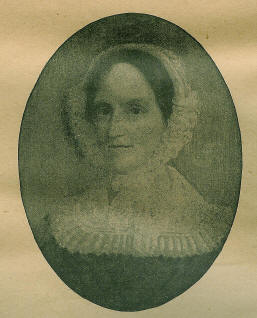
Mother’s Day Little Rock Look Back: Eliza Bertrand Cunningham, Founding Mother of Little Rock

Eliza CunninghamEliza Wilson Bertrand Cunningham was the First Lady of Little Rock.  She literally was the first lady and the founding mother.

She became the first permanent female resident when she joined her husband Matthew Cunningham in Little Rock.  She gave birth to Chester Ashley Cunningham, the first baby born in Little Rock, as well as several other children with Cunningham.  When he became the first Mayor of Little Rock, she was the first First Lady of Little Rock. They hosted the first Little Rock Council meeting at their house on what is now the block downtown bounded by Third, Main, Fourth and Louisiana Streets.  Her son Charles P. Bertrand, from her first husband, later served as Mayor of Little Rock, making her the only woman to be married to a Mayor and be mother of a Mayor.

Born in Scotland in December 1788, she emigrated with her parents to the United States as a young girl.  In 1804 or 1805, she married a French businessman, Pierre Bertrand in New York City.  She lived in New York City, while he traveled to his various business ventures.  He never returned from a trip to his coffee plantation in Santo Domingo and was presumed to have died in 1808 or 1809.  She and Bertrand had three children, Charles Pierre, Arabella and Jane. (Jane may have died in childhood, because records and lore only indicated Charles and Arabella coming to Little Rock with their mother.)

Eliza married Dr. Matthew Cunningham in New York City.  He later moved to Saint Louis and settled in Little Rock in early 1820.  Eliza and her two children came to Little Rock in September 1820.  In 1822, she gave birth to Chester Ashley Cunningham, the first documented baby born in Little Rock.  (There are unsubstantiated reports that at least one slave child may have been born prior to Chester.)  She and Matthew also had Robert, Henrietta, Sarah and Matilda.  The latter married Peter Hanger, after whom the Hanger Hill neighborhood is named.

Dr. Cunningham died in June 1851.  Eliza died in September 1856. They and Chester (who died in December 1856) are buried in the Hanger family plot at Mount Holly Cemetery.

Today from 1 to 5, the 51st Quapaw Quarter Association Spring Tour of Homes

qqa tourThe Quapaw Quarter Association will hold its 51st Spring Tour of Homes next month in historic downtown Little Rock. The event has existed since 1963 and this year we continue to celebrate decades of remarkable preservation that has made downtown Little Rock the South’s most impressive urban renewal success story!

Tickets for this award winning tour of downtown are $25 today. The tour runs from 1pm to 5pm.

The Sunday tour will feature three trolleys throughout the route.
Trolley Stops: 
  • 509 Scott Street (Christ Episcopal Church)
  • 615 E Capitol Avenue (Historic Curran Hall)
  • 1201 Commerce Street (Firehouse Hostel and Museum)
  • Daisy Bates and Main Street(Bernice Gardens)
  • Daisy Bates and Broadway
  • 13th and Spring Street
QQATicket Booths: 
  • 615 E Capitol Avenue (Historic Curran Hall)
  • 1201 Commerce Street (Firehouse Hostel and Museum)
  • Daisy Bates and Broadway
Restrooms: 
  • 615 E Capitol Avenue (Historic Curran Hall)
  • 1201 Commerce Street (Firehouse Hostel and Museum)


Here are the properties to be featured!

Historic CURRAN HALL, ca. 1842

615 E. Capitol Avenue

Construction of Curran Hall began in 1842. The home was a wedding gift from Colonel Ebenezer Walter, to his wife Mary Starbuck. She unfortunately passed before the home was completed. The home would then be sold the home to James M. Curran in 1849. The home remained with the Currans until 1881, and Mary Curtis Bell, daughter of William E. Woodruff, in 1884. The home stayed in the Bell family until 1997, when local preservationists and the City of Little Rock joined forces to save it. The home was restored through this partnership to its original glory as a Greek Revival, and today serves as Little Rock’s Visitor Information Center.

1411 Broadway, ca. 1896

The history of construction for this home is unknown, beyond that it was likely constructed before 1896. The primary owner after its construction, throughout the 1890s and early 1900s was Frank Carl, a businessman. The structure then had various owners from 1912- 1922 and was divided up as a rental property from 1922-1935. The home was officially the Broadway Apartments from 1935 to 1975 and became commercial property after that until the Miller family purchased the home for rehabilitation. The home is now a single family home once again and has been restored with historically appropriate details.

HAILE COTTAGE, ca. 1880s

417 W. 13th Street

The Haile family, Andrew J. and his mother Annie, likely constructed the cottage in the late 1880s. This home appears to have been built as a rental property. The Haile Cottage did not remain under the ownership of the Haile family for long. It changed hands many times throughout the late nineteenth and early twentieth centuries. Throughout the early 1900s, there were several additions on the east and west sides of the home. There was also a second story added. It was not until 1989 that the home would be purchased to be restored to its original beauty.Carl Miller, Jr. purchased the home for restoration. When the home was purchased, it had seen years of deterioration and overall neglect. Miller’s rehabilitation restored the Haile Cottage to its original Folk Victorian charm.

CHRIST EPISCOPAL CHURCH, 1941

509 Scott Street

In 1839, Leonidas Polk helped organize Christ Episcopal church in Senator Chester Ashley’s home. It was named after Christ Church in Alexandria, Virginia, of which several of the group had been members. Bishop Polk arranged to buy property at the church’s present location, 5th & Scott Streets, in 1840. In 1846 the first church building was opened. By 1873, that building had been destroyed by fire. By 1887 the funds had been raised and a new building was opened. In 1938, before an unveiling of a new interior, this building burned as well. Plans were again drawn for a new church, this time in a neo-gothic style, with the exterior of Arkansas stone rather than the red brick of the former church. In September of 1941 the current building was opened. Guided tours of Christ Episcopal Church will begin at the front door and take place at 2, 3, and 4 p.m.

FIREHOUSE HOSTEL AND MUSEUM, ca. 1917

1201 Commerce Street

Little Rock Fire Station no. 2 is one of the most visible and well known landmarks in the MacArthur Park Historic District. The firehouse was opened in 1917 after moving from its Main Street location to the western end of City Park, now known as 1201 S. Commerce. The fire station, as seen today, is definitively Craftsman. Originally it featured a large porch and had some Spanish Revival elements as well. In 1959 the station was closed when a new station opened on 9th street. The building has served as a meeting location for clubs and organizations in the community, and has been managed by the City of Little Rock since the late 1990s. In 2006 Hosteling Arkansas, Inc. began plans to turn the firehouse into a hostel and museum. It is set to open later this year.

HERRON HORTON OFFICE/STUDIO/RESIDENCE, 2008

1219 South Spring Street

Architects Jennifer Herron and Jeff Horton designed and built their 2008 office and art studio as a separate structure beside the home they designed and built at the same time for their family of four. The two energy efficient structures are joined through a passageway and transition space that connects home to work and work back to home. As infill in an historic neighborhood at a point where residential begins to transition to commercial, the Herron Horton office/studio and residence offers a thoughtful and elegant counterpoint to the older homes and commercial businesses surrounding them.