
I was not blessed with athletic ability. Or coordination. But I am very competitive.
My lack of skill did not stop me from dragging my parents to four years of soccer and a concurrent six years of basketball.
 Because of my lack of talents on the field, and my interest in competition, I have found myself drawn to sports journalism and sports history. Which, being in Central Arkansas, lead me to the writing of David McCollum.
Disclosure, for several years I attended church with him and his family. My parents and sister still do. But he was such an unassuming gentleman, my interest in his writing sprung not from familiarity with him. It came from what and how he wrote.
With a career of over 50 years, David entered the newspaper business as it was starting the transition from hot lead and pecking out a story on typewriters into the world of computers and electronic filing. Likewise the field of sports journalism was transitioning from the era of colorful, hyperbolic language (which might not always be 100% accurate) into a time of bare facts crammed into increasingly shrinking column inches.
David did not try to be a colorful sportswriter. He was not trying to have the spotlight shown on him through his writing. In his stories, David sought to serve the sports. But he brought to his writing a sense of history and style that hearkened back to bygone days without sacrificing the facts that he knew his readers wanted. In serving his sports, he also served his readers.
While often the smartest guy in the room, especially when it came to Conway sports, David never acted like it. In his prose, he shows his expertise without lording it over the reader. He used his knowledge to let his readers be more informed. He was like that favorite teacher we all had at least once in high school or college. He wanted to bring us along on the journey.
For a sportswriter, working in Conway must have been a dream job. Both UCA and Hendrix have active athletic programs. And the Wampus Cats of Conway have long been dominant. In addition, during his career, David was able to see towns like Vilonia, Mayflower, and Greenbrier grow and develop into powerhouses in their own high school sports classifications.
Over the years, as I’ve been seeking to learn more about a sports topic, I’ve often gone back to his writing on a player, an event, a game. Whether it was a story or an interview, his trademark understated and engaging prose was on display. Earlier this year, I was needing background on a Little Rock Touchdown Club scholarship because we were honoring a recipient at Little Rock City Hall.
There it was.
In a column David wrote a few years ago, there were not just the facts, but the emotions. In writing about how some Texas Longhorns had created a scholarship in Little Rock to pay tribute to the memory of one of their own, David touched on the sentiment without being maudlin. He did not pile on the irony of Longhorns who beat the Hogs in the 1969 shootout creating a scholarship here. He let the story speak for itself. The kinship the two teams feel for each other now came through in David’s prose.
As David’s son Gavin said in making the announcement his father had died, “there were more stories for him to write.” Yes, there were. I feel sorry for future athletes in Faulkner County that they won’t get to be interviewed by him. I feel sorry for the readers who won’t get his take on a future game.
David had seen enough games to know that the outcome does not always go your way. As much as he would probably be uncomfortable with the outpouring of emotions that are now going on, I think he would understand we need to do this. We need to express our sadness. It helps us to move on to the next challenge. And part of that challenge is a world without him. I know he would be very pleased to see, just as a team rallies together, people are rallying together to support his wife and son.
So thank you, David McCollum. For your life and your commitment to excellence. Though it has fallen out of usage these days, I’m old school enough to pay tribute to your life and career with an old journalism and PR tool to indicate the end.
David McCollum -30-
 While this headline may say “Little Rock Look Back,” Lottie Shackelford is still very much focused on the present and the future!
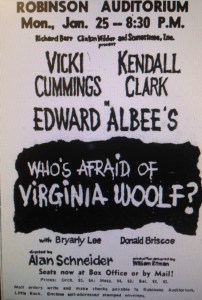 As April winds down, today’s featured play did not actually win the Pulitzer Prize for Drama. In 1963, Edward Albee’s Who’s Afraid of Virginia Woolf? was the choice of the Pulitzer Drama Jury to receive the award. However, each Pulitzer category’s jury can be overruled by the Pulitzer Board. In 1963, they chose not to award the Pulitzer in Drama.
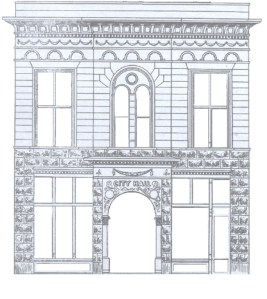 2018 marks 150 years since the opening of the 1868 Little Rock City Hall, which was located at 120 to 122 West Markham. This two story building was the home to Little Rock civic life from 1868 until 1908, when the current building was opened.
 August Wilson received his second Pulitzer for The Piano Lesson in 1990. It was thirteen years later, that play would take the stage of Arkansas Rep in January 2003 And while he was not the lead, local favorite Lawrence Hamilton shone in the play.
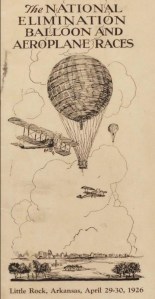 On April 29, 1926, nine hot air balloons took off from Little Rock’s airport (which was actually just an airfield at the time) in a national race to win the Litchfield Trophy. In addition to the trophy, the winner would be on the American team in an international balloon race in Belgium.
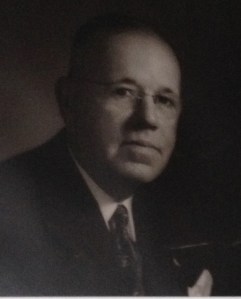 On April 28, 1883, future Little Rock Mayor Sam M. Wassell was born. His grandfather John W. Wassell had been appointed Mayor of Little Rock in 1868. He is the only Little Rock Mayor to be a grandson of another Little Rock Mayor.
 Little Rock Culture Vulture