February Frieze Frame Friday, Part Deux

Today’s February Frieze Frame Friday is the entrance to the old Little Rock City Jail.  This building, which sits behind City Hall, was the jail from the 1930s through the early 1960s.  It now serves as a parking garage, Parks & Recreation maintenance area, and city employee fitness facility.

Though the entrance below the frieze has long been bricked in, the jail bars are still detectable above the frieze.

This building was constructed by the WPA. The classical meets deco style of the frieze is typical of the works from that era.

For decades a metal awning bisected the frieze making it undetectable to people who walked by it.  But in 2007, as part of some renovations to the building (spearheaded by city employee Susan K. Langley), the awning was removed and the frieze became more prominent.  (As prominent as can be when the frieze is right at Broadway street level and is blocked from Broadway traffic by balustrades.

Vote for LR Main Street!

dwell believes that designing for the modern world begins with honoring the precedents of the past. So it joined forces with Sub-Zero to conceive a contest dedicated to rethinking preservation!  Little Rock was nominated and now it is time to vote! A panel of judges selects the winner from the top ten that receive the most votes.  dwell donates $10,000 to a worthy preservation organization. To get in the preservation spirit read the special digital issue Rethinking Preservation presented by Sub-Zero.

This is what they say about Little Rock:

Main Street Little Rock, Arkansas represents a well-known story. In its heyday, it was filled with department stores, restaurants and offices. It was the center of commerce, close to government, and had architecturally renowned buildings. Arkansas’s history can be connected to Main Street for generations. Today, there are a handful of businesses along the street supported by loyal locals, but most former department store and office buildings are now vacant or have been demolished for surface parking. Main Street has struggled for the past few decades, but is now poised to be a leader in downtown redevelopment in the South.

Little Rock has seen significant success with the development of areas surrounding Main Street, and there are new tax incentives in place for historic rehabilitation projects. Sadly, several historic buildings have been lost unnecessarily, but many significant buildings remain. Main Street is worthy of preservation because it represents the heart of Arkansas and it presents a rare opportunity to make Little Rock a leader in sustainable development.

Imagine: well designed, environmentally sensitive infill buildings working in conjunction with LEED certified rehabilitated historic buildings.

Sculpture Vulture: The Spirit of Central High

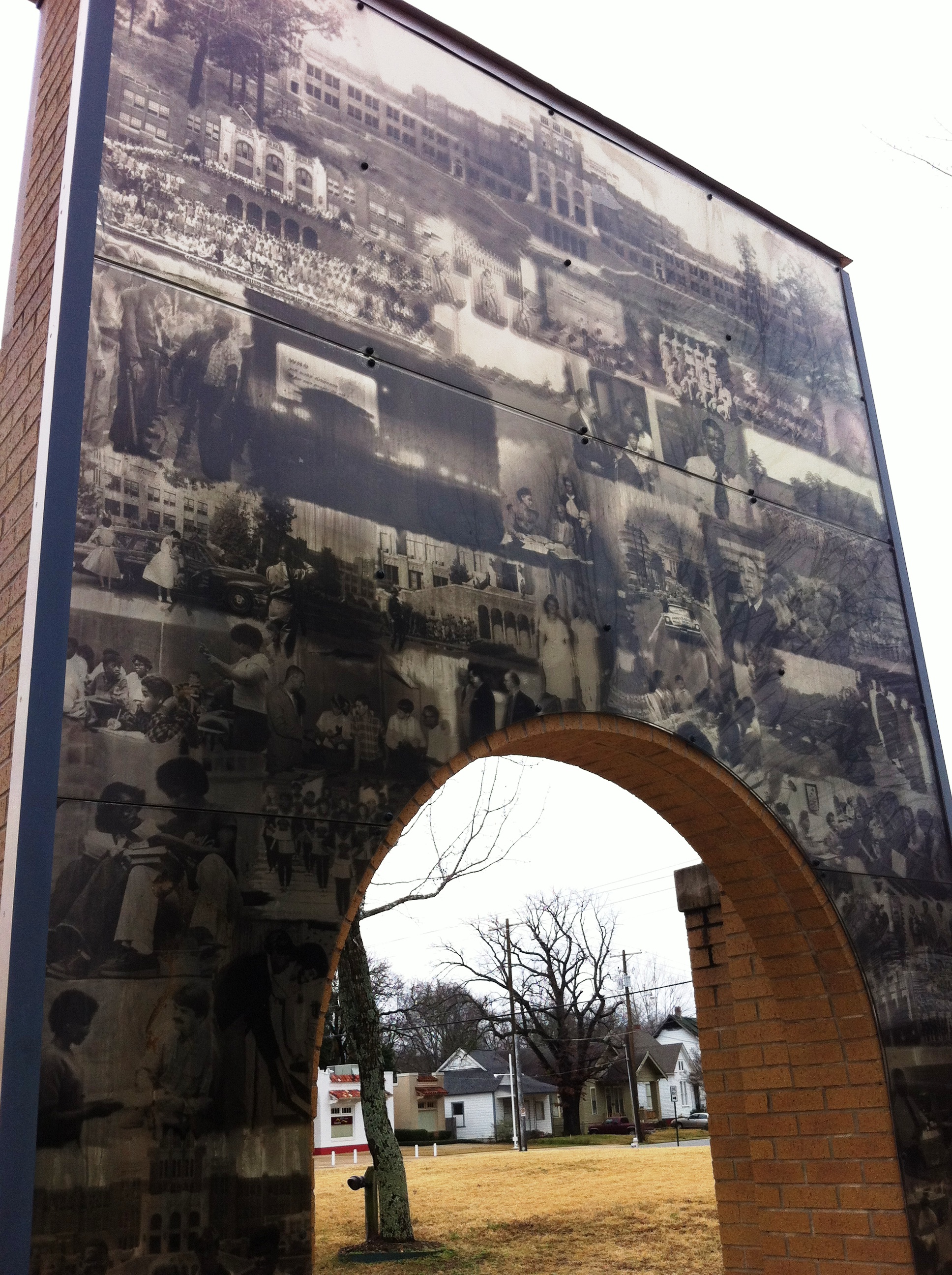
Located at the northwest corner of Park and Daisy L. Gatson Bates is the Central High School Commemorative Garden. The showcase of the garden is a sculpture created by Michael Warrick and Aaron P. Hussey.

The focal point of this piece is a pair of archways. The outward facing sides of each archway evokes the architecture of the historic high school through the buff bricks, cornice work and even statues.

On the reverse are a series of black and white photographs depicting the rich history and legacy of the school from its construction in 1927 through 2000.

By depicting a variety of decades and events, this sculpture does not shy away from 1957 there are images from that school year included. These several dozen photographs represent the hundreds of thousands of students who have gone to high school in this building since the doors first opened.

Nor does the sculpture try to explain away or justify actions. Instead it embraces the roots of excellence which gave birth to the school and shows the manifestation of that excellence in modern times which has been made possible by the crucible that was the flashpoint of 1957.

February Frieze Frame Friday

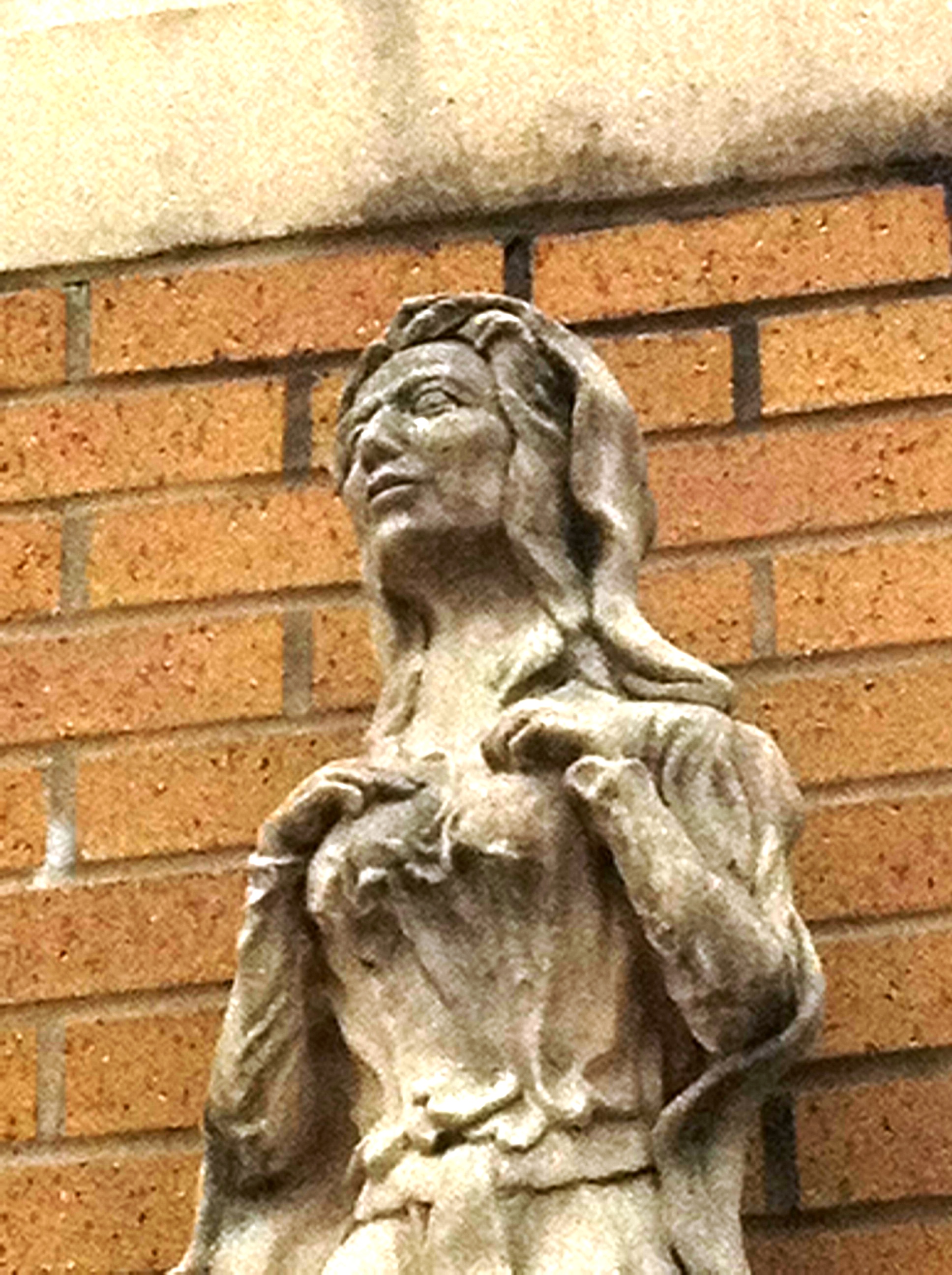
Each Friday in February, the Little Rock Culture Vulture will feature a frieze which can be found in Little Rock.

Today’s frieze is inspired by friezes from ancient cultures showing a laborer at work.  The shirtless and muscular nature of the man is evocative of friezes that can be seen today in Greek or Roman ruins.  His hair, breeches and shoes are more in keeping with the late 1700s/early 1800s as is the style of the printing press.

It is found, fittingly, on an annex to the Arkansas Gazette building, which now houses the lower grades of the eStem Public Charter School.

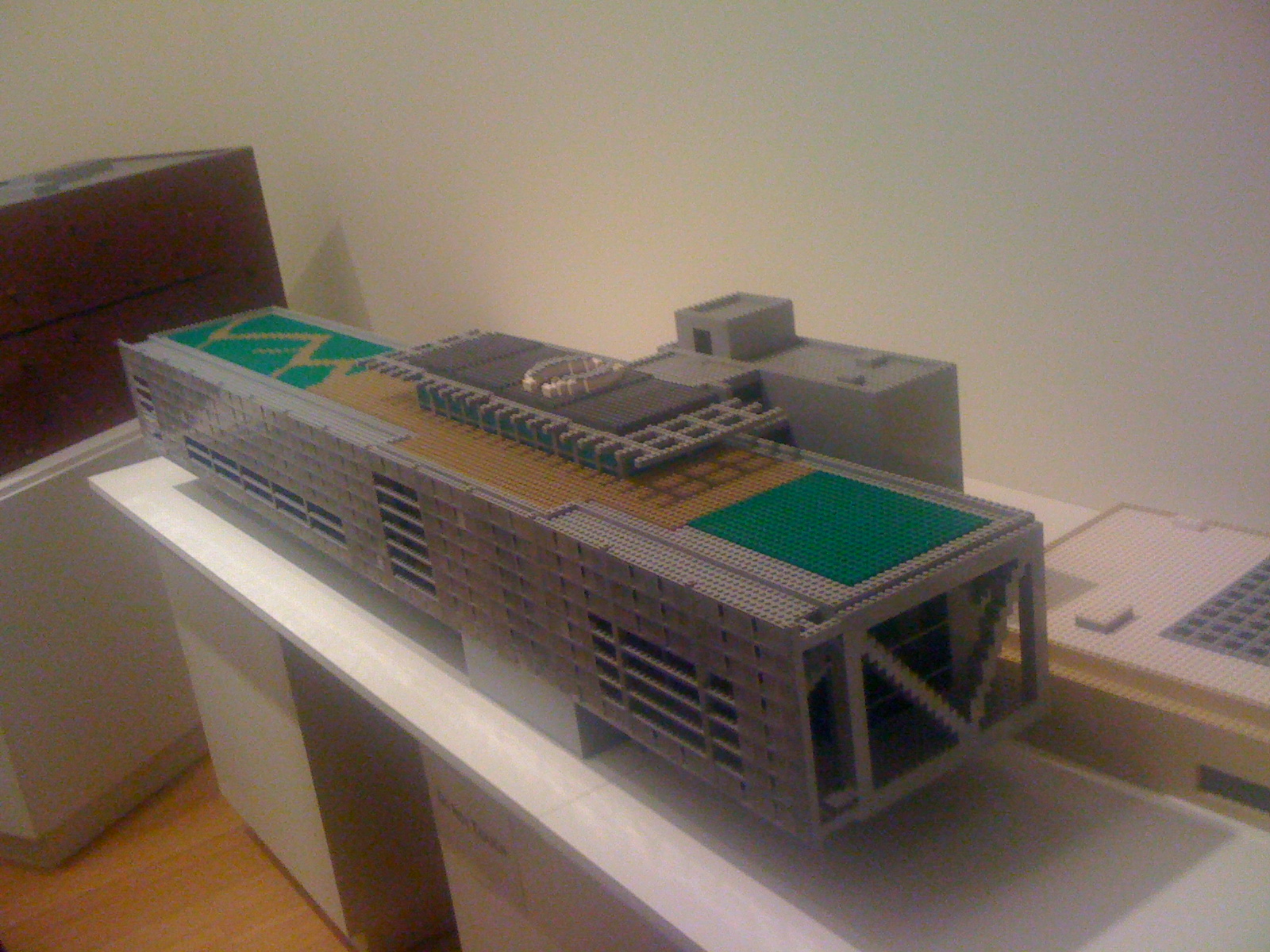
LEGO artist back at Clinton Center tonight

LEGO portrait of President Clinton

Back by popular demand, the Clinton Presidential Center hosts a second appearance by lawyer-turned-artist Nathan Sawaya.  In his remarks, he will relay how his childhood love of LEGOs has transformed into his artistic expression.

Sawaya’s works on display at the Center include buildings, furniture, animals and even “paintings.”

The exhibit “Art of the Brick” continues until February 12.

After the program, guests are invited to tour the exhibit. Sawaya will be signing copies of his book, The Art of the Brick Pictorial, which is available for purchase at the Clinton Museum Store.

Admission is free. Children are welcome. To reserve your seats e-mailing Joy Secuban at jsecuban@clintonfoundation.org or call (501) 370-8000.

Art of Architecture: William E. Massie – “Physical Delineations”

This month brings two editions of the “Art of Architecture” lecture series.  Tonight is the second as William E. Massie discusses Physical DelineationsThe program begins at 6:00pm in the lecture hall of the Arkansas Arts Center.

William E. Massie received a Bachelor of Fine Art in Architectural Studies from Parsons School of Design, New York, NY. He subsequently received a Master of Architecture from Columbia University Graduate School of Architecture. Upon graduation he worked for Robertson + McAnulty Architects and James Stewart Polshek and Partners. In 1993 he started his own company while simultaneously accepting a teaching position in the Graduate School of Architecture at Columbia University where he was appointed as the Coordinator for Building Technologies Research.

Massie is currently the Architect-in Residence / Head of Architecture Department at Cranbrook Academy of Art in Bloomfield Hills, Michigan and a Tenured Professor of Architecture at Rensselear Polytechnic Institute in Troy, NY. He has taught at Montana State University in Bozeman, Montana and Parsons School of Design in New York City.

He has participated as a visiting critic at many institutions nationally including, Harvard, Yale, California Polytechnic Institute and Lawrence Technological University. In 2005 he participated as the Keynote Speaker and appointed Bruce Goff Chair at the University of Oklahoma on the future of technology and digital processes in architecture and architectural education.

The 2011-2012 Art of Architecture lecture series is sponsored by the Architecture and Design Network, with support from the Central Arkansas Chapter of the American Institute of Architects, the Arkansas Arts Center and the Fay Jones School of Architecture.

QQA Preservation Conversations: Historic LR Schools

The Quapaw Quarter Association continues its monthly education series this year entitled “Preservation Conversations.” They take place the third Monday of each month at historic Curran Hall, which serves as the QQA headquarters in addition to being the Mayor’s Official Reception Hall.

The 2012 series kicks off tonight with “Historic Schools of Little Rock.”  The featured speaker is Rachel Silva, who is the Preservation Outreach Coordinator for the Arkansas Historic Preservation Program.

This city has a rich history of architecturally significant schools.  Though quite a few have been lost due to lack of care or disinterest in preservation, many are still standing today – even if they do not function as school buildings. The Kramer School, East Side Junior High and West Side Junior High now all serve as residential properties in part or toto. Lee Elementary is now the Willie L. Hinton Neighborhood Resource Center. But Little Rock Central High School, Pulaski Heights Elementary and Middle School and Dunbar Middle School are all historic structures which still serve as schools.

Beginning at 5:00, Curran Hall will be open for patrons to enjoy a glass of wine, programs start at 5:30 p.m. and last for one hour.  After the official program concludes, all are invited to keep the conversation going and enjoy a discounted dinner at nearby Copper Grill, 300 East Third Street.

The Quapaw Quarter Association is a non-profit historic preservation advocacy organization whose mission is to promote the preservation of the historic buildings and neighborhoods of Greater Little Rock. Rhea Roberts is the Executive Director.