
Central to Creativity – Gail Davis

gail_davisGail Davis is best known as TV’s Annie Oakley.  She was born Betty Jeanne Grayson on October 5, 1925. Her mother was a homemaker and her father, W. B. Grayson, was a physician in McGehee (Desha County), which did not have a hospital, so her birth took place in Little Rock (Pulaski County).

When her father became the state health officer, the family moved from McGehee to Little Rock, where Grayson attended Little Rock High School. Grayson rode horses and was a tomboy growing up. Grayson also held various beauty titles in high school and college, and she sang and danced in local shows from the time she was eight.

While studying dramatics at the University of Texas in Austin, she married Robert Davis in 1945, with whom she had a daughter, Terrie (the couple divorced in 1952). After World War II, they moved to Hollywood, where she worked as a hatcheck girl until being discovered by an agent who obtained an MGM screen test for her. She was signed to a contract, with her first appearance in 1947’s The Romance of Rosy Ridge, starring Van Johnson.

She worked steadily in movies, including fourteen films with Gene Autry in the late 1940s and early 1950s. He was impressed with her, changed her name to Gail Davis, and cast her as the star of the Annie Oakley TV show, which he produced. The show ran for eighty-one episodes from 1954 through 1956.

After her TV series ended, she appeared as Annie Oakley in the 1959 film Alias Jesse James starring Bob Hope. In that film, she appears in an uncredited role along with such other stars, also uncredited, as Gary Cooper, Bing Crosby, Roy Rogers, James Garner (as Bret Maverick), and Fess Parker (as Davy Crockett).

Her television appearances include guest roles on The Lone Ranger, The Gene Autry Show, The Cisco Kid, and Death Valley Days, as well as a 1961 episode of the Andy Griffith Show (Episode 37, “The Perfect Female”), her final appearance as a performer and in which she demonstrated her trademark sharpshooting.

Gail toured with Gene Autry’s Wild West show and made appearances as herself on TV programs such as Wide, Wide World: “The Western” (1958) with fellow Arkansan Ben Piazza. For her work in television, she was awarded a star on the Hollywood Walk of Fame, located at 6385 Hollywood Boulevard, and in 2004, she was inducted posthumously into the National Cowgirl Hall of Fame.

Gail Davis died of cancer in Los Angeles on March 15, 1997, and is buried in Hollywood’s Forest Lawn cemetery.  In 2007, she was posthumously inducted into the Arkansas Entertainer’s Hall of Fame.  In 2016, a room was named in her memory at the newly renovated Robinson Center.
Central to Creativity – Dee Brown

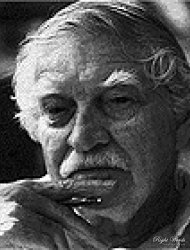
Dee BrownDorris Alexander (Dee) Brown was born in 1908 in Louisiana.  After spending time in Stephens, Arkansas, his family relocated to Little Rock.

He lived more than half his life in Arkansas and, beginning as a teenager, wrote continuously for publication.  An admiration for a Native American baseball player in Arkansas helped influence Brown’s attitude toward Native Americans.  After graduating from high school in 1927, Brown got a job as a printer for the Harrison Daily Times in Boone County.

In 1928, Brown went to Arkansas State Teachers College (ASTC), now the University of Central Arkansas, graduating in 1931 with a Bachelor of Arts and Education degree with a major in history. Brown met his future wife, Sally Stroud of when they were both students there.

In the 1930s, Brown worked in Washington DC for the U.S. Department of Agriculture library. While there, he earned a Bachelor of Library Science degree in 1935 from George Washington University. During World War II, he served in the Army.

His first book was 1942’s Wave High the Banner, which was based on stories Brown had heard his grandmother tell.  In the 1950s, Brown received his Master of Library Science degree at the University of Illinois in Urbana-Champaign.  He worked there as a librarian until 1972 and wrote several books during that time.


In the late 1960s, Brown began writing his groundbreaking book, Bury My Heart at Wounded Knee.  After his return to Little Rock, Brown spent 27 years as a writer.  Brown died on December 12, 2002, at the age of ninety-four at his home in Little Rock. A branch library in

Central to Creativity – Charlotte Moorman

tvbra2For 2017’s Arts and Humanities Month, the blog will focus on cultural personalities who are connected with Little Rock Central High School.
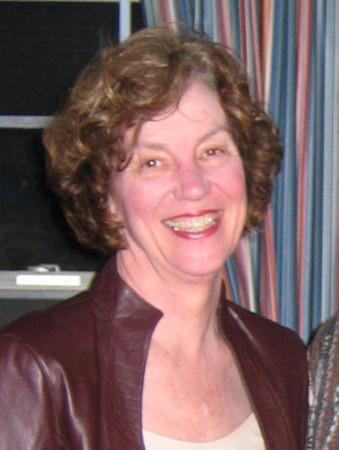
Up first – the Topless Cellist, a 1951 graduate.  Charlotte Moorman

Born in Little Rock, at the age of ten she began to study cello.  After graduating from Little Rock high school in 1951, she attended Centenary College.  She undertook subsequent studies at the University of Texas and Julliard.

After spending time with the American Symphony Orchestra, she participated in the experimental art scene including with her friend Yoko Ono.

In 1963 Moorman founded the Annual Avant Garde Festival of New York, which presented the experimental music of the Fluxus group and Happenings alongside performance, kinetic art, and video art. Despite the event’s title the festival was not held annually. There were fifteen festivals from 1963 to 1980.

On February 9, 1967 Moorman achieved widespread notoriety for her performance of Paik’s Opera Sextronique at the Film-Makers Cinematheque in New York City. For this performance, Moorman was to perform movements on the cello in various states of nudity. For the second movement, she played International Lullaby by Max Matthews while wearing a black skirt, but while being topless, and was arrested mid-performance by three plainclothes police officers For her court trial, Moorman and Paik restaged and filmed the first two movements of Opera Sextronique with the filmmaker Jud Yalkut.

In the late 1970s she was diagnosed with breast cancer. She underwent a mastectomy and further treatment, to continue performing through the 1980s in spite of pain and deteriorating health. She died of cancer in New York City on November 8, 1991, aged 57.


Black History Month – PORGY & BESS at Robinson Auditorium

porgy-bess-robinsonOn December 6, 1943, one of the great love stories of the 20th Century came to Robinson Auditorium.  Cheryl Crawford’s Broadway revival of PORGY & BESS was presented for one performance.

The show was on a national tour after having played Broadway in 1942 and 1943.  The cast included Todd Duncan, who had originated the role of Porgy in 1935 and Etta Moten, for whom George and Ira Gershwin had originally written the part of Bess.  Avon Long played Sportin’ Life (as he would for much of his long career).  The Eva Jessye Choir was the chorus, as they had been for the original 1935 Broadway debut and were in the 1942 and 1943 Broadway revivals.

Conductor Alexander Smallens had been associated with the title since its 1935 debut. The design team of Herbert Andrews (settings) and Paul Du Pont (costumes) had been brought to the project in 1942 by producer Crawford.

This production of Porgy & Bess eliminated some of the singing and changed most of the recitatives to spoken dialogue. It made it less like an opera and more like conventional musical theatre.  While it may not have been true to George Gershwin’s original intent, it was financially more successful than the original production.  In fact, the Crawford version played Broadway in 1942, 1943, and 1944, with national tours after each of the stops on the Rialto.

In 1942, the cast of the revival had performed a one hour version on radio. This was recorded and released, making it one of the first original cast recordings of a Broadway production.

Based on the play by DuBose and Dorthy Heyward,  George Gershwin envisioned Porgy & Bess as an American opera. It had a libretto by DuBose Heyward, who also supplied lyrics along with George’s brother Ira.  While the original production seemed to have slightly confounded critics and audiences who were expecting something more along the lines of the breezy Gershwin shows of the 1920s and early 1930s, it has proven to be a durable title.  It fell out of favor in the 1960s and early 1970s as the Civil Rights movement was causing people to rethink the depictions of African Americans.  In 1976, the Houston Grand Opera staged a new production which restored most of Gershwin’s score and returned it squarely into the realm of opera.  This production played Broadway in 1976 (and won the 1977 Tony for Best Revival) and was revived in 1983 on Broadway.

The most recent notable production of Porgy & Bess originated at Harvard’s American Repertory Theatre in 2011.  It officially opened on Broadway in January 2012 (where Little Rock native Will Trice was one of the producers).  In addition to winning the Tony for Best Revival of a Musical, it captured a Tony for Audra McDonald’s performance of Bess (Miss McDonald’s fifth Tony).

Creative Class 2016: Ruth Shepherd

cc16-shepherdThough Arts & Humanities Month ended yesterday, today is a bonus for the Creative Class 2016.  Ruth D. Shepherd has spent her career utilizing the arts and creativity to spread joy, messages of hope, and to change hearts and minds.

She is “retiring” later this year after having served as Director of Just Communities of Arkansas since 2000.  Though she will leave that post, her work in Little Rock and Arkansas will continue.

In her other careers, she has been a school teacher and worked in various non-profits.  She is probably most closely identified with the Arkansas Repertory Theatre having served as a volunteer, staff member, and Board member off and on for most of its 40 years of existence.  She has also served as Tabriz co-chair for the Arkansas Arts Center.

Ruth has graced several Little Rock stages including UALR (where she was in Hair), Community Theatre of Little Rock, the Weekend Theatre, and the Phoenix Theatre among others.  The Culture Vulture’s favorite performance was her riveting portrayal of a frustrated and frustrating matriarch in Edward Albee’s Three Tall Women.

While wrapping up her current role with JCA, she is busy putting the finishing touches on next Sunday’s Walk for CommUNITY.  It is not too late to sign up.  For more information on that and other JCA projects and programs, visit their website.

Creative Class 2016: Jason Willey

cc16-willeyJason Willey often has people howling with laughter when he performs with Red Octopus Theater.

As one of the movers and shakers behind this troupe for the past decade or so, Jason often writes and produces and directs for this topical sketch comedy troupe in addition to acting in it.  He can also usually be found cranking out press releases for it and doing whatever needs to be done.

In addition to appearing with Red Octopus, Jason has been a fixture on the local theatre scene. He has appeared in many productions with The Weekend Theater as well as on other local stages.

Jason has also appeared in numerous Arkansas-based films over the past few years.  He has lent his talents on many film crews as well.  He is an avid supporter of local film festivals as well.

In short, if it comes to an aspect of the acting profession in Arkansas, Jason has probably been involved.

Get FREE tickets to Ark Symphony concert

aso-nov-30On Tuesday, November 1, starting at 10am, the Arkansas Symphony Orchestra will be giving away FREE tickets to their November 30 “Thank You to Little Rock” concert.

The tickets will be available on the front steps of Robinson from 10am until 6pm. If they run out of tickets earlier than 6pm, they will end it earlier.  So don’t wait until evening Rush Hour!

This November 30 concert will be presented to thank Little Rock voters for their support of the Restore Robinson project. It is also in appreciation of continued patronage by audiences as the Symphony has been performing in other venues.

Don’t miss on this opportunity to attend a historic event in the restored Robinson Center Music Hall!