Black History Month – William Grant Still and Robinson Center

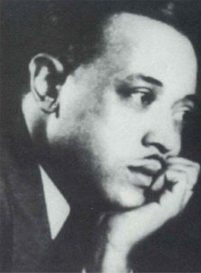
bhm StillDr. William Grant Still was a legend in his own lifetime.  Dr. Still, who wrote more than 150 compositions ranging from operas to arrangements of folk themes, is best known as a pioneer. He was the first African-American in the United States to have a symphonic composition performed by a major orchestra. He was the first to conduct a major symphony orchestra in the US; the first to conduct a major symphony in the south; first to conduct a white radio orchestra in New York City; first to have an opera produced by a major company. Dr. Still was also the first African-American to have an opera televised over a national network

Dr. Still was born May 11, 1895 in Woodville, Mississippi to parents who were teachers and musicians. When Dr. Still was only a few months old, his father died and his mother took him to Little Rock. Inspired by RCA Red Seal operatic recordings, his musical education began with violin lessons.

After his studies at Wilberforce University and the Oberlin Conservatory of Music, he played in orchestras and orchestrated for various employers including the great W. C. Handy. For several years he arranged and conducted the “Deep River Hour” over CBS and WOR.

In the 1920’s, Still made his first appearances as a serious composer in New York. Several fellowships and commissions followed. In 1994, his “Festive Overture” captured the Jubilee prize of the Cincinnati Symphony orchestra. In 1953, he won a Freedoms Foundation Award for “To You, America!” which honored West Point’s Sesquicentennial Celebration. In 1961, he received honors for this orchestral work, “The Peaceful Land”. Dr. Still also received numerous honorary degrees from various colleges and universities, as well as various awards and a citation from Arkansas Governor Dale Bumpers in 1972.

In 1939, Dr. Still married journalist and concert pianist Verna Avery, who became his principal collaborator. They remained together until Dr. Still’s death in 1978.  In a proclamation marking the centennial of Dr. Still’s birth, President Bill Clinton praised the composer for creating “works of such beauty and passion that they pierced the artificial barriers of race, nationality and time.”

In 1995, Dr. Still was posthumously inducted into the Arkansas Black Hall of Fame.  In 2016, the new ballroom at Robinson Center was named in his memory.
Black History Month – Florence Price and Robinson Center

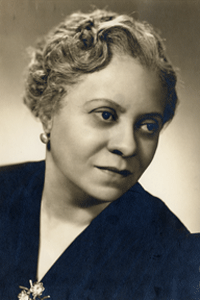
Florence-PriceOutside the William Grant Still Ballroom at Robinson Center is an atrium named for Florence Price.  It is fitting that these two childhood friends should be memorialized in adjoining spaces.

Florence Price was the first African-American female composer to have a symphonic composition performed by a major American symphony orchestra. She was born in Little Rock on April 9, 1887, to James H. Smith and Florence Gulliver Smith. Her father was a dentist in Little Rock, while her mother taught piano and worked as a schoolteacher and a businesswoman.

As a child, Smith received musical instruction from her mother, and she published musical pieces while in high school. She attended Capitol Hill School in Little Rock, graduating as valedictorian in 1903. Smith then studied at the New England Conservatory of Music in Boston, Massachusetts, In 1907, she received degrees as an organist and as a piano teacher.

After graduation, Smith returned to Arkansas to teach music. After stints in Cotton Plant, North Little Rock and Atlanta, GA, Smith returned to Little Rock in 1912 to marry attorney Thomas Jewell Price on September 25, 1912. Her husband worked with Scipio Jones.

While in Little Rock, Price established a music studio, taught piano lessons, and wrote short pieces for piano. Despite her credentials, she was denied membership into the Arkansas State Music Teachers Association because of her race.

The Prices moved to Chicago, Illinois, in 1927. There, Price seemed to have more professional opportunity for growth despite the breakdown and eventual dissolution of her marriage. She pursued further musical studies at the American Conservatory of Music and Chicago Musical College and established herself in the Chicago area as a teacher, pianist, and organist. In 1928, G. Schirmer, a major publishing firm, accepted for publication Price’s “At the Cotton Gin.” In 1932, Price won multiple awards in competitions sponsored by the Rodman Wanamaker Foundation for her Piano Sonata in E Minor, a large-scale work in four movements, and her more important work, Symphony in E Minor.

The latter work premiered with the Chicago Symphony Orchestra on June 15, 1933, and the orchestras of Detroit, Michigan; Pittsburgh, Pennsylvania; and Brooklyn, New York, performed subsequent symphonic works by Price. This was the first time a black woman had presented her work on such a stage. In this regard,

Price’s art songs and spiritual arrangements were frequently performed by well-known artists of the day. For example, contralto Marian Anderson featured Price’s spiritual arrangement “My Soul’s Been Anchored in the Lord” in her famous performance on the steps of the Lincoln Memorial in Washington DC on Easter Sunday, April 9, 1939. European orchestras later played Price’s works.

This national and international recognition made her more popular back home, and in 1935, the Alumni Association of Philander Smith College in Little Rock sponsored Price’s return to Arkansas, billing her as “noted musician of Chicago” and presenting her in a concert of her own compositions at Dunbar High School.

In her lifetime, Price composed more than 300 works, ranging from small teaching pieces for piano to large-scale compositions such as symphonies and concertos, as well as instrumental chamber music, vocal compositions, and music for radio. Price died in Chicago on June 3, 1953, while planning a trip to Europe.

Black History Month Spotlight – Politics and Law

Mahlon Martin Jr., City Manager Bruce T. Moore, Honorable Lottie Shackelford, Charles Bussey Jr.

Mahlon Martin Jr., City Manager Bruce T. Moore, Honorable Lottie Shackelford, Charles Bussey Jr.

The new Arkansas Civil Rights History Audio Tour was launched in November 2015. Produced by the City of Little Rock and the University of Arkansas at Little Rock allows the many places and stories of the City’s Civil Rights history to come to life an interactive tour.  This month, during Black History Month, the Culture Vulture looks at some of the stops on this tour which focus on African American history.

The Arkansas Civil Rights Heritage Trail was launched in 2011 by the UALR’s Institute on Race and Ethnicity.  Each year, a theme is chosen to honor a particular group of people who were active in Arkansas’s civil rights movement.  Year by year, the trail grows.  The plan is that over time the trail will stretch from the current starting point at the Old State House, down West Markham Street and President Clinton Avenue to the Clinton Presidential Library and Museum, and then back up the other side of the street to opposite the Old State House.

Politics and Law have been two central pillars in civil rights struggles.

The honorees contributed to those struggles in Arkansas in a number of ways. Annie Mae Bankhead was a community activist in Little Rock’s black College Station neighborhood; Charles Bussey was Little Rock’s first black mayor; Jeffery Hawkins was unofficial mayor of Little Rock’s black East End neighborhood; I. S. McClinton was head of the Arkansas Democratic Voters Association; Irma Hunter Brown was the first black woman elected to the Arkansas General Assembly; Mahlon Martin was Little Rock’s first black city manager; Richard L. Mays and Henry Wilkins III were among the first blacks elected to the Arkansas General Assembly in the twentieth century.

Lottie Shackelford was Little Rock’s first black woman mayor; Wiley Branton was head of the Southern Regional Council’s Voter Education Project in the 1960s; William Harold Flowers laid the foundations for the Arkansas State Conference of NAACP branches; Scipio Africanus Jones defended twelve black prisoners after the 1919 Elaine Race Riot; Olly Neal was the first black district prosecuting attorney in Arkansas; and John Walker for over five decades has been involved in civil rights activism in the courts.

The app, funded by a generous grant from the Arkansas Humanities Council, was a collaboration among UALR’s Institute on Race and Ethnicity, the City of Little Rock, the Mayor’s Tourism Commission, and KUAR, UALR’s public radio station, with assistance from the Little Rock Convention and Visitors Bureau.

Black History Month Spotlight – Healthcare Pioneers

UALR Trail HealthcareThe new Arkansas Civil Rights History Audio Tour was launched in November 2015. Produced by the City of Little Rock and the University of Arkansas at Little Rock allows the many places and stories of the City’s Civil Rights history to come to life an interactive tour.  This month, during Black History Month, the Culture Vulture looks at some of the stops on this tour which focus on African American history.

The Arkansas Civil Rights Heritage Trail was launched in 2011 by the UALR’s Institute on Race and Ethnicity.  Each year, a theme is chosen to honor a particular group of people who were active in Arkansas’s civil rights movement.  Year by year, the trail grows.  The plan is that over time the trail will stretch from the current starting point at the Old State House, down West Markham Street and President Clinton Avenue to the Clinton Presidential Library and Museum, and then back up the other side of the street to opposite the Old State House.

Healthcare

Healthcare has long been a civil rights issue. In the age of segregation, many blacks were denied healthcare by white physicians and hospitals under Jim Crow laws. African American physicians-such as Cleon A. Flowers, Sr., and John Marshall Robinson-played important roles in serving the black community. Nurse Lena Lowe Jordan founded the Lena Jordan Hospital in Little Rock in the 1930s. Edith Mae Irby desegregated the University of Arkansas Medical School in Little Rock in 1948. Dr. Irby paved the way for other black students and professors at the school. Thomas A. Bruce promoted access to quality healthcare to the underserved. Henry W. Foster became dean of Meharry Medical College in Tennessee. Billy Ray Thomas and Phillip Leon Rayford worked to increase underrepresented groups in the medical profession. Samuel Lee Kountz pioneered organ transplants. Joycelyn Elders, a UAMS graduate and director of the Arkansas Department of Health, served as the surgeon general of the United States during the presidency of Bill Clinton.

The app, funded by a generous grant from the Arkansas Humanities Council, was a collaboration among UALR’s Institute on Race and Ethnicity, the City of Little Rock, the Mayor’s Tourism Commission, and KUAR, UALR’s public radio station, with assistance from the Little Rock Convention and Visitors Bureau.

Black History Month Spotlight – Downtown Desegregation

Ozell Sutton, one of the honorees

Ozell Sutton, one of the honorees

The new Arkansas Civil Rights History Audio Tour was launched in November 2015. Produced by the City of Little Rock and the University of Arkansas at Little Rock allows the many places and stories of the City’s Civil Rights history to come to life an interactive tour.  This month, during Black History Month, the Culture Vulture looks at some of the stops on this tour which focus on African American history.

The Arkansas Civil Rights Heritage Trail was launched in 2011 by the UALR’s Institute on Race and Ethnicity.  Each year, a theme is chosen to honor a particular group of people who were active in Arkansas’s civil rights movement.  Year by year, the trail grows.  The plan is that over time the trail will stretch from the current starting point at the Old State House, down West Markham Street and President Clinton Avenue to the Clinton Presidential Library and Museum, and then back up the other side of the street to opposite the Old State House.

Downtown Desegregation

In January 1963, Little Rock set in motion a process that ended segregation in its downtown businesses.  Following student sit-ins coordinated by the Student Nonviolent Coordinating Committee and Philander Smith College students, in November 1962 white businessmen and merchants formed a secret Downtown Negotiating Committee to set out a timetable for change in consultation with black community representatives.  On January 1, 1963, lunch counters in downtown Little Rock began to serve black customers on an equal basis.  Downtown hotels desegregated their facilities.  Drinking fountains and restrooms had their “White” and “Colored” signs removed.  In June, movie theaters desegregated.  In October, city restaurants desegregated.  That same year, Robinson Auditorium, the Arkansas Arts Center, and city parks desegregated.  In April 1963, in Jet magazine, James Forman, executive secretary of the Student Nonviolent Coordinating Committee, hailed the city as “just about the most integrated…in the South.”

The app, funded by a generous grant from the Arkansas Humanities Council, was a collaboration among UALR’s Institute on Race and Ethnicity, the City of Little Rock, the Mayor’s Tourism Commission, and KUAR, UALR’s public radio station, with assistance from the Little Rock Convention and Visitors Bureau.

Tonight at Mosaic Templars – Spoken Word with Foreign Tongues

mtcc ftFan favorite, Foreign Tongues Poetry Troupe will be performing at Mosaic Templars Cultural Center tonight (2/27) at 6pm.

Foreign Tongues is an artistic organization that travels, conducts workshops, and performs poetry in Arkansas and throughout the United States. The group is composed of authors, educators, entertainers, actors, visual artist, playwrights, award-winning slam poets, hip-hop artist, and entrepreneurs. The group is a diverse collective linked by a common thread, which is their love of poetry.

Admission is free, but seating is limited.

For more information, contact Tameka Lee at 501.683.3620 or tameka@arkansasheritage.org

Black History Month Spotlight – Freedom Riders and Sit-In Demonstrators

UALR Trail Sit inThe new Arkansas Civil Rights History Audio Tour was launched in November 2015. Produced by the City of Little Rock and the University of Arkansas at Little Rock allows the many places and stories of the City’s Civil Rights history to come to life an interactive tour.  This month, during Black History Month, the Culture Vulture looks at some of the stops on this tour which focus on African American history.

The Arkansas Civil Rights Heritage Trail was launched in 2011 by the UALR’s Institute on Race and Ethnicity.  Each year, a theme is chosen to honor a particular group of people who were active in Arkansas’s civil rights movement.  Year by year, the trail grows.  The plan is that over time the trail will stretch from the current starting point at the Old State House, down West Markham Street and President Clinton Avenue to the Clinton Presidential Library and Museum, and then back up the other side of the street to opposite the Old State House.

Freedom Riders and Sit-In Demonstrators

In 1961, the Freedom Rides spread across the South to place pressure on local communities and the federal government to implement court-ordered desegregation of bus terminal facilities.  Little Rock’s first Freedom Riders, a contingent of five members of the St. Louis branch of the Congress of Racial Equality, arrived on the evening of July 10 at the Mid-West Trailways bus station at Markham and Louisiana.  A plaque there marks the site and tells the story of the Little Rock Freedom Rides.  The pressure exerted by the Freedom Rides, together with an Interstate Commerce Commission order to desegregate, led to the integration of all Little Rock’s bus terminals on November 1, 1961.  Five markers also commemorate Philander Smith College students involved in sit-in demonstrations between 1960 and 1962, as well as members of the Arkansas Student Non-violent Coordinating Committee.  SNCC was active in Arkansas from 1962 to 1967.

The app, funded by a generous grant from the Arkansas Humanities Council, was a collaboration among UALR’s Institute on Race and Ethnicity, the City of Little Rock, the Mayor’s Tourism Commission, and KUAR, UALR’s public radio station, with assistance from the Little Rock Convention and Visitors Bureau.