LR Cultural Touchstone: Kaki Hockersmith

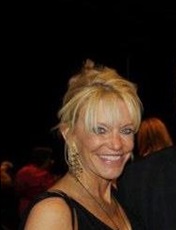
KakiKaki Hockersmith creates art as a designer. In addition, she promotes arts and heritage through her tireless efforts on behalf of numerous cultural institutions.

In 2010, she was appointed to the President’s Advisory Committee on the Arts for The Kennedy Center.  In that capacity, she serves as a national ambassador for The Kennedy Center. She has also brought programs from The Kennedy Center to Arkansas to help established and emerging arts organizations. She also serves as a commissioner on the cultural committee of UNESCO – the United Nations Educational, Scientific and Cultural Organization.

In 1993, she redesigned the interior of The White House during the Clinton Administration. She was also appointed a member of the Committee for the Preservation of The White House.  Her work on this American landmark was featured in Hillary Clinton’s book An Invitation to the White House: In Celebration of American Culture.

Locally, she serves on the Board of Trustees for the Arkansas Arts Center and the Arkansas Governor’s Mansion Association. She is an active supporter of many cultural organizations in Little Rock.  She and her husband Max Mehlburger open their home to host receptions and fundraisers for numerous cultural institutions and organizations.  Earlier this year she was recognized for this support at Ballet Arkansas’ Turning Pointe gala.

Professionally, she has been honored by the national ASID organization as well as the Washington D.C. chapter. Her projects have won 16 regional ASID awards, including seven gold awards.
LR Cultural Touchstone: Dr. Sybil Jordan Hampton

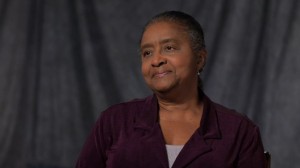
sybilDr. Sybil Jordan Hampton made history as the first African American student to attend each high school year at and graduate from Little Rock Central High School.  But her impact on history exceeds that and extends into classrooms throughout Arkansas.

After a career which took her from elementary classrooms to corporate boardrooms, Dr. Hampton returned to Little Rock in 1996 to become the Executive Director of the Winthrop Rockefeller Foundation.  In that capacity, she oversaw many opportunities to broaden the ways the arts and humanities were used in classrooms and outside of classrooms.  Dr. Hampton led the WRF until her retirement in 2006.  Through her vision and leadership, many tens of thousands of dollars of support went to cultural institutions and organizations during her decade at the helm.

Following the untimely death of the Arkansas Symphony Orchestra’s executive director, Dr. Hampton served as acting executive director of the ASO while a national search could be conducted.  She had long been a supporter of the ASO and other cultural institutions as a patron.

Currently serving on the State Ethics Commission and the LR CENT Committee, Dr. Hampton continues to be involved with Little Rock’s cultural life through her involvement in the Mount Holly Cemetery Association. She is a tireless advocate for this living museum of Little Rock’s past.

LR Cultural Touchstone: Charlotte Gadberry

charlotte-gadberryCharlotte Gadberry has long been a supporter of Little Rock’s various cultural institutions. She has both served on boards and consulted with boards in strategic planning.  She is a Cultural Touchstone, however, because of her vision to found ACANSA Arts Festival.

A trip to Charleston, South Carolina, amid it’s Spoleto USA arts festival inspired her to dream that Little Rock could play host to a similar endeavor.  Using her fundraising prowess and connections, she started to raise funds, friends and awareness for this idea.

In September 2013, the inaugural ACANSA Arts Festival was announced for September 2014.  Under her leadership, ACANSA (a name derived from an early Native American variation of what is now called Arkansas) incorporated both local cultural institutions as well as performers brought in for the event.

It kicked off on a Tuesday with a reception at the Governor’s Mansion and concluded the following Sunday with a reception at Wildwood Park for the Arts.  In between there was theatre, dance, mime, puppetry, instrumental music, choral music, opera, jazz, painting, photography, history, lectures, and gallery tours.

Under her leadership as founder, plans are already underway for the next edition.  ACANSA Arts Festival 2015 is scheduled for September 16-20. Tickets go on sale next spring.

LR Cultural Touchstone: Lorraine Albert Cranford

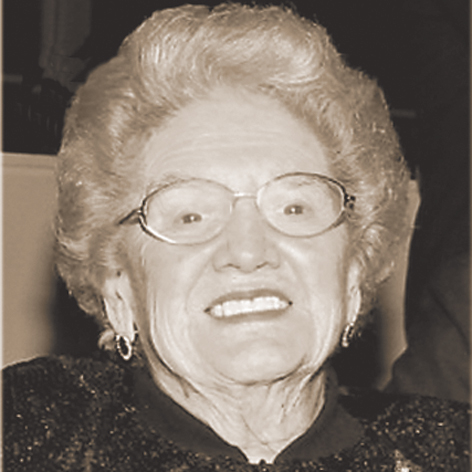
Lorraine Albert Cranford formalized ballet training and performance in Little Rock.  Together with her husband, she was the founder of Ballet Arkansas—a company that traces its roots to the Little Rock Civic Ballet of the 1960s—as well as a dance teacher.

Lorraine Albert was born on September 4, 1918, in Steubenville, Ohio, to Henri Albert and Arthurine Van Klempette Albert. Her mother was a ballroom dancer who started her daughter in dance classes. By the time she was three, her family lived in Pittsburgh, Pennsylvania.

Albert studied ballet under Karl Heinrich in Pittsburgh and went to New York at age fifteen to continue her dance training. Her training was not limited to classical ballet, and she studied and danced in the same shows as famous performers such as Gene Kelly and George M. Cohen.

She married D. Cater Cranford, a dancer originally from Little Rock, with whom she had performed. They had one daughter. They moved to Dallas, Texas, and lived in a house formerly owned by the outlaw Belle Starr. In 1957, they founded the Cranford House of Ballet, which developed dancers for the Dallas Civic Ballet, later named the Dallas Ballet. The company was dissolved in 1988.

In 1966, D. Cater Cranford moved to Little Rock, where he founded the Little Rock Civic Ballet; Lorraine Cranford joined him in Little Rock later. D. Cater Cranford died in 1977, and Lorraine Cranford founded Ballet Arkansas in 1978. Ballet Arkansas is perhaps best known for its annual production of The Nutcracker, which had begun with the Little Rock Civic Ballet. Ballet Arkansas has also contributed to the formation of most of the other ballet companies in central Arkansas, such as the Arkansas Festival Ballet, established in 2000. In addition to her work establishing ballet schools and companies in Arkansas, Cranford was a teacher herself and even performed as the grandmother in The Nutcracker.

Cranford died on December 3, 2004.

LR Cultural Touchstone: Lucy Lockett Cabe

lucy-cabeLucy Lockett Cabe grew up in Missouri and died in Texas, but made an enormous impact on the cultural life of Little Rock and Arkansas.

While best known as the major benefactor of Wildwood Park for the Performing Arts, she also supported many other cultural organizations including the Arkansas Arts Center, Ballet Arkansas, Arkansas Symphony Orchestra, Arkansas Repertory Theatre and many smaller organizations. For over 30 years, it was rare for there to be a musical performance in Little Rock without Lucy as either a performer or in the audience.

A lifelong musician, as she aged, her voice shifted from soprano to alto to tenor while singing. She also served as a church organist. She studied piano from the age of eight.  Meeting her future husband Harold Cabe while summering in Michigan, she moved to Arkansas in 1940. From that time until 1975, she lived in Gurdon but was actively involved in the arts scenes of Arkadelphia and Little Rock.  The couple moved to Little Rock in 1975.  Harold died in 1984.

In 1971 she was one of the original appointees to the state Arts and Humanities Council. For her work with musical and volunteer groups, she was honored as the Arkansas Democrat-Gazette Woman of the Year in 1986. In 1993 she received the Arkansas Arts Council’s Lifetime Achievement Award and the Little Rock Arts and Humanities Ed Hanlin Memorial Award for Outstanding Individual Contribution to the Arts.

Lucy was an honorary life member of the Arkansas Symphony, the Community Theatre of Little Rock and Wildwood Park for the Performing Arts. She was involved in every step of the formation of the Arkansas Opera Theatre, which subsequently evolved into the Wildwood Park. She supported and was honored by Wildwood with the 625-seat Lucy L. Cabe Festival Theatre on the grounds.

In the early 2000s she moved to Dallas to be closer to her family.  She died in 2005.

It is fitting that she be remembered in October, as Halloween was her favorite holiday.  Starting on October 1, the Halloween jewelry, socks and shirts would be donned.

LR Cultural Touchstone: Phyllis D. Brandon

phyllisbrandon_t180Phyllis D. Brandon has played a unique role in shaping and supporting Little Rock’s cultural life.  As the first and longtime editor of the Arkansas Democrat-Gazette‘s High Profile section, she promoted cultural institutions, supporters and practitioners.

Since it started in 1986, being featured in High Profile has been akin to the Good Housekeeping Seal of Approval.  It exposes cultural institutions and events to new and wider audiences.  There is no way to put a monetary measure on the support Brandon gave to Little Rock’s cultural life during her time leading High Profile from 1986 to 2009.  From 2009 to 2011, she served as editor of Arkansas Life magazine, again supporting and promoting cultural life.

With her unassuming manner, she coaxed stories out of interview subjects and captured photos which highlighted events.  A journalist since her junior high school days in Little Rock, Brandon has also been a witness to history.  As a recent graduate of the University of Arkansas, Brandon returned to her alma mater, Little Rock Central High, to cover the events in early September 1957 for the Arkansas Democrat.  Eleven years later, she was in Chicago for the contentious and violent 1968 Democratic National Convention as a delegate.

From 1957 until 1986, she alternated between careers in journalism and the business world, as well as being a stay-at-home mother.  Upon becoming founding editor of High Profile, she came into her own combining her nose for news and her life-long connections within the Little Rock community.  As a writer and photographer, she created art in her own right. A look through High Profile provides a rich historical snapshot of the changes in Little Rock and Arkansas in the latter part of the 20th Century and start of the 21st Century.

Since retiring in 2011, Brandon has kept a relatively low profile. She can be seen from time to time spending time with friends and family and enjoying attending events. Only this time she generally does not have her trusty camera or notepad.

LR Cultural Touchstone: Jana Beard

BeardJana Beard has taught dance in the central Arkansas area for over 30 years and has been the owner and director of her own studio for over twenty of those years.

In addition to being committed to offering the highest quality of instruction and the opportunity to experience all forms of dance, she has enjoyed performing in many Arkansas Rep productions, including Sweet Charity, Guys and Dolls, Chicago, Good Woman of Setzuan, A Soldiers Tale, Evita and Into The Woods.

Jana attended the University of Arkansas at Fayetteville as a dance major, and while at UALR she performed in the productions of Cabaret and Pippin.  She has also been an instructor in the Theatre and Dance Department.

She has served for many years as director and choreographer for the bi-annual legal cast spoof The Gridiron (which returned this year after a hiatus) and has also served as the stage director for the Arkansas Symphony Orchestra’s Christmas Spectacular.

A few years ago, Ballet Arkansas was on the brink of closing its doors.  Jana let the organization use space within her studio complex for offices, classes and rehearsals.  She sometimes served as the only staff member as the ballet was trying to regain its footing.  In addition, for several years she was the coordinator of The Nutcracker which was Ballet Arkansas’ only revenue source during the lean years.

Because of her lifeline, Ballet Arkansas is now poised to grow to heights never seen in the company’s history.  The move to Main Street, the new programming and statewide touring would not have been possible had Jana not offered a home when it needed it.

In addition, Jana choreographed high school musicals in which the Culture Vulture appeared in the 1980s.