
Little Rock Look Back: A few municipal primary races of yore

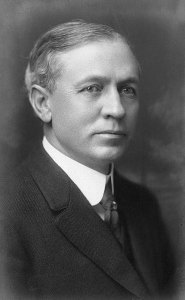
Taylor

Today is primary day in Arkansas.  Though City of Little Rock municipal races are non-partisan and won’t be on the ballot until November, that has not always been the case.

Between 1874 and 1957, usually winning the Democratic Primary was tantamount to election. So the municipal general elections were usually boring. (The only exception would be the three elections in which Pratt Remmel was the GOP nominee for mayor facing off against the Democratic nominee.)

The real drama was in the primary races.

The 1911 primary pitted crusading businessman Charles Taylor against a firebrand attorney and Alderman John Tuohey, a grocer. Each of the three tried to position himself as an outsider, though Tuohey was least successful in accomplishing this considering he was an alderman and the candidate of choice of the retiring mayor.

Riffle logged insults at both Taylor and Tuohey. Taylor sought to position himself as not just the candidate of the businessmen. As a progressive, he borrowed Teddy Roosevelt’s Square Deal motto and offered “A Square Deal for Everyone.” A Baptist Sunday School superintendent, he also campaigned against vice. Tuohey offered his own solutions to city issues but was hampered in the campaign by illness.

After the January 12, 1911, primary election day, Tuohey had 1530 votes, Taylor had 1493 and Riffle had 506. Taylor alleged 323 illegal votes were cast and sought the poll tax records to try to prove it. After he saw the poll tax lists, he reduced his charges to 250 illegal votes.

On January 26, Tuohey and Taylor agreed to a new, two-man primary (essentially a run-off) in an attempt to resolve the matter. After that race, Taylor had 1874 votes and Tuohey had 1645. Taylor went on to be elected mayor in April 1911 and would subsequently serve four two-year terms.
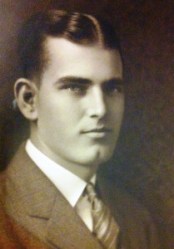
 

Robinson

When he took office in April 1929 having just turned 29 a few weeks earlier, Mayor Pat L. Robinson seemed to be a rising star in the Democratic Party. Within a few months, however, he found himself at odds with the Little Rock City Council on a variety of issues.

Some of these appear to have been of his own doing, partially due to youthful arrogance, and part of these were probably rooted in entrenched resistance to change. With the onset of the Great Depression six months into his term, the City’s already tight financial shape became even tighter. The aldermen and city clerk gave him no quarter (though some may have wanted to draw and quarter him).

Knowlton

In November 1930, City Clerk Horace Knowlton squared off against Mayor Robinson (no relation to Joe T.) in the Democratic primary. It was a particularly raucous primary with charges and counter-charges of corruption, malfeasance and misfeasance. In describing Mayor Robinson’s handling of the City finances, Mr. Knowlton declared the mayor had undertaken an “orgy of spending.”

The results after the election were  Knowlton, 4,537; Robinson, 4,554; and 61 votes for a third candidate. Robinson was declared the nominee. But Knowlton protested and filed suit. There charges of illegal voting and persons whose ballots were not counted. After an exhaustive investigation (over 1,800 pages of testimony were taken), the court found that neither side had willingly engaged in voter fraud or vote tampering. The painstaking analysis further found that Knowlton had received ten more votes than Robinson.

In April 1931, Knowlton won the general election and was sworn in as Little Rock mayor. Robinson continued to pursue the case and appealed to the Arkansas Supreme Court. In June 1931 (in the third month of Knowlton’s mayoral term), the Arkansas Supreme Court upheld the circuit court ruling that Knowlton had indeed won the primary.


Sprick

A little more than a decade later, the state’s high court would again be called on to weigh in on Little Rock’s Democratic primary for mayor. In December 1944, Alderman Sam Wassell and former Alderman Dan Sprick faced off in a particularly nasty race.  As World War II was drawing to a close, there were charges leveled which questioned patriotism. With both men having service on the Little Rock City Council, there were also plenty of past votes on both sides which could become fodder for campaigns.

Wassell

The election was on December 5, 1944. Sprick received 3,923 votes and Wassell 3,805. A few days later, Wassell filed suit claiming that there were people who voted who were not on the poll tax rolls and another group of voters who did not live in the ward in which they voted. Sprick countersued making the same charges against Wassell.

The case eventually ended up at the Arkansas Supreme Court, which remanded it back to the lower court. On March 26, 1945, Wassell dropped his case. This was only eight (8) days before the municipal general election.

Two years later, Wassell would challenge Sprick in the primary and be triumphant. Wassell would serve from 1947 until 1951.  Sprick would later return to politics and serve a decade in the Arkansas State Senate.


There are many more interesting primary and election stories to tell. Stay tuned…
Little Rock Look Back: Moments in LRFD History

In the Western Christian tradition, today is Pentecost Sunday. It is the day when tongues of flames appeared over the heads of the apostles as they preached in a variety of native languages (granted an oversimplification of the description).

In keeping with the flame reference, today’s entry looks at some moments in the Little Rock Fire Department history.

As early as 1840, the City’s volunteer firefighters had a steam-operated fire engine which had been obtained from New York City. It weighed 5,000 pounds and supposedly required the services of 50 men to pull it to a fire.

There are very few records of any of the fire fighting records from those days.

By the post Civil War era, volunteer fire companies were being created. These were as much about fraternization and politics as they were about public safety.  Most of Little Rock’s political leadership during the 1860s through the 1880s were members of a volunteer fire company.

On May 2, 1867, the Pat Cleburne Steam Fire Company responded to a fire. In the more modern era of record-keeping with the advent of Reconstruction, this is the first recorded response to a fire.  The location was a corner at Markham and Scott Streets where the Fones Tire Shop was on ablaze.  The damage was estimated at $500. (The equivalent to $8,000 today.)  It appears to be the first case of arson in Little Rock history.

In 1893, the Little Rock Fire Department was established as a paid company.  It would hardly be considered professional by today’s standards, but it kept up with the latest technology and firefighting efforts of the day.

By 1910, the first motorized vehicle was incorporated into the fire fleet.  In 1912, the first motorized aerial apparatus was put into commission for the LRFD.

Another notable LRFD response in the month of May took place in 1952.  The Albert Pike Masonic Temple at 8th and Scott caught fire.  10,000 spectators jammed the streets to look at the fire.  30 Marines had to be deployed to help with crowd control so the LRFD could put out the fire, which caused $250,000 worth of damage (the equivalent of $2.35 million today).

Since 2018 marks the 125th year of the full-time Little Rock Fire Department, there will be other entries from time to time throughout the year looking at different aspects of the department.

Armed Forces Day in Little Rock – Birthday of the MacArthur Museum of Arkansas Military History

Today is Armed Forces Day.

The third Saturday of May is designated each year as a day to celebrate the men and women who serve in the various branches of the United States armed forces.

On Saturday, May 19, 2001 (which was Armed Services Day that year), the City of Little Rock opened the MacArthur Museum of Arkansas Military History.  Today, the museum celebrates its 17th birthday.  However, it is temporarily closed to the public for renovations.

Though the museum is only 17 years old, the building in which it is located, is 170 years old.  It is undergoing a much-needed renovation and restoration in order to continue to serve for at least 170 more years.

Visitors to MacArthur Park today can still interact with the various outdoor memorials and monuments which pay tribute to various phases of Arkansas’ military history.

Little Rock Look Back: Dan T. Sprick

Future Little Rock Mayor Dan T. Sprick was born on May 19, 1902.  He served three terms on the Little Rock City Council (from 1935 to 1941).  In 1945, he was elected Mayor of Little Rock and served one term. During his tenure on the City Council, he was the sole vote against locating Robinson Auditorium at Markham and Broadway.  He had favored another location.

He was not alone, however, in being held in contempt of court and spending part of the day in jail.  On Monday, December 4, a dozen of Little Rock’s aldermen (which included Sprick) reported to the county jail to serve sentences for contempt of court. The previous Monday, the twelve council members had voted against an ordinance which had been ordered by the judge in an improvement district matter. The other aldermen had either voted in the affirmative or had been absent. Because the twelve had refused to change their votes since that meeting, the judge ordered them jailed.  After the aldermen changed their votes later in the day, they were freed.

His tenure as Mayor was relatively quiet. He took office the same month that World War II ended. While in office, the Sprick administration was marked by growth in the city budget and in city positions. As a part of that growth, there were many more new purchases taking place which had prompted extra scrutiny of the City’s purchasing procedures. A thorough investigation toward the end of his tenure found no malfeasance or misfeasance, it did note that the city needed to do a better job of anticipating cash flow. Much of the City’s focus during the Sprick tenure was on growth and keeping up infrastructure needs.

Sprick later served for ten years in the Arkansas State Senate (from 1961 to 1970).  During his tenure in the Senate, Sprick was closely aligned with Gov. Orval Faubus.  When the Little Rock high schools had been closed a year to ensure segregation, Sprick had served on the board of a private school set up by some of the leaders of the segregation movement.

His time in the Senate was also marked by controversy.  He was one of three Senators to opposed Muhammad Ali’s speaking at the University of Arkansas at Fayetteville.  After an Arkansas Gazette editorial lambasted him, Sprick sued the paper for libel. The Gazette settled with him out of court because his health was poor.

One of the landmark pieces of legislation he guided through the Arkansas General Assembly allowed cities to collect advertising and promotion taxes.  The 1972 and 1973 upgrades to Robinson Center were funded by this tax (as have some subsequent upgrades). So the building he voted against while on the LR City Council benefited from legislation he championed while in the General Assembly.

Sprick died in January 1972.

Little Rock Look Back: Gov. Baxter returns after end of Brooks-Baxter War

On the morning of May 19, 1874, Joseph Brooks cleaned out his belongings from the gubernatorial office in the 1842 Arkansas State Capitol (now the Old State House) and disappeared to points unknown.

The beginning of the end of his stint claiming to be Arkansas Governor came on May 15 when President US Grant accepted the recommendation of his Attorney General that found Elisha Baxter was the duly elected Governor of Arkansas.

Following Brooks’s departure, the grounds and building were in shambles.  A Gazette reporter noted that barricades had been built on the lawn of the building.  The front and back doors remained, but their facings had been removed to make it easier to roll big weapons and equipment in and out of the building.

Inside, furniture was in disarray and broken.  The bookcases in the state library had been turned on their sides to serve as tables.  The reporter described the smell as composed of “a mixed perfume of sour bacon and human beings.”

In preparation for the return of Gov. Baxter, crews were busy trying to restore order in the building. The Senate Chambers were nearly put back in order that day, but the House Chambers needed more attention.

As another illustration of the disarray in state government between April 15 and May 19, the state treasurer, Henry Page, told the newspaper that he had not cut a single check at the request of the Brooks administration.  He stated that he had not denied the request, he just delayed responding to it.

Finally that day, Governor Baxter arrived at the head of a ceremonial parade of carriages.  Among those who accompanied the governor was Arkansas Gazette founder William Woodruff.  In the next carriage, future US Senator and Attorney General Augustus Garland sat with reporters from the New York Times and Arkansas Gazette.

Upon arriving at the Capitol grounds, Baxter delivered a speech.  101 guns were fired in salute to him.  The cannon on the capitol grounds (nicknamed Old Lady Baxter) was shot off several times.  A retinue of Little Rock’s ladies pulled the lanyard to detonate the cannon.

As part of President Grant’s order to end the Brooks-Baxter War, the ground was laid for a new Arkansas Constitution, the end of Reconstruction, and the re-enfranchisement of Democratic voters.  In short order, the 1874 constitution, under which Arkansas still operates, was adopted.  Many of the Republicans and African American office holders soon found themselves out of power. And African Americans were completely disenfranchised.

It would be 92 years before Arkansas would again elect a Republican to be Governor.  The adoption of the new constitution took the term of governor and other constitutional officers from four years to two years.  In 1874, he retired to Batesville and lived there until his death in 1899.  Brooks remained in Little Rock until his death in 1877.

Scenes from Elizabeth Eckford bench groundbreaking

On May 17, 2018, Elizabeth Eckford joined with representatives of the National Park Service, Little Rock School District, Bullock Temple CME, and many other organizations to break the ground for a commemorative bench.

This bench is a reproduction of the one on which Ms. Eckford sat so famously on the morning of September 4, 1957.

The bench will be built over the summer and installed in September 2018.

Here are some scenes from the ceremony.

Elizabeth Eckford visits with Central High School Principal Nancy Rousseau.

David Kilton of the National Park Service speaks at the ceremony.

Attendees spilled out of the tent and lined the street for the event.

Ms. Eckford speaks to the crowd.

Ms. Eckford is joined by Central High students in breaking ground.


Little Rock Look Back: US Supreme Court hands down BROWN v BOARD decision

On May 17, 1954, the U.S. Supreme Court issued its ruling in Brown vs. Board of Education of Topeka.  

This landmark United States Supreme Court case declared state laws establishing separate public schools for black and white students to be unconstitutional. The decision overturned 1896’s Plessy v. Ferguson decision, which allowed state-sponsored segregation in public education. In a unanimous 9-0 decision, the Warren Court stated “separate educational facilities are inherently unequal.”  The results of this decision would be tested on the streets of Little Rock in 1957.

The Court’s fourteen page decision did not spell out any sort of method for ending racial segregation in schools, and the Court’s second decision in Brown II, muddied the waters even further by only ordering states to desegregate with the oxymoronic “all deliberate speed.”

Brown v. Board grew out of a class action suit filed in Topeka, Kansas, by thirteen African American parents on behalf of their children.  Mr. Oliver Brown was the only male. He was chosen to be the lead plaintiff, because it was felt that the court would look more favorably on a male plaintiff.  The District Court ruled in favor of the Board of Education, citing Plessy v. Ferguson.  The court did note that segregation had a detrimental effect on African American students, but that since the Topeka schools were substantially equal, there was no relief to be granted.

When it was appealed to the Supreme Court, Brown v. Board was combined with four other cases from other jurisdictions.  All were NAACP sponsored cases.  Thurgood Marshall was the lead attorney for the plaintiffs.  In December 1952, the Justice Department filed a “friend of the court” brief and argued, in part, that racial segregation had a detrimental effect on US foreign policy. Communist countries were using racial separation in anti-US propaganda.

In the spring of 1953, the Supreme Court held the case.  Unable to decide the issue, they reheard it in the fall of 1953.  They then put special emphasis on the Fourteenth Amendment’s Equal Protection Clause.

During deliberations, Chief Justice Earl Warren insisted on a unanimous ruling to avoid massive Southern resistance.

Since the Topeka schools were found to be substantially equal, the Court’s ruling was important in noting that the harm came from the separation.  While there was no doubt that many (if not most) African American public schools were inferior in infrastructure and supplies to white schools – that in and of itself was not the issue.

School leaders in Little Rock started perusing the Brown decision and considering how the Little Rock School District would comply.