Little Rock Look Back: FDR in LR

FDR Ark100On June 10, 1936, President Franklin D. Roosevelt visited Little Rock as part of a day-long series of appearances in conjunction with the Arkansas Centennial celebration.  (The actual statehood dates is June 15.)

His day started in Memphis before he journeyed by train to Hot Springs. After events there that morning and lunch at Couchwood (his longtime friend Harvey Couch was chairman of the Centennial celebration).  He then traveled to Rockport and Malvern for appearances before arriving in Little Rock.  He made his remarks at the State Fairgrounds in a structure called “Centennial Stadium.”

Following his remarks, which officially kicked off the six month Arkansas Centennial celebration, he retired to Senator Joseph T. Robinson’s house on South Broadway.  He dined with the Robinsons in the house before departing with the Senator at 8:45 that evening.  The Presidential entourage then journeyed to Texas for the next day.

Little Rock Look Back: Truman visits LR

HST in LR2On June 10 and 11, 1949, President Harry S. Truman visited Little Rock.  He was here to participate in activities connected to the reunion of the 35th Division Association.  He had served in that division during World War I.

While he was in Little Rock, President Truman spoke several times.  He generally was accompanied by Governor Sid McMath and Mayor Sam Wassell.

On June 10, he spoke at Robinson Auditorium as part of a welcome ceremony, at a reception at the Hotel Marion and at a ball held at Robinson Auditorium.  His first address was at 3:48 pm and his final one was at 10:15 pm.  The next day he spoke at a breakfast and at a luncheon at the Hotel Marion.  He took pains at these times to stress he was here as a member of the 35th Division.  He also participated in a parade.

In his Presidential role, he spoke at the dedication of War Memorial Park on June 11.  His address took place inside War Memorial Stadium, which had been opened a few months earlier.  It was not a brief dedicatory speech, but instead was a lengthy treatise on foreign affairs.  The address was carried on nationwide radio.  The text of his address can be found here.

President Truman would return to Little Rock in July 1952.  He was in the state to speak at the dedication of Bull Shoals Dam. He did not make any formal remarks in Little Rock while in the city for that visit.


Little Rock Look Back: Mayor and State Rep. Ben D. Brickhouse

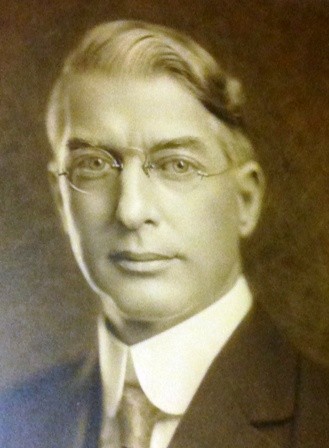
BrickhouseOn June 8, 1873, future Little Rock Mayor Ben D. Brickhouse was born in Virginia.  He moved to Texas as a child before his family settled in Arkansas.

His first job was with the Missouri Pacific Railroad.  He eventually attended law school at the University of Arkansas.  As an attorney, he remained interested in labor relations throughout the rest of his life.

In 1914, Brickhouse was elected to the Little Rock City Council.  He was reelected in 1916.  In 1918, he was appointed Labor Commissioner for the State of Arkansas by Governor Charles Brough.

Brickhouse was elected Mayor of Little Rock in 1919.  He was relected twice (1921 and 1923).  Prior to the change to the City Manager form of government in 1957, other Mayors would seek a third consecutive term, but none would be successful.

Mayor Brickhouse ran for a fourth term as Mayor but was defeated.  In 1923, he had openly opposed the Ku Klux Klan, which was then a major player in Democratic politics in Little Rock, in Arkansas and in the nation. In the next Democratic primary for Mayor, Brickhouse did not secure the nomination.

During Mayor Brickhouse’s tenure the City purchased the land to make Fair Park (now War Memorial Park).  He also served as chair of the State Fairgrounds. Brickhouse remained active in civic affairs, often speaking out in favor or opposition to local issues.

Brickhouse retired from public life in 1925 but returned in 1938 when he was elected to the Arkansas House of Representatives.  He was reelected in 1940.  On June 1, 1941, not long after the conclusion of the legislative session, Brickhouse died.

LR Look Back: The Rice Family and LR Auditorums

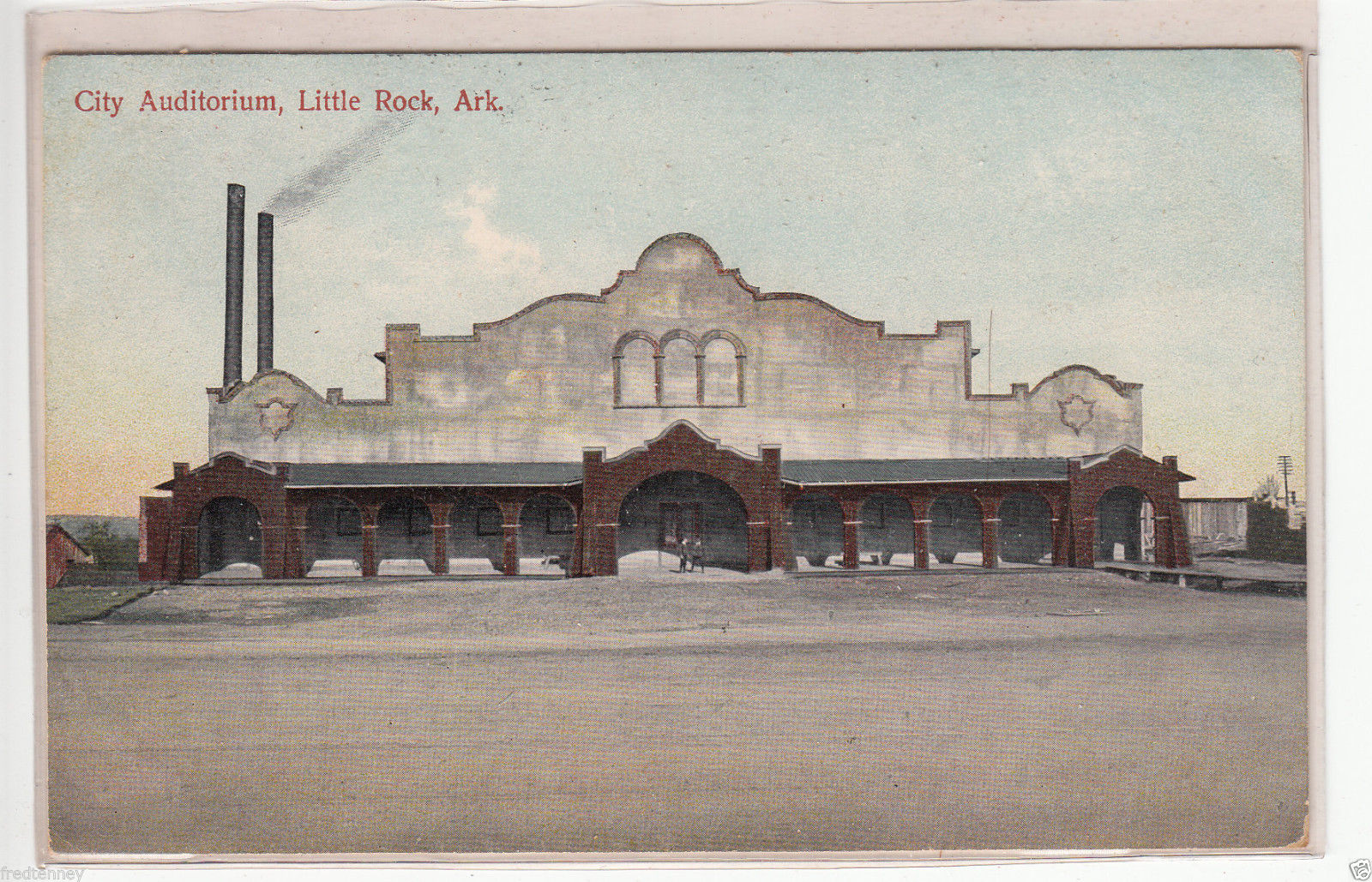
1906 LR auditoriumOn June 7, 1920, the Little Rock City Council finally authorized the demolition of Little Rock’s 1906 temporary auditorium.  The structure had originally been built as a skating rink which, when chairs were added, could be used for public meetings.  Since the mid 1910’s, the City Council had discussed tearing it down over safety concerns.  But since Little Rock had no other structure as a substitute, the Council kept delaying the decision.

J Rice 1920In 1920, though there was not alternative space available, the Council decided that the structure had to come down.  So City Engineer James H. Rice was authorized to have the building removed.

JimRice RobinsonToday, Rice’s grandson, also known as Jim Rice is the COO of the Little Rock Convention & Visitors Bureau.  In that capacity he is overseeing the renovation of Little Rock’s 1940 municipal auditorium – Robinson Center Music Hall.

Tony Awards Week – History of theatre in Little Rock

Joe E. Brown in HARVEY

Joe E. Brown in HARVEY

Little Rock existed as a theatre town for over 100 years prior to the Tony Awards.  But since this is Tony Awards week, “let’s start at the very beginning, a very good place to start” (words by my favorite lyricist Oscar Hammerstein II).

The first documented theatrical performance was on November 4, 1834, and in August 1838 the construction of the first theatre in Little Rock was announced.  Through Little Rock’s early years a variety of spaces were used for performances including the City Hall on Markham near Main Street which had been built in 1867.

The opening of the Capital Theatre in December 1885 would be Little Rock’s first large-scale, non-church space for performances and gatherings.  The Capital had a seating capacity of approximately 2,000 seats.  Designed to house theatrical productions, it also played host to civic events ranging from high school graduations (for both the white and African American high schools) to public memorials.  For instance, in 1901 it was the site of a public memorial for the recently assassinated President William McKinley.  In time, the Capital Theatre (which was situated on land that is now occupied by a portion of the Statehouse Convention Center) would be joined by a variety of other theatres, public houses, vaudeville houses and lodge halls.

The 1908 “temporary” City Auditorium probably played host to theatrical performances, but records do not exist for it.  The amphitheatre in Forest Park was home to many theatrical performances including appearances by Sarah Bernhardt.  Judy Baker Goss’s play Fond Farewell looked at one of Bernhardt’s visit to Little Rock.  (In the local production of that play, Bernhardt was played by Judy Trice, the mother of a three-time Tony winner Will Trice. His father, Bill Trice, played a Little Rock City Council member smitten with the actress.)

When Robinson Auditorium opened in 1940, it had space to host theatrical productions in the main music hall as well as in the lower level “little theatre.”  By that time, there were a variety of community theatre groups performing.  The first national tour to play in Robinson was Springtime for Henry starring Edward Everett Horton.

The first Tony winning production to play Robinson was the national tour of Harvey starring Joe E. Brown.  Brown, in fact, received a special Tony for starring in the national tour of the play.

Little Rock Look Back: Cornice placed on Robinson Auditorium

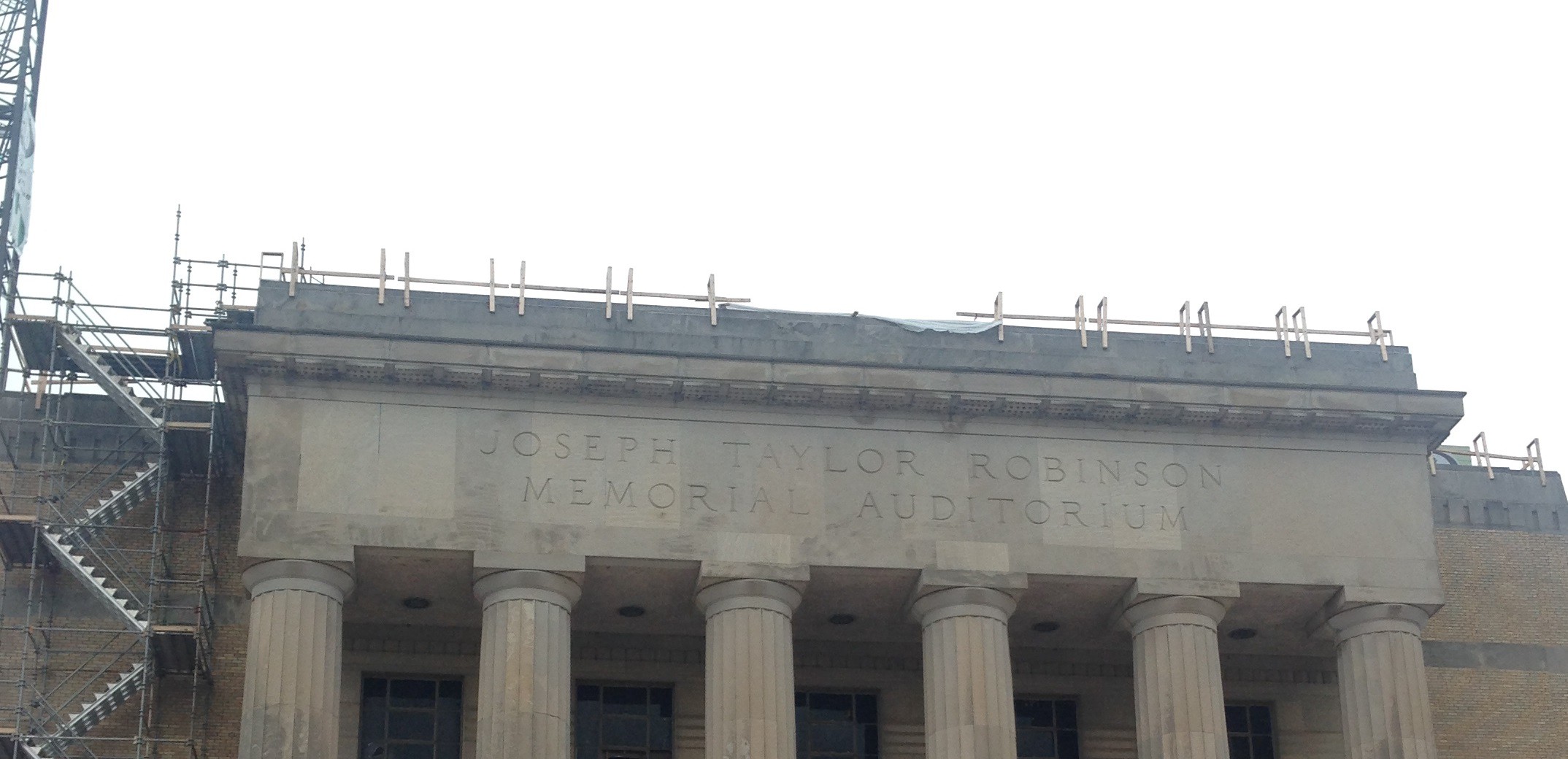
JTR CorniceOn June 1, 1939, the cornice was installed on Robinson Auditorium.  This granite slab noted the name of the building as the Joseph Taylor Robinson Memorial Auditorium.  (It is interesting to note that it used the more modern “u” instead of the classical “v” which was often used in buildings during prior decades – as evidenced by the Pvlaski Covnty Covrt Hovse across the street.)

This was a milestone marking the completion of the front facade of the structure.  Much work would continue on the interior of the structure.  This step in the construction was considered major enough that the Arkansas Gazette mentioned it in a news article.

Today the cornice is again surrounded by construction materials and braces. The front lobby, the cornice and columns are pretty much the only parts of the building not currently under construction as Robinson Center is readied for its second act.  It is scheduled to open in November 2016.

Heritage Month – Federal Building

Federal BuildingThe newest property to be added to the National Register of Historic Places closes out the month.  The Federal Building’s inclusion on this list was announced earlier this month.

The seven-story Federal Building at 700 West Capitol Avenue  was constructed in 1959-61.  It was designed in a modern style, featuring a uniform exterior grid of spandrel and plate glass framed by rows of aluminum bands and columns of white stone.

“The Little Rock Federal Building is a good example of the commercial work of two noted Arkansas architecture firms, Swaim & Allen & Associates and Ginocchio, Cromwell & Associates,” according to the National Register nomination. “The building’s design is consistent with modern high-rise office facilities in the late 1950s and early 1960s. Its uniformly packaged facades, defined by a grid of glass, aluminum, and stone, reflected a growing trend in which Federal buildings began to more closely resemble their commercial counterparts.”

The vertical bands mimic the neoclassical columns of the adjacent 1930s Federal Courthouse. While both structures are unique and representative of their architectural styles, a harmony exists based on the strong vertical lines and the use of the white and grey based primary color scheme.