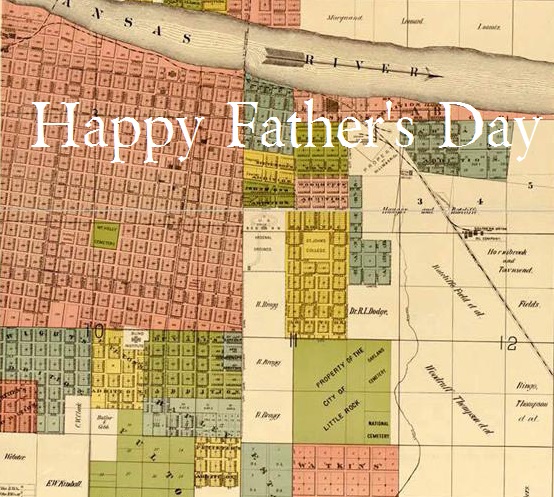
Little Rock Look Back: Founding Fathers of Little Rock

Fathers DayThere are several men who can be considered founding fathers of Little Rock: William Lewis, the first settler, who stayed for a few months in 1814; Roswell Beebe, who acquired most of the land and laid out streets as well as providing land for public buildings and a cemetery; Amos Wheeler, who was the first postmaster and later a land agent; Jesse Brown, who founded the first school and later served as mayor; and William Woodruff, the founder of the Arkansas Gazette.

There are three other men who were not only founding fathers, but also actual fathers to other leaders. They are: Dr. Matthew Cunningham, Major Nicholas Peay and Chester Ashley.

Dr. Cunningham was one of the first residents of Little Rock. He arrived in 1821 and was shortly joined by his family.  Dr. Cunningham would be Little Rock’s first physician. His son Chester was the first child born in Little Rock.  Dr. Cunningham later served as Little Rock’s first mayor from January 1832 to January 1833.  His stepson, Charles P. Bertrand, later served as Mayor of Little Rock from January 1855 to January 1857.  This is the closest Little Rock has ever had to a father and son both serving as Mayor.

Major Nicholas Peay arrived in Little Rock in 1825.  He quickly became engaged in civic affairs and served as a trustee of Little Rock (a precursor to a city council).  In the 1830s, Major Peay served on the Little Rock City Council. In that capacity, he also served as Acting Mayor of Little Rock.  His son, Gordon Neill Peay, would serve as Mayor of Little Rock from 1859 to 1861.  A grandson son, Ashley Peay, was a Little Rock alderman in the 1920s. A great-great-grandson, Joseph B. Hurst, served on the Little Rock City Board from 1967 to 1970.

Chester Ashley never served on the Little Rock council or as mayor.  He was, however, an early leader of Little Rock.  He actually arrived in 1820 and brought his new wife here in late 1821 (a few months after Mrs. Cunningham arrived).  One of Little Rock’s first attorneys, he was instrumental in the settlement of a competing land ownership disputes. In 1844, he was appointed to be one of Arkansas’ U.S. senators. He served in the Senate until his 1848 death.  His son William E. Ashley, served as Little Rock’s mayor from January 1857 to January 1859 and again from January 1861 until September 1863.

With Bertrand, Ashley, Peay and Ashley in the office of Mayor, from January 1855 until September 1863, Little Rock was governed by second generation leaders.

Descendants of the Cunningham and Peay families still reside in Little Rock today.

Art as Activism discussion tonight

30americansIn conjunction with the Arkansas Arts Center’s 30 Americans exhibit, tonight at 6:30, the Mosaic Templars Cultural Center will host a panel on the topic of Art as Activism.

As part of the “501 to 501 Partnership Program”, Dr. Ila Sheren, author of “Art as Activism” and professor at Washington University in St. Louis will host a discussion with Thomas Allen Harris, filmmaker of “Through A Lens Darkly: Black Photographers and the Emergence of a People,” Dr. Deborah Willis, Tisch School of the Arts Photography and Imaging Department Chair, Charley Palmer, mixed media artist, and Delita Martin, artist, Black Box Press studios.

This event will be held at the Mosaic Templars Cultural Center, 501 W. 9th Street (9th and Broadway).

The Mosaic Templars Cultural Center is an agency of the Department of Arkansas Heritage.

The event is free and open to the public.

Little Rock Look Back: Mayor John Widgery

LR sealOn June 17, 1802, future Little Rock Mayor John Widgery was born in Portland ME to Mr. and Mrs. William Widgery.  His father died in 1804.  At the age of 11, John Widgery entered Bowdoin College.  He was the youngest student admitted to the college.

Widgery studied law with his uncle, Nathan Kinsman.  He married Ann L. Woodward, who was from Boston MA.  According to Bowdoin College records, he later “wandered away into the Southwest” spending time “in the Cherokee country.”

Widgery spent most of his adult life in the south. For a time Widgery was clerk of the Mississippi House of Representatives.  He then moved to Little Rock prior to 1840.  By 1840, he was Recorder for the City of Little Rock.

According to media reports at the time, several tradesman groups encouraged Widgery to run for Mayor in January 1841.  He did run but lost to Rev. Samuel H. Webb.  The next year, Widgery ran again and this time was elected Mayor.  He took office in January 1842.  On May 24, 1842 he resigned from office.  He later served as Secretary of the Arkansas Senate (where he made $8 a day when the Senate was in session).

Widgery eventually settled in St. Louis.  He later returned up north.  He died on August 2, 1873 in Portland ME and is buried there.  He and his wife did not have any children.

No known painting or photograph of Mayor Widgery exists.

Arkansas at 179

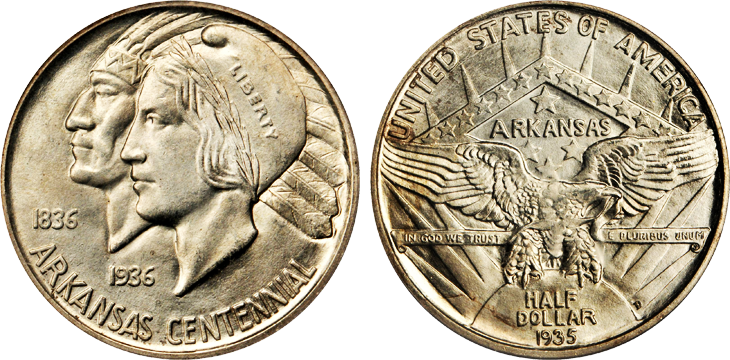
1935_arkansas_centennial_silver_half_dollar-dOn June 15, 1836, Arkansas was admitted as the twenty-fifth state of the Union.  The flag did not get an additional star until July 4, 1836.

Today, she turns 179.

In advance of the 1936 Centennial, the U.S. Mint struck a Centennial Coin with the value of fifty cents.  The original 1935 design depicted a Native American male chief and a female with a Liberty cap.  The reverse side featured an eagle in front of the insignia from the Arkansas flag.

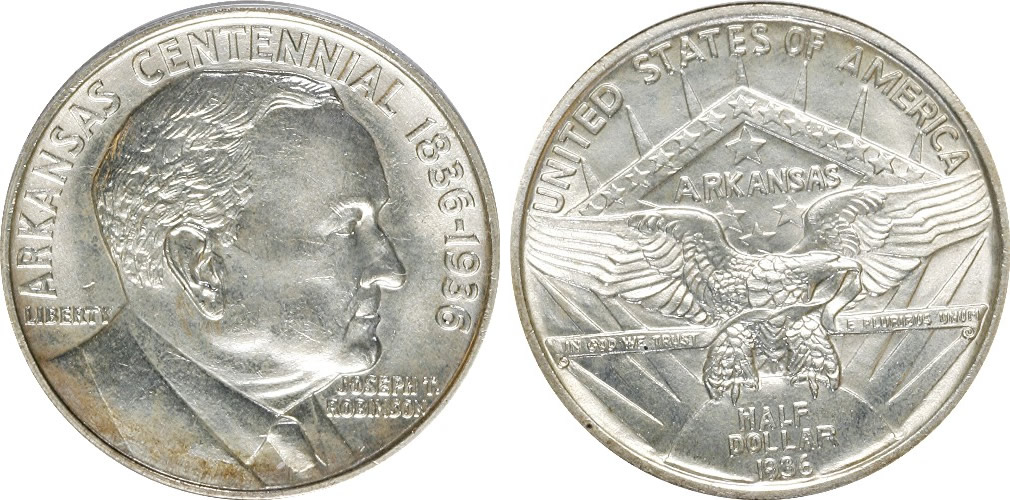
arkansas-robinson_half_dollar_commemorativeIn 1936, a second version was also authorized.  This was the only time that a design change was ever authorized for a commemorative coin.  The second version was a bust of Senator Joseph T. Robinson.  He was the Senate Majority Leader at the time and had been the 1928 Vice Presidential nominee for the Democratic Party.

The Centennial coins were actually issued up through 1940.  Today these coins can be valued well over $150 depending on their condition, the year of their issue and the location where they were struck.

Stars & Stripes & Rock

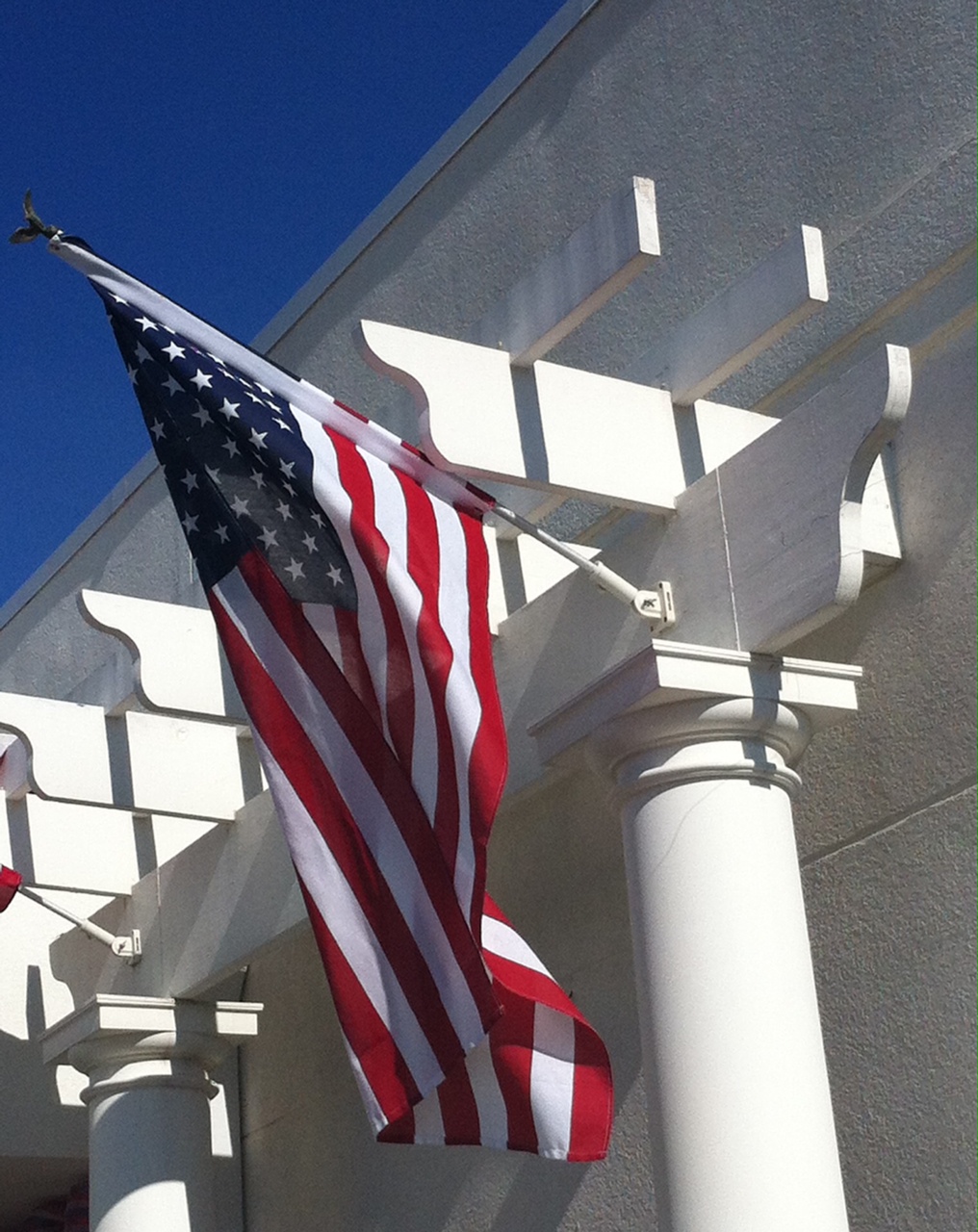
Today is Flag Day.  Here are a few of my favorite photos of the Stars and Stripes taken in Little Rock.

Flag outside of Tipton & Hurst main store in Heights

The red, white and blue stand out against the night sky and limestone of the Arkansas State Capitol.

The stars and stripes unfurled from the balcony of the Capital Hotel.

Flag Day 4

Red, White & Music – Wind Symphony Flag Day Concert

The Little Rock Wind Symphony’s annual Flag Day concert will take place this evening in MacArthur Park at 7pm.  Sponsored, in part by the MacArthur Museum of Arkansas Military History, the concert is the LRWS’s annual salute to the red, white, and blue.  Picnics are encouraged. There will also be free ice cream and free American flags to wave throughout the concert.

The musicians of the Little Rock Wind Symphony will perform the following selections:

arr. John Higgins: Back in the Good Old Days
Adam Gorb: Away Day
Aaron Copland : A Lincoln Portrait
      Brent Walker, narrator
John Philip Sousa: Washington Post
Edwin Eugene Bagley: National Emblem
Edwin Franko Goldman: The Chimes of Liberty
John Philip Sousa: Fairest of the Fair
Henry Fillmore: Americans We
Edwin Franko Goldman: On the Mall
Bob Lowden: Armed Forces Salute
Samuel Ward / Carmen Dragon: America the Beautiful
John Philip Sousa: The Stars and Stripes Forever

In case of rain, the concert will be played tomorrow evening.

Celebrate Arkansas’ Statehood today at Historic Arkansas Museum and Old State House Museum

Statehood Day

Statehood Day

The Old State House Museum and Historic Arkansas Museum will celebrate Arkansas’ Statehood today. A joint living history event, “The Quest for Statehood: From The Delta To The Hills,” will mark 179 years of statehood at both locations.

Costumed interpreters will transform The Old State House and Historic Arkansas Museum into the daily life and work of people representing all sections of 1836 Arkansas with games, talks and activities from 10 to 4 on June 13th.

Pick up a packet of clues about which historical figure you are, where you’re traveling from and why you are in Little Rock on this special day; use these clues to complete a task specific to your character and win a prize! You can participate as an individual, a couple or as a family! All activities are free and open to the public.

The museums are both agencies of the Department of Arkansas Heritage.