LR Look Back: Webb Hubbell, Little Rock 64th Mayor

Mayor HubbellOn January 18, 1948, future Little Rock Mayor Webster “Webb” Hubbell was born. After playing football in high school, he played for the University of Arkansas Razorbacks.  He also received his law degree from the U of A.

At the age of 30, already a successful attorney, Hubbell was appointed to the Little Rock City Board of Directors to fill a vacancy in September 1978.  In 1980, he was elected to a four year term on the City Board.

In June 1979, there was a vacancy in the office of Mayor of Little Rock.  Hubbell was selected by his fellow City Directors to serve as Mayor until December 1980.  In January 1981, he was selected to serve another term as Mayor.  In June 1981, he stepped down as Mayor but continued to serve on the City Board of Directors.

In 1984, Hubbell was appointed to serve as Chief Justice of the Arkansas Supreme Court to finish out the term of Richard B. Adkisson.  Following his service on the court, he returned to the practice of law at the Rose Law Firm.  He later served as the Associate Attorney General in the Justice Department during the Clinton administration.

Hubbell resigned from the Justice Department due to an investigation related to Whitewater.  Following conviction and serving time in prison, he has been an author and management consultant.  His novel, When Men Betray, was published by Beaufort Books in May 2014.  This coming May, his next novel Ginger Snaps will be released.

Little Rock Look Back: Martin Borchert, LR 57th Mayor

Martin John BorchertOn January 16, 1916, future Little Rock Mayor Martin Borchert was born in Stuttgart.  After graduating high school he moved to Little Rock.  He started work at ACME Brick and spent 21 years there before engaging in other business interests.  Among these businesses were Martin Borchert Co., ASCO Hardware, Dtection Systems Inc. and Component Systems Inc.  In 2005 he was inducted into the Arkansas Construction Hall of Fame.
Mayor Borchert was elected to the Little Rock City Board of Directors in 1964 and served from January 1965 through December 1968. He chose not to seek a second term.  In 1967 and 1968 he served as Mayor of Little Rock. During this time, he laid out the vision for what has become Riverfront Park along the Arkansas River.

Other civic achievements included being a member of the Board of the Little Rock Chamber of Commerce, being on the Governor’s Citizens Advisory Committee, a member of the Pulaski County Quorum Court, vice chairman of the Arkansas Planning Commission, and being on the Little Rock Air Force Base Community Council. In 1967 he served on the President’s National Advisory Council to the Small Business Administration. Mayor Borchert served on the Little Rock Water Commission, including a tenure as chairman. In 1985, he was chairman of the Metropolitan Transit Policy Board and as chairman oversaw the transfer of the Central Arkansas Transit system to the Central Arkansas Transit Authority. One of the achievements of which he was very proud of was that he was one of the very first in Arkansas to receive an Adopt the Highway road.

Mayor Borchert was married for 57 years to Rosemary “Biddy” Branch Borchert.  They had two children, a son, John “Topper” Borchert and a daughter, Leslie Borchert Wilson.  He died on May 11, 2007.


Little Rock Look Back: Little Rock Council Meets for First Time in 1832

TowncouncilplaqueOn January 16, 1832, Mayor Matthew Cunningham MD presided over Little Rock’s first council meeting. Since Little Rock did not yet have a government hall, the Mayor and his wife hosted the meeting at their house. The Cunninghams owned the entire block which was bordered by what is now Main Street, 3rd Street, Louisiana Street and 4th Street.

A plaque at 3rd and Main Street commemorates this meeting and was placed there in the 1930s. The Cunningham’s house was likely closer to the southwest corner of the block. The plaque is on the Fulk building which once housed Bennett’s Military Supply. Currently the plaque is covered as the building undergoes renovation in preparation of it housing CJRW.

The block also includes the Mann on Main project, which is comprised of the buildings originally constructed for the Gus Blass Department store.  Bruno’s and the new Samantha’s are also on the block.

Little Rock was chartered as a town in 1831 and elections were subsequently held. Dr. Cunningham outpolled Rev. W. W. Stevenson to become the first Mayor.

Joining Mayor Cunningham at the first meeting were the original four Town Council members – Charles Caldwell, Benjamin Clemens, David Holt and John McLain.

In 1931 a plaque, as part of Little Rock’s Centennial, a plaque was erected to note the first meeting. The plaque erroneously implies that the first meeting was in 1831. This mistake is understandable since the legislation incorporating Little Rock was approved in November 1831. The plaque also refers to the body as the City Council. It was, in fact, the Town Council. There would not be a City Council until 1835 when Little Rock was elevated to City status.

Arkansas Political History at Old State House

OSH logoThe Arkansas General Assembly convenes today, while tomorrow is the inauguration day for the Governor and other Constitutional officers.

To learn more about Arkansas’ political past, visit the Old State House Museum.  Two of their permanent exhibits are especially of note this week.

First Families of Arkansas

The “First Families” of Arkansas varied in their background and experience. James Miller, the First Territorial Governor, spent little time in Arkansas, and his wife Ruth remained in Massachusetts. James Conway, the first governor of the state of Arkansas, came to Arkansas as a surveyor in 1820 and served in the Territorial Legislature. Conway was a founding member of an Arkansas dynasty known as “the Family,” a political alliance that dominated Arkansas until the Civil War. Conway’s wife, the former Mary Jane Bradley, came from a prominent Arkansas frontier family and was actively involved in furthering her husband’s political career.

Beginning in the 20th century, Anna Roark Brough served as her husband’s campaign manager. First Lady Brough, an active suffragette, posed on the steps of the capitol during a 1919 rally advocating voting rights for women.


On The Stump: Arkansas Politics, 1819 – 1919

In 1819 when the Arkansas Territory was created, the elimination of property requirements for voting combined with the raucous spirit of the frontier produced a new style of mass participation in American politics. The results were crude and often vulgar, but thoroughly democratic. This manifested itself in Arkansas politics less centered on political parties of Arkansas and the ideology of citizens than on the personalities of those involved. So personal were the politics of the times that political campaigns often culminated in duels. Carl Moneyhon, Professor of History at the University of Arkansas at Little Rock, served as author and guest curator for On the Stump. Additional materials were provided by the museum’s staff.


In addition, the Old State House Museum website has features on the men who have served as Governor of Arkansas.

Little Rock Look Back: Basketball at Robinson Auditorium

Former entrance to Robinson off Garland Street. Used to attend basketball games.

Former entrance to Robinson off Garland Street. Used to attend basketball games.

While Joseph Taylor Robinson Memorial Auditorium is known today as a performance and meeting venue, in its early days it was also the home to sports. Seventy-five years ago tonight the first basketball game was played at Robinson.

One of the first regular activities which took place in the lower level exhibition hall was a series of boxing and wrestling matches.  Building on the success of this, basketball came to the convention hall in January 1940.

A series of games featuring Little Rock High School and North Little Rock High School were announced by Coach Earl Quigley to take place from January 11 through February 16, the official opening day for the facility.

At that time, neither high school had a gymnasium; therefore both schools played their basketball games on their school auditorium stages with fans seated in the audience. The convention hall offered a regulation size floor (made of pecan block parquet) with seating for over 1,300 people along the sidelines and in the balcony.  The first men’s basketball game in Robinson Auditorium took place between the Little Rock High School Tigers and the North Little Rock High School Wildcats on January 11, 1940.

The Tigers lost the game before a crowd estimated to be 1,300.  Earlier in the evening there had been an exhibition between two women’s basketball teams.  The cost for admission to the games was 35 cents for the reserved seating and 25 cents for general admission.

Sandwich in History today at noon at old Fire Station No. 2 in MacArthur Park

Little Rock Fire Station No 2_tour_tnThe monthly architectural history program “Sandwiching in History” visits the old Little Rock Fire Station No. 2 located at 1201 S. Commerce Street (on the southwestern corner of MacArthur Park).

Located in the MacArthur Park Historic District, Little Rock Fire Station No. 2 was built in 1917 and served as a fire station until the late 1950s. The Craftsman-style building was constructed with a mixture of materials. It features exposed rafter tails, false half-timbering, and triangular knee braces under the eaves.

From the early 1960s through the 1980s, it had a variety of uses by the City’s Parks Department and other entities. In the 1980s through the mid-1990s, it served as storage and preservation space for the nearby Museum of Science and History (then-located in the Arsenal Tower building on the northern edge of the park.)

It sat largely vacant for a couple of years and sustained damage during January 1999 tornado which ripped through downtown.  For the past several years, a group has been working to convert it into a 30-bed hostel and museum.

Sandwiching in History is a program of the Arkansas Historic Preservation Program, an agency of the Department of Arkansas Heritage.

Bicentennial of Battle of New Orleans

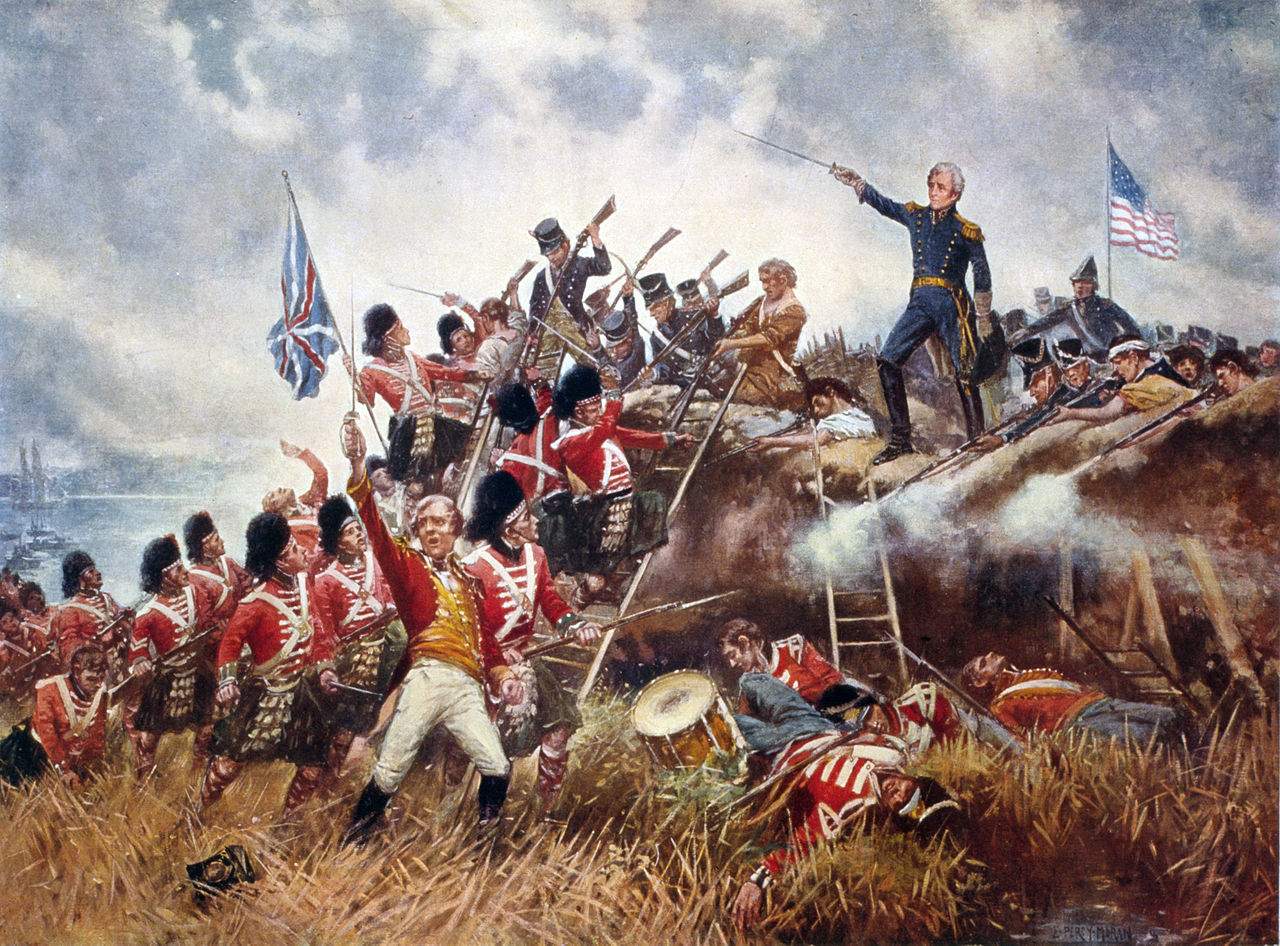
1280px-Battle_of_New_OrleansToday marks the 200th anniversary of the conclusion of the Battle of New Orleans.  It relates to Little Rock in a couple of ways.

First, it made General Andrew Jackson a national hero which helped propel him to the presidency.  It was while he was president that Arkansas was admitted to the Union.

Secondly, one of his soldiers in the battle was a young Roswell Beebe.  Jackson and Beebe became friends and maintained that friendship throughout their lives. Beebe later moved from Louisiana to Arkansas and became a leading citizen of Little Rock.  Using his friendships with Jackson and his successor Martin Van Buren, Beebe was able to navigate the already burgeoning bureaucracy of Washington DC.  Working with the federal government, he was able to straighten out the murky questions of who owned what land in Little Rock.

Beebe received the patent to most of Little Rock’s land. He then laid out streets, set aside land for a state capitol (now the Old State House Museum), set aside land for Mount Holly Cemetery (where he now resides), and sold land at reasonable prices to others.  These actions helped Little Rock continue its momentum as a growing trade town.  Without them, it could have devolved into a frontier town of lawlessness.