
 Future Little Rock Mayor John Gould Fletcher was born on January 6 in 1831. He was a mayor and civic leader at a crucial time in Little Rock’s 19th century life. But his lasting legacy is probably more his remarkable children, grandchildren, great-grandchildren, and great-great-grandchildren. (Undoubtedly his great-great-great-grandchildren will be equally remarkable.)
The son of Henry Lewis and Mary Lindsey Fletcher, he later served as a Captain in the Capital Guards during the Civil War. One of his fellow soldiers was Peter Hotze. Following the war, he and Hotze began a general merchandise store in Little Rock. They were so successful that they eventually dropped the retail trade and dealt only in cotton. Peter Hotze had his office in New York, while Fletcher supervised company operations in Little Rock. In 1878 Fletcher married Miss Adolphine Krause, sister-in-law of Hotze.
John Gould Fletcher was elected Mayor of Little Rock from 1875 to 1881. He was the first Mayor under Arkansas’ new constitution which returned all executive powers to the office of the Mayor (they had been split under a reconstruction constitution). Following his service as Mayor, he served one term as Pulaski County Sheriff. Mayor Fletcher also later served as president of the German National Bank in Little Rock.
Mayor and Mrs. Fletcher had five children, three of whom lived into adulthood. Their son was future Pulitzer Prize winning poet John Gould Fletcher (neither father nor son used the Sr. or Jr. designation). Their two daughters who lived to adulthood were Adolphine Fletcher Terry (whose husband David served in Congress) and Mary Fletcher Drennan.
In 1889, Mayor Fletcher purchased the Pike House in downtown Little Rock. The structure later became known as the Pike-Fletcher-Terry House. It was from this house that Adolphine Fletcher Terry organized the Women’s Emergency Committee which worked to reopen the Little Rock public schools during the 1958-1959 school year.
In the 1960s, sisters Adolphine Fletcher Terry and Mary Fletcher Drennan deeded the house to the City of Little Rock for use by the Arkansas Arts Center. For several decades it served as home to the Arts Center’s contemporary craft collection. It now is used for special events and exhibitions.
Mayor Fletcher died in 1906 and is buried in Mount Holly Cemetery along with various members of his family. Several of his descendants still reside in Little Rock.

 In November 1915, there were public meetings in Little Rock and Pulaski Heights to discuss the issue. As a part of the annexation, Little Rock promised to build a fire station in the area and to install traffic lights, sidewalks and pave more streets.
 On January 3, 1936, the ground was broken for the Museum of Fine Arts building in City Park. The facility would face Ninth Street and be to the west of the Arsenal Tower Building. That building was the one remaining structure of more than 30 which had populated the grounds when it was a federal military establishment.
 On Monday, January 2, 1826, Little Rock voters elected their first Board of Trustees. This five member governing body was authorized by the Arkansas General Assembly in October 1825. The five men getting the most votes were Bernard Smith, Isaac Watkins, James C. Collins, Ezra Owens and Sam C. Roane.
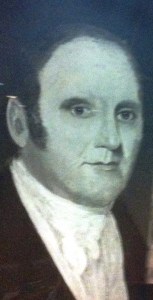 On January 2, 1771 in Ireland, future Little Rock Mayor David Fulton was born.
 100 Years Ago
 The Democrat (an afternoon paper) ran an article stating that New Year’s celebrations in DC were somewhat muted, perhaps because of concerns about the health of President Wilson, who had suffered a stroke in October 1919. There was also an article about planning being underway for the 300th anniversary of the Mayflower with events set for England, Holland, and the US.
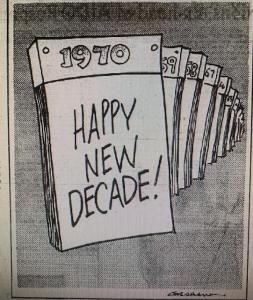 As 1970 dawned, the Gazette and Democrat both carried stories about Vietnam and the Department of Justice seeking a delay in implementation of school desegregation. Locally, it was announced that KATV was purchasing the old Worthen Bank Building at Main and Fourth Streets. The Hogs were getting ready to face Ole Miss in the Sugar Bowl (which the Razorbacks would lose by a score of 27 to 22 to the Archie Manning led Rebels).
 Teamsters Union president Jimmy Hoffa, in the middle of an eight year prison term, had indicated he would share information with authorities in return for President Nixon commuting his sentence. In local crime news, City Hall and the municipal garage behind the building had been broken into. While there had been a failed attempt to pry open the Collector’s office, thieves had apparently only been able to get a small amount of cash by breaking a vending machine in the building.
 Little Rock Culture Vulture