
Still Time to RSVP for NPR’s Steve Inskeep’s “Rule of Law” lecture in conjunction with US Marshals Museum

This week is the final week to RSVP for next Monday’s program featuring NRP’s Morning Edition co-host Steve Inskeep.

The United States Marshals Museum will host him for a “Rule of Law” lecture in Little Rock on November 12.

As part of his remarks, he will discuss the impact then and now on the Indian Removal Act of 1830. The free and open to the public lecture at UA-Little Rock’s Jack Stephens Center will begin at 6 p.m.

Inskeep is the co-host of Morning Edition, a nationally-broadcast daily news program on NPR public radio. Inskeep is the author of Jacksonland, his 2015 historic account on President Andrew Jackson’s long-running conflict with John Ross, a Cherokee chief who resisted the removal of Indians from the eastern United States in the 1830’s. In 1839, Ross’ wife Elizabeth “Quatie” Ross fell ill on the Trail of Tears and died in Little Rock. Her headstone lies in Little Rock’s Mount Holly Cemetery. Inskeep is also the author of Instant City: Life and Death in Karachi, a 2011 book about one of the world’s great megacities.

Former United States Court of Appeals for the Eighth Circuit Judge Morris “Buzz” Arnold will introduce the program and moderate the question-and-answer session. Event sponsors include UA-Little Rock, Sequoyah National Research Center, KUAR-Radio and NPR.

“We’re excited to bring Steve Inskeep to Arkansas,” said Alice Alt of the U.S. Marshals Museum Foundation. “We are all huge fans of his at the museum, and we’re looking forward to hearing his insights on the Rule of Law, one of our nation’s constitutional bedrock principles and a major part of what the museum will be about.”

The Museum, set to open in the fall of 2019, will focus on civic literacy and the Rule of Law, and feature five immersive galleries – Defining Marshals, The Campfire: Stories Under the Stars, Frontier Marshals, A Changing Nation and Modern Marshals.

Admission is free, but an RSVP is required by November 9 to https://theruleoflaw.eventbrite.com/.

About the United States Marshals Museum

The future United States Marshals Museum will be a national Museum located on the riverfront in Fort Smith, Ark. Opening in the fall of 2019, the United States Marshals Museum will tell the story of our nation’s oldest federal law enforcement agency from its establishment by President George Washington through current day. The Museum will honor the sacrifice of Marshals killed in the line of duty, as well as those who continue to place their lives in harm’s way, as they enforce the Constitution. For more information, visit usmmuseum.org.

RIP Donna Axum

News outlets are reporting that Arkansas’ first Miss America, Donna Axum, has died.

A native of El Dorado and a student at the University of Arkansas, during her reign as Miss America Miss Axum (or simply Donna as the newspaper headlines referred to her) made four public visits to Little Rock.  As the first Miss Arkansas to become Miss America, the state’s Capitol City was very interested in giving her a warm welcome.

After being crowned on September 7, 1963, Axum’s first official visit to Arkansas was November 1 through 3.  In addition to stops in Hot Springs and El Dorado, she appeared in Little Rock to attend events including an Arkansas Razorback football game at War Memorial Stadium.  Her entourage included the top four runners up from the Miss America pageant.

In February 1964, she made a brief appearance in Little Rock which included a press conference.

Donna Axum spent nearly two weeks in Arkansas in May 1964 attending several pageants as well as spending time with family.  During that visit she appeared in Little Rock twice.  The second time she headlined a concert with the Arkansas Symphony (not related to the current Arkansas Symphony Orchestra) and the Arkansas Choral Society. It took place at Robinson Auditorium.

Little Rock Look Back: Civic Leader Adolphine Fletcher Terry

Adolphine Fletcher Terry was born on November 3, 1882 to former Little Rock Mayor John Gould Fletcher and his wife Adolphine Krause Fletcher.
Raised in Little Rock, in 1889 she moved into the Albert Pike House on East 7th Street, when her aunt transferred the title to her father. That house would be her primary residence the rest of her life.  Her sister Mary Fletcher Drennan never lived in Arkansas as an adult after marriage. Her brother John Gould Fletcher spent much of his adulthood in Europe before returning to Little Rock and establishing his own house, Johnswood.

At age 15, Adolphine attended Vassar. She later credited that experience as broadening her views on many issues.  After graduating at age 19, she returned to Little Rock.  Her parents both died prior to her 1910 wedding to David D. Terry, which took place at what was then known as the Pike-Fletcher House (and today is known as the Pike-Fletcher-Terry House).

She is perhaps best known today for establishing the Women’s Emergency Committee in 1958 and for her subsequent deeding of the family house to the City for use by the Arkansas Arts Center.  But her entire life was based on civic engagement.

She was instrumental in establishing the first juvenile court system in Arkansas and helped form the first school improvement association in the state. She was long an advocate for libraries, serving 40 years on the Little Rock public library board.  Through her leadership, the library opened its doors to African Americans in the early 1950s. Today a branch of the Central Arkansas Library System (the successor the Little Rock public library) is named after her.  Another branch is named after her Pulitzer Prize winning brother.

Adolphine formed the Little Rock chapter of the American Association of University Women, the Pulaski County tuberculosis association and the Community Chest.

In 1958, when the Little Rock public high schools were closed instead of allowing them to be desegregated again, she called Harry Ashmore the editor of the Gazette and exclaimed, “the men have failed us…it’s time to call out the women.”  With this, she formed the Women’s Emergency Committee to Open Our Schools. This group played a major role in getting the four high schools open the following year.

From 1933 to 1942, David Terry served in the U.S. Congress. During that time, Adolphine alternated her time between Washington DC and Little Rock. But she spent much time in Little Rock raising her five children.

After her husband’s death in 1963, she continued to remain active in civic affairs. In the 1960’s, she and her sister deeded the Pike-Fletcher-Terry House to the City of Little Rock for use by the Arkansas Arts Center upon both their deaths.  Following Adolphine Fletcher Terry’s death in 1976, Mary turned over the title to the City.

Adolphine Fletcher Terry is buried in Mount Holly Cemetery alongside her husband. Three of her children are also buried in that plot.  Her parents and brother are buried in a nearby plot.

Her granddaughters and their families carry on Adolphine Fletcher Terry’s commitment to making Little Rock better.

Little Rock Look Back: Chartering of City of Little Rock

On November 2, 1835, the Town of Little Rock became the City of Little Rock upon the signature of Territorial Governor William S. Fulton.  The Town of Little Rock had been established on November 7, 1831.
The new charter deemed that the election of officers (including a mayor and eight aldermen) would be on November 10 at the Pulaski County Courthouse. To be eligible to serve, candidates had to be free white men who were aged 30 and above.

The charter established a constable and a court system, gave the City the ability to levy fees and fines, and provided the fact that the City would not have responsibility for maintaining county roads.

This transformation cut short David Fulton’s term as mayor of Little Rock by two months. Mayor Fulton was the father of Governor Fulton. So the governor signed legislation which shortened his father’s term as mayor.  James Pitcher would be elected the first mayor of the City of Little Rock.

Little Rock Look Back: Mr. J. N. Heiskell

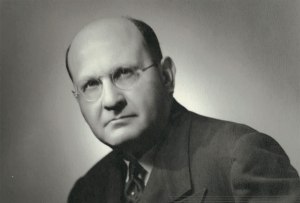
At the age of 87, J. N. Heiskell in 1960.

John Netherland (J. N.) Heiskell served as editor of the Arkansas Gazette for more than seventy years.  He was usually called “Mr. Heiskell” by all, but a very few confidantes felt confident to call him “Ned.”

Mr. Heiskell is the person most responsible for Robinson Center Music Hall being located at the corner of Markham and Broadway.  As Chair of the Planning Commission and editor of the Arkansas Gazette he had twin bully pulpits to promote this location when those on the City Council (who actually had the final say) were looking at other locations.  He felt the location would help create a cluster of public buildings with its proximity to the county courthouse and to City Hall.  Mr. Heiskell finally succeeded in winning over the mayor and aldermen to his viewpoint.

He was born on November 2, 1872, in Rogersville, Tennessee, to Carrick White Heiskell and Eliza Ayre Netherland Heiskell. He entered the University of Tennessee at Knoxville before his eighteenth birthday and graduated in three years at the head of his class on June 7, 1893.

His early journalism career included jobs with newspapers in Knoxville and Memphis and with the Associated Press in Chicago and Louisville. On June 17, 1902, Heiskell’s family bought controlling interest in the Arkansas Gazette. Heiskell became the editor, and his brother, Fred, became managing editor.

Governor George Donaghey appointed Heiskell to succeed Jeff Davis in the United States Senate after Davis’s death in office. Heiskell served from January 6, 1913, until January 29, 1913, when a successor was chosen by the Arkansas General Assembly.  His tenure is the shortest in the U. S. Senate history.  His first speech on the Senate floor was his farewell.  He was also only the second US Senator to live to be 100.

On June 28, 1910, Heiskell married Wilhelmina Mann, daughter of the nationally prominent architect, George R. Mann. The couple had four children: Elizabeth, Louise, John N. Jr., and Carrick.

In 1907, he joined a successful effort to build the city’s first public library. He served on the library board from that year until his death and was issued the first library card.  He also served on the City’s Planning Commission for decades.  In 1912, he was instrumental in bringing John Nolen to Little Rock to devise a park plan.

In the paper and in his own personal opinions, he crusaded on a variety of progressive causes.  Perhaps the most famous was the Gazette’s stance in the 1957 Central High desegregation crisis.  It was for this effort that the paper received two Pulitzer Prizes.

Although Heiskell stopped going to the office at age ninety-nine, he continued to take an active interest in the newspaper. He began by having a copy of the newspaper delivered to his home by messenger as soon as it came off the press each night. Eventually, he switched to having his secretary call him daily at his home and read the entire newspaper to him. He operated on the premise that “anyone who runs a newspaper needs to know what’s in it, even to the classified ads.”

A few weeks after turning 100, Heiskell died of congestive heart failure brought on by arteriosclerosis on December 28, 1972. He is buried in Little Rock’s Mount Holly Cemetery.  Interestingly, he is buried in the same cemetery as two of his most notable adversaries: Governor Jeff Davis, and segregationist Congressman Dale Alford.

Mr. Heiskell donated his vast papers to UALR. They are part of the Arkansas Studies Institute collection. These papers give insight into not only his career as a journalist, but also his political and civic affairs.  Thankfully he saved much of his paperwork. Without it, much insight into Little Rock in the 20th Century would be lost.

The November 4th CALS Rabbi Ira Sanders Distinguished Lecture pays tribute this year to the man who inspired it

The 2018 Rabbi Ira Sanders Distinguished Lecture of the Central Arkansas Library System will honor Rabbi Ira Sanders himself, as two expert scholars engage in a lively dialogue on his inspirational work and legacy.

The lecture will take place at Temple B’nai Israel, 3700 North Rodney Parham Road, at 4:00 p.m. on Sunday, November 4. A reception and book signing will follow the program, and copies of the book will be available for purchase. The event is free and open to the public.

Rabbi Sanders was a member of the library Board of Trustees for over 40 years, but his contribution to social justice, to the Little Rock community, and to the whole region stretched far beyond his library service.

James L. Moses, author of Just and Righteous Causes: Rabbi Ira Sanders and the Fight for Racial and Social Justice in Arkansas, 1926-1963, will join Mark K. Bauman, editor of the journal Southern Jewish History, for a dialogue focusing on the life and work of Rabbi Sanders.

Their dialogue coincides with the launch of the new book by James Moses, just released from the University of Arkansas Press. Moses and Bauman will discuss Sanders’s lifelong work for social and racial justice in Arkansas and its relation to the efforts of other southern rabbis during the civil rights movement.

Rabbi Ira Sanders built an unforgettable legacy through his passionate advocacy for social justice and the many initiatives he founded to better the lives of others. He was a founder of the Little Rock School of Social Work, the Arkansas Lighthouse for the Blind and the Urban League of Greater Little Rock, where he served as an executive and advisory board member for more than 30 years. Dr. Sanders also served as rabbi at Congregation B’nai Israel for 38 years, which makes the congregation’s building a natural setting for this unique lecture. Sanders, who lived in Little Rock from 1926 until his death in 1985, was an outspoken supporter of racial integration, equal opportunity, and women’s rights.

James Moses states: “Rabbi Ira Sanders was a warrior for social and racial justice throughout his life. He took these words from Isaiah strongly to heart: Learn to do well: seek Justice – relieve the oppressed.

Through a lifetime devoted to this moral imperative, Moses says, “Sanders made a real difference in the lives of many thousands over an influential career that spanned the eras of the Depression, World War II, the Civil Rights Movement, and beyond. Sanders’s inimitable career gives us a window through which we can understand the history of Arkansas and the South through the tumultuous 20th Century. I look forward to sharing his singular story – and hearing more stories about him – in Little Rock on November 4.”

Mark K. Bauman praises the new book by Moses: “James Moses has written a trailblazing book on a true Jewish American hero. Ira Sanders was involved in the civil rights movement long before other people were. He was devoted to a variety of causes to help people in need. Sanders is well-deserving of the marvelous tribute that Moses has given him through this biography.”

Bauman is also enthusiastic about the upcoming dialogue. “I very much look forward to relating the work of Sanders to the work of other Reform Rabbis in the South and to sharing these remarkable experiences with an energetic and informed audience.”

Rabbi Barry Block, current leader of Congregation B’nai Israel, sees continuing value in the legacy of Rabbi Sanders. “In collaboration with interfaith clergy partners, members of Congregation B’nai Israel, and diverse leaders throughout the community, Rabbi Sanders transformed Arkansas for the better,” he says. Rabbi Block believes that people of all belief systems can be inspired to bold action against today’s injustice by the example of Rabbi Sanders.

The 2018 Rabbi Ira Sanders Distinguished Lecture is sponsored by the Central Arkansas Library System and Congregation B’nai Israel and co-sponsored by the Jewish Federation of Arkansas and the CALS Butler Center for Arkansas Studies.

For more information about the Rabbi Ira Sanders Distinguished Lecture, contact Madelyn Ganos at mganos@cals.org or (501) 918-3030.

Little Rock Look Back: Founding of Rose Law Firm

On November 1, 1820, Robert Crittenden and Chester Ashley signed an agreement to form a “Partnership in the Practice of Law.”  This document is the genesis for what is now known as the Rose Law Firm, the oldest law firm west of the Mississippi River.

Crittenden and Ashley were both political leaders.  At the age of 22, Crittenden was appointed Lieutenant Governor of Arkansas Territory by President James Monroe.  Ashley would serve as a U.S. Senator from Arkansas from 1844 to 1848.  His son William E. Ashley was the first Little Rock mayor to be born in Little Rock.

Both Crittenden and Ashley have counties in Arkansas named in their memory.  In addition both Chester and Ashley streets in Little Rock are named for the latter.

In 1832, Crittenden and Ashley dissolved their partnership, though each continued practicing law.  George Watkins joined Mr. Ashley in 1837.  By 1865, U.M. Rose joined partnership. The name Rose has been in the firm’s name ever since.