
Still time for Spoken Word submissions for CALS and ASO collaboration

The Arkansas Symphony Orchestra (ASO) and Central Arkansas Library System (CALS) have announced a collaboration in a spoken word performance event focused on themes of joy, unity and hope.

Spoken word artists ages 18 and younger should submit their work, either in writing or by video, through a participating CALS branch or via email at teenpoetry@cals.org.

Adults should submit via odetojoy@arkansassymphony.org. Submissions will be accepted until December 3, 2018, and should be limited to no more than three minutes long. Performers may perform original work or works for which they have secured performance rights.

CALS and ASO will invite youth and adult finalists to perform for a panel of judges and a live audience January 10, 2019 at the Ron Robinson Theater. At this event, performers will be selected to join the ASO on stage at Beethoven’s Symphony No. 9: Ode to Joy, February 23 & 24 at the Robinson Center.

“Whether lyrics in a popular song, libretto for an opera, or a symphonic setting of a poem, music and writing go hand-in-hand,” said Christina Littlejohn, CEO of the Arkansas Symphony Orchestra. “We are excited to join with another fundamental Little Rock institution to enrich our community with the power of orchestral music and language in our first spoken word collaboration.”

“Engaging people with words, music, and creativity lies at the center of our broad library mission,” said Nate Coulter, CALS Executive Director. “This collaborative performance with ASO musicians and library patrons speaking poetry will be an opportunity to express shared hopes and joys through two of our oldest and most emotionally evocative art forms. Beethoven’s ‘Ode to Joy’ is a great choice by the orchestra to inspire and embrace our library community’s aspiring poets.”

With a full orchestra and massed Arkansas intercollegiate and professional chorus, Maestro Philip Mann will lead more than 300 musicians on stage to perform one of the most powerful and recognizable works in the entire history of music: Symphony No. 9, Ode to Joy. In this first ever collaboration between the ASO and CALS, spoken word artists will perform from the Robinson Center stage during the concert.

A series of special events at CALS branches is being planned as part of the partnership, including spoken word performances, mini-concerts and educational performances by ASO musicians, and panel discussions. CALS will also curate a multimedia collection of materials on Beethoven’s Symphony No. 9, its libretto, and other topics relevant to the themes of the presentation. For detailed information about events and materials at CALS and ASO, please visit ArkansasSymphony.org/spoken-word.

Tickets to Ode to Joy are available now and cost $16, $36, $57, and $68; active duty military and student tickets are $10 and can be purchased online at ArkansasSymphony.org at the Robinson Center street-level box office beginning 90 minutes prior to a concert; or by phone at 501-666-1761, ext. 1. All Arkansas students grades K-12 are admitted to Sunday’s matinee free of charge with the purchase of an adult ticket using the Entergy Kids’ Ticket, downloadable at http://www.arkansassymphony.org/freekids.
Expanded partnership between Arkansas Arts Center and Central Arkansas Library System announced

The Arkansas Arts Center and the Central Arkansas Library System are launching a long-term partnership to build valuable creative connections between two Central Arkansas cultural institutions.
This collaboration with CALS is the first of several community partnerships the Arkansas Arts Center will offer as its building in MacArthur Park undergoes a transformational renovation. Beginning in the fall of 2019, arts patrons will find Arts Center collection works and programming at a variety of locations around Arkansas, including 15 Central Arkansas Library System locations. More details about additional partnerships will continue to be announced throughout 2019.

“CALS has always served as a partner and host for our regional arts institutions. Our many branch locations provide a perfect venue to share with local neighborhoods the cultural richness of the Arkansas Arts Center’s collection,” CALS Executive Director Nate Coulter said. “We are also delighted to enable the continuation of the Arts Center’s educational programs during their construction process, thanks to our many community classrooms and meeting spaces. It is our pleasure to collaborate with the Arts Center to support our arts community, and we know CALS patrons will greatly enjoy these classes as an addition to our regular library programming.”

Beginning in early 2019, patrons of CALS branches will see works from the Arkansas Arts Center’s extensive collection of contemporary craft objects as they browse their neighborhood libraries. Nearly 10% of the craft collection’s 1,500 works will be on view at all 14 CALS branches, as well as the Butler Center for Arkansas Studies, with each installation carefully curated to the environment, history and mission of each individual library branch. These installations in communities across Central Arkansas will show off the incredible diversity of the Arts Center’s collection of contemporary craft objects.

Beginning in September 2019, CALS patrons will also find some of their favorite Arts Center youth and adult programs at their neighborhood libraries, with programs carefully placed to fit the communities already present at each library.

“Partnerships within our community have always been critical to our mission,” said Laine Harber, Arkansas Arts Center interim executive director. “As we look toward the future, we want to continue to build the Arts Center into a true community gathering space. During our construction process, we look forward to building community with our many partners across the state.”

Food for Fines this December at CALS

Shed unwanted library fines this holiday season. The Central Arkansas Library System (CALS) is continuing its tradition of helping those in need by holding its annual Food for Fines event from Sunday, December 2, through Saturday, December 8.

Food for Fines gives patrons an opportunity to help others in central Arkansas and to reduce fines for overdue library materials. During Food for Fines, patrons may bring in donations of non-perishable food items to offset overdue fines on their library accounts. Each non-perishable food item will offset $1 in fines up to $10. Fines accrued for billed items or replacement fees are not eligible under the program.

Food collected in Pulaski County during the drive will be donated to the Arkansas Foodbank. Donations collected at Milam Library will be donated to Partners for Progress in Perryville.

CALS libraries in Little Rock:

  • Main Library, 100 Rock Street
  • Hillary Rodham Clinton Children’s Library and Learning Center, 4800 W. 10th Street
  • Dee Brown Library, 6325 Baseline Road
  • Fletcher Library, 823 North Buchanan Street
  • Terry Library, 2015 Napa Valley Drive
  • McMath Library, 2100 John Barrow Road
  • Thompson Library, 38 Rahling Circle
  • Oley E. Rooker Library, 11 Otter Creek Court
  • Williams Library, 1800 Chester Street

For more information about Food for Fines, call 918-3000 or visit http://www.cals.org.

The Central Arkansas Library System includes 14 branch libraries located in Little Rock, Perryville, and throughout Pulaski County. CALS has the largest research collection in central Arkansas. Most of its more than one million items may be reserved online and picked up at any branch that is convenient to the patron. Library Square, the library system’s downtown Little Rock campus, includes the Main Library, as well as the Ron Robinson Theater, the Bobby L. Roberts Library of Arkansas History & Art, and the Bookstore at Library Square.

Community Input sought by CALS

The Central Arkansas Library System is undergoing a strategic planning process, and they would like your input and comments.

As part of the process, CALS is conducting an online community survey.  They encourage all residents – whether or not you use the Library regularly – to complete the survey.

The community survey is available online (English | Español) through December 15th.  Paper, hard copies of the survey will also be available at Library facilities.  The short survey only takes about 10 minutes to complete.  It includes an open-ended comment section, and all suggestions for the future directions of the Library are encouraged.

The survey is being conducted by the independent, Library Strategies Consulting Group, and all individual responses will be confidential. Only aggregate responses will be reported to the Library Board and administration.

The community survey, along with other Library data and trends, and input from the staff, Board and other key stakeholders, will form the basis for the strategic plan.  The plan is expected to be completed and approved in the first quarter of next year.

Still Time to RSVP for NPR’s Steve Inskeep’s “Rule of Law” lecture in conjunction with US Marshals Museum

This week is the final week to RSVP for next Monday’s program featuring NRP’s Morning Edition co-host Steve Inskeep.

The United States Marshals Museum will host him for a “Rule of Law” lecture in Little Rock on November 12.

As part of his remarks, he will discuss the impact then and now on the Indian Removal Act of 1830. The free and open to the public lecture at UA-Little Rock’s Jack Stephens Center will begin at 6 p.m.

Inskeep is the co-host of Morning Edition, a nationally-broadcast daily news program on NPR public radio. Inskeep is the author of Jacksonland, his 2015 historic account on President Andrew Jackson’s long-running conflict with John Ross, a Cherokee chief who resisted the removal of Indians from the eastern United States in the 1830’s. In 1839, Ross’ wife Elizabeth “Quatie” Ross fell ill on the Trail of Tears and died in Little Rock. Her headstone lies in Little Rock’s Mount Holly Cemetery. Inskeep is also the author of Instant City: Life and Death in Karachi, a 2011 book about one of the world’s great megacities.

Former United States Court of Appeals for the Eighth Circuit Judge Morris “Buzz” Arnold will introduce the program and moderate the question-and-answer session. Event sponsors include UA-Little Rock, Sequoyah National Research Center, KUAR-Radio and NPR.

“We’re excited to bring Steve Inskeep to Arkansas,” said Alice Alt of the U.S. Marshals Museum Foundation. “We are all huge fans of his at the museum, and we’re looking forward to hearing his insights on the Rule of Law, one of our nation’s constitutional bedrock principles and a major part of what the museum will be about.”

The Museum, set to open in the fall of 2019, will focus on civic literacy and the Rule of Law, and feature five immersive galleries – Defining Marshals, The Campfire: Stories Under the Stars, Frontier Marshals, A Changing Nation and Modern Marshals.

Admission is free, but an RSVP is required by November 9 to https://theruleoflaw.eventbrite.com/.

About the United States Marshals Museum

The future United States Marshals Museum will be a national Museum located on the riverfront in Fort Smith, Ark. Opening in the fall of 2019, the United States Marshals Museum will tell the story of our nation’s oldest federal law enforcement agency from its establishment by President George Washington through current day. The Museum will honor the sacrifice of Marshals killed in the line of duty, as well as those who continue to place their lives in harm’s way, as they enforce the Constitution. For more information, visit usmmuseum.org.

Little Rock Look Back: Civic Leader Adolphine Fletcher Terry

Adolphine Fletcher Terry was born on November 3, 1882 to former Little Rock Mayor John Gould Fletcher and his wife Adolphine Krause Fletcher.
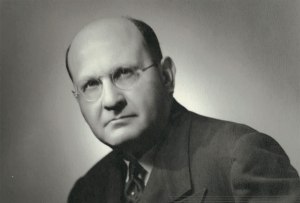
Raised in Little Rock, in 1889 she moved into the Albert Pike House on East 7th Street, when her aunt transferred the title to her father. That house would be her primary residence the rest of her life.  Her sister Mary Fletcher Drennan never lived in Arkansas as an adult after marriage. Her brother John Gould Fletcher spent much of his adulthood in Europe before returning to Little Rock and establishing his own house, Johnswood.

At age 15, Adolphine attended Vassar. She later credited that experience as broadening her views on many issues.  After graduating at age 19, she returned to Little Rock.  Her parents both died prior to her 1910 wedding to David D. Terry, which took place at what was then known as the Pike-Fletcher House (and today is known as the Pike-Fletcher-Terry House).

She is perhaps best known today for establishing the Women’s Emergency Committee in 1958 and for her subsequent deeding of the family house to the City for use by the Arkansas Arts Center.  But her entire life was based on civic engagement.

She was instrumental in establishing the first juvenile court system in Arkansas and helped form the first school improvement association in the state. She was long an advocate for libraries, serving 40 years on the Little Rock public library board.  Through her leadership, the library opened its doors to African Americans in the early 1950s. Today a branch of the Central Arkansas Library System (the successor the Little Rock public library) is named after her.  Another branch is named after her Pulitzer Prize winning brother.

Adolphine formed the Little Rock chapter of the American Association of University Women, the Pulaski County tuberculosis association and the Community Chest.

In 1958, when the Little Rock public high schools were closed instead of allowing them to be desegregated again, she called Harry Ashmore the editor of the Gazette and exclaimed, “the men have failed us…it’s time to call out the women.”  With this, she formed the Women’s Emergency Committee to Open Our Schools. This group played a major role in getting the four high schools open the following year.

From 1933 to 1942, David Terry served in the U.S. Congress. During that time, Adolphine alternated her time between Washington DC and Little Rock. But she spent much time in Little Rock raising her five children.

After her husband’s death in 1963, she continued to remain active in civic affairs. In the 1960’s, she and her sister deeded the Pike-Fletcher-Terry House to the City of Little Rock for use by the Arkansas Arts Center upon both their deaths.  Following Adolphine Fletcher Terry’s death in 1976, Mary turned over the title to the City.

Adolphine Fletcher Terry is buried in Mount Holly Cemetery alongside her husband. Three of her children are also buried in that plot.  Her parents and brother are buried in a nearby plot.

Her granddaughters and their families carry on Adolphine Fletcher Terry’s commitment to making Little Rock better.

The November 4th CALS Rabbi Ira Sanders Distinguished Lecture pays tribute this year to the man who inspired it

The 2018 Rabbi Ira Sanders Distinguished Lecture of the Central Arkansas Library System will honor Rabbi Ira Sanders himself, as two expert scholars engage in a lively dialogue on his inspirational work and legacy.

The lecture will take place at Temple B’nai Israel, 3700 North Rodney Parham Road, at 4:00 p.m. on Sunday, November 4. A reception and book signing will follow the program, and copies of the book will be available for purchase. The event is free and open to the public.

Rabbi Sanders was a member of the library Board of Trustees for over 40 years, but his contribution to social justice, to the Little Rock community, and to the whole region stretched far beyond his library service.

James L. Moses, author of Just and Righteous Causes: Rabbi Ira Sanders and the Fight for Racial and Social Justice in Arkansas, 1926-1963, will join Mark K. Bauman, editor of the journal Southern Jewish History, for a dialogue focusing on the life and work of Rabbi Sanders.

Their dialogue coincides with the launch of the new book by James Moses, just released from the University of Arkansas Press. Moses and Bauman will discuss Sanders’s lifelong work for social and racial justice in Arkansas and its relation to the efforts of other southern rabbis during the civil rights movement.

Rabbi Ira Sanders built an unforgettable legacy through his passionate advocacy for social justice and the many initiatives he founded to better the lives of others. He was a founder of the Little Rock School of Social Work, the Arkansas Lighthouse for the Blind and the Urban League of Greater Little Rock, where he served as an executive and advisory board member for more than 30 years. Dr. Sanders also served as rabbi at Congregation B’nai Israel for 38 years, which makes the congregation’s building a natural setting for this unique lecture. Sanders, who lived in Little Rock from 1926 until his death in 1985, was an outspoken supporter of racial integration, equal opportunity, and women’s rights.

James Moses states: “Rabbi Ira Sanders was a warrior for social and racial justice throughout his life. He took these words from Isaiah strongly to heart: Learn to do well: seek Justice – relieve the oppressed.

Through a lifetime devoted to this moral imperative, Moses says, “Sanders made a real difference in the lives of many thousands over an influential career that spanned the eras of the Depression, World War II, the Civil Rights Movement, and beyond. Sanders’s inimitable career gives us a window through which we can understand the history of Arkansas and the South through the tumultuous 20th Century. I look forward to sharing his singular story – and hearing more stories about him – in Little Rock on November 4.”

Mark K. Bauman praises the new book by Moses: “James Moses has written a trailblazing book on a true Jewish American hero. Ira Sanders was involved in the civil rights movement long before other people were. He was devoted to a variety of causes to help people in need. Sanders is well-deserving of the marvelous tribute that Moses has given him through this biography.”

Bauman is also enthusiastic about the upcoming dialogue. “I very much look forward to relating the work of Sanders to the work of other Reform Rabbis in the South and to sharing these remarkable experiences with an energetic and informed audience.”

Rabbi Barry Block, current leader of Congregation B’nai Israel, sees continuing value in the legacy of Rabbi Sanders. “In collaboration with interfaith clergy partners, members of Congregation B’nai Israel, and diverse leaders throughout the community, Rabbi Sanders transformed Arkansas for the better,” he says. Rabbi Block believes that people of all belief systems can be inspired to bold action against today’s injustice by the example of Rabbi Sanders.

The 2018 Rabbi Ira Sanders Distinguished Lecture is sponsored by the Central Arkansas Library System and Congregation B’nai Israel and co-sponsored by the Jewish Federation of Arkansas and the CALS Butler Center for Arkansas Studies.

For more information about the Rabbi Ira Sanders Distinguished Lecture, contact Madelyn Ganos at mganos@cals.org or (501) 918-3030.