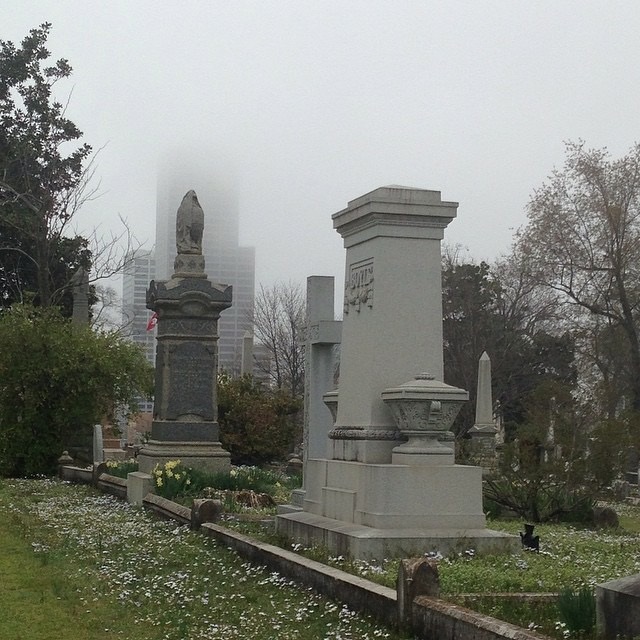
For Poetry Month – Epilogue

Since April is Poetry Month, here is a poem written by the Culture Vulture.  It was inspired by visits to the Old State House Museum and Women’s City Club buildings before they were renovated.

Epilogue

scratched oak floors
plaster peeling off of the walls
banisters smoothed by time’s sandpaper
the chandelier–Arachne’s loom
dank, dusty, musty odors permeate from
the drapes hanging
like Babylon’s gardens
the ballroom is lifeless.

But, stop and listen

Laughter
Strains of music
The rustle of taffeta and satin as
Women practice Terpsichore’s art
Whirling and swirling around with
Men in white tie and tails.
The clinking of glasses
To toast triumphs…and future hopes.

All of these are as much a part of the room as

scratched oak floors
plaster peeling off of the walls
banisters smoothed by time’s sandpaper….

“Target Tokyo: Jimmy Doolittle and the Raid that Avenged Pearl Harbor” tonight at the Clinton School

UACS TokyoThe Doolittle Raid is a feat of legend: a daring, some thought suicidal, bombing mission designed to avenge the attack on Pearl Harbor by taking the fight to the heart of the Japanese Empire—Tokyo. The raid’s success became a rallying point for the United States, destroyed Japan’s sense of its own invulnerability, and helped force a confrontation at Midway, a critical turning point in the Pacific War.

Shrouded in secrecy at the time, the raid quickly entered the realm of myth, almost literally: the White House and the American press began using “Shangri-La,” the name of a fictional mountaintop utopia, as a stand-in for the undisclosed launching point of the operation. In “Target Tokyo,” award-winning historian James Scott strips away the layers of the legend and provides the first truly comprehensive account of the raid, one that’s based on new interviews and scores of never-before published records drawn from archives across four continents.

The presentation will begin at 6pm this evening at the Clinton School.

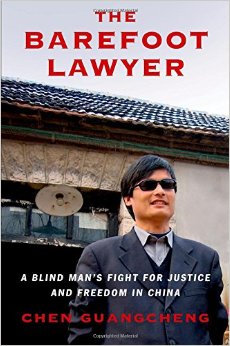
THE BAREFOOT LAWYER tonight at the Clinton School

uacs barefootThe son of a poor farmer in rural China and blinded by illness when he was an infant, Chen Guangcheng became a self-taught lawyer and a political activist. Repeatedly harassed, beaten, and imprisoned by Chinese authorities, Chen was ultimately placed under house arrest. Despite his disability, he was determined to escape to freedom and fight for the rights of his country’s poor. After two years, one morning he climbed over the wall of his heavily guarded home and escaped. Days later, he turned up at the American embassy in Beijing, and after high-level negotiations, was able to leave China and begin a new life in the United States. Both a riveting memoir and a revealing portrait of modern China, “The Barefoot Lawyer” tells the story of a man who has never accepted limits and always believed in the power of the human spirit to overcome any obstacle.

He will speak tonight at the Clinton School at 6pm.

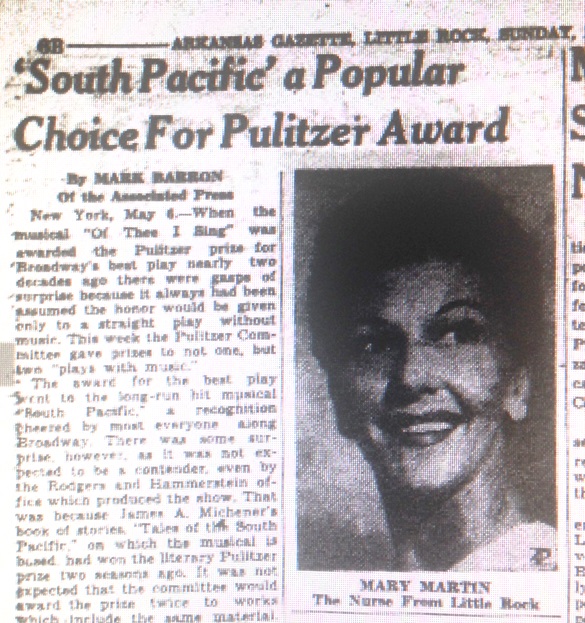
Little Rock Look Back: SOUTH PACIFIC wins Pulitzer Prize for Drama

SoPa Pul GazThe Pulitzer Prizes will be announced today.  In 1950, one of the recipients in the “Letters, Drama and Music” categories featured a character from Little Rock.

The 1950 Pulitzer for Drama went to a musical, for only the second time in the history of the awards.  The recipient was South Pacific by Richard Rodgers, Oscar Hammerstein II and Joshua Logan.  The character was the leading lady of Nellie Forbush. She was an Navy ensign and a nurse stationed on an exotic island during World War II.  The musical was based on a Pulitzer Prize winning novel, James Michener’s Tales of the South Pacific.

In the Michener novel, Miss Forbush is not from Little Rock.  She is actually from a small town in Alabama.  The part was written for Mary Martin from Weatherford, Texas.  Rodgers, Hammerstein & Logan did not discuss why they relocated Nellie’s birthplace.

In the musical, Nellie struggles with her own prejudices. This issue of prejudice became an instance of fact meeting fiction. In 1957, a few weeks after Eisenhower sent troops into Little Rock to ensure that Central High would be desegregated, a production of South Pacific on Long Island was temporarily halted when the audience booed and yelled after Nellie mentioned she was from Little Rock.


On Pulitzer Day – Prizing Mount Holly

The Pulitzer Prizes are to be announced today.  Mount Holly Cemetery not only touts that it is the site of a whole host of elected officials, it is also the only place in Arkansas where two Pulitzer Prize recipients are buried. The cemetery is open every day, but a special visit to these two prize winner gravesites can be made next Sunday during the Mount Holly Cemetery Association’s annual “Rest in Perpetuity” fundraiser picnic.

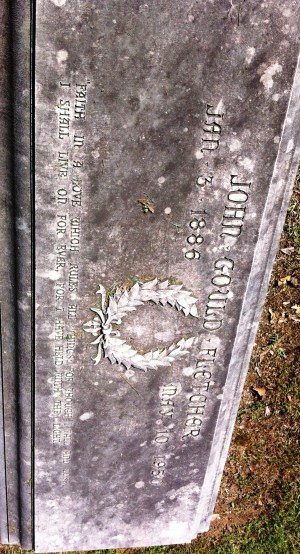
In 1939, John Gould Fletcher became the first Southern poet to win the Pulitzer Prize for Poetry.  He was born into a prominent Little Rock family in 1886.  Fletcher was awarded the prize for his collection Selected Poems which was published by Farrar in 1938.  Two years earlier, he had been commissioned by the Arkansas Gazette to compose an epic poem about the history of Arkansas in conjunction with the state’s centennial.

Fletcher is buried next to his wife, author Charlie May Simon and his parents (his father was former Little Rock Mayor John Gould Fletcher).  Other relatives are buried nearby in the cemetery.

The other Pulitzer Prize winner buried in Mount Holly is J. N. Heiskell, the longtime editor of the Arkansas Gazette.  It was Heiskell, in fact, who asked Fletcher to compose the poem about Arkansas.  Heiskell served as editor of the Gazette from 1902 through 1972.  He died at the age of 100 in 1972.

Under his leadership, the Gazette earned two Pulitzer Prizes for its coverage of the 1957 desegregation of Little Rock Central High.  One was for Harry Ashmore’s editorial writing and the other was for Public Service.

Heiskell remained in charge of the Gazette until his death in 1972.  He is buried alongside his wife with other relatives nearby.  Also not too far from Mr. Heiskell are two of his nemeses, proving that death and cemeteries can be the great equalizer. In the early days of his Gazette stewardship, he often locked horns with Senator (and former Governor) Jeff Davis. Later in Mr. Heiskell’s career, he vehemently disagreed with Dr. Dale Alford, who had been elected to Congress on a segregationist platform.

Poetry Month: John Gould Fletcher & “In Mount Holly”

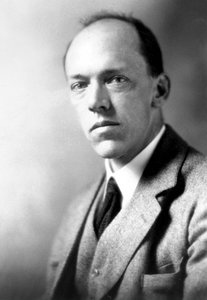
John_Gould_Fletcher poetThe Pulitzer Prizes will be announced tomorrow.  Arkansas poet John Gould Fletcher became the first Arkansan to win a Pulitzer and the first Southern poet to win the Pulitzer for Poetry.

The scion of a leading family of Little Rock, Fletcher was most known for his association with the Imagism movement in poetry.

Below is his 1929 poem “In Mount Holly.”  This cemetery is the final resting place of many members of his family. Fletcher and his wife Charlie May Simon (an award winning children’s author) are buried next to his parents in Mount Holly.

Supporters of Mount Holly will gather next Sunday (April 26) for the Rest in Perpetuity picnic in the cemetery.  It is a fundraiser sponsored by the Mount Holly Cemetery Association.


Mount Holly grey“In Mount Holly”

Here beyond hope is all that death shall hold of me,
This brown Arkansas hillside, dreaming through depth of mid-winter, alone in the southland;
Under the dove-grey low-swung cloud come up from the Gulf to scatter
Its benediction of deep rain, endlessly flashing and pouring;
Here, in the drift of the years,
From the seas I have crossed, and the lands I have known, and the struggles
I have faced with the steady river of time marching on through my vitals,
I have come back to this point of repose, to these stones side by side in the grass,
Turning as the earth turns against far Orion’s fierce whirlwind of stars.

They greet me unseeing, these graves,
Mute symbols of life accomplished, made noiselessly perfect,
Quieted by the cold hands of death that suddenly seize on the body
In an hour unexpected, as a thief in the night, running free with the tale of man’s days;
Yet not to be loosed from the soil till the sphere splits its core and is shattered
Like a ripe seed pod crammed full with thick seed of expectancies, memories, and failures;
Their dumb thought trails on in the soil while I in the high world above them
Lift up thin eager hands to the sky and cry to the sun’s dying splendor.

Here beyond hope is all that death shall take of me,
The blood that is mine, and yet theirs, the tower, the base and the framework;
The building not reared by man’s hands, but shaped in the night and the silence,
The framework of the body fashioned as theirs, for the blood through the generations
Repeats the same tale of Eden lost and Paradise darkly forgotten:
When the stars hang low in the sky and two souls become as one body
Straining past hope and despair to a timeless consummation,
Which is as the wedding-song of God mating the stars without number.
Here does the last life wait,
Crouched in its stronghold of bone behind the slow-vanishing sinew,
A spark without issue, a last ache of lust, a slow tide merging and dying
Into the running of quick hidden sap and the thin dumb flame of the grass.

Out of what chasms of fire,
Out of what lavalike torrents life sprung at the outset neither I nor these graves can remember;
They have become turf-covered dumb mouths opening below to the waters under the earth,
Which burst forth but once in the flood, and since then have ever been silent.
Into what dark seas we flow
I know not at all—I remember
Only the sunlight that lays a soft pencil of shadow to sleep on the grass;
The tramp of the black-clad pallbearers, the words spoken or sung, the lowering of the coffin to earth.

Here beyond hope, beyond dreams,
Under this soft and lazy sky dreaming in depth of midwinter,
Where the sweetgum casts to the earth its brown prickly balls, where the holly
Flashes its scarlet clusters, where the feathery pine sways its thin needles,
Where the red haw blazes with berries threaded bright on long outspraying stems,
Where the conelike fount of the magnolia spreads downwards a billion of star-rayed leaves,
Where the acorn lies split on the stone, its yellow sustenance wasted:
Here was I fashioned and made
By those who now sleep in the earth at my feet, as they by others forgotten.
Their speech was my speech, their dream was my dream, it was given
Beyond the cloud’s arbitrament of rain to create, or the slow earth’s power to destroy.
And I pause ere I go,
And stretch out my hands to these worn stones, smoothing them over and over,
Repeating their names which no one but I now remembers,
Praying that they may somehow bless me;
These who have given me life and so many dreams
On this brown Arkansas hillside, quiet in depth of midwinter:
Out of this army of graves facing eastward I single out but these two stones,
I wailingly beseech them
With the tears of the spirit torn against life and its days,
In this place where so many tears have been shed and mortal lives brought to the awe
Of the open portals of death, beyond hope, beyond dreams;
I kneel and weep as a man weeps,
I cry out loud as a man cries,
Let that which is mine and yet yours, this memory transient, this passion,
Marked by the cross of Christ on those stones, marked in my heart by time’s ebbing,
Be with me now forever wherever I go.

Tonight Amy Dubois Barnett speaks at Bless the Mic on Philander Smith campus

amy-dubois-barnettPhilander Smith College’s free lecture series “Bless the Mic” finishes the season tonight with journalist Amy Dubois Barnett.  She will speak at 7pm in the M.L. Harris Auditorium on the Philander Smith campus.

In August 2014, she was named Executive Editor of ESPN’s The Undefeated.  Prior to that, Barnett was Editor-in-Chief of Ebony, the oldest and largest African-American magazine in the country. At Ebony, Barnett executed the publication’s first top-to-bottom redesign in its 68-year history and also re-launched Ebony.com, both to critical acclaim.

Before Ebony, Barnett was the Deputy Editor-in-Chief of Harper’s Bazaar. Barnett was also the Managing Editor of Teen People. Before Teen People, Barnett served as Editor-in-Chief of Honey magazine where she oversaw a major redesign of the magazine.  Prior to Honey, Barnett was with Essence magazine, heading up the publication’s style content and lifestyle department.

For her work as a journalist, Barnett was named the 2012 Media Executive of the Year by Target Market News.  In 2013, she was included on the Folio 100, a list that honors the most innovative and influential professionals in magazine media.

This past school year, Barnett was also an Adjunct Professor of Management & Organizations at Northwestern University’s Kellogg School of Management, teaching a Spring semester class on Shifting Business Frameworks in Media and Entertainment.