
Little Rock Look Back: Dedication of Clinton Presidential Park Bridge and Bill Clark Wetlands

Photo by the Little Rock Convention and Visitors Bureau

On a very warm Friday, September 30, 2011, the Clinton Presidential Park Bridge was dedicated.  This completed the eastern loop of the Arkansas River Trail as well as created another feature in Clinton Presidential Park.

The ceremony featured remarks by both President Bill Clinton and the incumbent Secretary of State Hillary Rodham Clinton.  Chelsea Clinton also took part in the ceremony.  Former US Senators (and Arkansas Governors) Dale Bumpers and David Pryor were in attendance as was Jim Guy Tucker who followed Clinton into the Arkansas Governor’s Office.  Current Governor Mike Beebe was also present and took part in the ceremony, which was emceed by Stephanie Streett, executive director of the Clinton Foundation.  Many other former and current elected officials were present.

In addition to dedicating the bridge, the ceremony officially dedicated the William E. “Bill” Clark Presidential Wetlands which are adjacent to the bridge.  City Director Dean Kumpuris joined Clark’s widow, Margaret, and son, William, in the dedication of the wetlands.

This Clinton Presidential Park Bridge is over 2,600 ft. long.  It was constructed in 1899 as the Rock Island Bridge.  After the Rock Island stopped using the bridge, the lift span was permanently raised.  It had to stay this was for the Clinton redevelopment.  Therefore a new surface was built that slopingly takes persons from park level up to the span level and back down.

The bridge’s “rusty” structure is complemented by a well-lit 12-18-foot walkway flanked on both sides by silver galvanized steel handrails.
The total investment for this area is over $13.5 million.
Later that weekend, the Clinton Foundation hosted an event to commemorate the 20th anniversary of Clinton’s announcement that he was seeking the Presidency.

Little Rock Look Back: First Meeting of Pulaski Heights City Council

The opening of the first minutes of the Pulaski Heights City Council.

On September 28, 1905, the first meeting of the Pulaski Heights City Council took place.  The newly elected Mayor was J. H. Joslyn, the Recorder was F. D. Leaming, and new Alderman present were E. E. Moss, Maxwell Coffin and C. C. Thompson.  Pulaski Heights had been incorporated on August 1, 1905.  At that time its population was estimated at between 300 and 400.

The first ordinance, which was offered by E. E. Moss, was to set a tax rate and give the City the ability to levy taxes.  Next was a motion to establish a committee to establish rules and procedures for the council. The final business before the Council was to allow the Recorder to order stationary, a seal and a record book (that record book is now in the vault at Little Rock City Hall).

The next meeting would be October 28.  At that meeting, two other Aldermen are mentioned in the minutes (Fauble and Paul) but were absent from that meeting as well.  Mr. C. M. Fauble was present at the third meeting.  Mr. R. O. Paul did not appear until the fifth meeting (December 13, 1905).

Interestingly the Recorder had a vote in the Council meetings (which was not a practice in the City of Little Rock at the time).

The Council did not have a permanent meeting place until the third meeting.  At that point in time, they used space in the offices of Dr. Hockersmith.  They later met in a building which is now part of the Pulaski Heights Baptist Church campus.

Pulaski Heights was a separate City until January 1916.  On January 4, 1916, Little Rock voters approved the annexation of Pulaski Heights by a ten-to-one margin, and the suburb became the city’s ninth ward.

This established a couple of precedents for the City of Little Rock which are in effect to this day.  The first is that Little Rock would not be a central city surrounded by a variety of small incorporated towns (in the manner that St. Louis and other cities are).  It was this thought process which has led the City to continue to annex properties.

In addition, this move to annex Pulaski Heights was the first time that the City grew toward the west.  Previous growth had been to the south.  By emphasizing western expansion, this has allowed Little Rock to continue to grow.

Little Rock Look Back: 1958 Election continues LR High Schools closure

Signs placed outside of Little Rock’s high schools erroneously cited the federal government as the source of school closures. They also had a glaring spelling error.

On Saturday, September 27, 1958, voters in Little Rock approved the continuation of the closure of the city’s high schools.

Using legislation passed by the General Assembly in a hastily called special session in summer of 1958, Governor Orval Faubus had ordered the closure of Little Rock’s four public high schools in order to keep them from being desegregated.

But that state law only allowed the closure of Central, Hall, Horace Mann and Technical high schools on a temporary basis. In order for them to be closed permanently, the city’s voters must approve it by a vote.

The election date was to be set by Governor Faubus.  Originally scheduled for Tuesday, October 7, the date was moved to September 27.  Speculation for the new date selection centered on:

  • Faubus wanted it to be prior to the October 1 poll tax deadline so that only people who had paid their poll tax for the prior year were eligible
  • The election was on a Saturday.  Though Tuesday was the most common day of the week for elections, in the late 1950s Saturdays were used on elections as well.  The school board elections, for instance, were on Saturdays in some years.
  • On September 27, 1958, the Arkansas Razorbacks had a home football game in Fayetteville.

These were all designed to stifle voter turnout. In addition, the state law required a majority of eligible voters to approve reopening the schools.  The law also spelled out the confusing wording of the ballot question.  As historian Sondra Gordy points out in her book FINDING THE LOST YEAR, the ballot question was about only being for or against integration of the schools – it did not say anything about closure or opening of schools.

While the newly formed Women’s Emergency Committee did put forth efforts to educate voters about the issue and encourage a vote to reopen the schools, this nascent group was less than a fortnight old by the Saturday election day.  On the other side, the Governor campaigned for the remaining closure of the schools including in television appearances.

On that Saturday, Little Rock voters voted 19,470 to keep schools segregated to 7,561 to integrate them.

The WEC was disappointed but remained even more determined.  As some of the members have commented – having over 7,000 people be WITH them was encouraging.

It would be a long road ahead to reopen the schools.  It would take two more elections before the City’s four public high schools would reopen.

Little Rock Look Back: Happy Birthday to Gloria Ray Karlmark

Gloria Ray Karlmark enraptured the audience in 2017 at the Central High Integration 60th Anniversary when she talked about how welcomed she finally felt in the city of her lost youth.  She was born on September 26, 1942. So her second full day of classes in 1957 was her birthday.
Gloria is the youngest daughter of H. C. Ray, son of a former slave, and founder of the Arkansas Agricultural Extension Service for Negroes, and Julia M. Ray, a Sociologist and a graduate of Tuskegee Institute and Philander Smith College.  Her father was Laboratory Assistant to George Washington Carver, and received his degree in Horticulture under Booker T. Washington at Tuskegee Institute.  Her mother was fired when she refused to withdraw Gloria from Little Rock Central High School in 1957-1958.

When Central High School remained closed, on an order from Governor Faubus the following year, Gloria moved to Kansas City, Missouri, where she graduated in 1960 from the newly integrated Kansas City Central High School.  She went on to graduate from Illinois Institute of Technology (IIT), Chicago, after which she joined the IIT Research Institute as Assistant Mathematician on the APT IV Project (robotics, numerical control, and online technical documentation).  This included work at Boeing in Seattle, McDonnell-Douglas in Santa Monica, and NASA Automation center in St. Louis.

In 1969, she and her husband took a sabbatical year following the trail of the Maya Indians from Mexico through Central America by car.  Soon after, they immigrated to Sweden.  In the years that followed, the Karlmark family was blessed with a son and a daughter.

Recruited to join IBM’s Nordic Laboratory, Mrs. Karlmark completed the Svenska Patent och Registreringsverket “Patent Examiner” Program in 1975, and joined IBM’s International Patent Operations as European Patent Attorney.

In 1976, she co-founded Computers in Industry, and international journal of practice and experience of computer applications in industry affiliated with UNESCO and the International Federation of Information Processing-IFIP.  She served some 15 years as Editor-in-Chief.

In the years leading up to her retirement in 1994, Mrs. Karlmark also worked for Philips International in management as a specialist in Belgium, the Netherlands, France, Germany, Spain, and Scotland.  She and her family currently reside in Europe.

Little Rock Look Back: Roswell Beebe Gets the Deed to Little Rock in 1839

Map showing boundaries of original City of Little Rock

On September 25, 1839, businessman Roswell Beebe received title to all of the land in Little Rock.

Starting in the 1810s, there had been much dissension as to who had title to land in what would become Little Rock.  As the settlement developed into a town and city, these disagreements became greater. Often land speculators would sell land to settlers without having the right to do so.

Coming to Little Rock in 1835, Beebe was a witness to the continued uncertainty over land ownership.  In early 1839, he acquired 240 acres which had the only incontestable title in town. This acreage comprised most of Little Rock. He went to Washington DC in 1839 and, on September 25, received the original patent for the town of Little Rock, signed by President Martin Van Buren. It is recorded in the Pulaski County recorder’s office Book L, page 312.

Upon his return, Beebe gave all the people who had bought lots from a certain real estate developer, whom he considered to be fair and honest, title to their land for a dollar. In December 1839, he drew up a plan for Little Rock, laying off blocks and streets. He deeded the streets and alleys to the city for a dollar.

He gave the state the title for the land on Markham Street, where the new capitol building (now the Old State House Museum) was located.  He also donated part of the land for Mount Holly Cemetery, the other portion came from his brother-in-law Chester Ashley.

Little Rock Look Back: Little Rock Nine enter Central High for First Full Day

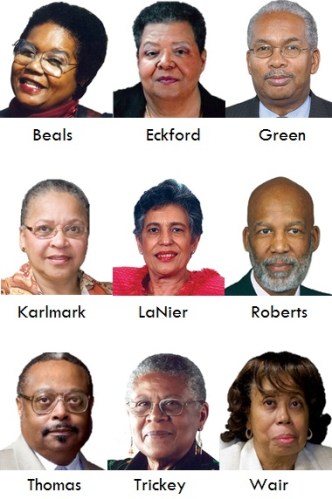
After legal challenges, stymied attempts, and literally countless threats, it was on Wednesday, September 25, 1957, that the group of African American students known as the Little Rock Nine actually entered Little Rock Central High School for a full day.  They would return each day through the end of the school year.

Unlike September 23, when they went in a side door before being hustled a few hours later for their own protection, on September 25 they walked in the front door.  They did so escorted by members of the 101st Airborne who had been ordered to Little Rock by President Eisenhower.

Much has been written about the events of September 25, 1957.  Several of the participants that day have penned memoirs.

Whatever I would write today would pale in comparison to the accounts of those who lived it.

So I just end this with words of gratitude to:

  • Melba Pattillo Beals
  • Elizabeth Eckford
  • Ernest Green
  • Gloria Ray Karlmark
  • Carlotta Walls LaNier
  • Terrence Roberts
  • Jefferson Thomas
  • Minnijean Brown Trickey
  • Thelma Mothershed Wair

Thank you to these nine pioneers, who were simply teenagers trying to have equal education opportunities.  Thank you to their parents, their families, their pastors, their legal team, their support system.  Thank you to Daisy and L. C. Bates, Wiley Branton Sr. Chris Mercer, and Thurgood Marshall for the roles they played.

While Jefferson Thomas passed away in 2010, the other eight continue to tell their stories and speak truth to audiences ranging from one to thousands and ages from pre-school to seniors.

Little Rock Look Forward: Happy Birthday Annie Abrams

September 25 is the birthday of Annie Mable McDaniel Abrams.

Miss Annie or Mother Abrams or Mrs. Abrams.  Whatever you call her, she greets you with a smile, a hug, and sage advice.

As both a historian and a futurist, she has turned her house into a museum and library. As a writer and preservationist, she has worked to document history and ensure historical properties and neighborhoods will long remain in Little Rock.

Born in Arkadelphia, she moved to Little Rock at age 13 to attend Dunbar Junior High School and High School.  She studied education at Dunbar Junior College and later taught in Marianna. In 1956, she returned to Little Rock to work for the Arkansas Teachers Association.  After her return to the capital city, she married Orville Abrams.  In addition to raising her four children, Miss Annie has helped raise countless others through her advice, support, love, and sometimes strong admonitions.  She also found time to return to school and receive a degree from Philander Smith College.

Among her many accomplishments are leading efforts to rename High Street for Martin Luther King, 14th Street for Daisy L. Gatson Bates and 20th Street for Charles Bussey.  Through her community activities, she had worked closely with both Bates and Bussey.  She was a friend to the Little Rock Nine (who were only a few years younger than she) and to their families. Perhaps, because she has been a personal friend of many Arkansas and national politicians over the past 60 years, it should come as no surprise that she and her husband were also acquainted with Governor Faubus.

Whether a leading political figure or a small child, Miss Annie isn’t afraid to give advice or to share her love.  Once an educator, always an educator, she loves to learn and teach. It is rare for her to miss a speech at the Clinton School or a Political Animals Club meeting.  (She is the Helen Thomas of the Political Animals Club — always given the first question when she is present.)

In recognition of all her efforts she has been recognized with an honorary doctorate from Philander Smith College, the Brooks Hays Award, and an award award from the national Martin Luther King Jr. Commission.  In 2010, she was inducted into the Arkansas Black Hall of Fame.