
155 years ago today: the “Battle” of Little Rock

The Civil War came to an end for Little Rock 155 years ago today (September 10) as Federal troops took control of the city.  Unlike some other Southern capitols, there was no long siege or bloody battle.

On September 10, 1863, Confederate forces under General Sterling Price evacuated Little Rock in advance of Federal forces, thus ending the Little Rock Campaign. By 5:00pm, his forces had left the city and at 7:00pm, civil authorities formally surrendered. Little Rock became the fourth Southern capital to come under Federal control.

The battle was the culmination of a campaign launched by Maj. Gen. Fred Steele, on August 1, 1863 to capture Little Rock. The campaign includes engagements at Westport, on 14 August, Harrison’s Landing, on 16 August, Brownsville on 25 August, the Reed’s Bridge, on 27 August, and Ashley’s Mills on 7 September 1863. After the Union army affected a river crossing east of Little Rock, effectively flanking the Confederate defenses north of the river, the Confederates staged a brief delaying action at Bayou Fourche to allow for evacuation of Little Rock.

As local historian Dr. Bobby Roberts has noted, “It was really more of a ‘skirmish’ than an actual ‘battle.’”

City of Little Rock leaders must have been anticipating the result of the battle.  In August 1861, they took the City’s treasury to an undisclosed location and started scaling back on City government.

The Battle of Little Rock is also known as the Battle of Bayou Fourche.

Little Rock Look Back: Arkansas’ first Miss America comes to Little Rock

Tonight a new Miss America will be crowned.  The competition has had a tumultuous year with many changes behind the scenes as well as alterations to the event format.

It seems a good time to hearken back to a earlier, simpler time when Donna Axum first brought the Miss America title to Arkansas.

A native of El Dorado and a student at the University of Arkansas, during her reign as Miss America Miss Axum (or simply Donna as the newspaper headlines referred to her) made four public visits to Little Rock.  As the first Miss Arkansas to become Miss America, the state’s Capitol City was very interested in giving her a warm welcome.

After being crowned on September 7, 1963, Axum’s first official visit to Arkansas was November 1 through 3.  In addition to stops in Hot Springs and El Dorado, she appeared in Little Rock to attend events including an Arkansas Razorback football game at War Memorial Stadium.  Her entourage included the top four runners up from the Miss America pageant.

In February 1964, she made a brief appearance in Little Rock which included a press conference.

Donna Axum spent nearly two weeks in Arkansas in May 1964 attending several pageants as well as spending time with family.  During that visit she appeared in Little Rock twice.  The second time she headlined a concert with the Arkansas Symphony (not related to the current Arkansas Symphony Orchestra) and the Arkansas Choral Society. It took place at Robinson Auditorium.

Little Rock Look Back: 1959 Labor Day Bombings

Labor Day Bomb

ARKANSAS GAZETTE photos showing the exterior and interior of the LRSD building after the bomb blast.

A

On September 7, 1959, a peaceful Labor Day in Little Rock was shattered by the explosions of three dynamite bombs.

The locations were Fire Chief Gene Nalley’s driveway on Baseline Road at 10:20pm, Baldwin Company offices at Fourth and Gaines at 10:53pm (where Little Rock Mayor Werner Knoop was a partner–the company is now known as Baldwin Shell), and the School District offices at 10:58pm (then located at Eighth and Louisiana streets).

Given the three targets, it was fairly quickly assumed that there was a connection between the bombings and the lingering effects of the 1957 integration crisis. In light of that, police officers were stationed at the homes of all Little Rock City Directors and School Board members.

The investigation into the bombings turned up a purported fourth location for a bomb. That was the office of Letcher Langford. (Culture Vulture Editorializing Note:  This could have been a ploy to throw investigators off the scent. Langford was the only City Director who had been backed by segregationist candidates and had been openly hostile to the Women’s Emergency Committee — to the point of threatening them with legal action for not disclosing their membership rolls.)

Investigators determined that the bombing had been planned in late August by members of the Ku Klux Klan.  Five individuals were arrested.  They were J. D. Sims, Jesse Raymond Perry, John Taylor Coggins, Samuel Graydon Beavers, and E. A. Lauderdale.  The latter had twice been an unsuccessful candidate for the City Board of Directors.

Sims pleaded guilty and started serving a prison term later in September 1959.  Perry, Coggins and Beavers all went to trial in October and November.  Each was found guilty. Their terms ranged from three to five years.  Lauderdale was convicted, but appealed his decision. Though the Arkansas Supreme Court upheld the verdict against him, he did not start serving his sentence until the court decision in February 1961.

Governor Faubus commuted the sentences of Perry, Coggins and Beavers.  All three served less than six months.  Lauderdale’s sentence was reduced by Faubus so that he, too, was eligible for release after six months.  Sims, who was first to plead, served the longest: nearly two years.

Sadly, this would not be the last bombing in Little Rock tied to 1957. In February 1960, Carlotta Walls’ house was bombed.

Little Rock Look Back: Arkansas Arts Center study group heads to China

TIna Poe, Raida Pfeifer and Jeane Hamilton at the Great Wall of China (photo from collection of Jeane Hamilton)

On September 1, 1975, a group from the Arkansas Arts Center left Little Rock for a study tour of China. This was the first non-governmental group from the United States who had been authorized to tour the People’s Republic of China.

Fred Poe, of Poe Travel, and Jeane Hamilton were the organizers of the trip.  It was part of the annual travel seminars the Arts Center  would take to locations throughout the world to learn more about art and culture.  It took many months of planning as wells as mounds and pounds of paperwork to get this trip underway.

Persons interested in the trip had to apply and be approved by the Chinese government in order to participate in the trip.   The Chinese government selected eighteen AAC members from submitted applications and the group visited Beijing, Shanghai, Changsha, Kweilin, and Guangzhou.

The AAC Traveling Seminar participants in front of Mao’s birthplace. (Photo from the Jeane Hamilton collection.)

Little Rock Look Back: Memorial Services for Senator Robinson

As Arizona Senator John McCain is being remembered in a series of memorial services, it seems an appropriate time to recall the series of services for Arkansas’ senator who was on a national party ticket. That man was Joseph Taylor Robinson.
Like Senator McCain, Senator Robinson was honored in services both in the state he represented as well as at the US Capitol.

Senator Robinson died in Washington D.C. on July 14, 1937.  His wife was in Little Rock making preparations for a trip the couple was to take. Following his demise, Mrs. Robinson went to Washington to accompany her husband’s body back to Arkansas.

The Senator was honored with a memorial service in the Senate chambers on Friday, July 17.  President Roosevelt and the cabinet joined members of the senate on the floor in what was described as a state funeral without pomp.  Mrs. Robinson sat with her brothers and two nephews as well as Bernard Baruch and Arkansas Power & Light’s Harvey Couch, who were Senator Robinson’s closest friends.  Eleanor Roosevelt was one of the many crowded in the senate galleries observing the service.  Following the service his body remained in the chambers until it was transferred to a train to make the journey to Little Rock.

The funeral train bore his body, his family, 50 senators and over twenty congressmen. It reached Little Rock around 8am on Sunday the 19th.  From there, Senator Robinson’s body was taken to his house on Broadway Street until noon.  It subsequently lay in state at the Arkansas State Capitol until being escorted by military to First Methodist Church.

1,500 people packed the church a half hour before the service began. The sun shone through the windows onto the flag-draped coffin as Rev. H. Bascom Watts led the service. Among the pallbearers was former Vice President Charles G. Dawes. Governor Carl Bailey of Arkansas was joined by Governors Richard Leche of Louisiana and E.W. Marland of Oklahoma.

As the funeral procession reached Roselawn Cemetery, thunder echoed. The skies which had alternated between sun and rain that day, returned to rain. A deluge greeted the end of the service and sent visitors hurrying for shelter at the end.

Little Rock Look Back: Michael Jackson in town

August 29, 2018, would have been Michael Jackson’s 60th Birthday.

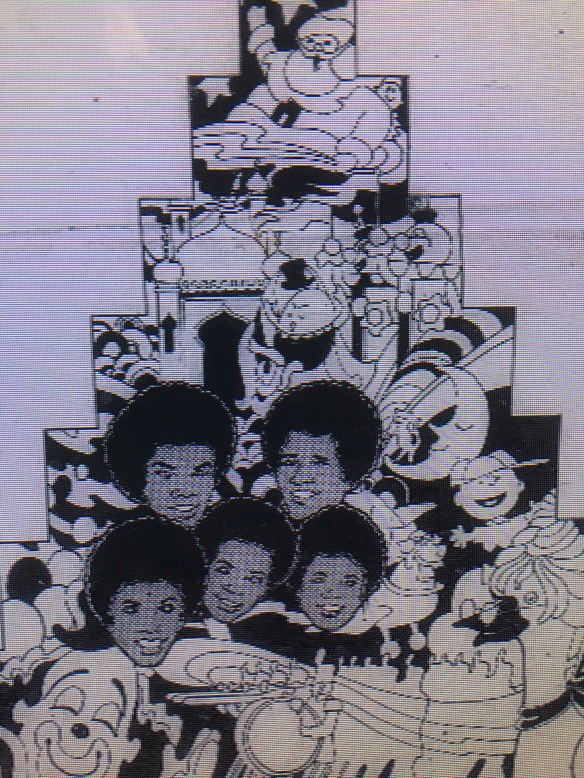
On December 2, 1972, he and his brothers performed in concert at Barton Coliseum. But earlier in the day, they were the grand marshals for the second annual Little Rock Christmas Parade.

They were featured in a full page ad for M. M. Cohn advertising the parade (and of course encouraging persons to stop by the store while they were downtown).

The Jackson 5 sang and waved from the upper level of a London style double decker bus. About fifty kids followed behind the bus yelling their appreciation and singing along.

Writing for the Arkansas Gazette, Bill Lewis notes that the biggest cheers at the parade, however, went to Gary Weir as KATV’s Bozo (even louder than the one’s for Santa).

Remembering Aretha Franklin at Robinson Center with the ASO

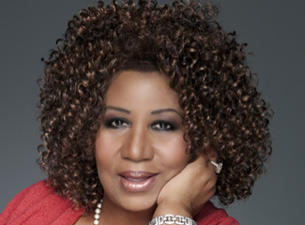
On Tuesday, November 16, 2004, Aretha Franklin showed why she was an unparalleled entertainer.

She shared the Robinson stage with the Arkansas Symphony Orchestra.  The ASO brought Miss Franklin to town as part of the festivities surrounding the opening of the presidential library.  Long a favorite of the Clintons, Miss Franklin sang at his 1993 inaugural festivities the night before he took the oath of office.

Resplendent in a series of white dresses, Miss Franklin was in top form feeding off the love from the audience.  While backstage she may have been dealing with back and knee issues (which I saw first hand), when she stepped on to the stage she was giving her all as she rolled through hit after hit from her starry career.  She sang, she played the piano, she entertained!

It was a sold out house and her voice and energy reached the last row of the balcony.

Prior to her appearance, the ASO played a few selections including variations on “Hail to the Chief” and “America.”

Earlier in the day, I had the chance to meet her.  The ASO had contacted me to see if I could pick up three copies of Bill Clinton’s autobiography for her to have him sign.  I was out and about on Clinton Library-related errands that day, so I happily obliged.  I picked up three copies and delivered them to Robinson Center.  Miss Franklin was on a break in between rehearsals and was about to be interviewed by Craig O’Neill for KTHV.  I only got to shake her hand and briefly say hello, but I could tell she was thrilled to receive the books.

I obviously did not ask to be reimbursed for the expense. The chance to spend a few seconds with her was payment enough.