Little Rock Look Back: St. Patrick’s Day with Mayor Pat L. Robinson

IMG_4517On this date in 1900, future Little Rock Mayor Pat L. Robinson was born.  While I cannot verify that he was indeed named after St. Patrick, it would be fairly reasonable to assume there might be a connection.

Robinson was a rising star of Little Rock Democratic politics.  In April 1929, just weeks after his 29th birthday, he was elected Mayor.  He had twice been elected as City Attorney (1926 and 1928) and was one of the youngest to serve in that position.

During Mayor Robinson’s tenure, he announced plans to construct a new airport.  That project led to the creation of what is now the Bill and Hillary Clinton National Airport.  Mayor Robinson was also involved in helping Philander Smith College secure the property where it is now located.  In addition, during his tenure, what is now the Museum of Discovery was folded into the City of Little Rock.  Shortly after taking office, he championed several projects for approval by Little Rock voters. The projects he supported were approved; the ones he did not support did not pass.

Single at the time he was in office and generally considered good looking, Mayor Robinson was sometimes referred to as the “Jimmy Walker of the Southwest.” Walker was the handsome and charming Mayor of New York City at the time.

Mayor Robinson ran afoul of some of the Democratic party leaders. Records don’t seem to indicate exactly what actions he took or did not take.  One thing that is brought up is that the City went into financial distress during his tenure.  Considering the Wall Street crash happened shortly after he took office, that financial state was not unique to Little Rock.

IMG_4532During this era in Little Rock, it was customary for an incumbent mayor to be given a second term. But City Clerk Horace Knowlton challenged Robinson in the primary.  It was a bitter campaign with Robinson linking Knowlton to disreputable denizens and Knowlton charging Robinson with “an orgy of spending.”  Robinson initially came out 17 votes ahead. But after a review and a lawsuit, it was found that Knowlton ended up with 10 more votes and became the nominee.  At the time, being the Democratic nominee was tantamount to election.

After he left office, Robinson practiced law for a few years in Little Rock and then left the city.  Records do not indicate where he went but he no longer appeared in the City of Little Rock directory by the early 1940s.  In the 1940 census he is listed as divorced and a lodger living with a couple.

Little Rock Women’s History Month – Lucy D. Dixon

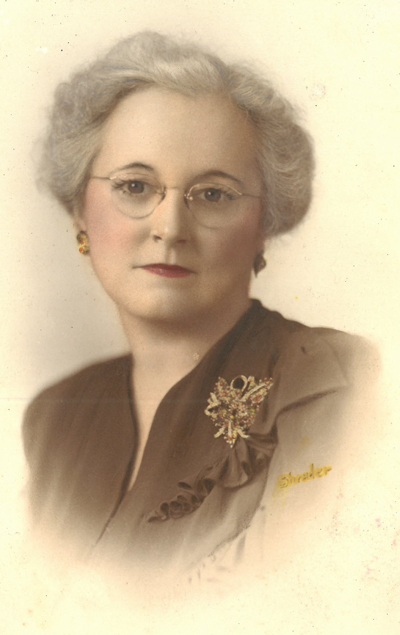
Lucy DixonKnown professionally as Mrs. Edgar F. Dixon (in an era when married women were listed publicly by their husband’s names), Lucy D. Dixon was elected to the Little Rock City Board of Directors in November 1957.  Though not noted at the time, her election was historic.  She was the first woman elected to a municipal office in Little Rock who had not first succeeded her husband.  Prior to her service on the City Board, Mrs. Dixon had served on the Little Rock School Board.  She was secretary of that body during the 1957 desegregation crisis.

Lucy Ann Dulin was born in Hensley in 1904.  She moved to Little Rock and graduated from Little Rock High School (then located on Scott Street) and attended the University of Arkansas.  From 1927 until 1935, she worked for her family’s business – Dulin Bauxite Company.  She returned to the company in 1941 and worked there until 1950.  She later served on the company’s board of directors.

Beginning in 1935, she became involved with the PTA and rose to the position of National Secretary in 1949, serving for three years in that position. As a PTA officer, she visited thirty-six of the then forty-eight states.

Among her other leadership positions were executive vice chair of the Governor’s Advisory Committee on Education, trustee of Little Rock Junior College (now UALR), delegate to the White House Conference on Children and Youth, delegate to White House Conference on Education, Pulaski County Welfare Board, and Little Rock Planning Commission.  She was also active in many Methodist organizations.  In 1953, she was the Arkansas Democrat Woman of the Year.

Married to Edgar F. Dixon, she had three children: Philip Edgar, Barbara and Mimi.  She died in January 1996 at age of 91.

LR Women’s History Month – Ruth May Wassell Gibb

Ruth-May-Wassell-GibbOn August 27, 1944, Ruth May Wassell shattered a bottle on the hull of a new ship and christened it the U.S.S. Little Rock.  Mrs. Wassell, whose husband was Little Rock alderman Sam Wassell, had been designated as the official sponsor for the City of Little Rock by Mayor Charles Moyer.

Ruth May Wassell was more than the wife of a local political leader.  The daughter of Dr. and Mrs. Wiley Singleton May, she moved from Gurdon to Little Rock with her family and graduated from Little Rock High School. She later graduated from Henderson-Brown College and received a law degree from the University of Arkansas.  In 1932, she was admitted to the Arkansas Bar and later was admitted to practice before the Arkansas Supreme Court, one of the first women to receive this designation.

Mrs. Wassell was active in business, serving as president of the Arkansas Lumber Company  and owner of a citrus farm in Texas.  She was also active in civic affairs through involvement with the Arkansas Democratic Women, Boys Club and Second Presbyterian Church.  From 1947 until 1951 she was First Lady of Little Rock when Sam Wassell was elected as Mayor.

Following the December 1954 death of Mayor Wassell, she subsequently married E. W. “Bud” Gibb.  She died in 1964.

Little Rock Look Back: Count Casimir Pulaski

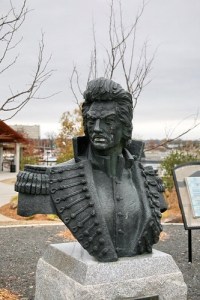
On March 6, 1745, Casimir Pulaski was born in Poland. A Polish nobleman and military commander he has been called a “father of the American cavalry.”

Born in Warsaw, he followed in his father’s footsteps he became involved in the military and the revolutionary affairs in Poland. Pulaski was one of the leading military commanders for the Bar Confederation and fought against Russian domination of Poland. When this uprising failed, he was driven into exile.

Following a recommendation by Benjamin Franklin, Pulaski emigrated to North America to help in the cause of the American Revolutionary War. He distinguished himself throughout the revolution, most notably when he saved the life of George Washington.

Pulaski became a general in the Continental Army, created the Pulaski Cavalry Legion and reformed the American cavalry as a whole. At the Battle of Savannah, while leading a daring charge against British forces, he was gravely wounded, and died shortly thereafter.

Pulaski is one of only eight people to be awarded honorary United States citizenship. He never married and had no descendants.

Arkansas is one of several states to have a county named in honor of Count Pulaski.  Pulaski County was Arkansas’s fifth county, formed on December 15, 1818.

Little Rock Look Back: William Marmaduke Kavanaugh

CLR KavanaughOn March 3, 1866, William Marmaduke Kavanaugh was born in Alabama. He later moved with his family to Kentucky before coming to Little Rock as a newspaper reporter.

Kavanaugh served as editor and manager of the Arkansas Gazette before entering politics.  From 1896 until 1900, he served as Pulaski County Sheriff, which at the time also included the duties of tax collector.  From 1900 until 1904, he was County Judge of Pulaski County.  In that capacity he helped wrangle several cities, railroads and trolley lines to create a compromise which lead to the completion of the Third Street Viaduct which connected Little Rock with Pulaski Heights. It is still in use today.

After leaving his post as County Judge, he had a varied career in banking and business interests.

When Senator Jeff Davis died in early January 1913, he left the last few weeks of his term incomplete as well as the new term he was set to start in March 1913.  There was much interest in who would fill the remainder of Davis’ current term, because that person might be the frontrunner to also fill out the new term.  (This was at the time that the U.S. Senators were still selected by state legislatures.) Defeated Governor George Donaghey appointed J. N. Heiskell to fill out the term. But once the Arkansas General Assembly convened in mid-January, they overrode Donaghey’s appointment and replaced Heiskell with Kavanaugh.

Kavanaugh served in the Senate from January 29, 1913 until March 3, 1913.  He was succeeded by Joseph T. Robinson who had only recently taken office as Governor.  Speculation was that Kavanaugh would not want the full six year term, so that he was acceptable choice to all of the politicians jockeying for the full appointment.  From 1912 until 1915, he was an Arkansas member of the Democratic National Committee.

Another interest of Kavanaugh’s was baseball.  He served as president of the Southern Association minor league starting in 1903.  The baseball field in Little Rock situated at West End Park was named Kavanaugh Field in his honor.  It stood until the 1930s when it was replaced by what is now known as Quigley Stadium.  (In 1927, Little Rock High School had opened on the land which had been West End Park.)

Kavanaugh died on February 2, 1915 at the age of 48.  He is buried in Oakland Cemetery.

Prospect Road was renamed Kavanaugh Boulevard in his memory.

LR Women’s History Month – Adolphine Krause Fletcher

CLR Adolphine Krause FletcherIn 1878, Adolphine Krause Fletcher became First Lady of Little Rock when she married John Gould Fletcher, who was then serving as mayor.  Though records are incomplete, this may well be the first and only time that a sitting mayor has been married while in office.

She was born September 3, 1854, the daughter of John and Fredericka Krause.  Her father had immigrated from Denmark and her mother had come from what is now Germany.  Adolphine had at least two older sisters – Clara and Johanna.  When the girls were small children, their father died.  While all three girls reached adulthood, Clara died in 1866.  By the time Adolphine married Mayor Fletcher, her mother had died.  It is expected that Adolphine was introduced to her future husband by her sister Johanna. She was married to Peter Hotze, who was a business partner of Mayor Fletcher’s.

Adolphine and John Gould Fletcher had five children, three of whom survived to adulthood – Adolphine, Mary and John Gould.  (The Fletcher family often used the same names in subsequent generations and never distinguished among different people with the uses of Senior, Junior, Third, etc.)

In 1889, the Fletcher family moved in to what is now known as the Pike-Fletcher-Terry House. It stayed in the family until the 1970s, when Adolphine’s two daugthers deeded it to the City of Little Rock for use by the Arkansas Arts Center.

Mrs. Fletcher saw to it that each of her children were well-educated, even if she restricted them to spending most of their time at the family manse. The three were surrounded with literature and books on topics of the day.  She brought in tutors to teach them German and Latin.  At a time when few females were educated, the Fletcher girls were sent to college.

Though her children and husband traveled, Mrs. Fletcher never ventured from Arkansas. She was, however, enthralled by images of the upper classes from the North, about which she read in magazines. She dressed her children inappropriately for the warmer Arkansas climate but in clothing inspired by etchings from New York, Philadelphia, Boston, and other northern cities.  She also apparently did not care for many of her husband’s more rural relatives. As soon as Adolphine was old enough to act as hostess, Mrs. Fletcher would stay in her room and send her daughter downstairs to receive guests.

Her two passions were gardening and music.  She had the glass conservatory installed on the southeast corner and spent countless hours there cultivating plants which were not native to Arkansas.  She also spent many hours playing piano and singing — everything from popular music to classical songs. She regaled her children with stories about a tutor who had encouraged her to become an opera singer.  She tried to teach her son how to play the violin, but his father would not allow it.

It appears that most her her life was spent focused on her gardening, music and children.  In May 1910, Adolphine Krause Fletcher died and was buried at Mount Holly Cemetery alongside her husband.  Her parents and sisters are also buried in that cemetery.


LR Women’s History Month – Adolphine Fletcher Terry

adolphine

Photos from the collection of the Butler Center for Arkansas Studies

Adolphine Fletcher Terry was born on November 3, 1882 to former Little Rock Mayor John Gould Fletcher and his wife Adolphine Krause Fletcher.

Raised in Little Rock, in 1889 she moved into the Albert Pike House on East 7th Street, when her aunt transferred the title to her father. That house would be her primary residence the rest of her life.  Her sister Mary Fletcher Drennan never lived in Arkansas as an adult after marriage. Her brother John Gould Fletcher spent much of his adulthood in Europe before returning to Little Rock and establishing his own house, Johnswood.

At age 15, Adolphine attended Vassar. She later credited that experience as broadening her views on many issues.  After graduating at age 19, she returned to Little Rock.  Her parents both died prior to her 1910 wedding to David D. Terry, which took place at what was then known as the Pike-Fletcher House (and today is known as the Pike-Fletcher-Terry House).

She is perhaps best known today for establishing the Women’s Emergency Committee in 1958 and for her subsequent deeding of the family house to the City for use by the Arkansas Arts Center.  But her entire life was based on civic engagement.

She was instrumental in establishing the first juvenile court system in Arkansas and helped form the first school improvement association in the state. She was long an advocate for libraries, serving 40 years on the Little Rock public library board.  Through her leadership, the library opened its doors to African Americans in the early 1950s. Today a branch of the Central Arkansas Library System (the successor the Little Rock public library) is named after her.  Another branch is named after her Pulitzer Prize winning brother.

Adolphine formed the Little Rock chapter of the American Association of University Women, the Pulaski County tuberculosis association and the Community Chest.

In 1958, when the Little Rock public high schools were closed instead of allowing them to be desegregated again, she called Harry Ashmore the editor of the Gazette and exclaimed, “the men have failed us…it’s time to call out the women.”  With this, she formed the Women’s Emergency Committee to Open Our Schools. This group played a major role in getting the four high schools open the following year.

From 1933 to 1942, David Terry served in the U.S. Congress. During that time, Adolphine alternated her time between Washington DC and Little Rock. But she spent much time in Little Rock raising her five children.

After her husband’s death in 1963, she continued to remain active in civic affairs. In the 1960’s, she and her sister deeded the Pike-Fletcher-Terry House to the City of Little Rock for use by the Arkansas Arts Center upon both their deaths.  Following Adolphine Fletcher Terry’s death in 1976, Mary turned over the title to the City.

Adolphine Fletcher Terry is buried in Mount Holly Cemetery alongside her husband. Three of her children are also buried in that plot.  Her parents and brother are buried in a nearby plot.

Her son William Terry and his wife Betty continue to be active in Little Rock. Their daughters and their families also carry on Adolphine Fletcher Terry’s commitment to making Little Rock better.