

A city’s built environment is a tangible link to the past. Walking the streets of cities can be a lesson in architectural history, if you know where to look. Due to the its economic and cultural prominence, Little Rock boasts the best collection of architectural styles in the state of Arkansas . The first Preservation Conversation of 2019 will explore the multitude of different forms that the architecture of the city has taken on over the last 189 years. Learn about what these styles meant to the people that built them and how they related to each other.
The event will take place in the Mixing Room at the Old Paint Factory in the East Village, 1306 East 6th Street, 72202
What Time: 5:30 pm (reception); 6:00 pm (lecture)
RSVP: The event is free and open to the public, but please RSVP.
Parking: There is parking directly in front of the doors that are marked “live”, “print”, “meet.” If those spots are taken. park in the parking lot to the right. There is also street parking in front of the building.
Entrance: Enter the event space through the door facing 6th Street marked “Meet.”
Questions? Call 501-371-0075 ext. 3 or email qqa@quapaw.com
Speaker Bio:
Mason Toms is an architectural historian and preservation designer at the Arkansas Historic Preservation Program. He works within the Main Street Arkansas program to assist building owners in historic downtowns to preserve their facades and storefronts, while still making them visually appealing to the changing demographics of the areas. Mason also works closely with the National Register and Survey staff to research and survey Mid-Century Modern architecture around Arkansas. To get the word out about the many remarkable Modernist structures in Arkansas to the general public, Mason created and continues to administer the Facebook group Mid-Century Modern Arkansas, which features a different Modernist building in the state every Friday.
 On January 9, 1866, the new Little Rock City Council held its second meeting after the post-Civil War resumption of municipal government. At that meeting, a special committee was created to meet with Gen. Williams who was the military commander for Arkansas. Mayor J. J. McAlmont, Alderman I. A. Henry, and Alderman Henry Ashley were authorized to discuss the creation of a permanent police force in Little Rock.
 Interested in becoming more involved with The Rep? They are back in action and ready for a great 2019 season, but they cannot do it without community support!
 The Arkansas Symphony Orchestra, Philip Mann, Music Director and Conductor, presents the 2018-2019 Intimate Neighborhood Concerts (INC) Series. The series opens with Songs from the Heart, featuring ASO principal musicians Michael Underwood (trombone), Susan Bell León (bassoon), and Blake Taylor (percussion) as soloists at Trinity Episcopal Cathedral on Mar. 28, 2019, and closes with Beethoven’s Triple Concerto on May 23, 2019 at Calvary Baptist Church in Little Rock.
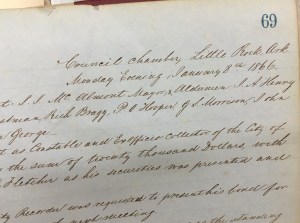 One hundred and fifty three years ago today (on January 8, 1866), Little Rock City Hall resumed functioning after the Civil War. The City government had disbanded in September 1863 after the Battle of Little Rock. From September 1863 through the end of the war (on on through part of Reconstruction), Little Rock was under control of Union forces.
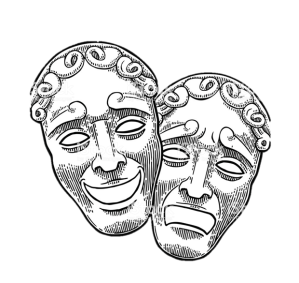 On January 8, 1835, the Little Rock Town Council passed an ordinance granting the Society of Thalians a one year franchise to conduct performances in Little Rock.
 Tonight (January 8), the Architecture and Design Network (ADN) continues its 2018/2019 June Freeman lecture series by taking a look at the Mid-Century Modern work of architect Frank Doughty (1930-present), a lecture by Mason Toms, architectural historian and preservation designer at the Arkansas Historic Preservation Program. The program is entitled “The Unexpected Modernism of Frank Doughty.”
 Little Rock Culture Vulture