In 1969,  Arkansan Charles Portis’ novel True Grit was made into a movie starring John Wayne and Arkansan Glen Campbell. Kim Darby, Robert Duvall, Dennis Hopper, Jeff Corey and Strother Martin are also in the cast.
The movie was directed by Henry Hathaway, produced by Hal B. Wallis, and written by Marguerite Roberts. Wilford Brimley and Jay Silverheels are uncredited actors in the movie.
Though set in Arkansas and Oklahoma, the movie was filmed in Colorado. Elvis Presley was the first choice for the part Campbell would play. But when his manager demanded top billing (over Wayne), he was bypassed and the part went to Campbell.
The movie was nominated for two Oscars: Wayne for Best Actor and composer Elmer Bernstein and lyricist Don Black for the song “True Grit.” The latter had been sung by Campbell in the movie.
Wayne won the Oscar that night, his only win. He would reprise the character of Rooster Cogburn in the eponymously named sequel in 1975. This film, in which he co-starred with Katharine Hepburn, was his penultimate film.
In 1970, Campbell teamed up with Kim Darby again in a film written by Roberts based on a Portis book. This time it was Norwood. It also starred Joe Namath, Carol Lynley, Meredith MacRae, and Dom DeLuise. It did not repeat the success of the earlier Portis based movie.
In 2010, the Coen Brothers released a new version of Charles Portis’ True Grit. Co-written and co-directed by Ethan and Joel Coen, it starred Jeff Bridges, Matt Damon, Hailee Steinfeld, Josh Brolin, Barry Pepper, Domhnall Gleeson and Elizabeth Marvel. Unlike the original film, which was filmed in Colorado, this film was actually filmed partially in Arkansas, where several scenes takes place. Filming also took place in Texas. Many Arkansas actors appeared in the film, but at the risk of omitting some, there will not be an attempt to name them.
The film received ten Oscar nominations: Best Picture, Adapted Screenplay, Directing, Leading Actor (Bridges), Supporting Actress (Steinfeld), Cinematography, Costume Design, Sound Mixing, Sound Editing, and Art Direction. Sadly, the film went home empty handed.

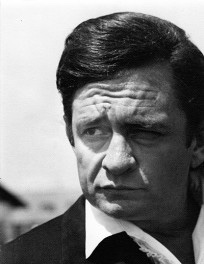 Cleveland County, Arkansas, native Johnny Cash was the subject of the Oscar winning film Walk the Line. Although he never lived in Little Rock, he was a frequent visitor throughout his career.
 The Oscars are tonight. One of the films nominated for Best Picture is BlacKkKlansman by Spike Lee. Though previously nominated for Best Screenplay (Do the Right Thing) and Docmentary (4 Little Girls), this is the first time Lee has been nominated for producing a Best Picture nominee and for Best Director.
 In March 1968, future Oscar winner John Houseman visited the Arkansas Arts Center in Little Rock.
 It is possible that journalist extraordinaire Roy Reed appears in archival footage of the Oscar winning documentary “Nine from Little Rock” (Documentary, Short-1964) and Oscar nominated Eyes on the Prize: Bridge to Freedom 1965 (Documentary, Feature-1988). First for the Arkansas Gazette and then for The New York Times, Reed was an eyewitness to history being made. What is not in doubt is that he is a character in the Oscar winning film Selma. In that movie, he was played by actor John Lavelle.
 The Arkansas Repertory Theatre works in partnership with the Clinton School of Public Service to participate in the UACS’s Distinguished Speaker Series, hosting educational panel discussions on various Rep productions. Now that the Rep is back in production (!), this partnership is back in full force.
 Little Rock Culture Vulture