April 18 Architeaser

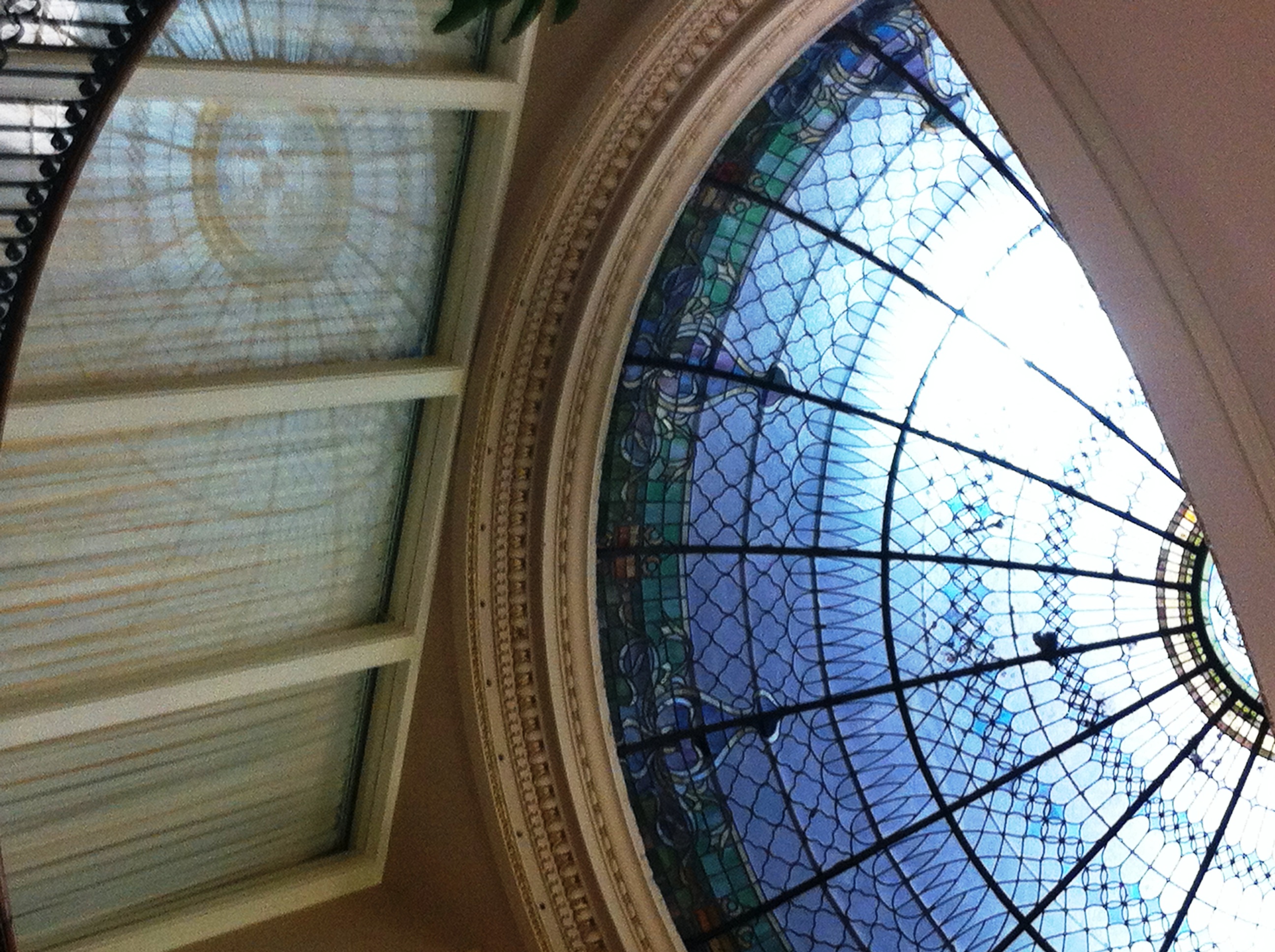
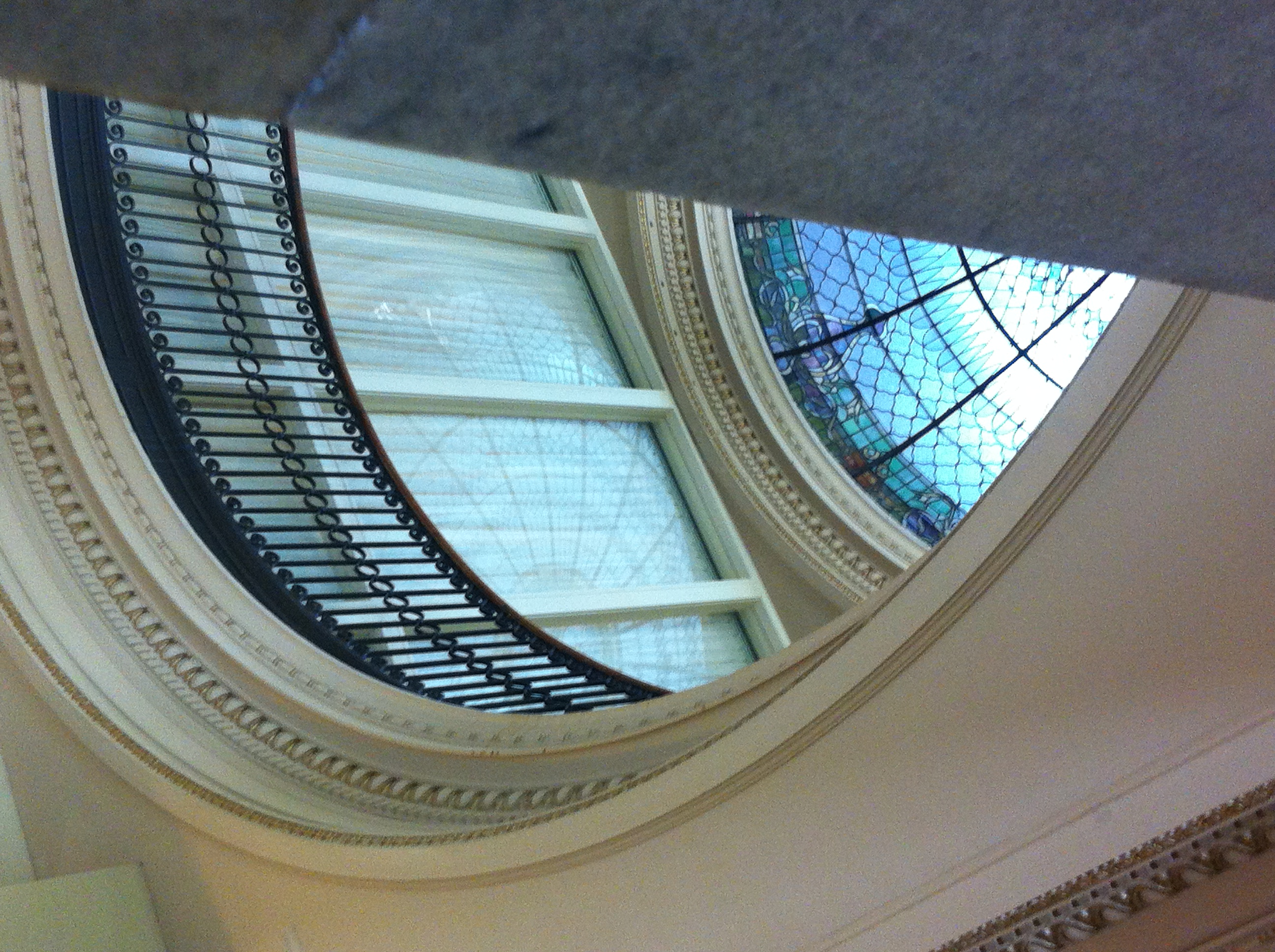
IMG_4577There have been many building modifications at Little Rock City Hall over the past 105 years.  One thing has not changed: the Tiffany stained glass window in the rotunda.

Though City Hall once had a dome, the stained glass window has always looked down on the rotunda from the third floor ceiling.  Here are some views of the stained glass in the rotunda.

There was a second, smaller stained glass skylight in the stairwell adjacent to the City Board chamber.  In the 1960s, it was removed.  Records do not indicate what happened to it.

IMG_4897 IMG_4899

April 17 Architeaser

IMG_4825In the early 1960s, the windows at City Hall were bricked in.  The rational at the time dealt with energy efficiency and the installation of air conditioning in the building.  At the same time, there were other renovations undertaken.  Some of these were undertaken because of growth at City Hall, others were due to the 1957 change to the City Manager form of government (which created some new positions and eliminated others).  The City Clerk’s office was moved and the vault was relocated.

In conjunction with the mid-1980s restoration of the building, all but a few of the windows were finally unbricked.  Most of the remaining bricked-in windows were left intact because of mechanical equipment now located behind them.  Three other windows remained enclosed.  Two were in the City Board Chambers (which had to remain enclosed to enable for clearer broadcasting of meetings) and the third was in the City Clerk’s office (because of the “new” 1960s location of the Clerk’s vault).

Today’s Architeaser shows the  bricked-in window on the second floor western elevation in the City Clerk’s office.  Next to it is the top half of the exposed window.

April 16 Architeaser

IMG_4837


When Little Rock City Hall opened in April 1908, the eastern facade had a porch with two sets of double staircases going from the building to the street level.

Capping each staircase was a portico with a balcony atop.  Though these balconies were structurally sound for standing atop, they were not accessed through doorways. The only way to access them is to climb through a window.

By the 1930s, with development behind the building.  A driveway had been constructed around City Hall and going up alongside the building.  As part of this, the northern staircases were removed and the doorway changed into a window.  The southern stairways remain on the Broadway side of the building to this day.

April 15 Architeaser

IMG_4853This week’s Architeasers will examine elements of Little Rock City Hall, which officially opened to the public on April 15, 1908.  Today’s features the front doors and wrought iron mini-balcony off the second floor.  These are covered by the portico which extends from the third floor facade.

It is doubtful the wrought iron balcony ever functioned as a place for people to stand. It is not a heavy structure and is secured very simply.  In addition, to reach it, one would have to climb over the 2nd story windows and crawl out onto it.  It appears to have always been for decorative purposes.

The glass doors are not original to City Hall.  They were installed as late as the 1980s renovation.  There also was once a porchlight which hung in the area.  The ceramic tile is original as is the masonry.

The architect for City Hall was Charles L. Thompson.  The building was championed by Mayor W. E. Lenon.  He served as Mayor from 1903 to 1908.  At the first meeting in the new building, he resigned because his work was needing his full attention.  At the time the position of Mayor was part-time.

April 11 Architeaser

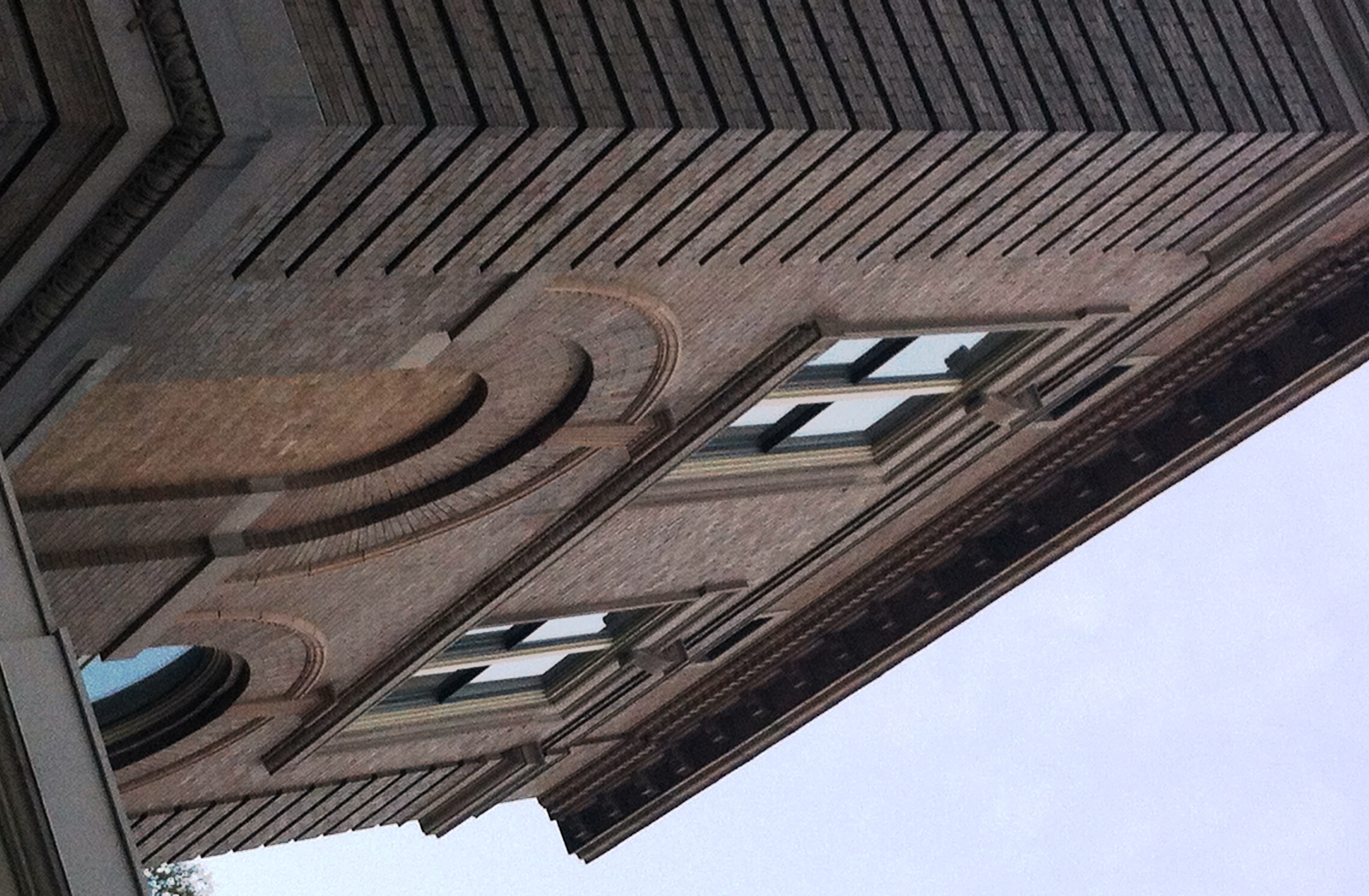
IMG_4810This rounded brick work can be found in the La Harpe’s building on President Clinton Avenue and Rock Street.   Over the decades this building has housed a variety of stores, offices and restaurants.  This photo was taken outside of the KATV River Market studio.


April 10 Architeaser

IMG_4803

The pyramid capped bricks are found on the building now known as the River Market Ottenheimer Hall.  This detail can be found on the eastern end of the building above the first floor.  The building was designed by Illinois native Charles Thompson and Canadian Fred Rickon who formed a partnership in Little Rock in 1891.  The pair were in a partnership until 1897; the firm continues today as the Cromwell firm.

The repurposed building opened in 1996 as the River Market’s anchor along President Clinton Avenue between Rock Street and River Market Avenue.

April 9 Architeaser

IMG_4812On the anniversary of La Harpe seeing the “Little Rock” for the first time, today’s Architeaser celebrates a building which is located near the Little Rock and looks to the past and the future.

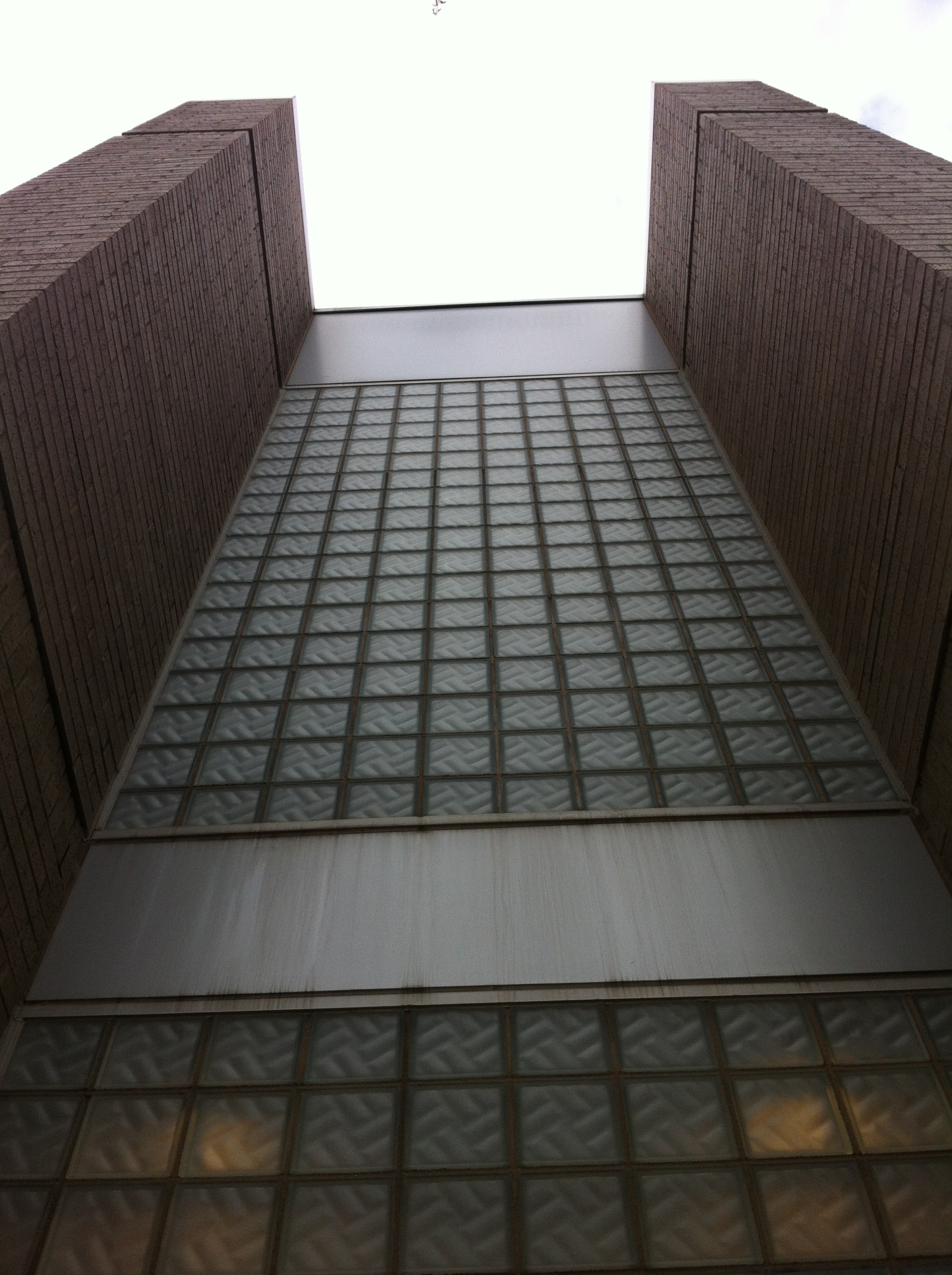
The Little Rock Regional Chamber of Commerce headquarters, located on Markham between Scott Street and the 4 Corners intersection (Markham, LaHarpe, Cumberland, President Clinton).  Designed by the firm Polk Stanley and Yeary (now Polk Stanley Wilcox), the building won awards in 2001 and 2002 from chapters of the American Institute of Architects.

The design evokes both mid-century designs with the buff brick and glass blocks, but also incorporates many contemporary facets of architectural design both inside and outside.