TV’s Annie Oakley – Little Rock native Gail Davis born on October 5, 1925

Gail Davis is best known as TV’s Annie Oakley.  She was born Betty Jeanne Grayson on October 5, 1925. Her mother was a homemaker and her father, W. B. Grayson, was a physician in McGehee (Desha County), which did not have a hospital, so her birth took place in Little Rock (Pulaski County).

When her father became the state health officer, the family moved from McGehee to Little Rock, where Grayson attended Little Rock High School. Grayson rode horses and was a tomboy growing up. Grayson also held various beauty titles in high school and college, and she sang and danced in local shows from the time she was eight.

While studying dramatics at the University of Texas in Austin, she married Robert Davis in 1945, with whom she had a daughter, Terrie (the couple divorced in 1952). After World War II, they moved to Hollywood, where she worked as a hatcheck girl until being discovered by an agent who obtained an MGM screen test for her. She was signed to a contract, with her first appearance in 1947’s The Romance of Rosy Ridge, starring Van Johnson.

She worked steadily in movies, including fourteen films with Gene Autry in the late 1940s and early 1950s. He was impressed with her, changed her name to Gail Davis, and cast her as the star of the Annie Oakley TV show, which he produced. The show ran for eighty-one episodes from 1954 through 1956.

After her TV series ended, she appeared as Annie Oakley in the 1959 film Alias Jesse James starring Bob Hope. In that film, she appears in an uncredited role along with such other stars, also uncredited, as Gary Cooper, Bing Crosby, Roy Rogers, James Garner (as Bret Maverick), and Fess Parker (as Davy Crockett).

Her television appearances include guest roles on The Lone Ranger, The Gene Autry Show, The Cisco Kid, and Death Valley Days, as well as a 1961 episode of the Andy Griffith Show (Episode 37, “The Perfect Female”), her final appearance as a performer and in which she demonstrated her trademark sharpshooting.

Gail toured with Gene Autry’s Wild West show and made appearances as herself on TV programs such as Wide, Wide World: “The Western” (1958) with fellow Arkansan Ben Piazza. For her work in television, she was awarded a star on the Hollywood Walk of Fame, located at 6385 Hollywood Boulevard, and in 2004, she was inducted posthumously into the National Cowgirl Hall of Fame.

Gail Davis died of cancer in Los Angeles on March 15, 1997, and is buried in Hollywood’s Forest Lawn cemetery.  In 2007, she was posthumously inducted into the Arkansas Entertainer’s Hall of Fame.  In 2016, a room was named in her memory at the newly renovated Robinson Center.

Rock the Oscars 2019: Lisa Blount

Image result for lisa blount ray mckinnonOn March 24, 2002, Lisa Blount and and her husband Ray McKinnon picked up the Oscar for Best Live Action Short for their film “The Accountant.”  Directed by McKinnon (and starring him) it was produced by Blount.

Married since 1998, the couple were strong promoters of the Arkansas film scene, especially from the early 2000s, onward. They were active in supporting the Little Rock Film Festival as well as film projects located in Arkansas.

In 2004, they moved to Little Rock, which was a return for Blount to the Central Arkansas in which she had grown up.  Born in Fayetteville, her family had moved to Jacksonville. After graduating from Jacksonville High School, she attended the University of Central Arkansas. It was there she got her big break appearing in the film September 30, 1955.

A month before her October 2010 death, Blount was inducted into the Arkansas Entertainers Hall of Fame.

Little Rock Look Back: Gail Davis

Gail Davis is best known as TV’s Annie Oakley.  She was born Betty Jeanne Grayson on October 5, 1925. Her mother was a homemaker and her father, W. B. Grayson, was a physician in McGehee (Desha County), which did not have a hospital, so her birth took place in Little Rock (Pulaski County).

When her father became the state health officer, the family moved from McGehee to Little Rock, where Grayson attended Little Rock High School. Grayson rode horses and was a tomboy growing up. Grayson also held various beauty titles in high school and college, and she sang and danced in local shows from the time she was eight.

While studying dramatics at the University of Texas in Austin, she married Robert Davis in 1945, with whom she had a daughter, Terrie (the couple divorced in 1952). After World War II, they moved to Hollywood, where she worked as a hatcheck girl until being discovered by an agent who obtained an MGM screen test for her. She was signed to a contract, with her first appearance in 1947’s The Romance of Rosy Ridge, starring Van Johnson.

She worked steadily in movies, including fourteen films with Gene Autry in the late 1940s and early 1950s. He was impressed with her, changed her name to Gail Davis, and cast her as the star of the Annie Oakley TV show, which he produced. The show ran for eighty-one episodes from 1954 through 1956.

After her TV series ended, she appeared as Annie Oakley in the 1959 film Alias Jesse James starring Bob Hope. In that film, she appears in an uncredited role along with such other stars, also uncredited, as Gary Cooper, Bing Crosby, Roy Rogers, James Garner (as Bret Maverick), and Fess Parker (as Davy Crockett).

Her television appearances include guest roles on The Lone Ranger, The Gene Autry Show, The Cisco Kid, and Death Valley Days, as well as a 1961 episode of the Andy Griffith Show (Episode 37, “The Perfect Female”), her final appearance as a performer and in which she demonstrated her trademark sharpshooting.

Gail toured with Gene Autry’s Wild West show and made appearances as herself on TV programs such as Wide, Wide World: “The Western” (1958) with fellow Arkansan Ben Piazza. For her work in television, she was awarded a star on the Hollywood Walk of Fame, located at 6385 Hollywood Boulevard, and in 2004, she was inducted posthumously into the National Cowgirl Hall of Fame.

Gail Davis died of cancer in Los Angeles on March 15, 1997, and is buried in Hollywood’s Forest Lawn cemetery.  In 2007, she was posthumously inducted into the Arkansas Entertainer’s Hall of Fame.  In 2016, a room was named in her memory at the newly renovated Robinson Center.

2015 In Memoriam – Jim Porter

1515 Porter

In these final days of 2015, we pause to look back at 15 who influenced Little Rock’s cultural scene who left us in 2015.

Jim Porter, Jr., spent a lifetime promoting music in Little Rock.  Along the way, he created social change as well.

A native of Little Rock, he graduated from Little Rock High School and the University of Arkansas.  After college, Jim started out in the family businesses and tried to follow a “traditional” path that his father had paved for him. Working in sales and public relations, he became active doing volunteer work.  Jim realized that the “traditional” path was not for him, and while working in the family businesses, he started bringing in top name entertainers, many of them black, to perform in Little Rock. He was not a singer, nor did he play any instrument, but his love for music and all things connected to music led him towards his calling as an agent/manager and promoter of musicians.

As a promoter of national artists and bands, Jim ran into southern racism and segregation. The Central High crisis in 1957 caused many black artists to refuse to come to Little Rock, fearful for their safety. Jim was forced to concentrate more on booking and managing local musicians through what was at the time Arkansas’ only full time booking and talent agency, Consolidated Talent Corporation (later to become Porter Entertainment). During his booking career from the late 50’s until his retirement in 2001, Jim placed talent across Arkansas (and even in Las Vegas) at clubs, hotels, restaurants, and private functions- anywhere that people needed entertainment.

Jim saw first hand the inequities of black musicians in Arkansas, the separate and very unequal accommodations, and the segregated venues. Never giving up promoting national artists, the 60’s led him and his co-investors to bring in such national names (mostly jazz artists) such as Louis Armstrong, Count Basie, Dizzy Gillespie, Al Hirt, Pete Fountain, Woody Herman, the Four Freshman, Dave Brubeck, George Shearing, Harry James and others.

In 1961, he was arrested for integrating a concert at Robinson Auditorium. A white man, he had entered the segregated balcony.  Knowing the challenges of booking acts in a segregated house (indeed Duke Ellington would cancel his booking at Robinson), Porter had tried to get the facility to change its rules.  It was 1966, when Louis Armstrong returned to Little Rock and played before an integrated house that the new rules were here to stay.  In the early 1970s, he helped bring the musical Hair to Little Rock, with the specter of full nudity causing consternation to Robinson Auditorium and some of the citizenry.

Jim was inducted into the Arkansas Entertainers Hall of Fame in 2005, and the Arkansas Jazz Heritage Foundation Hall of Fame in 2006. He was appointed to the Martin Luther King Commission in 2005 and entered politics to serve as a member of the Pulaski County Quorum Court from 1998 until 2006.

Always an entrepreneur, Jim also started MusAd Recording Studio, where commercial jingles were produced and bands could record demo tapes. The Hot Air Balloon Theatre (in the old Center Theatre on Main Street) was the site for G-movies and live entertainment for kids. The Yellow Rocket, an arcade in the “Heights” is still remembered by now middle-aged adults who spent afternoons and weekends feeding money into the game machines and eating snacks. Jim wrote several books, hosted TV shows (“After Five” and “Scene Around”) featuring restaurants, bars, clubs and their patrons and employees. He was featured on a weekly radio show about dining and entertainment, and wrote “Scene Around” columns and a dining and entertainment guide for the Arkansas Democrat.

Creative Class of 2015: Susan Altrui

cc15 altruiOctober is Arts & Humanities Month.  This year, the Culture Vulture will be highlighting 31 members of Little Rock’s Creative Class: the Creative Class of 2015.

Up first Susan Altrui.  Earlier this year, Altrui was named Assistant Director of the Little Rock Zoo.  She previously had overseen marketing, public relations and fundraising for the Zoo.  During that time, the Zoo opened the penguin and cheetah exhibits as well as undertaken several other initiatives which involved fundraising and friendraising.

In addition to her work with the Zoo, Altrui is the chair of the Hot Springs Documentary Film Institute board. She has been involved in bringing Hot Springs Documentary Film Festival back from the brink and returning it to higher visibility.  Altrui also served as an executive producer on the documentary Ann Richards’ Texas.

In 2014, she was appointed to the Arkansas Entertainer’s Hall of Fame board.  Altrui is a member of the Junior League of Little Rock and Rotary Club of Little Rock.  In her “spare” time she plays tennis.

Black History Month Spotlight – Louis Jordan

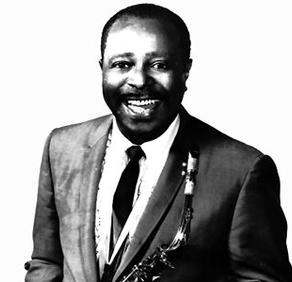
bhm louis-jordanSince tonight is the 57th Grammy Awards presentation, today’s spotlight looks at a musician who has several entries in the Grammy Hall of Fame – Louis Jordan.

Louis Thomas Jordan was born on July 8, 1908 in Brinkley. The son of a musician, he learned to play the saxophone as a youth and majored in music later at Arkansas Baptist College and performed with Jimmy Pryor’s Imperial Serenaders in Little Rock. He also toured with the famed Rabbit Foot Minstrels, who were the backing musicians for a number of blues legends. In the mid-Thirties, Jordan, now an accomplished jazz saxophonist, moved to New York, working with such jazz greats as Louis Armstrong. He joined drummer Chick Webb’s swing band in 1936.

After honing up his singing skills, he left the band in 1938 to start up his own band. Called the Elks Rendez-Vous Band, after the name of the club where they were playing a long-term engagement, Jordan signed with the Decca label. The band’s name was changed to the Tympany Five in 1939 and between 1941 and 1949; they had a series of hit records that were distinct of the “jump style” rhythm and blues style of music. These included “Choo Choo Cha Boogie,” “Saturday Night Fish Fry,”  and “Let The Good Times Roll.”

Jordan’s hits continued into the early 1950s, by which time his popularity on the R&B scene was enormous. His musical influence was far more reaching, with future rock ‘n’ roll stars like Bill Haley and Chuck Berry, fashioning their sound after Jordan’s style, particularly his vocal approach, song structures and lyrics and treatment of the guitars and horns. When Jordan left Decca in 1954, his popularity began to diminish quickly.

He continued to record and tour throughout the 1950s and 1960s, but rock ‘n’ roll, the music he helped foster, was a major contributing factor in his downfall. Louis Jordan died from heart failure in Los Angeles on February 4, 1975. In the early 1990’s, a revue called Five Guys Named Moe, based on Jordan’s music, was performed on London’s West End and New York’s Broadway.

Louis Jordan was inducted into the Rock ‘n’ Roll Hall of Fame in 1987.  He was posthumously inducted into the Arkansas Entertainers Hall of Fame in 1998 and the Arkansas Black Hall of Fame in 2005. In 2008, the centennial year of his birth, he was featured on a postage stamp.

For more on Louis Jordan and other inductees into the Arkansas Black Hall of Fame, visit the permanent exhibit at the Mosaic Templars Cultural Center. That museum is an agency of the Department of Arkansas Heritage.

ROCKing the TONYS – Lawrence Hamilton

Rock the Tonys LawrenceHamiltonLawrence Hamilton

Little Rock connection: Arkansas native, former Philander Smith College faculty member, acted at Arkansas Repertory Theatre in The Piano Lesson, To Kill a Mockingbird and Looking over the President’s Shoulder and directed Arkansas Rep’s production of Crowns, appeared with the Arkansas Symphony Orchestra as well as numerous other performances and events throughout Little Rock and Arkansas.  He also brought his friends to Little Rock to perform including Jessye Norman.  He was inducted into the Arkansas Black Hall of Fame and the Arkansas Entertainers Hall of Fame.

Tony Awards connection: Appeared on Broadway in Tony winning productions of Jelly’s Last Jam, Sophisticated Ladies, Ragtime and Tony-nominated productions of Play On!, Uptown…It’s Hot!, and Porgy & Bess.