Envision Little Rock finalists part of 2nd Friday Art Night tonight

envisinolrIn celebration of the 100 year anniversary of John Nolen’s 1913 “City in a Park” master plan for Little Rock, the Envision Little Rock design competition sought creative ideas for the establishment of an iconic gateway to the city at the intersection of Capitol Ave and I-30. In 1913, Nolen saw Capitol Avenue as the ceremonial boulevard that would transect the gridded streets of downtown Little Rock, establishing a visual and physical connection between the Capitol building and the proposed Choctaw Depot to the east. The competition challenged the public and professional design community to generate innovative concepts for the eastern terminus of Capitol Avenue in Little Rock.

Tonight, studioMAIN will open their exhibition of the competition finalists. The public is invited to come celebrate, discuss, and vote for your favorites. There are 3 public vote awards, in addition to the two main prizes that will be awarded by the Envision Little Rock jury later this month. Polls close August 31st at midnight.

Come see the wonderful group of entries by local designers and students. This is going to be a wonderful evening of big ideas and discussion of our city’s future. Don’t miss out!

studioMAIN is located at 1423 South Main Street.  The reception tonight is from 5pm to 9pm.  It is one of the participating sites in 2nd Friday Art Night.

Today at noon at Legacies & Lunch: Oakland-Fraternal Cemetery

OakFratFor over 150 years, the Oakland-Fraternal Cemetery has been a final resting place for Little Rock citizens. This City of Little Rock cemetery is the focus on the August “Legacies and Lunch” program today at noon at the Bulter Center.  Jan Davenport, historian of the Oakland-Fraternal Cemetery will be the speaker.

The 160 acres on which Oakland-Fraternal was located was purchased from Mary Starbuck, the widow of Paul R. Starbuck, by the City of Little Rock in March 1863. This became the city’s largest cemetery. Gradually, the total acreage declined as unneeded property was sold. Oakland-Fraternal now includes over 10,000 monuments and sculptures on its 92 acres. As the public cemetery for over one hundred years, the cemetery is representative of Little Rock’s social fabric. United States Senators and Congressmen, Governors, Mayors, merchants, doctors, and educators are all interred in Oakland-Fraternal.  The cemetery is actually comprised of seven different cemeteries which are collectively known by the name “Oakland-Fraternal.”

Legacies & Lunch, a free program offered by the Butler Center for Arkansas Studies on the first Wednesday of each month, will feature Jan Davenport, historian of the Oakland-Fraternal Cemetery, on Wednesday, August 7, noon – 1 p.m. in the Main Library’s Darragh Center, 100 Rock Street.

After years of resting quietly, history is being uncovered at the Oakland-Fraternal Cemetery, as caretakers restore and research aged headstones. The cemetery is Little Rock’s best-kept historical secret and the final resting place for people ranging from working-class families to an assassinated judge. In her talk, “Gone but Not Forgotten: 150 Years at the Oakland-Fraternal Cemetery,” Davenport will discuss her efforts to raise awareness of the cemetery and the stories of the people resting there.

The Butler Center for Arkansas Studies is a department of CALS. It was founded in 1997 to promote the study and appreciation of Arkansas history and culture. The Butler Center’s research collections, art galleries, and offices are located in the Arkansas Studies Institute building at 401 President Clinton Ave. on the campus of the CALS Main Library.

For more information, call 918-3086.

Little Rock Look Back: Mayor William Ashley

W E Ashley signatureOn August 6, 1823, future Little Rock Mayor William Eliot Ashley was born in Little Rock.  He would go on to become the first Little Rock Mayor to be born in Little Rock.  Ashley was the son of Mary and Chester Ashley; his father would later serve as a U. S. Senator from Arkansas.  He was the second of the couple’s seven children.

Though he was raised in Little Rock, he did receive some schooling out of state. The State History Commission has correspondence between eleven year old William, studying in New York, and his father. Part of the letter is a request for money.

LR sealOn October 26, 1846, he married Frances Eliza Grafton at Christ Episcopal Church.  They were the first Little Rock residents to be married in that church.  The couple had five children, including triplets.  Only one of the children, Frances (who was one of the triplets) survived to adulthood.

Ashley was first elected Mayor of Little Rock in 1857. After completing a two year term, he was succeeded by Gordon N. Peay (another scion of a prominent Little Rock family).  In 1861, Ashley returned to the office of Mayor.  He was reelected to a third term in 1863.  In September 1863, following the defeat of Confederate troops by the Union forces at the Battle of Little Rock, the City of Little Rock ceased operations.  On September 21, 1863, Little Rock municipal government closed its doors, stopped collection of taxes and disbanded.  Thus Ashley’s third term ended.

In addition to his interest in local government, Ashley was a member of St. John’s College Board and a director of the newly-formed Little Rock Gas Company.

William Elliot Ashley died on August 16, 1868 at the age of 45.  He was buried in Mt. Holly Cemetery (which sat partially on land that had once belonged to his family). His parents, wife and children are all buried in Mt. Holly as well.

Interestingly, for someone who grew up in a prominent family, there does not appear to be a surviving likeness of Mayor Ashley – either in painting or photograph.  Several exist of his parents, but none of him.

Little Rock Look Back: Mayor William G. Whipple

whippleOn August 4, 1834, future Little Rock Mayor William G. Whipple was born in Connecticut.  He attended school in Massachusetts and graduated from Wesleyan University. After studying law at Albany Law School, he moved to Milwaukee, Wisconsin.

In 1868, Whipple moved to Little Rock following the 1866 death of his first wife in Wisconsin. Long active in Republican politics, he quickly became involved in Little Rock’s political and social life.  Shortly after his arrival he was appointed United States Attorney and served three years.

In 1870, he married Mary S. Dodge, daughter of former mayor Roderick Lathrop Dodge MD.  They had one son Durand, who followed his father into the legal profession. The Whipple family were active members of Trinity Episcopal Cathedral.

In 1887, Whipple was elected Mayor of Little Rock and was re-elected two years later.  During this time period, electric lighting was introduced to Little Rock (September 1, 1887), streets were paved, and new brick and concrete sidewalks were installed.

Whipple’s mayoral administration introduced electric lighting to the city beginning on September 1, 1887, paved many streets with granite and macadam, created sixty miles of new brick and concrete sidewalks, and introduced a steam dummy railway.

In 1892, he ran for Governor of Arkansas as the Republican nominee but was unsuccessful.  In 1895, he sought a third term for Mayor but was defeated by James A. Woodson.

From 1897 to 1900, he served as register of the US Land Office in Arkansas.  Whipple, who had long practiced law, was appointed United States Attorney for the Eastern District of Arkansas in 1900.  He served in that capacity until 1913.

In July 1914, Mayor Whipple died.  He is buried at Oakland Cemetery in Little Rock.

Little Rock Look Back: Willie L. Hinton

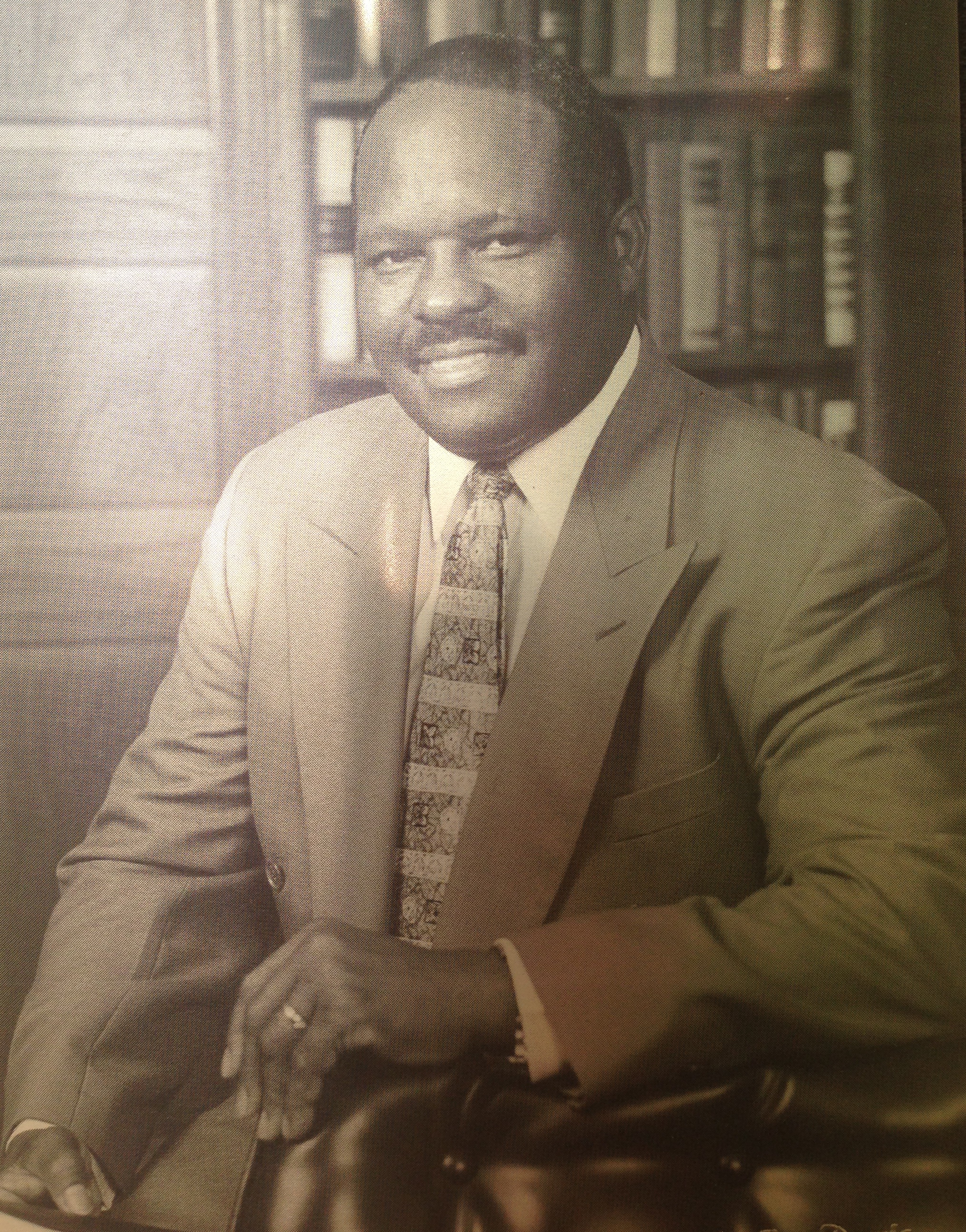
HintonOn August 2, 1947, future Little Rock Vice Mayor Willie Lee Hinton was born in Wynne and educated in Cross County.  He then attended what is now the University of Arkansas at Pine Bluff.

For twenty-eight years, Hinton was a vocational education teacher at the Arkansas School for the Deaf.  He was also very active in neighborhood activities as well as in grassroots community-building efforts.

In 1993, Hinton made his first race for the City Board of Directors.  After narrowly losing the Ward 2 race in a special election, he returned to run again the following year.  Hinton won the race in November 1994 and was re-elected in 1998 and 2002.  In 2003, he was selected to serve as Little Rock Vice Mayor for a two year term.

Long an advocate for neighborhood empowerment, Hinton had championed the transformation of the old Lee Elementary School into a resource center.  Under his leadership the building was purchased from the Little Rock School District in 1997 and opened in 2000 as the Neighborhood Resource Center.  Five years later, the Little Rock City Board of Directors voted to name it in his honor.  The building, which stands at 12th and Pine Streets, is a living testament to his vision of inclusiveness and the worth of every individual.

After battling a brain tumor for nearly two years, Hinton chose not to seek a fourth term on the Little Rock City Board.  His public service to the citizens of Little Rock ended on December 31, 2006.  On February 13, 2007, Hinton died at his home in Little Rock at the age of 59.  He was survived by his wife Blondell, two children and two grandchildren.  He is buried in the Graham Cemetery in Cross County.

Little Rock Look Back: Mayor Jim Dailey

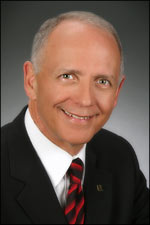
cityoflr_img_board_dailyOn July 31, 1942, future Little Rock Mayor Dalton James “Jim” Dailey, Jr. was born to Dalton and Ellen Dailey.  After graduating from Little Rock Catholic High School, he attended the University of Arkansas at Fayetteville.  He graduated with a Bachelor of Science degree in Business Administration. He joined his father in the family business, Dailey’s Office Furniture.

In 1974, Dailey was elected to the City of Little Rock Board of Directors.  He served one four-year term. The last two years of that term, he was the Vice Mayor of Little Rock.

Following that term, he remained engaged in civic activities including serving in leadership capacities in community campaigns.  He also served as president of the National Office Products Association – the first Arkansan to do so.  Dailey also served as the founding chair of Leadership Greater Little Rock.

In 1988, Dailey was elected to return to the City Board.  He was reelected in 1992.  Dailey served as Vice Mayor in 1991 and 1992.  In January 1993, he was chosen by his fellow City Directors to serve a two year term as Mayor.  Under his leadership, the Future-Little Rock goal-setting process took place.

Following a voter-approved change to the City structure, the position of Mayor was changed to be elected by the people while maintaining the City Manager form of government.  On January 1, 1995, Jim Dailey was sworn in as the first popularly-elected Mayor of the City of Little Rock in over 38 years.

cityoflr_img_mayor_01Dailey has served on the Board of Directors for the Little Rock Regional Chamber of Commerce, Metroplan, Communities in Schools, Arkansas BioVentures and New Futures for Youth. He was appointed to the National League of Cities Board of Directors and the Municipalities in Transition on Public Finance.

As Mayor, he served as Chair of the Intergovernmental Advisory Committee of the Federal Communications Commission. He was also a member of the United States Conference of Mayor’s Communications Task Force.  He also served as president of the Arkansas Municipal League in 2002 and 2003.

While he was Mayor of Little Rock, he was a strong proponent of the development of the River Market and worked to locate the Clinton Presidential Library in Little Rock.  He also worked to increase public safety support.  He also oversaw the establishment of Central Arkansas Water, the development of downtown headquarters for Acxiom Corporation and Heifer International, and the creation of Prevention, Intervention and Treatment programs.  In addition, he was instrumental in leading the efforts for the 40th anniversary of the integration of Little Rock Central High in 1997.

Mayor Dailey was re-elected in 1998 and 2002.  His fourteen years as Mayor of Little Rock set a longevity record.  Upon his retirement the City’s fitness center was renamed the Jim Dailey Fitness and Aquatic Center.  This was in recognition of his lifelong interest in wellness activities.

Since leaving office, he has continued his civic involvement by serving as a member of the Little Rock Airport Commission which oversees the Bill and Hillary Clinton National Airport.  He is also involved in commercial real estate.

Mayor Dailey has been married to Patti Murphy since 1965. They have two daughters, two sons and six grandchildren…a set of quadruplets, plus two.

Art Porter Music Education’s 2013 Jazz Week this week

artporterThe 2013 Art Porter Music Education Jazz Week runs from Monday, July 29 through Saturday August 3 at various locations in Little Rock.

The week kicks off at Little Rock City Hall on Monday.  The City of Little Rock will host the first concert as young musicians will take center stage in the City Hall Rotunda on Monday, July 29 at noon.  This is a free event.

Other events this week include

Jazz on the Plaza at the Metropolitan BankPlaza – Tuesday, July 30 at noon – FREE

Walter Beasley and Eric Struthers at Cajun’s Wharf – Wednesday, July 31 at 7:00 pm – ticketed event

Martha Burks at Club Sway – Thursday, August 1 at 7:30pm – ticketed event

Porter Players at The Afterthought – Friday, August 2 – FREE

Pieces of A Dream at the Metroplex Event Center – August 3 at 8pm – ticketed event

All proceeds benefit the Art Porter Music Education (APME) scholarship program. Ticket information is available at www.ArtPorter.org or call (501) 492-9120.

The APME was created by friends and family of Little Rock natives – Art Porter Sr and Art Porter Jr – both amazingly talented musicians. The purpose of the APME is two-fold:

  • To provide scholarships to talented Arkansas music students in need of financial assistance to pursue higher education from an accredited college or university.
  • To provide musical enhancement opportunities through workshops and seminars.