
Tartan Day, celebrate all things Scottish, visit the Brownlee House at HAM

Photo by Larry Pennington

Today is Tartan Day, designated to celebrate the contributions of Scots everywhere.

One of Little Rock’s oldest structures, the Brownlee House was built by a Scotsman.  The Brownlee House is one of the restored structures at Historic Arkansas Museum.

Robert Brownlee built this Federal style brick house in the late 1840s for his brother and sister-in-law. A Scottish stonemason, Brownlee came to Little Rock in 1837 to help build the State House (now the Old State House Museum). He pursued a number of careers before leaving for California in the 1849 Gold Rush. From the late 1840s through 1852, the home’s residents were James and Isabelle Brownlee and Tabby, a woman enslaved by James Brownlee.

Brownlee had the wooden mantels in the parlor and bedroom marbleized, a popular decorative art of the time. The home’s furnishings reflect the mid-19th century.

This house is a project of The National Society of the Colonial Dames of America in the State of Arkansas.

Historic Arkansas Museum is open seven days a week.  The galleries are free, but the tours of the historic structures have a nominal fee.  It is an agency of the Department of Arkansas Heritage.
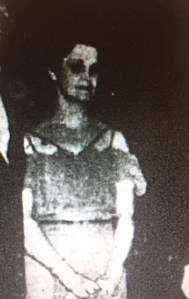
RobinsoNovember: Emily Miller

emilyFrom January 1940 until December 1971, Emily Miller served on the Robinson Auditorium Commission.  She was the longest serving member of that body and had one of the longest tenures of any person on any City of Little Rock commission.  In keeping with the times, she was always referred to publicly as Mrs. Grady Miller. Probably the only time she was ever listed in a newspaper as Emily Sturges Miller was her obituary in 1993.

Born in Ohio in 1903, she studied at Smith College in Massachusetts. In 1925, she visited Washington DC for the presidential inauguration of Calvin Coolidge. While there she met Grady Miller, who was the brother-in-law of Senator Joseph T. Robinson.  After marrying Mr. Miller, she moved to Arkansas and made it her home for the next seven decades.

Throughout the 1930s and 1940s, she was active in the PTA, Junior League of Little Rock, and Colonial Dames.  Mrs. Miller was also active in Second Presbyterian Church.  As her two children became older, she and her husband traveled extensively.

Because she was related to Senator Robinson’s widow, Mayor J. V. Satterfield asked Mrs. Miller to serve on the Auditorium Commission.  She was subsequently reappointed every time her term came up.  For the 1940 ribbon cutting, Mrs. Miller joined her sister-in-law and Mayor Satterfield on the stage.  They were the only participants.  (It had been Mrs. Miller who informed Mrs. Robinson of her husband’s death.  Mr. Miller had called Mrs. Miller, who was visiting family in Ohio at the time, to inform her.  She then called her sister-in-law to extend her sympathies, not realizing that no one had yet informed Mrs. Robinson who was in Little Rock preparing for a trip.)

Several decades later as a Sunday School teacher in her late 60s, Mrs. Miller was not in favor of the musical HAIR being performed at Robinson.  When a federal judge ruled that it had to be allowed, Mrs. Miller was the only member of the Auditorium Commission who would speak to the press. Her response is one of the Culture Vulture’s favorite statements ever made to a member of the media.  “Oh dear,” was her only reply. She refused further elaboration.  While the Commission was wrong in opposing the show, the fact that none of her fellow commissioners (all men) would speak to the press, shows a lot of moxie on her behalf.

On Tartan Day, celebrating all things Scottish, visit the Brownlee House at HAM

Photo by Larry Pennington

Photo by Larry Pennington

Today is Tartan Day, designated to celebrate the contributions of Scots everywhere.

One of Little Rock’s oldest structures, the Brownlee House was built by a Scotsman.  The Brownlee House is one of the restored structures at Historic Arkansas Museum.

Robert Brownlee built this Federal style brick house in the late 1840s for his brother and sister-in-law. A Scottish stonemason, Brownlee came to Little Rock in 1837 to help build the State House (now the Old State House Museum). He pursued a number of careers before leaving for California in the 1849 Gold Rush. From the late 1840s through 1852, the home’s residents were James and Isabelle Brownlee and Tabby, a woman enslaved by James Brownlee.

Brownlee had the wooden mantels in the parlor and bedroom marbleized, a popular decorative art of the time. The home’s furnishings reflect the mid-19th century.

This house is a project of The National Society of the Colonial Dames of America in the State of Arkansas.

Historic Arkansas Museum is open seven days a week.  The galleries are free, but the tours of the historic structures have a nominal fee.  It is an agency of the Department of Arkansas Heritage and is celebrating its 75th anniversary this year.