Heritage Month – Federal Building

Federal BuildingThe newest property to be added to the National Register of Historic Places closes out the month.  The Federal Building’s inclusion on this list was announced earlier this month.

The seven-story Federal Building at 700 West Capitol Avenue  was constructed in 1959-61.  It was designed in a modern style, featuring a uniform exterior grid of spandrel and plate glass framed by rows of aluminum bands and columns of white stone.

“The Little Rock Federal Building is a good example of the commercial work of two noted Arkansas architecture firms, Swaim & Allen & Associates and Ginocchio, Cromwell & Associates,” according to the National Register nomination. “The building’s design is consistent with modern high-rise office facilities in the late 1950s and early 1960s. Its uniformly packaged facades, defined by a grid of glass, aluminum, and stone, reflected a growing trend in which Federal buildings began to more closely resemble their commercial counterparts.”

The vertical bands mimic the neoclassical columns of the adjacent 1930s Federal Courthouse. While both structures are unique and representative of their architectural styles, a harmony exists based on the strong vertical lines and the use of the white and grey based primary color scheme.

 

Legacy of LR architect Ed Cromwell to be discussed tonight

CromwellTonight the Architecture and Design Network will host a panel discussion on the legacy of longtime Little Rock architect Ed Cromwell.
The panelists are:
  • Charles Penix, Chief Operating Officer, Cromwell Architects and Engineers
  • Bill Worthen, Director, Historic Arkansas Museum
  • Don Evans, architect and associate of the late Ed Cromwell

Chris East is the program’s moderator.  It will take place at 6pm at the Arkansas Arts Center, following a reception at 5:30pm.

After working at various jobs during the early years of the Depression, Ed Cromwell, who graduated from Princeton in 1931 with a degree in architecture, moved to Little Rock in 1935 to take a position with the  Resettlement Administration. After a year with the agency, he left to devote full time to the practice of architecture, a career which spanned forty-eight years, from 1936 to1984. Cromwell, who remained active in the community after his retirement, died in 2001, leaving a legacy that continues to impact people’s lives.

There would be no Maumelle if it hadn’t been for Cromwell’s vision of a planned community on the 5,000 acres of land owned by Jess P. Odum, an Arkansas businessman and insurance executive. The Capital Hotel might have been taken out by the wrecker’s ball if it hadn’t been for his determination to save the historic structure. An advocate for the city’s riverfront development, he understood its importance long before others did. He championed historic preservation and  chaired the commission of the Arkansas Territorial  Restoration (now the Historic Arkansas Museum). Cromwell Architects and Engineers, the firm he founded, has to its credit the design of many public buildings and facilities throughout the state and beyond.

The three panelists will explore Cromwell’s legacy as a creative architect, a visionary planner and a champion of  historic  preservation. Architecture and Design Network (ADN) lectures are free and open to the public. For additional information, contact ardenetwork@me.com.

ADN’s supporters include the Arkansas Arts Center, the University of Arkansas Fay Jones School of Architecture, the Central Section of the Arkansas Chapter of the American Institute of Architects and friends in the community.

Ark Arts Center exhibit on Bauhaus School of Architecture closes this week

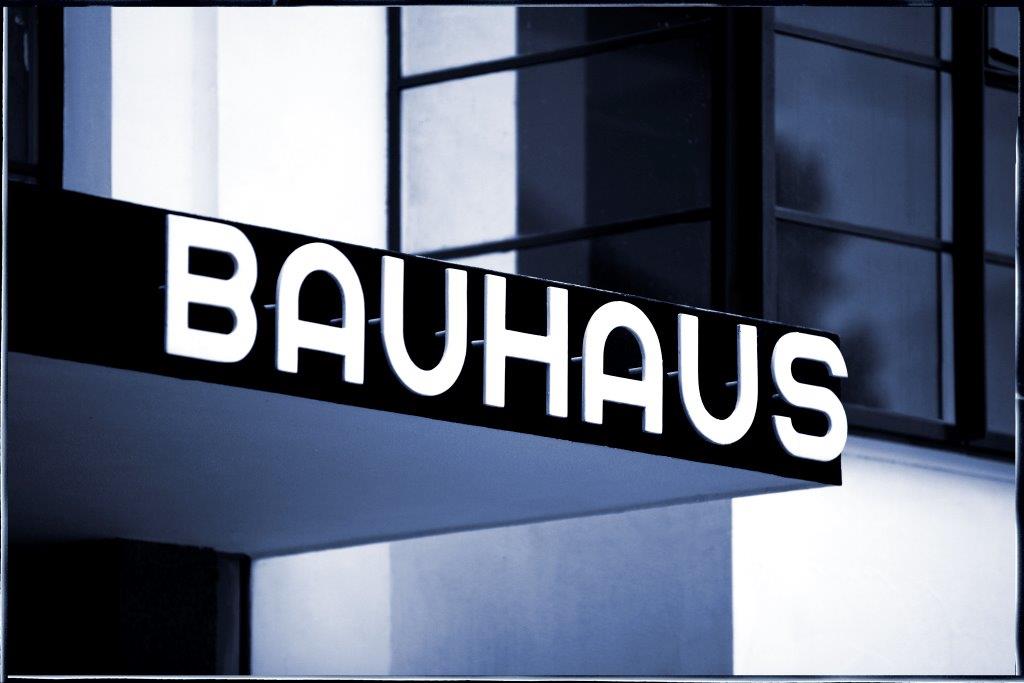
bauhausToday is the final Sunday of the exhibit Bauhaus twenty-21: An Ongoing Legacy – Photographs by Gordon Watkinson. The exhibit, organized by Foto+Synthesis Incorporated, has been at the Arkansas Arts Center since May.  (It was set to close today but has been extended through Monday.)

This exhibition conveys the architectural history, design and enduring philosophies of the Bauhaus, a German expression meaning “house for building” and the name of an important German School principle of architecture and design. The exhibition offers a unique perspective on Bauhaus design philosophy as it relates to architecture and its relevance in today’s society.

The Bauhaus school was founded by Walter Gropius in 1919 and introduced principles that shaped the foundation of modern architecture. Conceived as a project encompassing architecture, design and photography, Bauhaus twenty-21 not only conveys the architectural history, but also illustrates the enduring philosophies of the Bauhaus. The exhibition is comprised of 77 photographs, plans and elevations and furniture that capture the essence of Bauhaus design and its influence on modern architecture and design.

Sponsored by: Janet and Sam Alley; Cromwell Architects Engineers; The Arkansas Chapter of the American Institute of Architects; Brent Stevenson Associates

April 30 Architeaser

IMG_5069

Yesterday focused on the entrance to the old Museum of Fine Arts.  When the new Arkansas Arts Center opened in May 1963, the architectural firm of Ginocchio, Cromwell, Carter, Dees & Neyland (now the Cromwell firm) had designed a new entrance.  This one created a more modern look and reoriented the building toward the south and MacArthur Park.  Just off the entrance and lobby are studios, galleries and a theatre.

Since the 2000 renovation and expansion, this has functioned as an entrance for the Museum School and the Children’s Theatre and is now most commonly referred to as the lower lobby.

As this is the last day of April, it will be the last daily Architeaser.  Starting in May, it will shift to a twice a week (generally Tuesdays and Thursdays) feature.

April 10 Architeaser

IMG_4803

The pyramid capped bricks are found on the building now known as the River Market Ottenheimer Hall.  This detail can be found on the eastern end of the building above the first floor.  The building was designed by Illinois native Charles Thompson and Canadian Fred Rickon who formed a partnership in Little Rock in 1891.  The pair were in a partnership until 1897; the firm continues today as the Cromwell firm.

The repurposed building opened in 1996 as the River Market’s anchor along President Clinton Avenue between Rock Street and River Market Avenue.