LR Cultural Touchstone: Mrs. H. H. Foster

Foster BandshellElizabeth Wallin Foster, known better as Mrs. H. H. Foster, became very active in Little Rock’s music scene when she and her husband arrived from Wisconsin in 1901.  She was a driving force of the Little Rock Music Festival which took place annually during the 1910s.

Though at the time she had been unable to exercise her vote, since this was prior to the passage of the 19th Amendment, Mrs. Foster was not afraid to exercise her voice and address the City Council to work for the City to support cultural life.  Mrs. Foster was very involved with the National Federation of Music Clubs serving in leadership positions and establishing an Arkansas affiliate.  She also organized the Little Rock Festival Chorus (during World War I) and the Little Rock Song Leaders (after the war).

Mrs. Foster appeared before the City Council in June 1926 to speak about the need for entertainment in City Park.  The matter was referred to the Council’s Parks Committee.  The following year the City Council appropriated money for construction of a Bandshell in City Park.  The City Park Bandshell was located in the southwestern corner of the park nearly in line with 13th Street.  The structure was positioned at a diagonal so that the music would be projected out toward the park and away from neighboring houses.  The City agreed to pay $1,500 toward the erection of the structure.  The stipulation was that the members of the Federation of Music Clubs would raise the remaining money.

Mrs. Foster purportedly donated one third of the cost of the bandshell. From 1928 through 1958 the bandshell would be the site of a variety of outdoor events including concerts and speeches.  Three 1952 presidential candidates spoke at the bandshell: Little Rock native General Douglas MacArthur (City Park had been renamed in his honor ten years earlier), General Dwight D. Eisenhower and Adlai Stevenson.  Following Mrs. Foster’s death in 1929, the bandshell was renamed in her memory by the City Council.

The bandshell was torn down in the early 1960s.  Today, the Foster Pavilion in MacArthur Park is named in her memory.

Little Rock Look Back: 57 Years since 1957

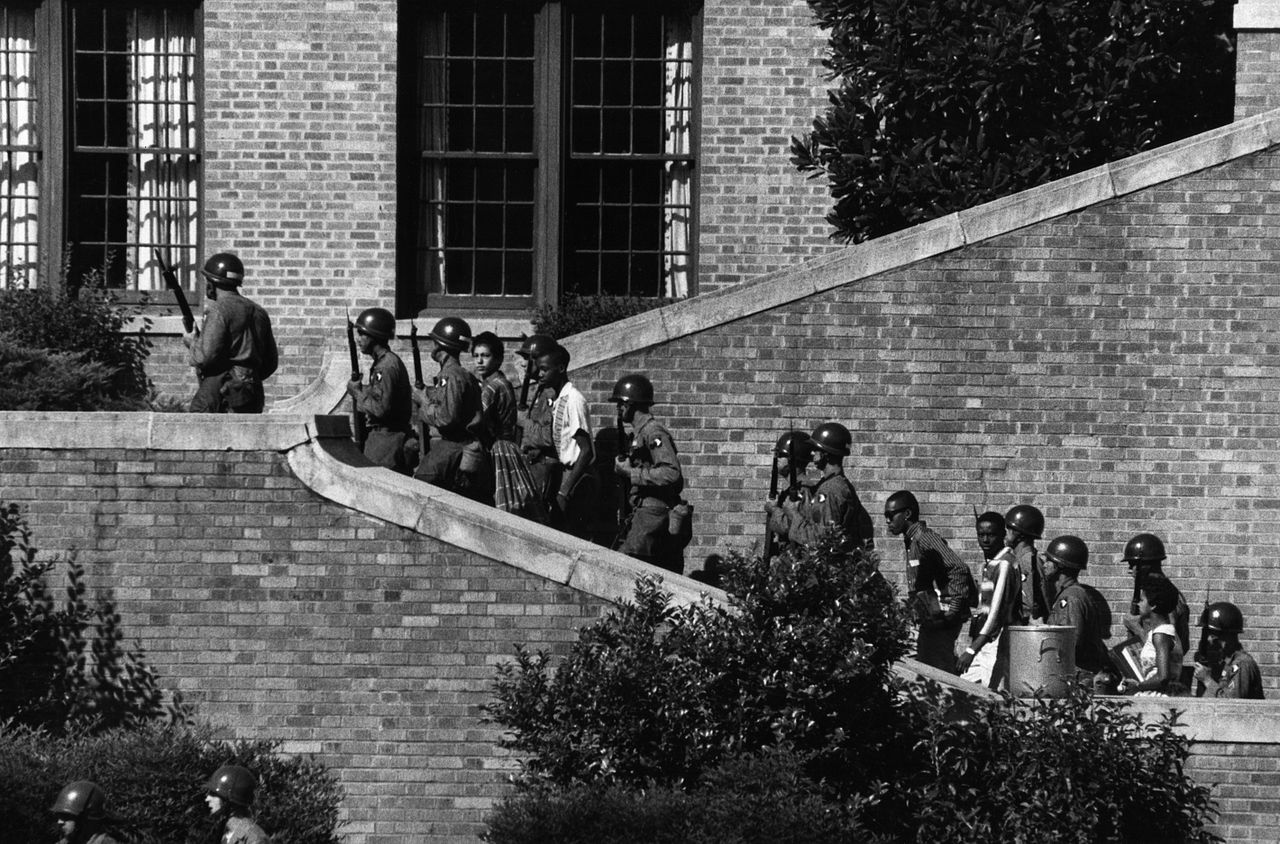
101st_Airborne_at_Little_Rock_Central_HighIt was 57 years ago today that the Little Rock Nine entered Central High School and stayed. On one hand, this brought to the end a nearly month long standoff between segregationists and those who wanted to obey the U.S. Supreme Court’s Brown v. Board decision.

In the bigger picture, the struggle did not end that day.  Throughout the remainder of the school year, the Little Rock Nine were subjected to threats, isolation and hostility.  Outside of the school, while the crowds may had dispersed after September 25, the raw feelings did not subside.

This was evidenced by the fact that the following year the high schools were closed to avoid having them integrated.

But September 25, 1957, was an historic day in the United States. Under guard of members of the 101st Airborne Division of the Army, the Little Rock Nine were escorted into Central High School. This action by President Dwight Eisenhower was the result of the intrusive efforts of Governor Orval Faubus who had used the Arkansas National Guard to keep the nine students out.

The City of Little Rock was largely a bystander in this issue. The form of government was changing from Mayor-Council to City Manager in November 1957. Therefore Mayor Woodrow Mann and the entire City Council were lame ducks. Mann, whose son was a senior at Central, tried to focus on keeping the peace in Little Rock. Most (if not all) of his Council members sided with the Governor.

Congressman Brooks Hays, a Little Rock resident, had tried to broker an agreement between the President and the Governor but was unsuccessful.  Following that, Mayor Mann was in discussions with the White House about the ability of the Little Rock Police Department to maintain order.  Finally, in the interest of public safety, the President federalized the National Guard and removed them. This paved the way for the Army to come in.

Though the school year was not easy, the nine youths who became known worldwide as the Little Rock Nine were finally in school.  They were Minnijean Brown, Elizabeth Eckford, Ernest Green, Thelma Mothershed, Melba Patillo, Gloria Ray, Terrence Roberts, Jefferson Thomas and Carlotta Walls.

In 1997, President Bill Clinton, Governor Mike Huckabee and Mayor Jim Dailey, famously held open the doors of Central High for the Little Rock Nine on the 40th anniversary.  Ten years later, Clinton, Huckabee and Dailey returned joined by current Governor Mike Beebe and Mayor Mark Stodola to host the 50th anniversary events.

Today the school is a National Historic Site, while still functioning as a high school.

2014 Reel Civil Rights Film Festival continues with films, discussions today

lrff_film-projects_civil-rightsLittle Rock Central High School National Historic Site commemorates the 57th anniversary of the desegregation crisis in September with the Reel Civil Rights Film Festival featuring special guests, panel discussions, and a special commemoration to honor local educators and civil rights activists. All events at local venues are FREE and open to the public; reservations are required for the September 20th evening program and may only be secured by logging on to http://www.eventbrite.com and searching “Little Rock Film Festival” or “A Night with Oliver Stone and Peter Kuznick.”

Saturday, September 20, 12:00 p.m. – Riverdale 10 Movies (2600 Cantrell Road)
Been Rich All My Life

(Director: Heather MacDonald) –Been Rich All My Life follows the most unlikely troupe of tap dancers – the “Silver Belles,” five women aged 84 to 96. In their heyday they worked at some of Harlem’s most prestigious haunts, performing with legendary band leaders like Cab Calloway, Jimmie Lunceford and Duke Ellington. They met in the 1930’s as chorus dancers at the Apollo and the Cotton Club. When the big band era ended, and with it the need for show dancers, they all went into other work. They regrouped in 1985, put their shoes back on and —sassy as they ever were —are still performing regularly. They may not kick as high, but they are hip-swaying and show-biz savvy. These women will disrupt any notions you have of old age.

The film will be followed by a moderated discussion with Chief of Interpretation and Education Enimini Ekong and Lasker Bell.


Saturday, September 20, 2:30 p.m. – Riverdale 10 Movies (2600 Cantrell Rd)
Ending the Schoolhouse to Jailhouse Project

Motivational Educational Entertainment (MEE) was hired by the civil rights advocacy group, The Advancement Project, to conduct qualitative, focus group research over a two-month period, with African American and Caucasian parents and African American, Latino and Caucasian teachers for the Advancement Project’s Ending the Schoolhouse to Jailhouse Project. Fourteen focus groups were conducted in Philadelphia, PA; Jefferson County, CO; Jackson, MS; Houston, TX; and Miami, FL. The overall purpose of the research was to identify messages and strategies that can be used to motivate parents and teachers to advocate for changes in school disciplinary policies. The findings from this research were used to inform The Advancement Project and its community partners as they prepared a strategic communications plan to launch local advocacy campaigns designed to bolster existing efforts related to the Ending the Schoolhouse to Jailhouse Project.

The film will be followed by a moderated discussion and workshop with Dr. Joseph Jones, Founding Director of the Social Justice Initiative at Philander Smith College, and Ivan Juzang, Founder and President of MEE.


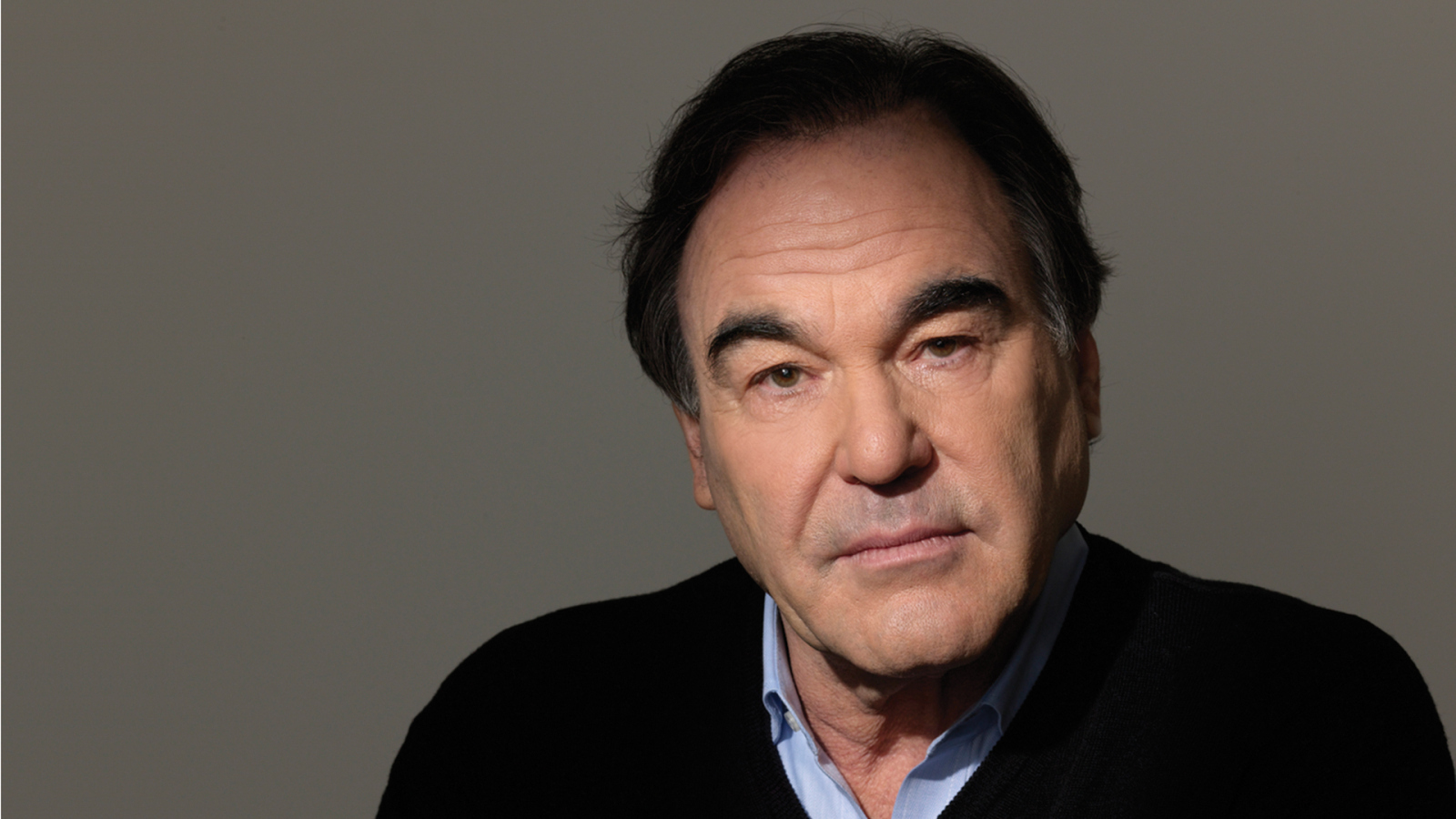
oliver_stoneSaturday, September 20, 6:00 p.m. –Little Rock Central High School (1500 S. Park Street)
A Night with Oliver Stone and Peter Kuznick
The ’50s: Eisenhower, The Bomb & The Third World

(Director: Oliver Stone;Series Writers: Oliver Stone, Matt Graham, Peter Kuznick) – There is a classified America we were never meant to see. From Academy Award®-winning writer/director Oliver Stone, The Untold History of the United States looks back at human events that at the time went under reported, but that crucially shaped America’s unique and complex history over the 20th century. This 60 minute episode examines: United States – Soviet relations post-World War II;Communism;nuclear rearmament;the Korean War;governmental policies toward the Third World;and the role played by President Dwight D. Eisenhower, including his orders to send the 101st Airborne to Little Rock, to enforce the Brown v. Board decision and prevent interference with court orders of integration.

The film will be followed by a moderated discussion between director Oliver Stone;Professor of History/Director of the Nuclear Studies Institute at American University and film/book co-writer Peter Kuznick;and Little Rock Film Festival executive director Craig Renaud. Dr. Eric Singer, Untold History’s principal researcher and coordinator of the Untold History Education Project, will also be in attendance.

Presenting Sponsor –Little Rock Film Festival

Premier Sponsor –Little Rock Central High School National Historic Site

Supporting Sponsors: arfilm|Arkansas Production Alliance, Central High Museum Inc., City of Little Rock, Conyers Institute of Public Policy, Jefferson National Parks Association, Little Rock Central High School, Little Rock Convention and Visitors Bureau, Little Rock School District, Marriott Little Rock, Mosaic Templars Cultural Center, Moses Tucker Real Estate, Riverdale 10 Movies, National Park Service, Sue Smith Vacations/Vacation Valet, North Point Toyota, University of Arkansas Clinton School of Public Service, Philander Smith College, Whole Hog Cafe –North Little Rock, Arkansas Education Television Network, and Arkansas Motion Picture Institute

Little Rock Look Back: Nixon Resigns

RMN WDM

Nixon with Mills

Forty years ago today, Richard M. Nixon resigned as the President of the United States.  Five months earlier, in a press conference in Little Rock, Congressman Wilbur Mills predicted that Nixon would resign.  Mills, still chair of the House Ways & Means Committee, predicted that the resignation might be prompted by errors in his tax returns.  As part of investigations into Nixon resulting from Watergate, the President’s taxes were being reviewed by Congress.

Nixon had been the first Republican President since the Reconstruction era to win Arkansas and gain the state’s electoral votes in 1972.  The 1968 election cycle had seen third-party candidate George Wallace win the state’s votes though Nixon handily won that election too.

Little Rock weighed prominently in Nixon’s earlier career.  He was Vice President when Eisenhower sent the troops into Little Rock to ensure the Little Rock Nine would desegregate Central High School.  In a 1960 Presidential debate, he and Senator Kennedy were asked whether they would have sent in the troops.  Kennedy begrudgingly said that he would have, though he would have wished the situation were different.  Nixon did not really answer the question, but instead used it as an opportunity to point out that Senator Johnson, as Kennedy’s running mate, had actively opposed civil rights legislation at the time.

There are many other connections between Nixon and Little Rock.  During his Presidency he both relied up and clashed with Arkansas’ legislative giants: Mills, Senator J. William Fulbright and Senator John L. McClellan.  Hillary Clinton served on the staff of the House Judiciary Committee as it investigated Nixon.  It would be during Bill Clinton’s presidency that Nixon died.

Little Rock Look Back: Gen. Douglas MacArthur

MacArthurOn January 26, 1880, Douglas MacArthur was born in the Arsenal Building while his father was stationed at the Little Rock Barracks.  Though he left Arkansas a few weeks later when his father was transferred, he returned to his birthplace on March 23, 1952. On that day he was greeted by crowds welcoming one of the USA’s most famous military figures.

Though Gen. MacArthur spent only a few weeks in Little Rock, he was baptized at Christ Episcopal Church.  The location of the baptism remains a mystery today because the church was meeting in temporary locations due to the first structure having been lost to a fire.

When the General returned to Little Rock in 1952, he did pay a brief visit to Christ Church.  He also spoke at the Foster Bandshell in the park which bore his name.  He was one of three presidential candidates to speak at the Foster Bandshell in 1952, the others were the eventual Democratic and Republican nominees Adlai Stevenson and Dwight Eisenhower.

When General MacArthur died, he was granted a state funeral.  He was one of the few non-Presidents to have been given this honor.

Today, the MacArthur Museum of Arkansas Military History is located in the Arsenal building.  It was created to interpret our state’s military heritage from its territorial period to the present.

Located in the historic Tower Building of the Little Rock Arsenal–the birthplace of General Douglas MacArthur–the museum preserves the contributions of Arkansas men and women who served in the armed forces.

Exhibits feature artifacts, photographs, weapons, documents, uniforms and other military items that vividly portray Arkansas’s military history at home and abroad.

Little Rock Look Forward: LR 9 Foundation establishes Clinton School Scholarship

clinton-school-logoThough normally there are “Little Rock Look Back” posts, this one is truly more a look to the future.

Today the Little Rock Nine Foundation, which has awarded scholarships to deserving young people for the past 16 years, has set up a scholarship fund at the University of Arkansas Clinton School of Public Service to continue the foundation’s legacy. The Foundation was established in 1997 and since that time has awarded 60 college scholarships to high school students all over the United States.

“Because of our great appreciation for President Clinton, and in recognition of the extraordinary public service work performed by Clinton School students, we have now decided to make the Clinton School our educational philanthropic focus,” said Carlotta Walls Lanier, the foundation’s spokesperson. “The Clinton School prepares its students in the global arena and what better way to keep our story alive than through those we assist.”

Nine African American students–Lanier, Melba Pattillo Beals, Elizabeth Eckford, Ernest Green, Gloria Ray Karlmark, Terrence Roberts, Minnijean Brown Trickey, Thelma Mothershed Wair and the late Jefferson Thomas became known as the Little Rock Nine when they integrated  Little Rock Central High School in 1957. The resistance of Arkansas Governor Orval Faubus and protests by large groups of segregations forced the intervention of President Dwight Eisenhower who the sent the military’s finest, the 102 Airborne Division, to protect the students.

It was an historical moment and was the first the time the President of the United States sent the military to enforce a United States Supreme Court order, in this case the historic Brown v. The Board of Education decision.

“We are honored and are most grateful to the Little Rock Nine for the establishment of this scholarship fund,” said Clinton School Dean Skip Rutherford. “Over the years the Little Rock Nine–as a group and individually–have participated in Clinton School programs and met with our students. Spirit Trickey, the daughter of Minnijean Brown Trickey, is one of our graduates.”

The Clinton School is the nation’s first to offer a Master of Public Service (MPS) degree. It is located on the campus of the William J. Clinton Presidential Center in downtown Little Rock.