Little Rock Look Back: 1959 Recall Election Day

The triumphant trio who were retained by Little Rock voters.

May 25, 1959, was not only the Recall Election Day, it was the last day of school for the Little Rock School District’s elementary and junior high students.  The results of that day’s vote would determine whether the ninth grade students would be in class come fall, or joining their older friends and neighbors in sitting out a school year.

While expectations that a new record of turnout would be set were off, over 25,000 of the 42,000 registered voters DID cast ballots in the May 25, 1959, Recall Election.

As the precinct results started coming in, some unexpected trends developed.  Some of the boxes in the more affluent, western neighborhoods which had been expected to be strongly in favor of keeping Everett Tucker, Russell Matson and Ted Lamb were not providing the anticipated overwhelming numbers.  Likewise, some of the more working class neighborhoods which had been projected to be strongly in favor of keeping Ed McKinley, Ben Rowland and Bob Laster were more receptive to keeping Tucker, Matson and Lamb.

As the night rolled onward, only Everett Tucker looked like a sure thing to be retained on the School Board.  At one point in the evening it appeared that the other five members would be recalled.  By the time they were down to four boxes still uncounted, the three CROSS-backed candidates were guaranteed to be recalled, but the status of Lamb and Matson was still undetermined.  Finally, with only two boxes remaining, there was a sufficient cushion to guarantee Matson and Lamb would continue as board members.

Two boxes from the Woodruff school were uncounted at the end of Monday. They had 611 votes between the two of them, which was not enough to change any outcomes.  They were being kept under lock and key to ensure there was no tampering with them.

Once it became apparent that Tucker, Lamb and Matson were retained, the STOP watch party erupted.  Six young men hoisted the triumphant three on their shoulders and paraded them through the crowd.  Dr. Drew Agar enthusiastically announced to the crowd, “Mission completely accomplished.”

At around 11:00 p.m. William S. Mitchell addressed the crowd.  “This is a great awakening of our home town…I have never seen such a wonderful demonstration of community spirit.”  He later went on to thank the thousands of people who volunteered in the effort.

At the CROSS headquarters, Ed McKinley and Rev. M. L. Moser were sequestered in a room poring over results.  When it appeared that 5 of the 6 might be recalled, McKinley issued what turned out to be a premature statement.

Back at the STOP party, the celebration continued.  While people knew that much work was still ahead, the men and women in attendance were enjoying a rare moment of joy after nearly two years of strife.

Little Rock Look Back: 27 students attempt to integrate LR schools in 1956

Arkansas Democrat photo by staff photographer Mr. Bisgood.

On Monday, January 23, 1956, twenty-seven African American students attempted to integrate four Little Rock schools.  By the end of the day, all four school principals had refused entry and some of the students had met with LRSD Superintendent Virgil Blossom.

Eight girls who were students at Horace Mann High School arrived at Central High at 9:30 am accompanied by Daisy Bates and Frank W. Smith both of the NAACP.  One male student attempted to integrate Little Rock Technical High School.  Four students arrived at Forest Heights Junior High (accompanied by three adults) and fourteen students attempted to integrate Forest Park Elementary (accompanied by four adults).  Neither the Arkansas Gazette nor the Arkansas Democrat broke down the age or gender of the junior high and elementary students.

Though all were referred to meet with Mr. Blossom, only the young women from Horace Mann visited with him.  After the conversation both he and Mrs. Bates declared the conversation had been friendly.   Mr. Blossom, in denying the request, noted that the Little Rock School District had a plan for integration. To allow them to integrate immediately would have been going against the plan.  The integration plan was connected to the completion of the new high school.  If it were ready to open in the fall of 1957, then integration at the high schools would start then.  The newspapers noted that there was no timeline for when it would extend down to the junior high and elementary levels.

That evening, Rev. J. C. Crenchaw, the president of the Little Rock NAACP, issued a statement.  In it he expressed frustration that the LRSD was vague on its timeline for integration.  He noted that the students lived near the schools which they tried to integrate and were therefore forced to travel several extra miles each day to attend school.  He also commented that the young man who attempted to enroll at Tech was not afforded the training available there at his current school.

The Arkansas Democrat ran a photo of the meeting with Mr. Blossom.  It identified the seven students who were pictured.  No mention was made as to whether the eighth student was present but not photographed, or if she did not attend the meeting.  As was the practice at the time, the addresses of the students were listed by their names.  Based on those addresses, the students lived between 0.4 and 0.9 miles from Central High School and were between 2.1 and 3.2 miles away from Horace Mann High School.  Of the seven students in the photo, two were seniors, three were juniors, and three were sophomores.  None of the students named became part of the Little Rock Nine who did integrate Central High twenty-one months later.

On January 24, the Gazette editorial writer opined they were glad for the amicable nature of the conversations. They hoped it did not affect the good race relations in Little Rock.  The writer concluded by saying they did not want it to incite extremists (but did not specify if they viewed the extremists as being for or against integration.)

Little Rock Look Back: LR Voters ratify closing of high schools

fedgovark

Signs placed outside of Little Rock’s high schools erroneously cited the federal government as the source of school closures.

On September 27, 1958, voters in Little Rock approved the continuation of the closure of the city’s high schools.

Using legislation passed by the General Assembly in a hastily called special session in summer of 1958, Governor Orval Faubus had ordered the closure of Little Rock’s four public high schools in order to keep them from being desegregated.  But that state law only allowed the closure of Central, Hall, Horace Mann and Technical high schools on a temporary basis. In order for them to be closed permanently, the city’s voters must approve it by a vote.

The election date was to be set by Governor Faubus.  Originally scheduled for Tuesday, October 7, the date was moved to September 27.  Speculation for the new date selection centered on:

  • Faubus wanted it to be prior to the October 1 poll tax deadline so that only people who had paid their poll tax for the prior year were eligible
  • The election was on a Saturday.  Though Tuesday was the most common day of the week for elections, in the late 1950s Saturdays were used on elections as well.  The school board elections, for instance, were on Saturdays in some years.
  • On September 27, 1958, the Arkansas Razorbacks had a home football game in Fayetteville.

These were all designed to stifle voter turnout. In addition, the state law required a majority of eligible voters to approve reopening the schools.  The law also spelled out the confusing wording of the ballot question.  As historian Sondra Gordy points out in her book FINDING THE LOST YEAR, the ballot question was about only being for or against integration of the schools – it did not say anything about closure or opening of schools.

While the newly formed Women’s Emergency Committee did try to educate voters about the issue and encourage a vote to reopen the schools, this nascent group was less than a fortnight old by the Saturday election day.  In addition, the Governor campaigned for the remaining closure of the schools including in television appearances.

On that Saturday, Little Rock voters voted 19,470 to keep schools segregated to 7,561 to integrate them.

It would be a long road ahead to reopen the schools.  It would take two more elections before the City’s four public high schools would reopen.

Little Rock Look Back: Mahlon A. Martin

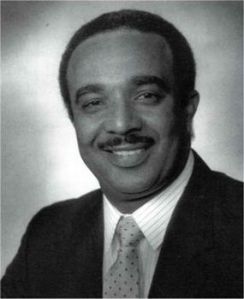
On July 19, 1945, future Little Rock City Manager Mahlon A. Martin was born in Little Rock.
After graduating in 1963 from Horace Mann High School, he attended Philander Smith College.  (He had received a baseball scholarship to Grambling, but chose to remain in Little Rock to be near his ailing grandmother.)  Martin graduated from Philander Smith in 1967 with a degree in business administration.

After working in the private sector for two years, Martin was hired by City Manager Jack T. Meriwether to work for the City of Little Rock in 1969 after the City had received a Model Cities grant.  Martin started working with community organizations and then became promoted to the City’s recruiting officer.

In 1972, he was named to leadership posts at the four-county Central Arkansas Manpower Program.  Three years later, he returned to the City of Little Rock to work on the staff of City Manager Carleton McMullin.  In 1976, Martin was named Assistant City Manager for Little Rock.

Martin left City Hall in 1979 to become a top executive at Systematics, Inc.  However, his stint in the private sector was short-lived.  In 1980, the City Board of Directors asked him to come back and be Little Rock’s sixth City Manager.  At thirty-four, he was one of the youngest chief administrators of a major city in the country and the first African American City Manager for Little Rock.

In 1983, Governor Bill Clinton asked him to join the state of Arkansas as the Director of the Department of Finance and Administration.  He was the first African American to lead that or any major Arkansas state department.  Throughout his tenure with the State, he oversaw numerous initiatives to restore the state to sound financial footing.

Martin joined the Winthrop Rockefeller Foundation as president in 1989.  He held that position until his death in 1995.

The name Mahlon Martin lives on in a son and grandson named after him, in an apartment complex on south Main Street, in a street in Clinton Presidential Park, and in the City of Little Rock’s Employee of the Year award.  The latter was created by City Manager Bruce T. Moore in 2004.  At the time Moore noted that Martin had been so popular while City Manager, “It was said you could criticize the Razorbacks to a City of Little Rock employee, but you better not say anything bad about Mahlon Martin to them.”

In 2001, Mahlon Martin was posthumously inducted into the Arkansas Black Hall of Fame.  A decade later, the Butler Center for Arkansas Studies created a fellowship in his memory.  It supports research and programming in the field of public policy in Arkansas.  In 2015, he was included in the Arkansas Civil Rights Heritage Trail.

Black History Month – Art Porter Sr. and Robinson Center

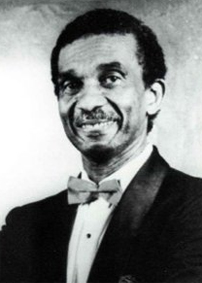
bhm art srArthur Lee (Art) Porter Sr. was a pianist, composer, conductor, and music teacher. His musical interest spanned from jazz to classical and spirituals.  One of the new event spaces in the Robinson Conference Center is named in his memory.

Born on February 8, 1934 in Little Rock, he began his music education at home. He played in church at age eight; played his first recital at twelve; and, by fourteen, hosted a half-hour classical music radio program on KLRA-AM. He earned a bachelor’s degree in music from Arkansas AM&N College (now UAPB) in May 1954. The next year, he married Thelma Pauline Minton. Following his marriage, he pursued graduate study at the University of Illinois, University of Texas and Henderson State University.

He began his teaching career at Mississippi Valley State University in 1954.  When he was drafted into the Army, his musical talents were responsible for him being assigned as a chaplain’s assistant in New York.  In the late 1950s he returned to Little Rock and taught at Horace Mann High School, Parkview High School and Philander Smith College.

He also started playing piano jazz in the evenings. This led to the creation of the Art Porter Trio, which became THE music group for events.  Many musicians who came to Arkansas to perform in Little Rock or Hot Springs would often stop by and join in with Porter as he played.  From 1971 to 1981 he hosted The Minor Key musical showcase on AETN.  His Porterhouse Cuts program was shown in 13 states.

Often encouraged to tour, he instead chose to stay based in Arkansas.  He did, from time time, perform at jazz or music festivals.   He also performed classical piano with the Arkansas Symphony Orchestra, founded the Art Porter Singers, and created a music group featuring his four oldest children.  Though Porter received many honors and awards, he found particular satisfaction in the “Art Porter Bill” enacted by the state legislature, which allowed minors to perform in clubs while under adult supervision. Porter’s children thus were able to perform with him throughout the state. Governor Bill Clinton, at the time a huge fan and friend of Porter, often joined Porter’s group on his saxophone.

In January 1993, Porter and his son Art Porter, Jr., performed at festivities in Washington DC for the Presidential Inauguration of his friend Bill Clinton.  In July 1993, he died of lung cancer.  Today his legacy lives on in the Art Porter Music Education Fund as well as in the lives of the many musicians and fans he touched.  He was posthumously inducted into the Arkansas Black Hall of Fame in 1994.

Holiday Fun at Mosaic Templars Cultural Center this afternoon from 2 until 5

MTCCSayJoin the Mosaic Templars Cultural Center for a festive and fun day full of holiday cheer! The fun runs from 2pm util 5pm.

This year’s event will feature the 5th annual “Say It Ain’t Say’s” sweet potato pie contest, in honor of Little Rock’s black Santa, Robert “Say” McIntosh.  They will live entertainment, fun activities for kids and the opportunity to browse our current exhibits.

You and our panel of celebrity judges will determine who has the best sweet potato pie in Central Arkansas.

Tthe Holiday Open House will feature performances by comedian Nate Williams, Tania and Tamia Kelley, Mablevale Elementary Drumline, Gloryland Pastor’s Choir, Mablevale Magnet Middle School Dance Team, Horace Mann Magnet Middle School Dance Ensemble, Latavia Franklin and Shereece Manuel aka Shades of Diamondz.

This year, a trolley will be available to take guests to two other Department of Arkansas Heritage Museums located in downtown Little Rock: Old State House Museum and Historic Arkansas Museum. The trolley route will also include the Governor’s Mansion Open House.

For more information call 501-683-3620.

1969 Turkey Day Football in LR: Hogs, Tigers, Warriors, Rockets, and Bearcats

The Hogs stop Texas Tech at War Memorial Stadium

The Hogs stop Texas Tech at War Memorial Stadium


Thanksgiving 1969 marked not only the Culture Vulture’s first foray into the holiday, it saw three high schools and the University of Arkansas all playing football games in Central Arkansas.  November 27 was a day for football in the Rock!  It appears this was the only time this feat happened.

It was a cool and misty day which seems to have made balls slippery and grass fields sloppy. But the precipitation seemed to be more an annoyance than a barrier for the players and fans.  

The Arkansas Razorbacks, ranked number 2 in the nation, played host to the Texas Tech Red Raiders at War Memorial Stadium.  The two teams played before a crowd of 35,287.  This was the smallest crowd in LR that season, likely due to it being Thanksgiving and the presence of the Central/Hall football game the same day.  It would have been hard to fit in two football games, Thanksgiving meals, and a possible church service all within one day.  

The Hogs were 16 point favorites for the game with a 1:50 kickoff.  It was broadcast on ABC, and fans were encouraged to wear red to show up well on the color telecast.  

The Hogs beat the Red Raiders by a score of 33 to 0 in their penultimate regular season game.  Turnovers were the key with the Hogs recovering a fumble and intercepting five passes.  (The final Hogs regular season game was the shootout against Texas in Fayetteville on December 6.)

Little Rock Catholic took on NLRHS north of the river with a 10am kick off. The Rockets, under head coach George Loss, were 9-2 heading into the game. The Wildcats (coached by Ken Stephens) were 5-4 and had won four in a row. At the end of the game, NLR was triumphant by a score of 21 to 12.  

Later that day, Jones High hosted Horace Mann at the same stadium. This game, with a 2pm kickoff, would be the final game between Jones and Mann. Jones was being closed at the end of the year.  
The teams had met earlier in the season with Mann triumphing 13 to 8. Mann had a record of 2-8, playing in the larger AAAA classification. Jones, with a record of 4-6, played in the AA classification. It is notable that by 1969 the teams were in Arkansas Activities Association classifications and playing integrated schools.  

Jones scored an upset victory over the Bearcats by a score of 19-8. 

Quigley Stadium was less than three miles from War Memorial Stadium. With a 10am kickoff before a sold out crowd, people who had wanted to go to both the Hogs game and Hall/Central game also had the option of listening to the high school gridiron competition on KARK radio. 
Prior to the game, Hall had captured the AAAA State Championship. CW Keopple was the Warriors’ coach, while Gene Hall was the Tigers’ mentor.  The damp field and high stakes of the game turned it into a defensive slugfest.  Hall had 2 fumbles while Central fumbled four times.  

At the end of the fourth quarter the scoreboard showed a 0 to 0 tie. And that one went into the record books.  Hall’s season record was 9-0-1, while Central’s was 6-2-2.  It was the best season record Hall had amassed in its 13 years of football. 

Four football games within a few miles of each other were a peek into Little Rock life: 

  • The Hogs were riding the crest of their 1960s football superiority in the Southwest Conference.  
  • The final Thanksgiving football game in Arkansas between two segregated public schools. 
  • Continued alternating dominance by Hall and Central in the state’s largest school sports classification.  Soon, Parkview would be added to the mix. Throughout the 1970s, all three Little Rock public high schools would rotate winning state championships.