Black History Month – Al Jarreau and Robinson Center

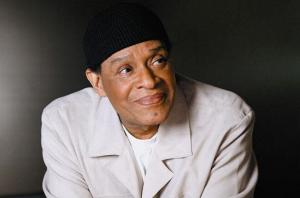
aljWhile he made a few subsequent visits in the intervening years, Al Jarreau’s first visit to Little Rock was in May 2002, when he performed with the Arkansas Symphony Orchestra at Robinson Center Music Hall.

By that time, Jarreau was a Grammy winning artist with a decades long career.  He received a total of seven Grammy Awards (and several other nominations). So in a way it was fitting that he died on the day that the 2017 Grammy Awards were handed out.

Jarreau’s unique vocal sounds lent itself to many different styles of music.  He would sing jazz, R&B, and standards from the American songbook.  While his recordings were a delight, seeing him perform in concert was even better due to the joy in his face as he was performing.

Born in Milwaukee, he was the son of a minister and church musician.  Growing up singing music, he sang in groups while in college (though his degree was in psychology).  While working as a rehab counselor in San Francisco in the late 1960s, he started performing in music clubs in the Bay Area.  In 1968, he made music his primary vocation. (But education remained a key focus of his philanthropic and volunteer activities.)

In the 1970s and 1980s, he recorded and toured extensively.  In the 1990s, he did not record as much, but kept up his touring schedule.  He also played the Teen Angel on Broadway in a revival of Grease.  He kept touring up until earlier this year.  On February 8, after being hospitalized, he announced his retirement from touring.
Black History Month – Art Porter Sr. and Robinson Center

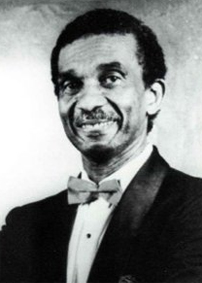
bhm art srArthur Lee (Art) Porter Sr. was a pianist, composer, conductor, and music teacher. His musical interest spanned from jazz to classical and spirituals.  One of the new event spaces in the Robinson Conference Center is named in his memory.

Born on February 8, 1934 in Little Rock, he began his music education at home. He played in church at age eight; played his first recital at twelve; and, by fourteen, hosted a half-hour classical music radio program on KLRA-AM. He earned a bachelor’s degree in music from Arkansas AM&N College (now UAPB) in May 1954. The next year, he married Thelma Pauline Minton. Following his marriage, he pursued graduate study at the University of Illinois, University of Texas and Henderson State University.

He began his teaching career at Mississippi Valley State University in 1954.  When he was drafted into the Army, his musical talents were responsible for him being assigned as a chaplain’s assistant in New York.  In the late 1950s he returned to Little Rock and taught at Horace Mann High School, Parkview High School and Philander Smith College.

He also started playing piano jazz in the evenings. This led to the creation of the Art Porter Trio, which became THE music group for events.  Many musicians who came to Arkansas to perform in Little Rock or Hot Springs would often stop by and join in with Porter as he played.  From 1971 to 1981 he hosted The Minor Key musical showcase on AETN.  His Porterhouse Cuts program was shown in 13 states.

Often encouraged to tour, he instead chose to stay based in Arkansas.  He did, from time time, perform at jazz or music festivals.   He also performed classical piano with the Arkansas Symphony Orchestra, founded the Art Porter Singers, and created a music group featuring his four oldest children.  Though Porter received many honors and awards, he found particular satisfaction in the “Art Porter Bill” enacted by the state legislature, which allowed minors to perform in clubs while under adult supervision. Porter’s children thus were able to perform with him throughout the state. Governor Bill Clinton, at the time a huge fan and friend of Porter, often joined Porter’s group on his saxophone.

In January 1993, Porter and his son Art Porter, Jr., performed at festivities in Washington DC for the Presidential Inauguration of his friend Bill Clinton.  In July 1993, he died of lung cancer.  Today his legacy lives on in the Art Porter Music Education Fund as well as in the lives of the many musicians and fans he touched.  He was posthumously inducted into the Arkansas Black Hall of Fame in 1994.

RobinsoNovember: Art Porter Sr.

bhm art srAs part of the new Robinson Center, nine Little Rockians (Little Rockers?) have been enshrined by having spaces in the building named after them.  One of those is Art Porter Sr.

Arthur Lee (Art) Porter Sr. was a pianist, composer, conductor, and music teacher. His musical interest spanned from jazz to classical and spirituals.

Born on February 8, 1934 in Little Rock, he began his music education at home. He played in church at age eight; played his first recital at twelve; and, by fourteen, hosted a half-hour classical music radio program on KLRA-AM. He earned a bachelor’s degree in music from Arkansas AM&N College (now UAPB) in May 1954. The next year, he married Thelma Pauline Minton. Following his marriage, he pursued graduate study at the University of Illinois, University of Texas and Henderson State University.

He began his teaching career at Mississippi Valley State University in 1954.  When he was drafted into the Army, his musical talents were responsible for him being assigned as a chaplain’s assistant in New York.  In the late 1950s he returned to Little Rock and taught at Horace Mann High School, Parkview High School and Philander Smith College.

He also started playing piano jazz in the evenings. This led to the creation of the Art Porter Trio, which became THE music group for events.  Many musicians who came to Arkansas to perform in Little Rock or Hot Springs would often stop by and join in with Porter as he played.  From 1971 to 1981 he hosted The Minor Key musical showcase on AETN.  His Porterhouse Cuts program was shown in 13 states.

Often encouraged to tour, he instead chose to stay based in Arkansas.  He did, from time time, perform at jazz or music festivals.   He also performed classical piano with the Arkansas Symphony Orchestra, founded the Art Porter Singers, and created a music group featuring his four oldest children.  Though Porter received many honors and awards, he found particular satisfaction in the “Art Porter Bill” enacted by the state legislature, which allowed minors to perform in clubs while under adult supervision. Porter’s children thus were able to perform with him throughout the state. Governor Bill Clinton, at the time a huge fan and friend of Porter, often joined Porter’s group on his saxophone.

In January 1993, Porter and his son Art Porter, Jr., performed at festivities in Washington DC for the Presidential Inauguration of his friend Bill Clinton.  In July 1993, he died of lung cancer.  Today his legacy lives on in the Art Porter Music Education Fund as well as in the lives of the many musicians and fans he touched.  He was posthumously inducted into the Arkansas Black Hall of Fame in 1994.

International Jazz Day – Bryan Massey’s JAZZ PLAYER

Massey JazzApril 30 is International Jazz Day.

In commemoration of that, here is Bryan Massey, Sr.’s Jazz Player.  It is located in the Vogel Schwartz Sculpture Garden in Riverfront Park.

Massey, who is an artist and art professor at the University of Central Arkansas, created this piece in honor of Bill Clinton and his love of jazz.  It was sculpted in 2009 in honor of the fifth anniversary of the opening of the Clinton Presidential Center.

The sculpture is placed next to another piece of Massey’s called Uptown Saturday Night which depicts a couple dancing to music.  Together they present a celebration of music, dance, and having fun.

The Arkansas Arts Council seeking applications for Individual Artist Fellowships

aaclogo_vertical_colorThe Arkansas Arts Council is accepting applications for its Individual Artist Fellowships. The deadline to apply is April 15, 2016.

The Individual Artist Fellowships annually recognize individual artistic ability and creative excellence to encourage the continuing artistic development of the selected recipients. To be eligible for a fellowship, an artist must be at least 25 years old and must have been an Arkansas resident for at least one year at the time of application.

Individual Artist Fellowships are unconditional, non-matching awards made directly to individual artists. Awarded annually, these fellowships recognize the artistic creative excellence of the recipient’s work and enable the selected artists to devote more time and energy to creating their art and mastering their craft. Funding categories change each year.

Up to nine Individual Artist Fellowships worth $4,000 each will be awarded to artists in the following categories:

  • Literary Arts – Poetry
  • Performing Arts – Music Composition (Folk/Gospel/Jazz/Pop)
  • Visual Arts – Painting (Paintings may include work on canvas, panel, or board, but not on paper.)

Click HERE to download an application, or contact the Arkansas Arts Council at (501) 324-9766. For more information, call Robin McClea at (501) 324-9348 or e-mail robinm@arkansasheritage.org.

The Arkansas Arts Council is an agency of the Department of Arkansas Heritage.

The Oxford American presents the UCA Dixieland Band tonight at South on Main

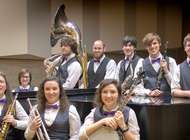
SOM UCA jazzTonight (March 1) at 7:00 PM, the Oxford American magazine presents the UCA Dixieland Band at South on Main.

This event is free and open to the public. Call ahead to South on Main to make your reservations and ensure a table: (501) 244-9660.


The UCA Dixieland Band was founded in 1976 by Professor Patrick Hasty. The group has a long tradition of performing all styles of Traditional Jazz at venues across campus and in the Central Arkansas area. Merging the instrumentation of Early New Orleans Style and Chicago Style jazz, the group utilizes clarinet, tenor saxophone, trumpet, trombone, piano, banjo/guitar, sousaphone/bass, and drum set. The ensemble studies original and contemporary recordings and prepares their own arrangements with an emphasis on collective and individual improvisation, and is currently coached by Dr. Jackie Lamar.

Art+History Throwback Thursday – Arkansas Arts Center in the 1960s

On February 9, Little Rock voters will have the chance to say Yes to improving the Arkansas Arts Center, MacArthur Museum of Arkansas Military History, and MacArthur Park.

Leading up to that election is a good time to look back at the development of these entities over the years.  Today, some mid-century images of the Arkansas Arts Center.

AAC 1960sThis includes the cover from the May 1963 dedication week, a jazz album produced by the Arkansas Arts Center, a scene from an early Beaux Arts Ball, and the original Arkansas Arts Center logo (as it appeared on a matchbook).