Little Rock Look Back: Lottie Shackelford, LR’s 68th Mayor

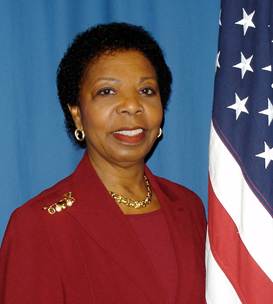
Mayor Lottie_ShackelfordOn April 30, 1941, future Little Rock Mayor Lottie Shackelford was born. Throughout her career in public service she has been a trailblazer.

Active in community activities and politics, she ran for the City Board in 1974 and lost.  But she was appointed to the Little Rock City Board in September 1978 to fill a vacancy.  This made her the first African American woman to serve on he City Board, and indeed on any governing board for the City (during Reconstruction, there were at least three African Americans on the City Council, but they were all men.) She was subsequently elected to a full-term on the City Board in 1980 winning 55% of the vote over three male candidates.

She was subsequently re-elected in 1984 (unopposed) and in 1988 (with 60% of the vote).

In January 1987, Shackelford became the first female mayor of Little Rock when she was chosen by her colleagues on the City Board to serve in that position. She was Mayor until December 1988.

From 1982 until 1992, she served as Executive Director of the Arkansas Regional Minority Purchasing Council.  She left that position to serve as Deputy Campaign Manager of Clinton for President.  She subsequently served on the Clinton/Gore transition team. She later served on the Overseas Private Investment Corporation from 1993 to 2003. She was the first African American to be in that position.

A graduate of Philander Smith College, she has also studied at the Arkansas Institute of Politics at Hendrix College and the Kennedy School of Government at Harvard University.

Mayor Shackelford has also served on numerous boards including the Little Rock Airport Commission, Philander Smith College, Chapman Funds (Maryland) and Medicis Pharmaceutical Corporation (Arizona).  She has been the longest serving Vice-Chair of the Democratic National Committee.

Mayor Shackelford was in the first class of inductees for the Arkansas Black Hall of Fame.

LR Look Back: Mayor J. V. Satterfield Jr.

SatterfieldOn May 14, 1902, future Little Rock Mayor John Vines Satterfield, Jr. was born in Marion.   He grew up in Little Rock and Earle. J.V. was a star quarterback for the Earle football team and is ostensibly featured in a painting of that team by respected painter Carroll Cloar.

Following high school, J.V. taught and coached and sold Fords.  He then moved to Little Rock and sold insurance and later securities.  In 1931 he opened his own business; that same year he built a house at 40 Beverly Place in Little Rock, which would serve as his home until his death.

J. V. Satterfield was elected to serve as Mayor of Little Rock in 1939 and served one term, until 1941.  He was credited with saving the City from bankruptcy because of his fiscal policies. Among his efficiencies were the creation of a central purchasing office and using grass moved from the airport to feed the Zoo animals.

Satterfield was a staunch supporter of the airport and worked to expand it.  He would serve as the chair of the first Municipal Airport Commission.  He also established the Little Rock Housing Authority (on which he would later serve on the board) and oversaw the bonds needed to finish constructing Robinson Auditorium.  He was mayor when the building opened.  Mayor Satterfield also served as President of the Arkansas Municipal League in 1941.

Following the outbreak of World War II, Satterfield enlisted in the Army and was given the rank of a Major. He later was promoted to a Colonel and worked in the Pentagon during its early days.

In the late 1940s Satterfield became president of a small Little Rock bank called People’s Bank.  The bank changed its named to First National Bank when it moved into new offices at 3rd and Louisiana in 1953.  By focusing on smaller customers and courting corporate customers, Satterfield grew the bank into one of the state’s largest banks.  He maintained his desk in the lobby of the bank so he could interact with the customers and ensure they were having a positive experience.

Due to some health issues, Satterfield retired from the bank in 1964. He died in March 1966.

Sculpture Vulture: Interdependence

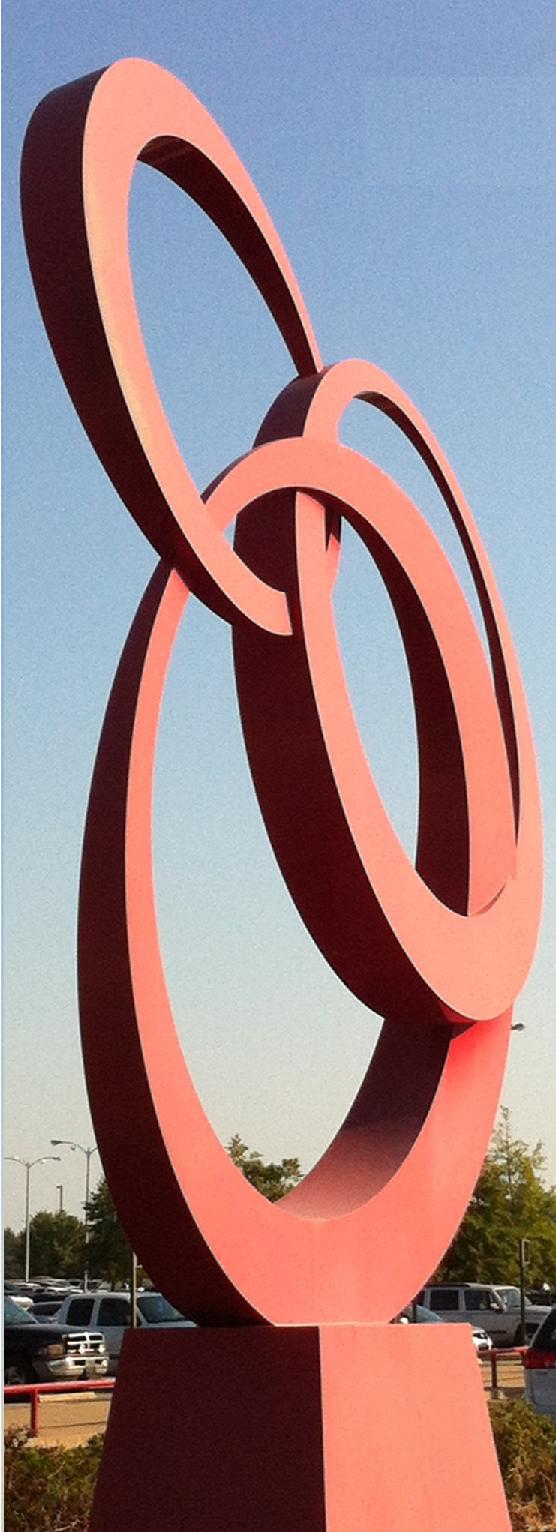
The Sculpture Vulture returns today with a visit to the Bill and Hillary Clinton National Airport.  Mark Leichliter’s Interdependence: Encircling the Future was installed near the entrance to the airport in 2004.

This sculpture greets visitors to the airport whether they are departing or arriving.  It was commissioned by the Airport Commission to be a focal point with the existing airport as well as play a pivotal role in any future expansion.

Leichliter is a member of the National Sculptors’ Guild.  He has several other installations in Little Rock.

The three rings represent the world, the nation, and the individual; the complex intersections between the rings symbolize the vital and undeniable interconnections between these three elements, as well as underscoring the strength that exists when these facets all work together cooperatively.

The sculpture is fabricated from cold-rolled A36 steel with the base and first ring being 12 gauge (.105 inch) and the remainder 14 gauge (.075 inch). It is finished with a baked-on powder coat by Cardinal Industrial Finishes, product RD03. The sculpture is 16 feet tall, 11 feet 8 inches wide, and 2 feet 10 inches deep.