Women’s History Month – Charlotte Stephens

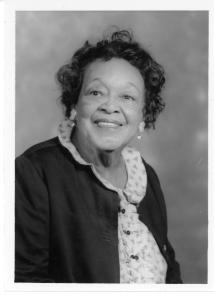
Charlotte Andrews Stephens was the first African American teacher in the Little Rock School District.  Between 1910 and 1912, when an elementary school for African Americans was named after her, she became the first woman to have a public building in Little Rock named after her.  For nearly fifty years, Stephens Elementary (which is now in its third building) would be the only LRSD building named after a woman.

Born into slavery, Charlotte Stephens was educated first by her father who ran a private school in what is now Wesley Chapel UMC.  At the age of 15, she started teaching at the Union School to finish out the term of a white teacher who had become ill.  She taught for 70 years, retiring at age 85 in 1939.

From 1870 to 1873, she attended college at Oberlin College, though not always every semester. (It is possible she was the first African American woman from Arkansas to attend college, but that cannot be verified.)  During her career with the LRSD, she taught students in all grades. She was twice principal of Capitol Hill School, and later headed the high school Latin Department.  At the time of her retirement, she was librarian of Dunbar High School.

The land on which Stephens Elementary now sits was once owned by Charlotte Stephens.  She donated the land and attended the 1950 dedication of the second Stephens Elementary.  That building was torn down in 1994 to make way for the current Stephens Elementary.  Some of her grandchildren attended the dedication of the new and current Stephens Elementary.


Black History Month – Art Porter, Jr. and Robinson Center

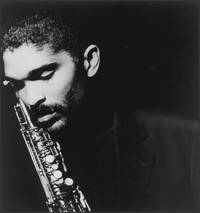
bhm art jr.Like his father, Art Porter Jr. is recognized with a space named in his memory in the new Robinson Center.

Arthur Lee (Art) Porter Jr. was born in Little Rock on August 3, 1961. Porter began his music career under the tutelage of his father, legendary jazz musician, Arthur Porter, Sr. who surrounded him with everything musical. He performed proficiently on drums, saxophone and piano. He was classically trained but his performances ranged across jazz, rhythm and blues, funk, and ballads.

During high school, under the supervision of Sterling Ingram, private teacher and band director at Parkview High School, Art Jr. was selected to be a member of the Arkansas All-State Band for three consecutive years.  At age 16, he was awarded the “Most Talented Young Jazz Artist in America” by the National Association for Jazz Education.

During Porter’s youth, his playing while underage in venues where liquor was sold proved controversial. Bill Clinton, then attorney general, established a framework for the legislature that would allow minors to work in such venues with parental supervision. Act 321 known as The “Art Porter Bill” became Arkansas law.

Porter graduated from Northeastern University in Chicago, Illinois, in 1986 with a BA degree in music education and performance.

Art burst on the music scene with his debut album, Pocket City (1992), followed by Straight to the Point (1993). In 1994, his third album, Undercover, placed Porter solidly on the “wave” radio charts with R&B artists as well as “cool jazz” artists. During this same year, he performed at Carnegie Hall for the Polygram Anniversary Celebration. His final album, Lay Your Hands on Me (1996), contained the radio favorite “Lake Shore Drive.”

Porter traveled the world with performances but no matter where his music would carry him, he always returned to his beloved hometown of Little Rock. He conducted workshops for music students at his alma maters, Dunbar Magnet Junior High School and Parkview Arts and Science Magnet School. Porter died on November 23, 1996, in a boating accident in Thailand. He had just completed a performance at the Thailand International Golden Jubilee Jazz Festival commemorating the fiftieth anniversary of King Bhumibol Adulyadej’s reign.  In 2013, he was posthumously inducted into the Arkansas Black Hall of Fame.

Black History Month – Florence Price and Robinson Center

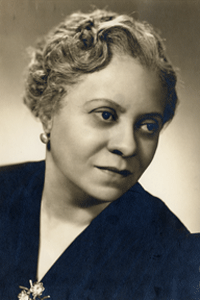
Florence-PriceOutside the William Grant Still Ballroom at Robinson Center is an atrium named for Florence Price.  It is fitting that these two childhood friends should be memorialized in adjoining spaces.

Florence Price was the first African-American female composer to have a symphonic composition performed by a major American symphony orchestra. She was born in Little Rock on April 9, 1887, to James H. Smith and Florence Gulliver Smith. Her father was a dentist in Little Rock, while her mother taught piano and worked as a schoolteacher and a businesswoman.

As a child, Smith received musical instruction from her mother, and she published musical pieces while in high school. She attended Capitol Hill School in Little Rock, graduating as valedictorian in 1903. Smith then studied at the New England Conservatory of Music in Boston, Massachusetts, In 1907, she received degrees as an organist and as a piano teacher.

After graduation, Smith returned to Arkansas to teach music. After stints in Cotton Plant, North Little Rock and Atlanta, GA, Smith returned to Little Rock in 1912 to marry attorney Thomas Jewell Price on September 25, 1912. Her husband worked with Scipio Jones.

While in Little Rock, Price established a music studio, taught piano lessons, and wrote short pieces for piano. Despite her credentials, she was denied membership into the Arkansas State Music Teachers Association because of her race.

The Prices moved to Chicago, Illinois, in 1927. There, Price seemed to have more professional opportunity for growth despite the breakdown and eventual dissolution of her marriage. She pursued further musical studies at the American Conservatory of Music and Chicago Musical College and established herself in the Chicago area as a teacher, pianist, and organist. In 1928, G. Schirmer, a major publishing firm, accepted for publication Price’s “At the Cotton Gin.” In 1932, Price won multiple awards in competitions sponsored by the Rodman Wanamaker Foundation for her Piano Sonata in E Minor, a large-scale work in four movements, and her more important work, Symphony in E Minor.

The latter work premiered with the Chicago Symphony Orchestra on June 15, 1933, and the orchestras of Detroit, Michigan; Pittsburgh, Pennsylvania; and Brooklyn, New York, performed subsequent symphonic works by Price. This was the first time a black woman had presented her work on such a stage. In this regard,

Price’s art songs and spiritual arrangements were frequently performed by well-known artists of the day. For example, contralto Marian Anderson featured Price’s spiritual arrangement “My Soul’s Been Anchored in the Lord” in her famous performance on the steps of the Lincoln Memorial in Washington DC on Easter Sunday, April 9, 1939. European orchestras later played Price’s works.

This national and international recognition made her more popular back home, and in 1935, the Alumni Association of Philander Smith College in Little Rock sponsored Price’s return to Arkansas, billing her as “noted musician of Chicago” and presenting her in a concert of her own compositions at Dunbar High School.

In her lifetime, Price composed more than 300 works, ranging from small teaching pieces for piano to large-scale compositions such as symphonies and concertos, as well as instrumental chamber music, vocal compositions, and music for radio. Price died in Chicago on June 3, 1953, while planning a trip to Europe.

Turkey Day Football – Dunbar & later Mann take on Jones High

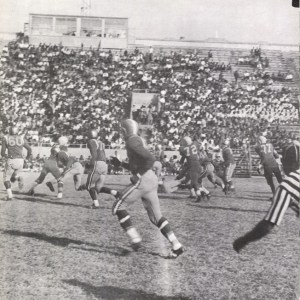
Mann High School takes on Jones High in 1962

Mann High School takes on Jones High in 1962

From the 1930s to the early 1960s, Thanksgiving Day high school football in Arkansas was the time for big rivals to meet.  In addition to Little Rock playing NLR (later morphing into Central playing Hall), many a Thanksgiving Day schedule involved seeing Jonesboro face off against Paragould or El Dorado play Camden. Fayetteville vs. Springdale, Morrilton vs. Conway, Newport vs. Batesville, and DeQueen vs. Texarkana were all longtime traditions.

In these days, football classifications were much more fluid.  It would not be until the 1960s that the Arkansas Activities Association would permanently institute state playoffs in football.  This led to the demise of Thanksgiving Day games throughout the state.  Either the schools were not in the same classification and/or they were in a classification that had playoffs starting in mid-November.  Gone were the days when a regular football season extended from September to Thanksgiving.

The two exceptions to this were the largest classification of schools and the segregated African American schools.  The largest class, which eventually became known as the AAAAA (it had previously been the Big 6, 8, 9–whatever number of schools were in it), had few enough members that they were all in one conference.  A conference championship was tantamount to a state championship.

The African American schools were ignored in athletics as they were in other areas.  While the schools fielded teams and played each other, they did not have playoffs or Arkansas Activities Association recognized championships.  Up through the late 1950s, a mention of their games in the Arkansas Gazette or Arkansas Democrat was rare.

For several years, Little Rock’s Dunbar High School Bearcats took on the Scipio Jones Dragons of North Little Rock on Thanksgiving Day.  Due to the lack of coverage in newspapers, there are few records of these games.  Unfortunately the yearbooks of neither school shed any light. Due to limited budgets which led to thinner yearbooks, the football team usually got one page that was devoted to showing the players and left no room for details about their exploits on the gridiron.

In the 1955-1956 school year, Little Rock opened a new high school for African American students – Horace Mann High School. The Bearcat mascot of Dunbar (now a junior high) became the new Horace Mann mascot.  Mann carried on the tradition of playing Jones on Thanksgiving.

Many seasons the African American LR-NLR football game was the second meeting of the two teams.  They usually played against each other in September and then again on Thanksgiving.  This second game seems to have been as much about ensuring that their students, fans, and alumni had the chance to have a Thanksgiving Day game – just as most white schools throughout the state had.

Due to the lack of African American high schools fielding football teams in Arkansas, often the LR and NLR schools would also play out-of-state teams.  While it was not unusual for Little Rock’s white high school to play teams from other states, this was because of prestige, not necessity.  The same luxury was not afforded African American schools.  In 1963, for instance, Horace Mann played teams from Oklahoma, Tennessee, Louisiana and Texas.  Their in-state rivals that year were segregated schools in North Little Rock, El Dorado, Pine Bluff (two schools), Camden, Hope, Hot Springs and Texarkana. Horace Mann’s travel schedule was much more extensive than either Central or Hall had on a weekly basis.

From 1956 through 1965, Mann and Jones met at Wildcat Stadium. After that season, the Thanksgiving game would alternate between Wildcat and Quigley.  Since the Central v. Hall and NLR v. Catholic matchups were in the morning, the Mann v. Jones games were afternoon affairs.

As the Little Rock School District was gradually integrating its high schools in the 1960s, the Mann vs. Jones game continued.   (Both school districts seemed to be more focused on the “deliberate” part of the Supreme Court directive than on the “speed” aspect.)   With the demise of Jones High in the spring of 1970, the Mann vs. Jones series ended.

Because of the lack of records of the Dunbar games, here is the breakdown only of the Mann games.  In the fourteen Mann vs. Jones games, Horace Mann won ten of the outings, while Jones captured four.  The Bearcats shut out the Dragons twice, while NLR only once blanked LR.  Horace Mann scored 332 points over the fourteen Thanksgiving games to Scipio Jones’s 126 points.


Horace Mann Scipio Jones
1956 14 0
1957 27 13
1958 0 13
1959 40 7
1960 45 0
1961 31 6
1962 31 18
1963 14 20
1964 27 6
1965 51 9
1966 20 7
1967 13 14
1968 19 13
1969 8 19


RobinsoNovember: Art Porter Jr.

bhm art jr.Like his father, Art Porter Jr. is recognized with a space named in his memory in the new Robinson Center.  Today marks the 20th anniversary of his tragic death.

Arthur Lee (Art) Porter Jr. was born in Little Rock on August 3, 1961. Porter began his music career under the tutelage of his father, legendary jazz musician, Arthur Porter, Sr. who surrounded him with everything musical. He performed proficiently on drums, saxophone and piano. He was classically trained but his performances ranged across jazz, rhythm and blues, funk, and ballads.

During high school, under the supervision of Sterling Ingram, private teacher and band director at Parkview High School, Art Jr. was selected to be a member of the Arkansas All-State Band for three consecutive years.  At age 16, he was awarded the “Most Talented Young Jazz Artist in America” by the National Association for Jazz Education.

During Porter’s youth, his playing while underage in venues where liquor was sold proved controversial. Bill Clinton, then attorney general, established a framework for the legislature that would allow minors to work in such venues with parental supervision. Act 321 known as The “Art Porter Bill” became Arkansas law.

Porter graduated from Northeastern University in Chicago, Illinois, in 1986 with a BA degree in music education and performance.

Art burst on the music scene with his debut album, Pocket City (1992), followed by Straight to the Point (1993). In 1994, his third album, Undercover, placed Porter solidly on the “wave” radio charts with R&B artists as well as “cool jazz” artists. During this same year, he performed at Carnegie Hall for the Polygram Anniversary Celebration. His final album, Lay Your Hands on Me (1996), contained the radio favorite “Lake Shore Drive.”

Porter traveled the world with performances but no matter where his music would carry him, he always returned to his beloved hometown of Little Rock. He conducted workshops for music students at his alma maters, Dunbar Magnet Junior High School and Parkview Arts and Science Magnet School. Porter died on November 23, 1996, in a boating accident in Thailand. He had just completed a performance at the Thailand International Golden Jubilee Jazz Festival commemorating the fiftieth anniversary of King Bhumibol Adulyadej’s reign.  In 2013, he was posthumously inducted into the Arkansas Black Hall of Fame.

RobinsoNovember: Florence Price

Florence-PriceOutside the William Grant Still Ballroom at Robinson Center is an atrium named for Florence Price.  It is fitting that these two childhood friends should be memorialized in adjoining spaces.

Florence Price was the first African-American female composer to have a symphonic composition performed by a major American symphony orchestra. She was born in Little Rock on April 9, 1887, to James H. Smith and Florence Gulliver Smith. Her father was a dentist in Little Rock, while her mother taught piano and worked as a schoolteacher and a businesswoman.

As a child, Smith received musical instruction from her mother, and she published musical pieces while in high school. She attended Capitol Hill School in Little Rock, graduating as valedictorian in 1903. Smith then studied at the New England Conservatory of Music in Boston, Massachusetts, In 1907, she received degrees as an organist and as a piano teacher.

After graduation, Smith returned to Arkansas to teach music. After stints in Cotton Plant, North Little Rock and Atlanta, GA, Smith returned to Little Rock in 1912 to marry attorney Thomas Jewell Price on September 25, 1912. Her husband worked with Scipio Jones.

While in Little Rock, Price established a music studio, taught piano lessons, and wrote short pieces for piano. Despite her credentials, she was denied membership into the Arkansas State Music Teachers Association because of her race.

The Prices moved to Chicago, Illinois, in 1927. There, Price seemed to have more professional opportunity for growth despite the breakdown and eventual dissolution of her marriage. She pursued further musical studies at the American Conservatory of Music and Chicago Musical College and established herself in the Chicago area as a teacher, pianist, and organist. In 1928, G. Schirmer, a major publishing firm, accepted for publication Price’s “At the Cotton Gin.” In 1932, Price won multiple awards in competitions sponsored by the Rodman Wanamaker Foundation for her Piano Sonata in E Minor, a large-scale work in four movements, and her more important work, Symphony in E Minor.

The latter work premiered with the Chicago Symphony Orchestra on June 15, 1933, and the orchestras of Detroit, Michigan; Pittsburgh, Pennsylvania; and Brooklyn, New York, performed subsequent symphonic works by Price. This was the first time a black woman had presented her work on such a stage. In this regard,

Price’s art songs and spiritual arrangements were frequently performed by well-known artists of the day. For example, contralto Marian Anderson featured Price’s spiritual arrangement “My Soul’s Been Anchored in the Lord” in her famous performance on the steps of the Lincoln Memorial in Washington DC on Easter Sunday, April 9, 1939. European orchestras later played Price’s works.

This national and international recognition made her more popular back home, and in 1935, the Alumni Association of Philander Smith College in Little Rock sponsored Price’s return to Arkansas, billing her as “noted musician of Chicago” and presenting her in a concert of her own compositions at Dunbar High School.

In her lifetime, Price composed more than 300 works, ranging from small teaching pieces for piano to large-scale compositions such as symphonies and concertos, as well as instrumental chamber music, vocal compositions, and music for radio. Price died in Chicago on June 3, 1953, while planning a trip to Europe.

Black History Month Spotlight – Sue Cowan Williams Library

sue_cowan_williamsThe new Arkansas Civil Rights History Audio Tour was launched in November 2015. Produced by the City of Little Rock and the University of Arkansas at Little Rock allows the many places and stories of the City’s Civil Rights history to come to life an interactive tour.  This month, during Black History Month, the Culture Vulture looks at some of the stops on this tour which focus on African American history.

In 1945, Sue Cowan Williams successfully sued the Little Rock School District for equal pay for black and white teachers. The existing inequality in pay clearly did not meet the stipulation of “separate but equal” treatment of African Americans required by the law.

Williams was chair of the English Department at Dunbar High School. She had attended Spelman College in Atlanta, Talladega College in Alabama, and the University of Chicago. These impressive credentials made her an ideal standard bearer for the suit. Local lawyers, along with the NAACP’s Thurgood Marshall, successfully appealed Williams’ case to the Eighth Circuit Court of Appeals in St. Louis. In the meantime, however, Williams’ contract was not renewed at Dunbar.

After working several other jobs, she was eventually rehired in 1952. She remained at Dunbar until her retirement in 1974. Williams died in 1994. In 1997, the tenth library in the Central Arkansas Library System was dedicated as the Sue Cowan Williams Library in her honor.

The app, funded by a generous grant from the Arkansas Humanities Council, was a collaboration among UALR’s Institute on Race and Ethnicity, the City of Little Rock, the Mayor’s Tourism Commission, and KUAR, UALR’s public radio station, with assistance from the Little Rock Convention and Visitors Bureau.