Arkansas native, FERC Commissioner – the Honorable Colette Honorable speaks today at Clinton Center

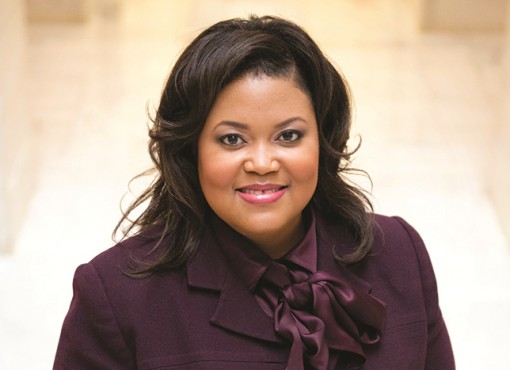
coletteArkansan Colette Honorable was confirmed as a Commissioner of the Federal Energy Regulatory Commission and sworn in earlier this year.  Today at noon at the Little Rock Regional Chamber of Commerce, she makes her first speech in Arkansas since assuming this new position.

Prior to serving as a FERC Commissioner, she served on the Arkansas Public Service Commission.  From January 2011 until January 2015, she was chair of the PSC.  As Chairman of the Arkansas PSC, Commissioner Honorable oversaw an agency charged with ensuring safe, reliable and affordable retail electric service. She participated in rate case proceedings, plant acquisitions, transmission buildout applications, regional transmission efforts and other transactions to ensure the reliability of the Arkansas grid and diversity in generation in the state. During Commissioner Honorable’s time at the PSC, Arkansas led the South and Southeast in comprehensive energy efficiency programs, and electric rates were consistently among the lowest in the nation.

Her remarks today are entitled “The Clean Power Plan and the Evolving Power Grid.”

FERC is an independent agency that regulates the interstate transmission of electricity, natural gas, and oil. FERC also reviews proposals to build liquefied natural gas (LNG) terminals and interstate natural gas pipelines as well as licensing hydropower projects.

Honorable is past president of the National Association of Regulatory Utility Commissioners (NARUC) and is known by her peers as a fair, pragmatic, moderate and hardworking leader who is able to build consensus across party lines for common goals. Honorable represented NARUC on an array of issues ranging from pipeline safety to reliability and resilience efforts, and diversity. She testified before Congress on multiple occasions and advocated for infrastructure development to ensure safety and efficiency, increased reliability and resilience efforts, and diversity of energy and the energy workforce.

A native of Arkansas, she is a graduate of the University of Memphis and received a Juris Doctor from the University of Arkansas at Little Rock School of Law.

Little Rock Look Back: MacArthur Returns….to Little Rock

General MacArthur and Mayor Remmel

General MacArthur and Mayor Remmel

On Sunday, March 23, 1952, General Douglas MacArthur made his only post-infancy visit to Little Rock. He had previously been scheduled to visit Mississippi, and Little Rock Mayor Pratt Remmel had persuaded him to add a visit to Little Rock to the agenda. The fact that Little Rock now had a Republican mayor had apparently piqued the General’s interest.

General MacArthur, accompanied by his wife and son as well as several journalists and members of his military retinue, arrived at Little Rock Airport at 10:40 am. He was met by a delegation of civic leaders including Mayor Remmel. Alderman James Griffey made welcoming remarks on behalf of the city. Then the General and Mayor boarded an open car and led a motorcade from the airport to downtown.

The motorcade’s destination was Christ Episcopal Church at Capitol and Scott streets. It was at this church that MacArthur had been baptized as an infant. The delegation was greeted by the Episcopal Bishop R. Bland Mitchell, Rector J. Hodge Alves, and Rector Emeritus W. P. Witsell. (While he had been Rector, Dr. Witsell had garnered national attention by issuing an Easter blessing to Gen. MacArthur as he had been evacuating the Philippines at the height of World War II.) In order to gain admittance to the church that morning, church members and guests had to have tickets.

Following the worship service, the General and his party went to three events in the park named in his honor. The first was a tour of the Museum of Natural History (now the Museum of Discovery and located in the River Market; the current tenant of the building is the MacArthur Museum of Arkansas Military History), which was located in the building in which the General had been born. After the tour, he spoke at a dedication of a small rose garden adjacent to the museum. It was sponsored by the Little Rock City Beautiful Commission and the Garden Clubs of Greater Little Rock.

Though every stop of the General’s visit had featured crowds, the largest was at the third location in MacArthur Park. A crowd of several thousand greeted the General as he spoke from the Foster Bandshell in the park’s southwest corner. Chamber of Commerce president Richard C. Butler (brother-in-law of Mayor Remmel) was the master of ceremonies. Following an invocation by Methodist Bishop Paul Martin, the only other speaker was the General. In his remarks he spoke of his Southern heritage and of his appreciation for the support of the citizens of Little Rock over the years.

Several gifts were bestowed upon the MacArthurs at the ceremony. The City of Little Rock presented Mrs. MacArthur with an engraved silver serving tray.

Following the events in MacArthur Park, the family retired for a brief respite to the Hotel Marion. They then attended a luncheon buffet in their honor at the home of Howard and Elsie Stebbins on Edgehill Road. The General and Mrs. MacArthur circulated through the house greeting guests and then eschewed a special table in favor of balancing their plates on their laps and sitting in wingback chairs. Meanwhile Arthur MacArthur stayed upstairs and discussed stamp collecting and other hobbies with the Stebbins’ two teenage sons.

Following the luncheon, the MacArthur party went back to the airport and by 4:00pm, the plane was in the air.

Though this visit was coming at the end of a whirlwind of activities, by all accounts, the General and Mrs. MacArthur were very gracious and accommodating. The General was being mentioned as a potential GOP candidate for President, but purposefully steered clear of any political comments in his remarks. He and Mrs. MacArthur dutifully posed for photos not only for the media but also for amateur photographers. At lunch, the General even asked a Gazettephotographer to take a photo of him with his Little Rock Police motorcycle escorts so that they could have a souvenir of the visit.

Little Rock Look Back: Byron Morse, 55th Mayor of Little Rock

On February 23, 1917, future Little Rock Mayor Byron R. Morse was born.
A founder of the real estate firm of Rector-Phillips- Morse, he was long active in civic affairs of Little Rock.

Mayor Morse was first elected to the City Board of Directors in November 1960. In 1963, he was chosen as Little Rock Mayor. After serving two years as Mayor, he chose to not seek re-election to the City Board.

In 1980, he was appointed to the City Board to fill out an unexpired term. He was later asked to fill another unexpired term but declined.

In 1983, he was elected national president of the Society of Industrial and Office Realtors. Mayor Morse also served as president of the Little Rock Chamber of Commerce, the Little Rock United Way, the Little Rock Red Cross, and was a member of the Board of Directors of the Little Rock Boy’s Club. He was a member of the Fifty for the Future.

On July 25, 2001, Mayor Morse died.

IMG_5431

Little Rock Look Back: Robinson Auditorium officially opens

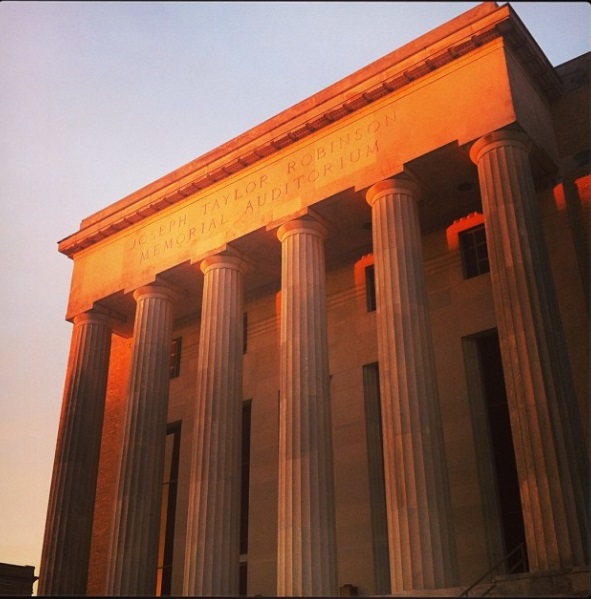
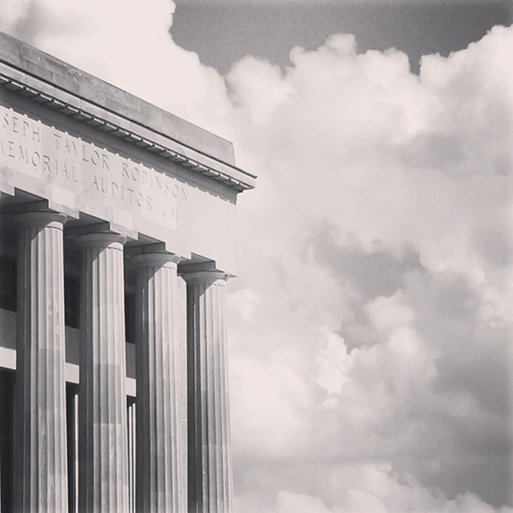
auditoriumduskOn February 16, 1940, after three years of planning and construction, the Joseph Taylor Robinson Memorial Auditorium officially opened. It was a cold, rainy night, but those in attendance did not care.

Searchlights painting arcs in the sky greeted attendees. They were borrowed from the Arkansas National Guard. Newspaper accounts noted that only a few of the men who attended were in tuxedos, most were simply in suits. The work to get the building opened had been so harried, that it was discovered there was not an Arkansas flag to fly in front of the building. Mayor Satterfield found one at the last minute courtesy of the Arkansas Department of the Spanish War Veterans.

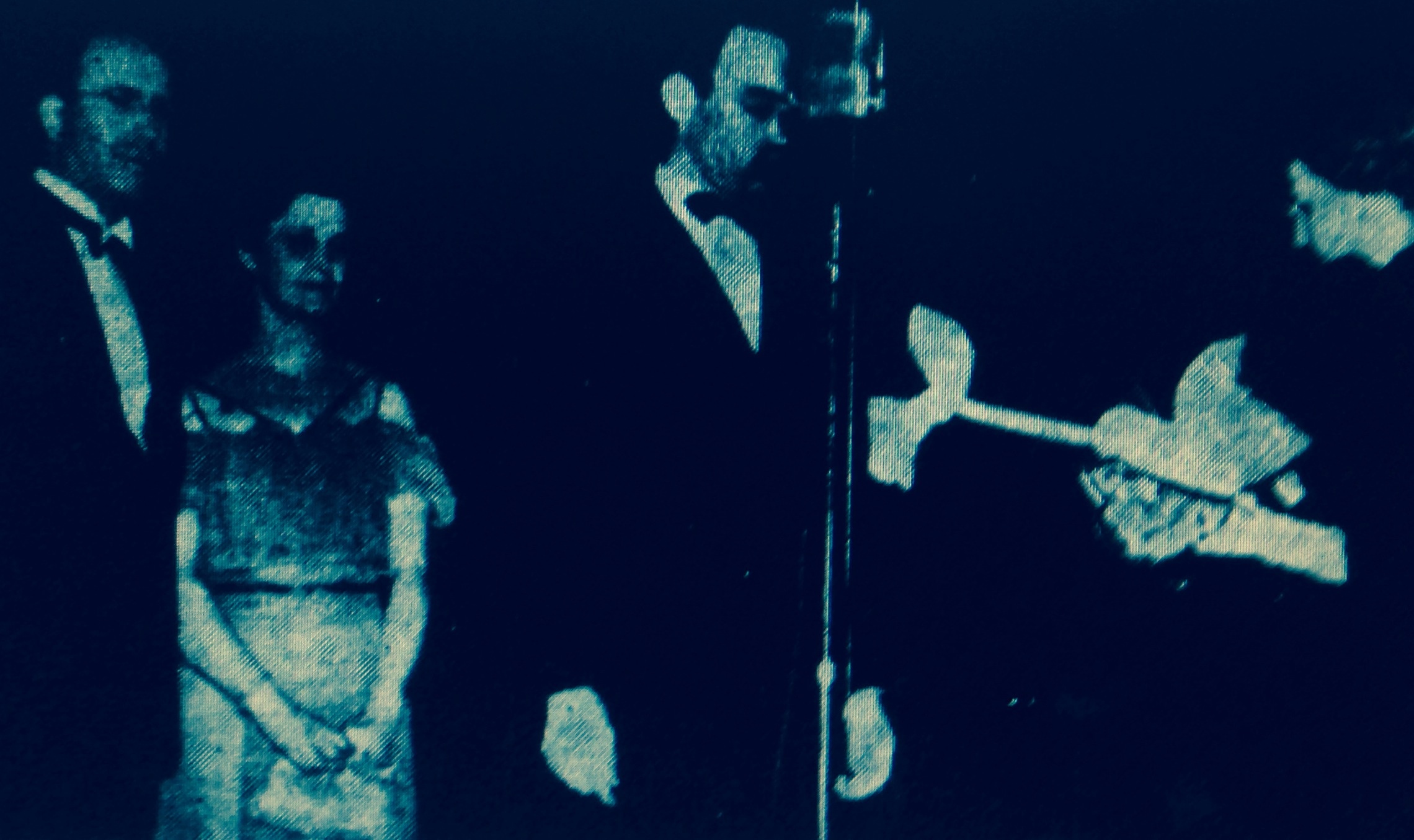
The weather delayed arrivals, so the program started fifteen minutes late. Following a performance of Sibelius’ Finlandia by the fledgling Arkansas State Symphony Orchestra, Mayor J. V. Satterfield, Mrs. Joseph T. Robinson, Mrs. Grady Miller (the Senator’s sister-in-law and a member of the Auditorium Commission) and D. Hodson Lewis of the Chamber of Commerce participated in a brief ribbon cutting ceremony. Mrs Robinson cut the ribbon on her second attempt (once again proving that nothing connected with getting the building open was easy).

The ceremony was originally set to be outside of the building but was moved indoors due to the inclement weather. The ribbon cutting took place on the stage with the ribbon stretched out in front of the curtain. The opening remarks were broadcast on radio station KGHI.

Though he had previously discussed how he had voted against the auditorium in 1937 before entering public life, the mayor’s remarks that evening were appropriately gracious, statesmanlike and a testament to the effort he had invested to get it open upon becoming mayor. “We hope you have a very pleasant evening and hope further that it will be the first in a long series which you will enjoy in this, your auditorium.”

20140215-172047.jpgTickets for the event, advertised as being tax exempt, were at four different pricing levels: $2.50, $2.00, $1.50 and $1.00.

The estimated attendance was 1700. Following the ribbon cutting, the main performance took place. The headliner for the grand opening was the San Francisco Opera Ballet accompanied by the new Arkansas State Symphony Orchestra (not related to the current Arkansas Symphony Orchestra). The featured soloist with the ballet was Zoe Dell Lantis who was billed as “The Most Photographed Miss at the San Francisco World’s Fair.”

At the same time that the gala was going on upstairs in the music hall, a high school basketball double-header was taking place in the downstairs convention hall. North Little Rock lost to Beebe in the first game, while the Little Rock High School Tigers upset Pine Bluff in the marquee game.

Little Rock Look Back: Voters Approve Municipal Auditorium

muni aud elect ad editedOn January 26, 1937, Little Rock voters went to the polls to vote on three different municipal bond issues.  One of them was the construction of a municipal auditorium (what would become Joseph Taylor Robinson Memorial Auditorium, now Robinson Center Music Hall).

The bonds for the auditorium would be $468,000 in general obligation bonds which would be paid off between 1940 and 1971. This was toward a total cost of $760,000 for the entire project.

The official campaign for the auditorium was sponsored by the Little Rock Forward Committee which was led by W. H. Williams. In campaign advertisements it showed the value of conventions in New York City which was estimated at $100 per convention attendee. Little Rock organizers were estimating a $10 a day expenditure by visitors, which the committee stressed was very conservative. The campaign committee emphasized the importance of acting at that time due to the federal government money involved.

Various committees and organizations endorsed the auditorium project including the Little Rock Chamber of Commerce, Little Rock Federation of Women’s Clubs, and the Young Business Men’s Association.

The thrust of the campaign focused on the economic benefit to Little Rock as well as the fact that the auditorium would be for all citizens. This message was picked up in editorials by both the Democrat and Gazette. In editorials on January 23 and 25, the Democrat opined that the benefits of the auditorium would be distributed among all classes of the citizenry. The next day, both papers ran editorials which touted the economic boon an auditorium would bring through conventions and meetings.

The Democrat’s approach broke down the current value of conventions to Little Rock with, what it termed, the city’s “existing inadequate” facilities. The paper emphasized a conservative estimate of what the added value to Little Rock’s economy would be with the new auditorium.

In expressing support for the auditorium the Gazette stressed the values for local, statewide and national groups. “An auditorium would provide a more convenient and better adapted community center for all kinds of local gathering,” and continued that it would make Little Rock “the logical meeting place for state conventions of every sort.” In discussing the value of state, regional and national meetings the paper stressed that the outside money spent by convention attendees has an impact beyond stores, hotels and restaurants.

Both papers also echoed the importance of the federal government financing to make this possible. The Democrat noted that the Public Works Administration grant and federal low cost loan made this an ideal time.

On January 26, 1937, Little Rock voters approved the auditorium bond by a vote of 1,518 to 519. It passed in each of the city’s 23 precincts. Little Rock Mayor R. E. Overman expressed his pleasure at the outcome of the vote and extended his thanks to the voters.

After the election, a Gazette editorial commented on the low turnout for the special election by commenting that the weather had been nice and there were no other barriers to voting. The editorial writer opined that those not voting in the election must not have been opposed to the endeavor.

Little Rock Look Back: City Takes Possession of Robinson Auditorium

10.+citylittlerock-2On January 25, 1940, the City of Little Rock officially took complete possession of the Joseph Taylor Robinson Memorial Auditorium. By assuming custody of the structure from the contractor and the PWA, the City accepted responsibility for any of the remaining work to be completed.  This event happened one day shy of the third anniversary of the election which approved plans to issue bonds for an auditorium.

E. E. Beaumont, the Auditorium Commission chairman, stated that an opening date could not be set until more work was completed. A major unfinished task was the laying of the front sidewalk which had been delayed due to cold weather.

The night before Little Rock took possession, Robinson Auditorium had been a topic of discussion at the Little Rock Chamber of Commerce annual meeting. The new Chamber president Reeves E. Ritchie (who as an Arkansas Power & Light executive had been engaged in the lengthy discussions about the installation of the steam line and transformers of the building) pledged that the Chamber would work to bring more and larger conventions to Little Rock at the Joseph Taylor Robinson Memorial Auditorium.

Today, the building is once again a construction site as it is being renovated and repurposed to become a performing arts and event space for the 21st Century.

Little Rock Look Back: Martin Borchert, LR 57th Mayor

Martin John BorchertOn January 16, 1916, future Little Rock Mayor Martin Borchert was born in Stuttgart.  After graduating high school he moved to Little Rock.  He started work at ACME Brick and spent 21 years there before engaging in other business interests.  Among these businesses were Martin Borchert Co., ASCO Hardware, Dtection Systems Inc. and Component Systems Inc.  In 2005 he was inducted into the Arkansas Construction Hall of Fame.

Mayor Borchert was elected to the Little Rock City Board of Directors in 1964 and served from January 1965 through December 1968. He chose not to seek a second term.  In 1967 and 1968 he served as Mayor of Little Rock. During this time, he laid out the vision for what has become Riverfront Park along the Arkansas River.

Other civic achievements included being a member of the Board of the Little Rock Chamber of Commerce, being on the Governor’s Citizens Advisory Committee, a member of the Pulaski County Quorum Court, vice chairman of the Arkansas Planning Commission, and being on the Little Rock Air Force Base Community Council. In 1967 he served on the President’s National Advisory Council to the Small Business Administration. Mayor Borchert served on the Little Rock Water Commission, including a tenure as chairman. In 1985, he was chairman of the Metropolitan Transit Policy Board and as chairman oversaw the transfer of the Central Arkansas Transit system to the Central Arkansas Transit Authority. One of the achievements of which he was very proud of was that he was one of the very first in Arkansas to receive an Adopt the Highway road.

Mayor Borchert was married for 57 years to Rosemary “Biddy” Branch Borchert.  They had two children, a son, John “Topper” Borchert and a daughter, Leslie Borchert Wilson.  He died on May 11, 2007.