Little Rock Look Back: LR Mayor W.W. Stevenson

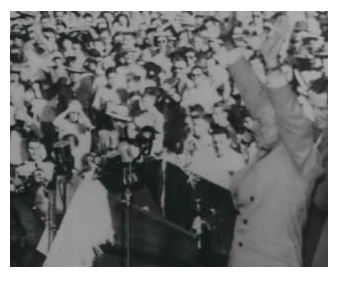
Mayor StevensonOn January 29, 1797, future Little Rock Mayor William Wilson “W. W.” Stevenson was born in South Carolina.

In 1811, he came to Arkansas when his family settled in Batesville.  An ordained Presbyterian minister, he married Ruana Trimble in 1821 and had two children. After she died, he married Maria Tongray Watkins in 1831 and had two more children.

In 1831, he ran for Little Rock Mayor in the first election for the office but was defeated by Dr. Matthew Cunningham.  The next year he ran to succeed Cunningham and was elected.  After leaving the Mayor’s office on December 31, 1833, he continued public service.  He was asked to run for Mayor later in the 1830s, but declined.  He did serve as State Commissioner for Public Buildings in 1839.

In 1849, he delivered the funeral oration at the ceremony for Hon. Ambrose H. Sevier.  Later that year, he was hired as a geologist for the Little Rock and California Association which was created to take advantage of the gold rush.  He and his two oldest sons moved to California and never returned to Arkansas. He died in 1888.

Little Rock Look Back: LR Mayor Martin Borchert

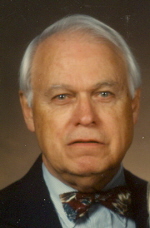
Mayor BorchertOn January 16, 1916, future Little Rock Mayor Martin Borchert was born in Stuttgart.  After graduating high school he moved to Little Rock.  During World War II, he served as a bomber.  He started work at ACME Brick and spent 21 years there before engaging in other business interests.  Among these businesses were Martin Borchert Co., ASCO Hardware, Dtection Systems Inc. and Component Systems Inc.  In 2005 he was inducted into the Arkansas Construction Hall of Fame.

Mayor Borchert was elected to the Little Rock City Board of Directors in 1964 and served from January 1965 through December 1968. He chose not to seek a second term.  In 1967 and 1968 he served as Mayor of Little Rock. During this time, he laid out the vision for what has become Riverfront Park along the Arkansas River.

Other civic achievements included being a member of the Board of the Little Rock Chamber of Commerce, being on the Governor’s Citizens Advisory Committee, a member of the Pulaski County Quorum Court, vice chairman of the Arkansas Planning Commission, and being on the Little Rock Air Force Base Community Council. In 1967 he served on the President’s National Advisory Council to the Small Business Administration. Mayor Borchert served on the Little Rock Water Commission, including a tenure as chairman. In 1985, he was chairman of the Metropolitan Transit Policy Board and as chairman oversaw the transfer of the Central Arkansas Transit system to the Central Arkansas Transit Authority. One of the achievements of which he was very proud of was that he was one of the very first in Arkansas to receive an Adopt the Highway road.

Mayor Borchert was married for 57 years to Rosemary “Biddy” Branch Borchert.  They had two children, a son, John “Topper” Borchert and a daughter, Leslie Borchert Wilson.  He died on May 11, 2007.

Little Rock Look Back – Mayor Horace Knowlton

IMG_3227On November 25, 1872, future Little Rock Mayor Horace A. Knowlton Jr. was born.

In April 1920, he was elected City Clerk of Little Rock.  He served in that position until April 1931.  That year, he was chosen as the Democratic nominee for Mayor, denying incumbent Mayor Pat L. Robinson a second term.  The primary race against Mayor Robinson was close.  When the results were first announced, it looked as if Mayor Robinson had prevailed.  But after challenging ballots, Mr. Knowlton was declared the winner.  Since Little Rock was primarily a Democratic Party city, unsurprisingly Mr. Knowlton was elected Mayor in April 1931 and served two terms as Mayor.

He oversaw the start of some of President Roosevelt’s New Deal programs in Arkansas during his tenure.  In 1934, he negotiated the purchase of Gillam Park for the City which established the first public park in Little Rock for African Americans.  While a segregated park would one day be viewed as wrong, he was viewed as very progressive at the time for providing a public park for African Americans.  One of his final acts as Mayor was to participate in the groundbreaking for the Museum of Fine Arts building in City Park (now a portion of the Arkansas Arts Center building in MacArthur Park).

Following his departure from public office, Mayor Knowlton and his wife (who had been an elementary school teacher) eventually moved to Florida and resided in the Tampa Bay area.  His son and grandson (Horace III and Horace IV) have both been lawyers in the Tampa Bay area.  Mayor Knowlton died on February 14, 1965.  He is buried in the Oak Grove cemetery in Conway.

Little Rock Look Back: Mayor W. H. Walters

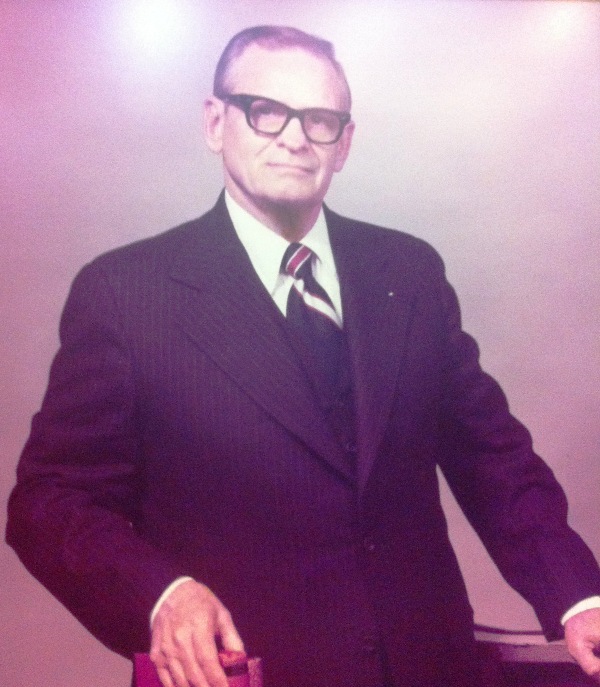
Mayor Walters' official portrait

On November 6, 1912, future Little Rock Mayor William H. Walters was born in Clearfield, Pennsylvania.

He ran for the City Board of Directors in 1970 and was unopposed.  Walters took office on January 1, 1971 and served one term on the City Board.  He chose not to run for a second term and left office on December 31, 1974.

In January 1973, he was selected by his colleagues to serve a two year term as Mayor of the City of Little Rock.

Throughout his life, Mayor Walters enjoyed traveling and visiting over 100 countries throughout the world. Mr. Walters had a keen interest in the circus and collected circus memorabilia from many countries.

He was employed by 3M Company. He was Superintendent and Acting Plant Manager beginning January 1, 1951 and 3M Plant Manager beginning February 1, 1972. He retired in 1977.

In addition to serving on the City Board, he had been active in the Little Rock Chamber of Commerce (he served as Chamber President in 1969), Kiwanis Club, Associated Industries of Arkansas and the YMCA among other activities.

Mayor Walters died on February 14, 2005 at the age of 94.

Little Rock Look Back: Little Rock becomes the Capital of Arkansas

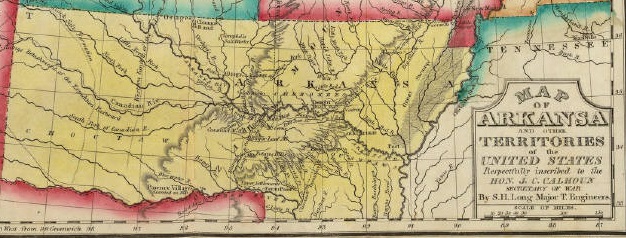
Arkansas TerritoryOn October 18, 1820, Territorial Governor James Miller signed legislation designating Little Rock as the new capital for Arkansas.  This was a mere 10 months after the first permanent settlement was established in Little Rock.

While Little Rock became the Capital, technically it was not the Capital City, since it would not be incorporated as a City until 1835. It wasn’t even incorporated as a town until 1831.

The Act provided that after June 1, 1821, the sessions of the Legislature and the Superior Court would be held at Little Rock.  This caused Arkansas Post, the first territorial capital, to fade from prominence.

The move was made based on the lobbying of Amos Wheeler, Chester Ashley and William Russell.  These men all owned land in the Little Rock area and would benefit from the move of the Capital to Little Rock. The official reason given was Little Rock’s geographical center to the Arkansas Territory and that it was elevated land less prone to flooding.

But as important, Messrs. Wheeler, Ashley and Russell promised to donate land for a capitol building and a guarantee of $20,000 for construction of a suitable building. (That would be the equivalent of $408,000 today.)

Around the time the legislation was approved, several members of the Territorial legislature purchased land around Little Rock.  When a subsequent effort to relocate the Capital upstream was launched, it failed due to the financial ties of these legislators to land in Little Rock.

Little Rock Look Back: Mayor Sharon Priest

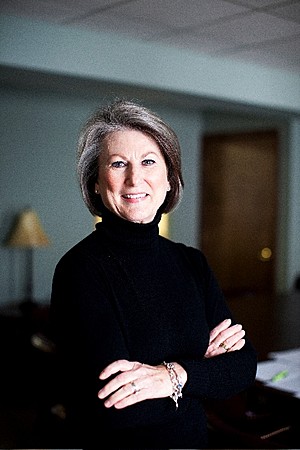
13632023960On September 12, 1947, future Little Rock Mayor Sharon Priest was born in Montreal, Canada. After marrying Bill Priest, she came to Little Rock. She began her public service at the grassroots level when she led the effort to bring flood relief to Southwest Little Rock and Pulaski County following the devastating flood of 1978 that killed 13 people in central Arkansas.

She was appointed to the Little Rock City Beautiful Commission.  Following that, she challenged an incumbent City Director and won her first elective office in 1986. In January 1989, she was named Vice Mayor of Little Rock by her colleagues on the City Board.  Two years later, she was selected Mayor becoming only the second female to serve as Mayor of Little Rock.  During her service to the City of Little Rock, she spearheaded the effort to create a Little Rock flag.  At the conclusion of her second four year term on the City Board, she decided to run for Secretary of State.

In November 1994, she elected Secretary of State, becoming the first woman to be elected to that position in Arkansas.  She was reelected in 1998.   In the summer of 2000, she became President of the National Association of Secretaries of State. After the 2000 presidential election, she was thrust into the forefront of the movement toward election reform. Ms. Priest testified before U.S. House and Senate Committees on election reform. As Secretary of State, restoring the Governor’s Reception Room and the Old Supreme Court Chamber of the State Capitol to their original splendor and restoring the rotunda marble are a few of her proudest achievements.

In January 2003, Priest was selected to serve as Executive Director of the Downtown Little Rock Partnership. She served in that capacity until early 2015.  She has also been a leading champion for the redevelopment of MacArthur Park, the City’s oldest park.

Prior to her work as an elected official, she worked as Director of Membership for Little Rock Chamber of Commerce and was founder and owner of the Delvin Company, a property management firm.

She was a Toll Fellow in 1995, and has won numerous distinctions including the Excellence in Leadership Fellowship, Women Executives in State Government, 1997 and TIME/NASBE Award for Outstanding Leadership in Voter Education, 1996.  In 2013, she was the featured honoree at the Big Brothers/Big Sisters Roast and Toast, becoming the first (and to date only) female to be so honored.

 

Little Rock Look Back: Ike in Little Rock

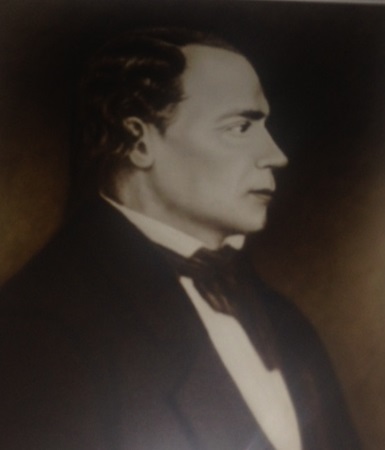
Detail from UPI photo of General Eisenhower following his address.

Detail from UPI photo of General Eisenhower following his address.

If Ike, Little Rock and September are considered, it is usually in reference to his role in the desegregation of Little Rock Central High in September 1957.  But five years earlier, he appeared in Little Rock on September 3, 1952.

General Eisenhower’s speech to 14,000 in MacArthur Park was the final leg in his swing through the South on his campaign for the White House.  He became the third presidential candidate to visit MacArthur Park in 1952 following General MacArthur (in his ill-fated attempt to gain traction as a GOP candidate during the delegate selection process) and Democratic nominee Adlai Stevenson.

He visited every southern state except Mississippi on this campaign jaunt.  In comments that neither he nor his audience could have foreseen as prescient, Eisenhower declared that he deplored the government meddling in areas in which it did not belong.  This remark was made in reference to race relations.  His stance was that some rights of minorities should be protected, but it was not necessarily the role of the federal government.

Ike proffered that if white southerners did not protect the rights of African Americans they were in danger of losing their own rights, too.  In the era of the Cold War when people were worried about the imminent loss of rights, this message seems to have crafted to appeal to those concerns.  While Eisenhower did not shy away from addressing civil rights, his Democratic opponent Adlai Stevenson was silent on the issue.  But with Alabama segregationist Senator John Sparkman as his running mate, it put Stevenson in a difficult position to try to bring it up.

In the end, Ike lost most of the South.  He did carry Maryland, Virginia, Tennessee and Florida. The only states Stevenson won were in the South.  Eisenhower’s 43.74% of the Arkansas popular vote was the highest any Republican had garnered since General Grant carried the state in 1868 and 1872.