Beethoven, Wagner, Ghosts and Tangos tonight at Ark Symphony’s River Rhapsodies

ASO_revTonight at 7pm, the Arkansas Symphony Orchestra’s final 2013-2014 concert of the Parker Lexus River Rhapsodies Chamber Music Series will feature ASO Musicians playing Wagner, Beethoven, Theofanidis and Piazzolla. The concert will be held at the Clinton Presidential Center.

The program is an intimate showcase of the ASO’s musicians.

General Admission tickets for River Rhapsodies concerts are $23, and Student tickets are available for $10. Tickets can be purchased online at www.ArkansasSymphony.org, over the phone at (501) 666-1761 or at the door.

The program will include:

THEOFANIDIS                    O Vis Aeternitatis for String Quartet and Piano
(Quapaw Quartet, Tatiana Roitman, piano)

BEETHOVEN                      Piano Trio No. 5 in D Major, Op. 70, No. 1, “Ghost”
I.          Allegro vivace e con brio
II.         Largo assai ed espressivo
III.        Presto
(Geoffrey Robson, violin, David Gerstein, cello, Julie Cheek, piano)

INTERMISSION

PIAZZOLLA                         Histoire du Tango
I. Bordello 1900
II.        Café 1930
III.       Night Club 1960
IV. Concert d’Aujourd’hui (Modern Day Concert)
(Kelly Johnson, Karla Fournier, Carina Washington, clarinet; Lyle Wong, bass clarinet)

WAGNER                              Siegfried Idyll
(Diane McVinney, flute; Leanna Booze, oboe; Kelly Johnson, Karla Fournier, clarinet; Susan Bell Leon, bassoon; David Renfro, Brent Shires, French horn; Richard Jorgensen, trumpet; Kiril Laskarov, Andrew Irvin, violin; Katherine Reynolds, viola; Daniel Cline, cello; Barron Weir, contrabass)


PROGRAM NOTES
Beethoven’s “Ghost” Trio is so-called because of its eerie slow movement. It is speculated that the ghostly sound may have been influenced by Beethoven’s thoughts of  composing a Macbeth opera.

Originally written for flute and guitar, Histoire du Tango is one of Piazzolla’s most famous compositions. It has been arranged for many ensembles and is presented here as a demonstration of the lush sound of a clarinet quartet. The work attempts to demonstrate the evolution of the Tango, and the composer provided these notes:

Bordello, 1900: The tango originated in Buenos Aires in 1882. It was first played on the guitar and flute. Arrangements then came to include the piano, and later, the concertina. This music is full of grace and liveliness. It paints a picture of the good natured chatter of the French, Italian, and Spanish women who peopled those bordellos as they teased the policemen, thieves, sailors, and riffraff who came to see them. This is a high-spirited tango.

Café, 1930: This is another age of the tango. People stopped dancing it as they did in 1900, preferring instead simply to listen to it. It became more musical, and more romantic. This tango has undergone total transformation: the movements are slower, with new and often melancholy harmonies. Tango orchestras come to consist of two violins, two concertinas, a piano, and a bass. The tango is sometimes sung as well.

Night Club, 1960: This is a time of rapidly expanding international exchange, and the tango evolves again as Brazil and Argentina come together in Buenos Aires. The bossa nova and the new tango are moving to the same beat. Audiences rush to the night clubs to listen earnestly to the new tango. This marks a revolution and a profound alteration in some of the original tango forms.

Modern-Day Concert: Certain concepts in tango music become intertwined with modern music. Bartok, Stravinsky, and other composers reminisce to the tune of tango music. This is today’s tango, and the tango of the future as well.

Wagner composed Siegfried Idyll  – in honor of his son – for his wife, Cosima. The piece was very private and filled with references of personal significance to the composer and his wife, many of which went unknown to the public for a long time.

The Arkansas Symphony Orchestra celebrates its 48th season in 2013-2014.  Under the leadership of Music Director Philip Mann, the ASO performs more than thirty concerts each year for more than 42,000 people through its Stella Boyle Smith Masterworks Series, ACXIOM Pops LIVE! Series and River Rhapsodies Chamber Series, in addition to serving central Arkansas through numerous community outreach programs and bringing live symphonic music education to over 24,000 school children and over 200 schools.
The 2014-2015 Arkansas Symphony Orchestra’s Parker Lexus River Rhapsodies Chamber Series

ASO_revThe Arkansas Symphony Orchestra is still very busy with several concerts of all types in the 2013-2014 season. Looking ahead to next year, here is the lineup for the 2014-2015 Parker Lexus River Rhapsodies Chamber Series.

The series kicks off on September 30 with “Death and the Maiden.”  The evening features Bridge’s 3 Idylls, Brahms’ Trio in Eb for horn, violin, piano and Schubert’s String Quartet in D minor “Death and the Maiden.”

The next month, on October 21, the program is entitled “Quartet for the End of Time.”  It will features Haydn’s String Quartet No. 39 in F# Op. 50 No. 4 and Messiaen’s Quatuor pour la fin du temps. (When translated into English, the latter piece gives its name to the program.)

Italian Serenade is the name of the November 11 program.  It features Beethoven’s String Quartet in C, Op. 59, No. 3, Corigliano’s String Quartet No. 1 and Wolf’s Italian Serenade in G.

The 2015 portion of the season will commence on February 10 with Mozart’s “Gran Partita” Serenade. The program features Smetana’s String Quartet No. 1 in E minor “From My Life” and Mozart’s Serenade No. 10 in Bb “Gran Partita”.

The March 3 concert features Artist of Distinction: Vadim Gluzman.  The program will include Dohnanyi’s Serenade in C, Op. 10, Berg’s The Featherlight Ballet, Auerbach’s Lonely Suite “Ballet for a Lonely Violinist” and Bruch’s String Quartet in A minor.

The 2014-2015 season will conclude on April 21. That evening will features Mendelssohn’s String Quaret in F minor, Mozart’s Oboe Quartet in F Major and Brahms’ String Quintet in G.

All concerts are presented at the Clinton Presidential Center in the Great Hall. The concerts start at 7pm. Tickets are generally available at the door, but to be guaranteed a seat, advance purchase is recommended.

Rescheduled River Rhapsodies tonight – Sonatas for Two

ASO_revDue to inclement weather earlier this year, the Sonatas for Two Parker Lexus River Rhapsodies Chamber Concert of the Arkansas Symphony Orchestra was postponed.  It is fitting that on the last night of winter, the ASO musicians offer a musical adieu to bleakness with a warm offering of three Sonatas.  The concert takes place tonight at 7pm at the Clinton Presidential Center.

The program is an intimate showcase of the ASO’s musicians.

General Admission tickets for River Rhapsodies concerts are $23, and Student tickets are available for $10. Tickets can be purchased online at www.ArkansasSymphony.org, over the phone at (501) 666-1761 or at the door.

The program will include:

BEETHOVEN: Sonata for Violin and Piano in F Major, “Spring”
Meredith Maddox Hicks, violin and Tatiana Roitman, piano

FAURE: Sonata for Violin and Piano No. 1 in A Major, Op. 13
Geoffrey Robson, violin and Neil Rutman, piano
BEACH: Sonata for Violin and Piano in A minor, Op. 34
Andrew Irvin, violin and Julie Cheek, piano
The Arkansas Symphony Orchestra celebrates its 48th season in 2013-2014.  Under the leadership of Music Director Philip Mann, the ASO performs more than thirty concerts each year for more than 42,000 people through its Stella Boyle Smith Masterworks Series, ACXIOM Pops LIVE! Series and River Rhapsodies Chamber Series, in addition to serving central Arkansas through numerous community outreach programs and bringing live symphonic music education to over 24,000 school children and over 200 schools.
ASO Masterworks for 2014-2015 announced

ASO_revThough there are several concerts remaining in each of their series, the Arkansas Symphony Orchestra has announced three of their 2014-2015 series.

Next year is the first of their two-year hiatus from Robinson Center Music Hall (as it gets transformed into a true music hall instead of a civic gathering room).

The Stella Boyle Smith Masterworks Series will be performed at the Maumelle Performing Arts Center. To entice audiences who have been used to attending Robinson for ASO concerts for 40 years, Music Director Philip Mann has programmed a line up with many familiar composers. In addition, an Oscar winning musical genius will be presented.

The series will kick off on September 27 & 28 with Rachmaninoff’s Piano Concerto No. 2 featuring Andrew Staupe on piano.  Also on the program will be John Corigliano’s Promenade Overture and Brahms’ Symphony No. 2 in D Major.  Corigliano is the Oscar winner, having won for composing the score of The Red Violin.

On October 18 & 19, the ASO will heat things up with Blazing Brass featuring trumpeter Richard Jorgensen.  The program will consist of Haydn’s Trumpet Concerto in E-flat Major and Bruckner’s Symphony No. 7 in E Major.

The now annual Beethoven and Blue Jeans concert will be November 8 & 9. Sharon Isbin’s guitar work will be featured as the ASO plays Corigliano’s Three Hallucinations from Altered States as well as his Troubadours-Variations for Guitar and Chamber Orchestra.  The Beethoven portion of the evening will be his Symphony No. 5 in C minor.

The Masterworks series will ring in 2015 on January 31 & February 1 with a Tchaikovsky & Mozart Festival.  Vladimir Verbitsky will be guest conductor. The evening will feature violin soloist Randall Goosby.  The program consists of Tchaikovsky’s Polonaise from Eugene Onegin, Mozart’s Concerto for Violin No. 5 in A Major, and Tchaikovsky’s Symphony No. 4 in F minor.

On February 28 and March 1, the ASO will present Schubert’s “Unfinished.”  In addition to that masterpiece, the musicians will play Wagner’s Prelude to Die Meistersinger and Brahms’ Concerto for Violin in D. Major.

The Masterworks Series for 2014-2015 will conclude with an evening of Mozart, Prokofiev & Strauss.  Pianist Yeol Eum Son will be the featured guest artist.  The program will consist of Mozart’s Symphony No. 41 in C Major – Jupiter, Prokofiev’s Piano Concerto No. 3 and Strauss’ Der Rosenkavalier, Op. 59 Suite.

All Masterworks concerts will be performed at 7:30pm on Saturday evenings and 3pm on Sunday evenings.

The other ASO series will be previewed by the Culture Vulture in the coming days.

Beethoven, Blue Jeans, Beer, Brats all with the Arkansas Symphony Orchestra this weekend

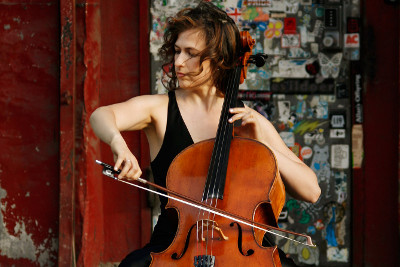
mw3_largeThis weekend: Maestro Philip Mann and the ASO are joined by talented cellist Inbal Segev for the ASO’s most popular Masterworks concert, featuring Strauss’s Die Fledermaus: Overture, Gulda’s rollicking Cello Concerto, and, of course, the mighty Beethoven with his Symphony No. 4. Wear jeans to this casual concert and be sure to come early for the 3rd Annual Beer and Brats Street Party!

Beethoven and Blue Jeans presents a thoroughly Viennese affair with sounds of court, nature, and even the city’s downtown clubs. Opening the performance in quintessential fashion is Johann Strauss’s Overture to Die Fledermaus, which is infused with the excitement of nighttime Vienna and its grand waltzes and intoxicating flair. A personal favorite, Beethoven’s Symphony No. 4 is one of the most perfect works of the classical Viennese symphony genre. His brilliance and wit is particularly sharp is one of his finest and most joyful works, whose only shortcoming is that it was a middle child -falling between Eroica and the mighty 5th Symphony.

Outrageous personality Friedrich Gulda crossed genres between jazz and classical as a pianist, but as a composer he left all labels behind. His Concerto for Cello and Wind Orchestra is an altogether Viennese work citing everything from Haydn to rock and roll as inspiration. It could easily have been kitsch, but Gulda’s genius engenders a work of style, fun, and panache. Bringing the unforgettable concerto to the Robinson stage is critically acclaimed cellist, Inbal Segev, making her ASO debut.

This casual concert kicks off with the Beer & Brats Street Party at 6 pm on Saturday and 1 pm on Sunday. Concert ticket holders can enjoy free brats, $2 Diamond Bear beer, the sounds of the Episcopal Collegiate School Steel Drum Band, and maybe a few surprises! Concert goers can follow @ARsymphony and the hashtag #BeethovenAndBlueJeans via Twitter to get the inside scoop about the Street Party and to learn insights about the concert in progress.

Tickets for this casual concert and street party start at $14 – click here to get your tickets now!

Beethoven & Blue Jeans attendees can also support the Arkansas Foodbank by dropping off a frozen turkey or other bird at the BBJ Street Party. And as a thank you, turkey donors will receive a pair of free tickets to any concert from the ASO’s 2013-2014 Season.

Free Concert This Afternoon Featuring ASO Musicians

The Ruth Allen UAMS Series takes place from time to time at UAMS and is free.  This afternoon at 4:30pm the concert will feature ASO co-concertmaster Andrew Irvin, violist Ryan Mooney and pianist Julie Cheek.

The program will feature Mr. Irvin and Mr. Mooney performing Mozart’s Duo No. 1 in G for Violin and Viola, K. 423 and Mr. Irvin and Ms. Cheek performing Beethoven’s Sonata No. 1, Op. 12 for Violin and Piano.

Here are the directions for the concert:

From Markham, turn south onto Hooper St.
Follow signs to Parking Lot 1.
Enter the lot, which goes underground.
Take the elevator to the “top” of the parking Lot 1, which immediately adjoins the back side of the lobby.
The Music Room is at the west end of the lobby, behind the grand piano.

ARmusica in Recital

On Friday, November 16, a recital will take place to help raise funds for the restoration of the St. Joseph Center of Arkansas.

Violinist, Drew Irvin and pianist, Julie Cheek will perform music of Mozart, Beethoven and Schumann.  They will be joined by violist, Ryan Mooney and cellist, David Gerstein.

The recital will take place at 7pm at Trinity United Methodist Church in Little Rock.

The St. Joseph Center of Arkansas was originally built as an orphanage by the Catholic Diocese of Little Rock.  Designed by Charles Thompson, the building opened in 1910.  It served as an orphanage until 1978 (except for a brief stint as officers’ family housing during World War I).  It later served as a daycare and kindergarten until 1997.   In 2010, the Diocese signed a 50 year lease with the St. Joseph’s Center of Arkansas.

In 1976, it was placed on the National Register of Historic Places.  Built for $80,000 it is a 56,000-square-foot brick and stone building that includes eighty rooms, an attic, and a basement. It features a chapel, classrooms, a kitchen and dining room, a bakery, and a laundry. The roof was laid with red tile and crowned with a dome.