Rock the Oscars: Marvin Hamlisch

Composer-conductor-arranger-pianist Marvin Hamlisch was a multi-hyphenate.  He also was an early EGOT winner (back when it was more difficult to accomplish this feat because there were fewer categories in all four awards).

Hamlisch visited Little Rock numerous times throughout his careers.  In 1996, he performed at Wildwood Park during the first season of the Lucy Lockett Cabe Festival Theatre.  He soloed with the Arkansas Symphony Orchestra in January 2000 performing many of his works for film and a few for stage.

In 2006, he returned to the ASO to perform with Robert Klein and Lucie Arnaz and the latter duo recreated their roles from the Hamlisch-Neil Simon-Carole Bayer Sager musical They’re Playing Our Song.  His final visit to Little Rock was in 2011. He was performing in Conway but shopped in Little Rock for clothes when his luggage stayed in Chicago.

Over his career, Hamlisch was nominated for twelve Oscars.  He won three at the 1974 ceremony. They were Best Song for “The Way We Were” from the film of the same name (shared with Alan and Marilyn Bergman), Best Score for The Way We Were and Best Adaptation Score for The Sting.  The latter heavily featured music by former Little Rock resident Scott Joplin.

Rock the Oscars 2019: Richard Linklater

Image may contain: 2 people, people smiling, people standing

Arkansas Cinema Society’s Jeff Nichols (left) with 5 time Oscar nominee Richard Linklater at ACS’s 2018 FILMLAND opening night. (Photo from ACS)

The 2018 Arkansas Cinema Society FILMLAND kicked off with a screening of Richard Linklater’s THE NEWTON BOYS. 

Linklater, a multiple Oscar nominee, founded the Austin Film Society, which was one of the models for the creation of the Arkansas Cinema Society.  Following the screening of his film, he engaged in a conversation with filmmaker Jeff Nichols, who is a founder of the ACS.

Linklater is mostly known for his realistic and natural humanist films which revolve mainly around suburban culture and the effects of the passage of time. Some notable films of his include the observational comedy film Slacker, the coming-of-age comedy Dazed and Confused,” the romantic drama film trilogy Before SunriseBefore Sunset, & Before Midnight and the music-themed comedy School of Rock, as well as the rotoscope animated films Waking Life and A Scanner Darkly.

In 2002, he began filming “Boyhood,” a passion project which took over twelve years to complete. The film was released in 2014 to widespread critical acclaim. Linklater won the Golden Globes, Critics’ Choice Movie Awards, and BAFTAs for Best Director and Best Picture.

Linklater was nominated for Best Adapted Screenplay for 2004’s Before Sunset, 2013’s Before Midnight, and 2014’s Boyhood. He also picked up a Best Director and Best Picture nomination for the latter.


Rock the Oscars 2019: Lisa Blount

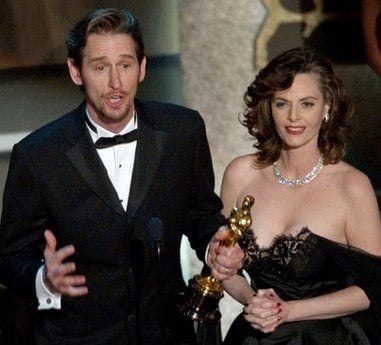
Image result for lisa blount ray mckinnonOn March 24, 2002, Lisa Blount and and her husband Ray McKinnon picked up the Oscar for Best Live Action Short for their film “The Accountant.”  Directed by McKinnon (and starring him) it was produced by Blount.

Married since 1998, the couple were strong promoters of the Arkansas film scene, especially from the early 2000s, onward. They were active in supporting the Little Rock Film Festival as well as film projects located in Arkansas.

In 2004, they moved to Little Rock, which was a return for Blount to the Central Arkansas in which she had grown up.  Born in Fayetteville, her family had moved to Jacksonville. After graduating from Jacksonville High School, she attended the University of Central Arkansas. It was there she got her big break appearing in the film September 30, 1955.

A month before her October 2010 death, Blount was inducted into the Arkansas Entertainers Hall of Fame.

Rock the Oscars 2019: Maureen O’Hara

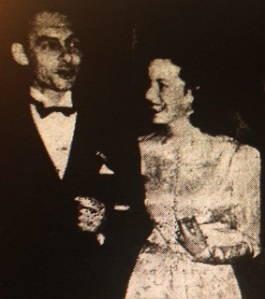
Mayor J V Satterfield escorting actress Maureen O’Hara at the Movie Ball (photo from Arkansas Democrat)

Oscar winner Maureen O’Hara lived until she was 95.  In February 1940, a nineteen year old Miss O’Hara turned many heads and set off a frenzy of autograph seekers when she came to Little Rock to attend a series of events.

In conjunction with a meeting of film executives and movie theatre owners sponsored by Robb and Rowley Theaters (which later became the United Artists theatre chain), several Hollywood actors were in Little Rock and headlined a Movie Ball. While in Little Rock, Maureen O’Hara, Phyllis Brooks, Arleen Whelan, Tim Holt and Gene Autry had also made a variety of public appearances.

At the time of the event, Miss O’Hara had recently completed her starring turn as Esmerald opposite Charles Laughton in The Hunchback of Notre Dame.  She had already filmed A Bill of Divorcement (which was the first movie for which she received star billing) but it was not released until May 1940.

On the evening of February 1, 1940, Robb and Rowley hosted the Movie Ball in the lower level of Robinson Auditorium. So many of the attendees crowded around for autographs that the evening’s grand march could not take place (a newspaper headline in the Democrat innocently used the word “orgy” to describe the crowd). After two attempts, Little Rock Mayor J. V. Satterfield (who was escorting Miss O’Hara) and the other members of the Little Rock host delegation led the Hollywood stars to their reserved table. For quite a while that evening, the table was besieged by autograph seekers.

Rock the Oscars 2019: Carol Channing

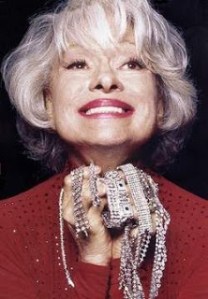
On January 31, 1921, future “Little Girl from Little Rock” and Oscar nominee Carol Channing was born. Alas it was in Seattle.

After gaining the notice of New York critics and audiences in the musical revue, Lend an Ear, Channing achieved Broadway stardom playing fictional Little Rock native Lorelei Lee (the creation of Anita Loos) in Gentlemen Prefer Blondes.  In this show, which opened in December 1949, she introduced the Leo Robin-Jule Styne songs “Little Girl from Little Rock” and “Diamonds Are a Girl’s Best Friend.”

In 1964, she won the Actress in a Musical Tony for her second signature role playing the title character in Hello, Dolly!  Channing also earned a special Tony in 1968 for Dolly when it became the longest-running Broadway musical.

On November 15, 1966, Carol Channing opened a six day stint in HELLO, DOLLY! at Robinson Auditorium.  She would play 8 sold out shows over those six days.  She had just wrapped filming THOROUGHLY MODERN MILLIE (for which she would receive an Oscar nomination). She had specifically requested that Little Rock be added to the tour.

While in Little Rock, Channing was entertained at the Arkansas Governor’s Mansion and feted at parties.  She was made an honorary citizen of Little Rock, as well.  But she was here to perform. And perform she did. She was rarely known to miss a performance and always gave her utmost.  Bill Lewis, in his review in the ARKANSAS GAZETTE, stated “To hear Channing sing ‘Hello, Dolly!’ Is one of the great experiences of all musical theater to date…”

In 1993, she spent her birthday in Washington DC at a White House dinner for the National Governors’ Association.  This was the Clintons’ first official White House dinner after moving in to the residence eleven days prior.  President Bill Clinton led the crowd in singing “Happy Birthday” to her.  She remarked to the President that she was Christian Scientist and didn’t celebrate birthdays, which meant she didn’t get any older.  He replied that it meant the night was her first birthday (it was her 72nd in actuality).

She died earlier this month just two weeks shy of her 98th birthday.

Rock the Oscars 2019: THE STORY OF DR. WASSELL

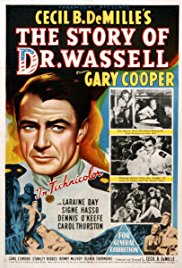
From April 24 to 26, 1944, future Oscar winner Cecil B. DeMille was in Little Rock for the world premiere screening of The Story of Dr. Wassell.  This 1944 Paramount Pictures Technicolor release told the story of wartime hero Dr. Corydon Wassell.  It would be nominated for the Oscar for Best Special Effects.

Why was Little Rock chosen?  It was the hometown of Dr. Wassell.  His paternal grandfather, John Wassell, was Little Rock’s 27th mayor.  His first cousin, Sam Wassell, was serving on the City Council at the time of the film’s release and would become Little Rock’s 51st mayor.

Based on a book by James Hilton, it was inspired by the heroic efforts of Dr. Wassell, a naval officer, as he led the evacuation of several sailors (and treated their wounds) in Java in February 1942.  President Roosevelt highlighted Dr. Wassell in his May 26, 1942, fireside chat.

Little Rock rolled out the red carpet (literally and figuratively) for DeMille and a contingency from Hollywood.  Dr. and Mrs. Wassell also returned to Little Rock for the festivities.  Unfortunately, Gary Cooper (who played Wassell in the film) was unable to attend due to illness.  His costar, Laraine Day, was making another film and could not attend either.    Those in attendance with DeMille (and Mrs. DeMille) included actresses Signe Hasso and Carol Thurston, and actor Melvin Francis.  The latter played himself; he had actually been one of the sailors saved by Dr. Wassell.

On April 24, 1944, DeMille and Dr. Wassell appeared on a radio program broadcast live from the music hall of Robinson Auditorium.  The next day, the troupe toured Camp Robinson and spoke to the soldiers there.  Later that day, Miss Hasso and Miss Thurston sold war bonds at Pfeiffers and M.M. Cohn’s.

April 26, 1944, was a full day for the DeMilles, the Wassells, and the others.  It started with a luncheon at the Hotel Marion, hosted by the Lions Club and Little Rock Chamber of Commerce.  Governor Homer Adkins presented DeMille with an Arkansas Traveler certificate.  DeMille, in return, presented Governor Adkins with a copy of the script.

When it was Dr. Wassell’s time to speak, he praised Little Rock’s efforts on the home front.  He also asked for a standing tribute to longtime Little Rock school superintendent R.C. Hall, who had died the day before.  Dr. Wassell had taught with Mr. Hall decades earlier.

Following the lunch, there was a parade on Main Street.  It started at 10th and Main and proceeded to Markham before ending at the War Memorial Building (now the Old State House Museum).  Newspaper accounts said that it was four miles long and featured many military units and marching bands.

Dinner that evening was at the Lafayette Hotel before screenings of the movie at the Capitol and Arkansas Theatres. Both screenings were sold out.  On April 27, 1944, a regular run of the movie started at the Capitol Theatre.  It would be released nationally on July 4, 1944, which also happened to be Dr. Wassell’s birthday.

Rock the Oscars 2019: Marjorie Lawrence

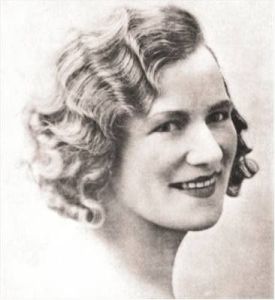
Opera star Marjorie Lawrence, CBE, was born in Australia, but spent the last two decades of her life in Arkansas.   Her triumph over polio to return to the opera stage was the subject of the Oscar winning film Interrupted Melody.

First singing in her native country, she rose to star in the opera halls of Europe before conquering the Metropolitan Opera.  Lawrence had contracted polio as an adult while on a trip to Mexico.  She eventually returned to the stage, usually singing while seated or reclining.  She also had an extensive recital career.  She performed at the White House at the invitation of Franklin Roosevelt and later Lyndon Johnson. During World War II, she performed at Buckingham Palace.  When Queen Elizabeth II made her a Commander of the British Empire in 1977, the Queen fondly remembered that wartime concert.

Eleanor Parker as Lawrence in INTERRUPTED MELODY

In 1949, she wrote her autobiography Interrupted Melody. The next year, Hollywood was interested in making it into a film.  Lawrence only wanted to agree to that if she herself did the singing.  In 1955, MGM released the film starring Eleanor Parker as Lawrence and Glenn Ford as her husband. Lawrence did not provide the singing voice; Eileen Farrell did.  Lawrence was openly critical of the film, though some suspected it was because she did not get to sing for it.  By the time of the filming, her vocal range was not what it had been, which is apparently what led MGM to make the decision not to use her.

Despite Lawrence’s disdain for the film, the film was financially successful.  It was nominated for three Oscars: Original Screenplay (though it was actually based on a book), Eleanor Parker as Best Actress, and Costume Design for Color motion pictures.  Sonya Levien and William Ludwig won the statuette for their screenplay.

Lawrence and her husband bought a ranch near Hot Springs in 1952.  She spent most of her life there afterward though she was a vocal coach at Southern Illinois University and Tulane. She also welcomed international students to her home for coaching.  In 1975, she started working with students from the University of Arkansas at Little Rock.  She was also an early member of the Arkansas Arts Council.

Lawrence died in January 1979 and is buried in Hot Springs.